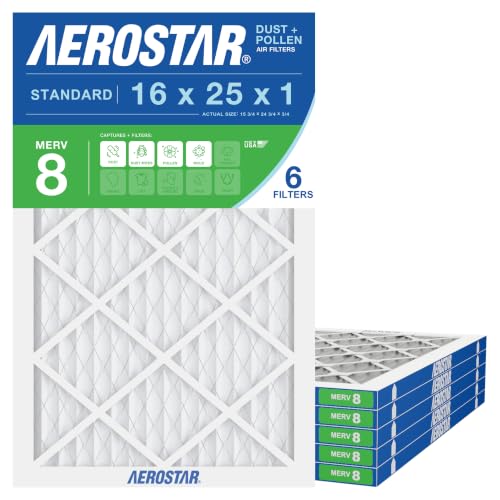
16x25x1 Furnace Filter: The Complete Buyer's Guide
Everything you need to know about the 16x25x1 filter size — actual dimensions, MERV ratings, airflow, replacement timing, and how to pick the right filter for your furnace or air handler.
SEE RECOMMENDED FILTERSQuick summary: A 16x25x1 furnace filter is one of the most common return-air filter sizes in North American homes. The numbers mean 16 inches tall, 25 inches wide, and 1 inch deep (nominal). Actual dimensions usually run about 15.5 x 24.5 x 0.75 inches. Choosing the right MERV rating for your blower matters more than choosing the highest number.
What Does 16x25x1 Mean on a Furnace Filter?
The label on a furnace filter box describes its nominal size in inches. For a 16x25x1 furnace filter, that means:
- 16 inches — the height (the shorter side of the face)
- 25 inches — the width (the longer side of the face)
- 1 inch — the depth or thickness of the filter media and frame
Nominal sizing is a rounded industry standard. When you measure your filter slot with a tape measure, you may see something closer to 15.5 x 24.5 x 0.75 inches. That is normal — filters are intentionally built slightly undersized so they slide into the rack without binding. Always match the nominal size printed on your existing filter or listed in your furnace manual, not the raw measurement of the slot.
If your filter sits inside a dedicated cabinet or a media air cleaner rather than a simple 1-inch slot, double-check the spec plate before ordering. Thicker filters (4-inch or 5-inch media) use a different housing and are not interchangeable with a 1-inch filter.
Why the 16x25x1 Size Is So Common
Many residential air handlers and upflow furnaces in the 2-ton to 3.5-ton range use a return plenum that accommodates a 16x25 filter. This size offers a generous face area, which helps keep face velocity low enough to avoid whistling and excessive pressure drop. In practical terms, a larger face area means the same volume of air passes through at a slower speed, which is easier on the blower and quieter at the grille.
This size is also widely stocked at hardware stores and online retailers, which makes replacement straightforward. If you are upgrading from a basic fiberglass panel to a pleated filter, staying with the same 16x25x1 footprint is usually the simplest path — the change to watch is the MERV rating, not the dimensions.
MERV Ratings Explained for 1-Inch Filters
MERV (Minimum Efficiency Reporting Value) tells you how effectively a filter captures particles of different sizes. For 1-inch furnace filters, the practical range runs from MERV 4 up to MERV 13. Higher ratings capture more particles but also add airflow resistance, which is why matching the filter to your system matters.
| Tier | Typical MERV | Best For | Airflow Impact |
|---|---|---|---|
| Essential tier | MERV 4–6 (fiberglass / basic pleated) | Basic dust and lint protection; older systems with limited static pressure budget | Very low resistance |
| Balanced tier | MERV 8 | Most homes; everyday dust, pollen, and pet dander control | Low to moderate |
| Mid-tier | MERV 11 | Allergy-sensitive households; finer dust and mold spore capture | Moderate |
| High-end tier | MERV 13 | Strong particle capture for smoke, fine dust, and pollen; systems with blower headroom | Higher resistance — verify compatibility |
The key takeaway: a MERV 8 pleated filter is the sweet spot for most 16x25x1 applications. It captures the particles that matter for everyday comfort without straining a standard PSC blower. Moving to MERV 11 or 13 can be worthwhile for allergy sufferers, but only if your ductwork and blower are sized to handle the extra pressure drop. If your system already runs high static pressure, a restrictive filter can reduce airflow, raise supply temperatures, and shorten equipment life.
Pleated vs. Fiberglass: Which Should You Choose?
Fiberglass panel filters are the entry-level option. They are thin, capture larger debris, and offer very little resistance — which is why builders often install them in new construction. Their downside is that they let fine dust pass through and load up quickly.
Pleated filters use a folded media that packs more surface area into the same 1-inch frame. That extra surface area is what allows a pleated filter to hold more dust before it clogs, while still delivering respectable airflow. For a 16x25x1 slot, a pleated MERV 8 filter is generally the better long-term choice for indoor air quality and equipment protection.
Electrostatic and washable filters sit in between. Washable filters reduce waste but typically underperform pleated media on fine-particle capture, and their airflow characteristics change as they load. If you choose a washable option, clean it on a strict schedule rather than waiting for visible buildup.
How Often Should You Replace a 16x25x1 Filter?
Replacement timing depends on the filter type, the home, and the season. Use this as a starting framework:
| Home Situation | Suggested Interval | Notes |
|---|---|---|
| No pets, low occupancy, light dust | Every 3 months | Inspect monthly; replace sooner if visibly gray |
| Average home with one pet | Every 2 months | Pet dander loads media faster than visible dust suggests |
| Multiple pets or heavy dust (renovation nearby) | Every 4–6 weeks | Check pressure drop or visible loading frequently |
| Allergy season / wildfire smoke periods | Every 4–8 weeks | Higher-MERV filters load faster during smoke events |
| Vacant or lightly used seasonal home | Before each cooling and heating season | Stored filters can absorb moisture; inspect before use |
A simple habit: write the installation date on the filter frame edge with a marker. That turns guesswork into a reliable schedule. If you notice the blower sounding louder, rooms heating unevenly, or a dusty return grille, the filter is probably overdue.
Installation and Fit Tips for the 16x25x1 Slot
- Turn off the furnace or air handler at the thermostat and the service switch before opening the filter door.
- Note the airflow arrow on the old filter — the new one must point in the same direction (toward the blower).
- Slide the filter in squarely; a tilted filter lets air bypass around the edges.
- Check that the filter frame seats flush against the rack gasket. Gaps reduce effective filtration.
- If the filter rattles, add a thin foam strip or verify the rack clips are engaged — vibration wears the media.
- After replacement, confirm airflow at several supply registers before closing up the system.
If your filter slot is unusually tight and the nominal 16x25x1 filter binds, do not force it. A slightly bowed filter creates edge gaps that defeat the purpose. Measure the rack and confirm the nominal size printed on the old filter before trying a different product.
Seasonal Considerations
Summer cooling season puts the filter under continuous load because the blower runs for long stretches. Spring pollen and fall leaf debris both spike particulate levels in the return air. That makes the change of seasons the natural checkpoint for a fresh filter. A filter that looks acceptable in early spring may be heavily loaded with pollen by late April, so a visual check around the first warm week is worthwhile.
During wildfire smoke events, MERV 13 filters capture far more fine particulate than MERV 8, but they also load faster. If you switch to MERV 13 for smoke season, plan on a shorter replacement interval and monitor airflow at the registers.
Related Reading
Filter size is only one piece of maintaining a healthy HVAC system. If you are also reviewing air conditioning equipment or planning a replacement, these guides may help:
- How to size an air conditioner for your home — match capacity to your square footage and load.
- 16 SEER air conditioning unit overview — understand efficiency ratings before you upgrade.
- What is a SEER rating? — the efficiency metric explained in plain terms.
- 2-ton air conditioner guide — a common capacity for mid-size homes.
- AC maintenance guide — seasonal tasks that protect equipment life.
- How to clean an AC filter — safe cleaning steps for reusable media.
- When to replace an AC filter — signs that loading has gone too far.
Frequently Asked Questions
What does 16x25x1 mean on a furnace filter?
The numbers are nominal dimensions in inches: 16 inches tall, 25 inches wide, and 1 inch deep. Actual dimensions are typically about 15.5 x 24.5 x 0.75 inches so the filter slides easily into the rack.
Can I use a 16x25x1 filter in a 16x25x4 cabinet?
No. A 1-inch filter will not seal properly in a 4-inch media cabinet, and air will bypass around it. Use the depth specified by the cabinet or air cleaner manufacturer.
What MERV rating is best for a 16x25x1 filter?
For most homes, MERV 8 is the balanced choice. It captures everyday dust, pollen, and pet dander without excessive airflow resistance. MERV 11 and MERV 13 are options for allergy-sensitive households, provided the blower can handle the added static pressure.
How do I know which direction the filter goes?
Look for the airflow arrow printed on the filter frame. It should point toward the blower, which is the direction air travels through the system. If the old filter's arrow is visible, match it.
Does a higher MERV filter make my home dustier?
Not directly — but an overly restrictive filter can reduce airflow, which may cause uneven cooling and let the blower work harder. The right rating depends on your system's static pressure budget, not on the number alone.
Are washable 16x25x1 filters a good alternative?
They reduce waste and can be reused, but most washable media underperform pleated filters on fine-particle capture. If you choose one, follow the cleaning schedule strictly and replace it if the media becomes brittle or torn.
Ready to Compare 16x25x1 Filters?
Scroll to the recommended products below to compare MERV ratings, construction, and airflow characteristics across the most popular 16x25x1 furnace filter options.