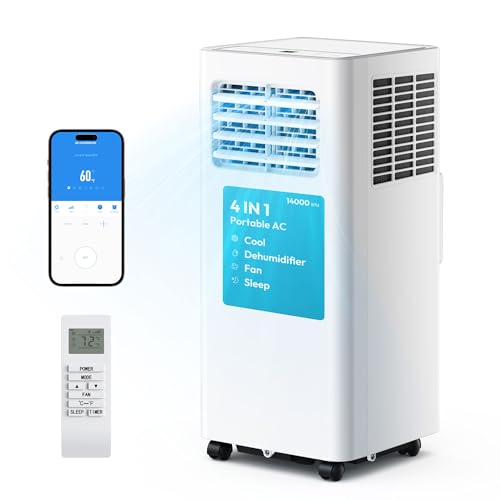
12,000–14,000 BTU Air Conditioner
The perfect cooling capacity for large rooms between 250–400 square feet. Discover everything you need to know before making your purchase.
View Top Recommendations →Room Size
Ideal for living rooms, master bedrooms, open plans
Price Range
Window: $400–$900 | Mini-Split: $1,200–$1,800
Typical Power
Most units use 115V (standard outlet)
SEER Rating
Higher SEER = lower electricity bills
Is a 12,000–14,000 BTU AC Right for You?
If you have a large bedroom, spacious living room, home office, or an open-plan area between 250 and 400 square feet, a 12,000–14,000 BTU air conditioner is the ideal solution. This capacity range provides powerful cooling without wasting energy. Units in this class are available in multiple configurations including window air conditioner, portable air conditioner, and ductless mini-split AC systems.
Choosing the right BTU is critical for both comfort and efficiency. An undersized unit will run continuously without adequately cooling your space, while an oversized unit will short-cycle, leading to poor humidity control and higher energy bills. For most American homes, the 12k–14k BTU category represents the sweet spot for larger individual rooms.
Room Size & BTU Requirement Guide
Use this table to determine the correct how to size an air conditioner for your specific space. Factors like ceiling height, sunlight exposure, and number of occupants can affect requirements.
| Room Size (sq ft) | Recommended BTU | Example Spaces |
|---|---|---|
| 250–300 sq ft | 12,000 BTU | Master bedroom, large home office |
| 300–350 sq ft | 12,000–13,000 BTU | Living room, studio apartment |
| 350–400 sq ft | 14,000 BTU | Open kitchen-living, sunroom, basement |
| 400–450 sq ft | 14,000–15,000 BTU | Large great room, small commercial space |
💡 Pro Tip: If your room has high ceilings (over 9 feet), large windows facing south/west, or is a kitchen with heat-generating appliances, consider moving up to the next BTU tier or choosing a inverter AC that can modulate its output.
Available Types of 12,000–14,000 BTU ACs
Understanding the different form factors helps you choose the best fit for your home layout, budget, and installation preferences. Here are the most common types available in this capacity range:
🪟 Window AC
Price: $400–$900
Pros: Most affordable, easy installation, effective for single rooms.
Cons: Blocks window, not suitable for all window types.
Best for renters or homeowners with standard double-hung windows.
🌀 Portable AC
Price: $450–$800
Pros: Movable, no permanent installation, good for rooms without windows.
Cons: Less efficient, hose venting required, takes floor space.
Best for temporary cooling or rooms where window units aren't allowed.
❄️ Ductless Mini-Split
Price: $1,200–$1,800 (including professional installation)
Pros: Very quiet, energy-efficient (inverter technology), heating option available.
Cons: Higher upfront cost, requires professional installation.
Best for older homes without ducts, additions, or garage conversions.
🏠 Through-the-Wall AC
Price: $500–$1,000
Pros: Permanent installation, doesn't block window, secure.
Cons: Requires wall sleeve, more complex installation.
Best for apartments with existing wall sleeves or permanent installations.
Efficiency Matters: SEER, EER, and Energy Star
When shopping for a 12,000–14,000 BTU air conditioner, pay close attention to efficiency ratings. The what is SEER rating (Seasonal Energy Efficiency Ratio) directly impacts your electricity bills. For window and portable units, look for EER (Energy Efficiency Ratio) of 11 or higher. For mini-splits, a SEER rating of 18+ is considered excellent.
An ENERGY STAR certified AC can save you 15–20% on cooling costs compared to standard models. Over the 10-15 year lifespan of a unit, the savings from a high-SEER model often exceed the initial price difference.
📊 Quick Math: Upgrading from a 12 EER unit to a 15 EER unit in a 14,000 BTU AC can save approximately $50–$100 per cooling season, depending on your local electricity rates and usage hours.
Installation & Electrical Requirements
Most 12,000–14,000 BTU window and portable units operate on standard 115V household outlets. However, some larger 14,000 BTU models or those with heating elements may require a dedicated 230V circuit. Before purchasing, check your check home electrical panel to ensure compatibility. Additionally, verify amps and breaker size for AC to avoid tripping breakers.
For mini-split systems, professional installation is strongly recommended. The installation cost estimate for a 12,000 BTU mini-split typically ranges from $500 to $1,200, which includes mounting the indoor and outdoor units, running refrigerant lines, and electrical connections.
If you are considering DIY installation for a window unit, follow safety guidelines and consider using a support bracket for units over 60 lbs. Always hire a licensed electrician if any electrical modifications are needed.
Must-Have Features in 2025
- Inverter Compressor: Provides variable speed operation, quieter performance, and up to 40% energy savings compared to traditional on/off compressors. Learn more about inverter AC technology.
- Wi-Fi & Smart Control: Allows you to control temperature remotely via smartphone apps, integrate with Alexa or Google Home, and monitor energy usage.
- Dehumidification Mode: Removes excess moisture from the air without excessive cooling – essential for humid climates.
- Sleep Mode & Timer: Gradually adjusts temperature during sleeping hours and allows scheduling to reduce waste.
- Washable Air Filter: Easy-clean filters improve air quality and maintain efficiency. Regular how to clean AC filter extends unit life.
Keeping Your 12,000–14,000 BTU AC Running Efficiently
Regular maintenance ensures optimal performance and longevity. Here are essential tips & maintenance practices:
- Clean or replace air filters every 30 days during peak cooling season.
- Inspect and clean condenser coils annually (for window and mini-split units).
- Keep the area around outdoor units free from debris, leaves, and vegetation.
- Check for refrigerant leaks – if cooling performance drops, call a professional for refrigerant leak repair.
- Before winter, remove window units or cover outdoor mini-split components.
Frequently Asked Questions (FAQ)
What size room will a 12,000 BTU AC cool effectively?
A 12,000 BTU air conditioner is designed for rooms between 250 and 350 square feet. For spaces up to 400 square feet, a 14,000 BTU unit is more appropriate. Factors like ceiling height, insulation quality, and sun exposure can adjust these numbers by 10–20%.
Is a 12,000 BTU AC enough for a living room?
Yes, for a typical living room of 300 square feet, a 12,000 BTU unit provides ample cooling. If your living room is open to a kitchen or dining area, consider a 14,000 BTU model or even an 18,000 BTU if the total open area exceeds 450 sq ft.
How much electricity does a 12,000 BTU AC use?
On average, a 12,000 BTU window AC uses about 1,000–1,200 watts per hour when running. At 8 hours of daily use, the monthly cost ranges from $30 to $50 depending on your electricity rate (at $0.15/kWh). Inverter models can reduce consumption by 30% during partial load conditions.
Can a 14,000 BTU AC run on a standard 110V outlet?
Most 14,000 BTU portable and window units are designed for 115V/15A circuits. However, always verify the manufacturer's specifications. Some high-efficiency or heat pump models may require a 230V outlet. Check your circuit breaker and consult an electrician if unsure.
What is the typical lifespan of a 12,000 BTU AC?
With proper maintenance, window and portable units last 5–10 years. Ductless mini-splits can last 15–20 years. Regular filter cleaning, coil maintenance, and professional checkups significantly extend lifespan.
Your Next Steps: Choose the Right 12k–14k BTU AC
Now that you understand sizing, efficiency, and features, you're ready to make an informed purchase. Below you'll find our curated recommendations for 12,000–14,000 BTU air conditioners from trusted brands. These picks are based on real customer reviews, energy efficiency, and value for money.
Remember that the best air conditioner for your home depends on your specific needs: renters prefer portable or window units, while homeowners often invest in mini-splits for long-term savings. Always compare warranties and check for available HVAC tax credits & rebates for high-efficiency models.