Complete Guide to Air Conditioners for Sunrooms
Conquer solar heat gain & glass-room temperatures: expert sizing, AC types, and energy-efficient cooling for year‑round comfort.
Start BTU Sizing →Did you know? Sunrooms can experience 3–5x more heat gain than standard rooms due to large glass surfaces. Standard AC sizing often fails — we’ll show you the exact formula to beat the greenhouse effect and keep your sunroom refreshingly cool.
Why Sunrooms Need a Different AC Approach
A sunroom (or solarium) is a beautiful addition to any home, but its floor-to-ceiling windows and exposure to direct sunlight create a unique thermal challenge. Unlike a regular living room or bedroom, a sunroom’s cooling load depends heavily on solar radiation, outdoor temperature, and glazing type. Standard BTU calculators often underestimate requirements by 30–50%, leading to an undersized unit that runs continuously, increasing energy bills and shortening equipment life.
Choosing the right air conditioner for sunroom means factoring in window orientation (south/west exposures are hottest), double-pane vs. single-pane glass, and ceiling height. Many homeowners find that a ductless mini-split AC or a high-capacity window air conditioner works best, but the decision also involves inverter technology and SEER ratings for maximum efficiency.
Step 1: Calculate Sunroom Cooling Load (BTU Requirements)
For a sunroom, use this professional rule: start with 20 BTU per square foot, then add 10–20 BTU per square foot for high solar exposure. Example: a 250 sq ft south-facing sunroom with single-pane glass needs about 250 × 35 = 8,750 BTU minimum. But to avoid short-cycling and ensure performance on scorching days, we recommend oversizing by 10–15% — that points you to a 12,000 BTU unit. For larger sunrooms (>400 sq ft), consider 18,000–24,000 BTU systems or even dual-zone mini splits. Always prefer inverter-driven units for part-load efficiency.
If you also use the sunroom as a home office or for plants, factor in additional heat from equipment or humidity. Read our complete guide on Manual J load calculation for precision engineering, especially for new construction or major renovations.
Step 2: Best AC Types for Sunrooms
Not every AC type can handle solar heat loads effectively. Below are the top performers for glass-enclosed spaces.
1. Ductless Mini-Split AC (Most Recommended)
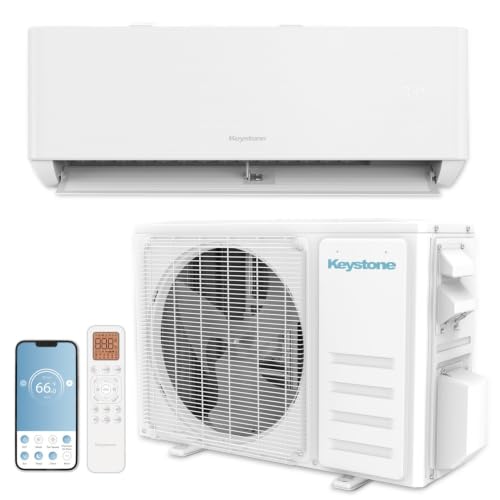
A ductless mini-split AC is widely considered the gold standard for sunrooms. It offers high cooling capacity (up to 36,000 BTU), inverter variable speed for quiet operation, and no need for ductwork. The indoor wall-mounted unit can be placed to avoid direct glare, and outdoor unit works efficiently even in high ambient temperatures. Mini-splits also provide heating via heat pump, making your sunroom usable in winter. With SEER ratings often above 20, you’ll save substantially on electricity.
2. High-Capacity Window Air Conditioner
Modern window air conditioners are a budget-friendly option for smaller sunrooms (<300 sq ft). Look for models with at least 10,000–14,000 BTU and digital temperature control. Energy Star certified units ensure lower operating costs, and many now include Wi-Fi smart control for scheduling. However, window units may block part of your view — consider a through-the-wall kit if aesthetics matter.
3. Portable Air Conditioner (Dual Hose)
If installation flexibility is key, a portable air conditioner can be placed near a window or sliding door. Always choose a dual-hose model: single-hose units create negative pressure, pulling warm outdoor air into the room, reducing efficiency by up to 40%. For sunrooms, a 14,000 BTU (DOE/SACC) dual-hose portable AC can work, but expect higher noise levels. Ideal for renters or temporary setups.
4. Through-the-Wall AC Units
A through-the-wall AC is a permanent, sleek solution that doesn't protrude externally like a window unit. It’s especially useful when sunroom walls are thick enough. Sizes range from 8,000–15,000 BTU, and many include heat options. Installation requires a sleeve and proper sealing, but it leaves your glass panels unobstructed.
Step 3: Efficiency Features That Matter for Glass Rooms
Sunrooms demand long runtimes in summer. Prioritize these features:
- Inverter compressor: Inverter AC adjusts speed continuously, avoiding temperature swings and saving 30–50% energy compared to non-inverter units.
- High SEER2 / EER: Aim for SEER2 of 16+ or EER above 12 for window units. Energy Star Most Efficient models provide the best payback.
- Dehumidification mode: Sunrooms can get humid from condensation; a dedicated dry mode enhances comfort.
- Smart thermostat compatibility: Wi-Fi enabled ACs allow you to precool before you enter and adjust schedules, reducing waste.
Also consider an AC with a heat pump to extend the usage of your sunroom into spring and fall, turning it into a true four-season space.
Step 4: Installation & Placement Tips for Sunrooms
Position the indoor unit of a mini-split away from direct sunbeams (on a side wall or under a shaded eave). Window units should be installed on the north or east side of the sunroom whenever possible to reduce direct solar load on the AC itself. For new builds, consider HVAC zoning systems that allow separate temperature control for the sunroom versus the rest of the house — this prevents overcooling adjacent rooms. Always check electrical requirements: larger units may need a dedicated 240V circuit, so review our guide on 110V vs 240V air conditioner before purchase.
If you’re hiring a professional, ask about refrigerant line set insulation and proper drainage, as sunrooms often have slab foundations. DIY? Ensure you have the right permits and follow indoor/outdoor placement guidelines.
Cost Analysis: Budget vs. Premium Sunroom AC
Here’s a realistic market snapshot (installed costs, USD):
- Window AC (10,000–14,000 BTU): $350–$700. Good for DIY, low upfront, but moderate efficiency (EER 10–11).
- Through-the-Wall Unit (12,000 BTU): $600–$1,200 + installation sleeve. Clean aesthetic, decent longevity.
- Dual-Hose Portable AC (14,000 BTU SACC): $500–$900. Flexible but less efficient and noisier.
- Ductless Mini-Split (12,000–18,000 BTU): $1,500–$2,800 (including professional installation). SEER up to 22+, ultra quiet, adds property value.
Investing in a most energy efficient AC for your sunroom can reduce cooling costs by up to $200–$400 per summer, paying back the premium within 2–3 years. Moreover, check for federal tax credits and local rebates via HVAC tax credits & rebates — many high-SEER ductless systems qualify.
5 Common Sunroom AC Mistakes (And How to Avoid)
- Undersizing based on regular room rules: Always add a solar load multiplier. Use our AC too big or too small? article to understand consequences.
- Placing the unit behind furniture or curtains: Blocks airflow and reduces cooling capacity by 20%.
- Ignoring window coverings: Reflective blinds or solar shades can reduce needed BTU by 15–20% — combine with AC for best results.
- Forgetting to seal gaps: Air leaks around windows or unit sleeves destroy efficiency. Use weatherstripping.
- Skipping routine maintenance: Sunrooms accumulate dust quickly. Clean filters every month (guide) and schedule annual pro checkup.
For deeper understanding, explore our HVAC education hub to learn how an AC works, or compare inverter vs non-inverter technology. You might also enjoy our guides for similar challenging spaces: basement AC or garage cooling.