Complete Guide to Choosing the Best AC for Large House
Homes over 2,500 sq ft need powerful, energy-efficient cooling. We break down central AC, ductless mini-splits, BTU calculations, SEER2 standards, and real-world costs — so you buy with confidence.
See Top Recommendations →🏡 Cooling a large house is different. Standard window units won’t cut it. You need a whole-home solution that balances capacity, efficiency, and long-term savings. This guide walks you through every decision — from proper sizing to choosing between central AC and ductless mini-splits.
1. How Much AC Power Does a Large House Need?
For homes larger than 2,500 square feet, typical window or portable units are insufficient. Most large houses require a total cooling capacity between 36,000 BTU (3 tons) and 60,000 BTU (5 tons) — sometimes more for homes over 4,000 sq ft or with high ceilings, large windows, or poor insulation.
⚠️ Don’t oversize or undersize! An oversized AC will short-cycle, increase humidity, and wear out quickly. Undersized units run constantly, skyrocket energy bills, and never reach desired comfort. Use Manual J Load Calculation for professional precision, or start with our simplified table below.
| Home Size (sq ft) | Recommended BTU | Tons (Cooling Capacity) | Typical System Type |
|---|---|---|---|
| 2,500 – 3,000 sq ft | 48,000 – 54,000 BTU | 4 – 4.5 tons | Central AC or Multi-zone Mini-Split |
| 3,000 – 3,800 sq ft | 54,000 – 60,000 BTU | 4.5 – 5 tons | Central AC (5-ton) or Dual-fuel heat pump |
| 3,800 – 5,000+ sq ft | 60,000 – 84,000 BTU | 5 – 7 tons | Zoned Central AC or Two mini-split systems |
For accurate BTU per room, use our BTU calculator by room size and sum up high-traffic areas. Also consider whole-home AC sizing that accounts for climate zone, insulation, and number of windows.
2. Best AC System Types for Large Houses
When your home exceeds 2,500 sq ft, you have three primary options: Central Air Conditioning, Ductless Multi-Zone Mini-Splits, and Packaged Units (rooftop or ground). Each has pros and cons depending on ductwork availability, budget, and efficiency goals.
❄️ Central AC System
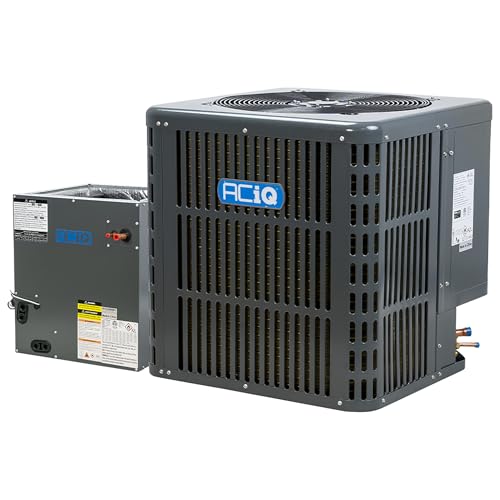
Ideal for homes with existing ductwork. Delivers whole-home cooling from a single outdoor condenser and indoor air handler. Best for uniform temperature and high SEER options (up to 24 SEER).
Learn about Central AC →🌀 Ductless Mini-Split (Multi-zone)
Perfect for homes without ducts or room-by-room zoning. One outdoor unit connects to 3–8 indoor heads. Energy-efficient (inverter tech), easy installation, and individual temperature control per zone.
Explore Mini-Splits →🏭 Packaged AC Unit
All-in-one system (condenser + evaporator) installed outdoors or on roof. Common for slab-on-grade homes or commercial-style residences. Saves indoor space and often pairs with electric heat strips.
Packaged AC overview →If your large house has multiple stories or separate living zones, consider HVAC zoning systems to avoid hot/cold spots. Another modern alternative is a ductless vs ducted AC hybrid approach — ducted for main floor, ductless for upper level.
3. Efficiency Ratings: SEER2, EER, and HSPF for Large Homes
For a large house, energy efficiency directly impacts monthly electricity bills. The US Department of Energy now mandates SEER2 standards (effective 2023). For southern regions, minimum SEER2 is 14.3–15.2; for northern, 13.4–14.3. However, we recommend 16–20 SEER2 for large houses to see real savings.
A high SEER rating reduces energy consumption by 20–40% compared to older 10–12 SEER units. Over 10 years, the upgrade from 14 SEER to 18 SEER can save $1,500–$3,000 depending on local rates. Also, look for ENERGY STAR certified AC units and consider inverter AC technology which varies compressor speed for optimal efficiency.
💡 Pro Tip: Pair your large-house AC with a programmable thermostat or smart Wi-Fi control. Zoned systems combined with ceiling fans can raise thermostat settings by 4°F without sacrificing comfort, cutting cooling costs by up to 15%.
Learn more about the new SEER vs SEER2 DOE standards and how they impact your purchase decision.
4. Installation & Electrical Requirements
Large AC systems (4–5 tons) typically require 240V power and dedicated 30–60 amp breakers. Before purchasing, verify your home’s electrical panel capacity. Check your home electrical panel to ensure you have available slots. Also, professional installation is non-negotiable for whole-house systems — costs range from $1,500 to $4,000 depending on complexity.
Other key factors: refrigerant line set length (refrigerant line set guidelines), outdoor condenser placement (clearance from walls, shrubs), and permits (do I need a permit for AC). Always vet your contractor: how to choose HVAC contractor and confirm license/insurance.
After installation, read our guide on how to test new AC and register warranty promptly: AC warranty registration protects your investment.
5. Avoid These Large-House AC Pitfalls
Many homeowners assume bigger is better, but that leads to short-cycling and high humidity. Others neglect regular maintenance: large systems require filter changes every 1–3 months, and coil cleaning annually. If your AC is not cooling evenly, check for AC too big or too small symptoms. Leaking water or frozen coils often indicate airflow or refrigerant issues — see AC not cooling solution.
For ongoing performance, follow a seasonal AC checklist and learn to clean AC filter properly. If you ever face major repairs, weigh replace vs repair cost — for large homes, replacing an old 10 SEER unit with 18 SEER can pay back in 3–5 years.
6. Cost Breakdown: Budgeting for Large House AC
High-quality central AC for 3,000–4,000 sq ft runs $4,500–$9,000 (equipment only). With installation, total $6,000–$12,500. High-end inverter systems or multi-zone mini-splits range $8,000–$16,000. However, federal tax credits (up to $2,000) and local rebates for ENERGY STAR HVAC tax credits & rebates offset costs significantly.
If your budget is under $5,000, consider adding a AC under $5,000 multi-zone ductless for the main living area and supplement with window units elsewhere — but whole-home central remains the gold standard for resale value and comfort.
7. Your Buying Roadmap (Large House Edition)
Follow these steps to make a confident purchase:
- Measure your home – calculate total square footage per floor.
- Perform a load calculation (use Manual J or online tool).
- Choose system type – central AC if ducts exist, ductless if not.
- Pick efficiency level – aim for 16+ SEER2 for large homes.
- Get 3 quotes from licensed HVAC contractors (find HVAC contractor near me).
- Check warranties – compressor (10–12 yrs) & parts (5–10 yrs).
- Schedule installation during spring/fall for better pricing.
For more details about specific brand models and real-user feedback, explore our AC shopping guide or FAQ section.
👉 Already decided on the type? Below you’ll find hand-picked recommendations for large houses — high-BTU units, inverter technology, and whole-home systems ready for Amazon purchase (affiliate).