
AC Buying Guide: How to Choose the Best Air Conditioner
A step-by-step roadmap to finding the perfect AC for your space, budget, and comfort needs — from sizing and efficiency ratings to installation and warranty.
What This Guide Covers
- 1 Choose the Right AC Type for Your Space
- 2 Calculate the Correct BTU Capacity
- 3 Understand Efficiency Ratings (SEER, EER, HSPF)
- 4 Check Electrical Requirements
- 5 Plan Your Total Budget
- 6 Evaluate Smart and Advanced Features
- 7 Navigate Installation and Contractor Selection
- 8 Understand Warranty and Long-Term Costs
- 9 Final Buying Checklist
- 10 Frequently Asked Questions
Choose the Right AC Type for Your Space
The first and most consequential decision in your AC purchase is selecting the correct type. Your choice determines everything that follows — cost, installation complexity, energy consumption, and long-term comfort. Each AC type is engineered for specific scenarios, and choosing the wrong one leads to wasted money and inadequate cooling.
There are six primary AC types used in residential and light commercial settings. Understanding where each one excels will immediately narrow your options and prevent costly mistakes. Explore the full breakdown of all AC types or jump directly to the category that matches your situation below.
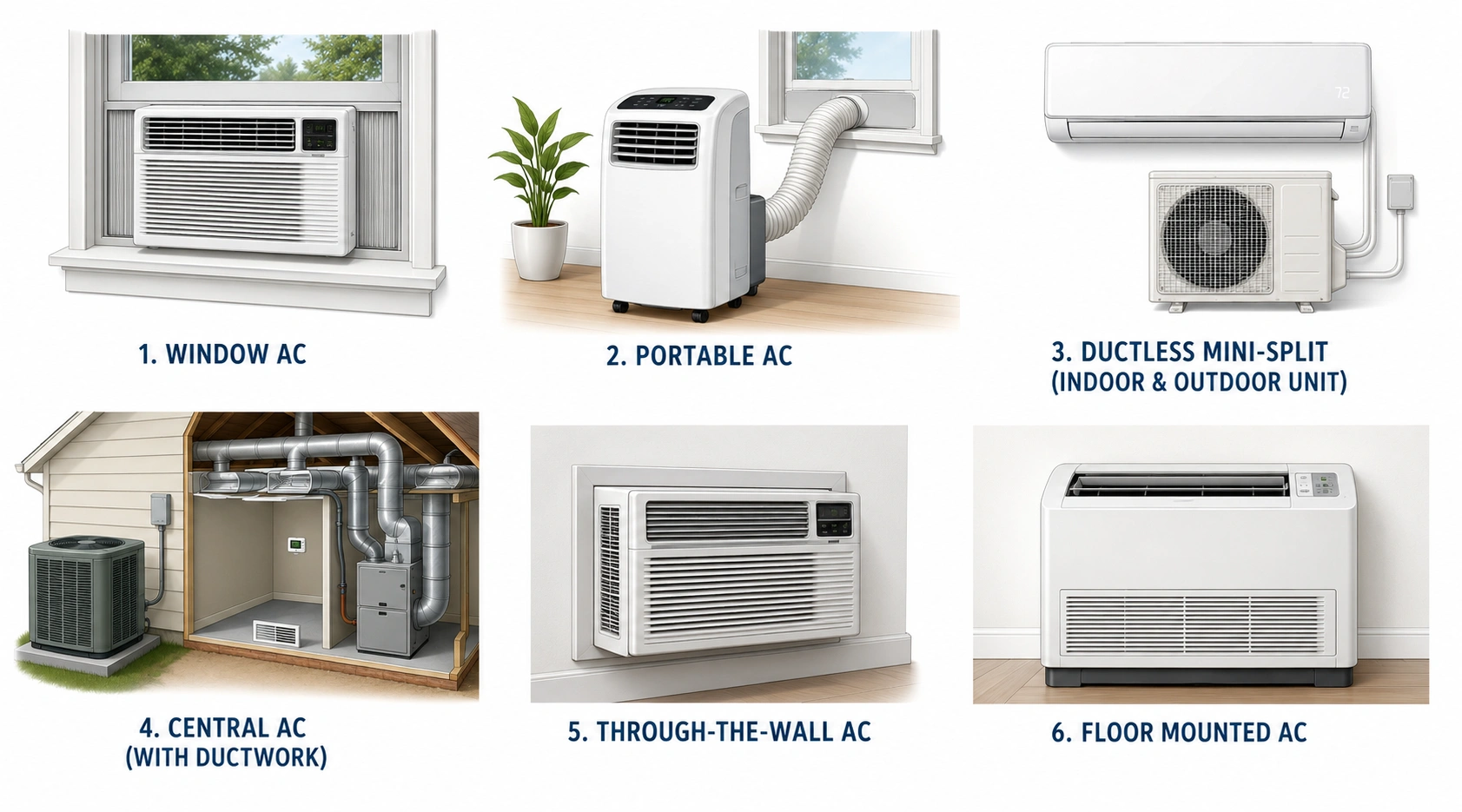
Window Air Conditioner Best Budget
Self-contained unit mounted in a window opening. Ideal for single rooms, apartments, and renters who cannot modify the property.
Capacity: 5,000–24,000 BTU
Pros: Affordable, easy DIY install, no ductwork
Cons: Noisy, blocks window light, limited to single rooms
Portable Air Conditioner Most Flexible
Freestanding unit with an exhaust hose vented through a window. Perfect for temporary cooling or rooms where window installation is impossible.
Capacity: 8,000–14,000 BTU
Pros: No permanent installation, movable between rooms
Cons: Less efficient than window units, exhaust hose required
Ductless Mini-Split Best Value
Wall-mounted indoor unit connected to an outdoor compressor via refrigerant lines. Excellent for homes without existing ductwork or room-by-room zoning.
Capacity: 9,000–36,000 BTU per zone
Pros: Quiet, efficient, zone control, no ducts needed
Cons: Higher upfront cost, professional installation required
Central Air Conditioning Best for Whole Home
Split system that distributes cooled air through ductwork to every room. The gold standard for whole-home comfort in houses with existing ducts.
Capacity: 24,000–60,000+ BTU
Pros: Even cooling throughout home, quiet operation, adds home value
Cons: Expensive, requires ductwork, professional install mandatory
Through-the-Wall AC
Permanently installed through a wall sleeve. A cleaner alternative to window units for rooms where a wall-mounted solution is preferred.
Capacity: 8,000–18,000 BTU
Pros: Does not block windows, more secure than window units
Cons: Requires wall sleeve installation, permanent modification
Floor Mounted AC
Indoor unit installed at floor level, connected to an outdoor compressor. Ideal for rooms with slanted ceilings or where wall mounting is impractical.
Capacity: 9,000–24,000 BTU
Pros: Easy maintenance access, good for rooms with low ceilings
Cons: Takes up floor space, less common in the US market
Quick Decision Helper: Renting a single room? Go with a window AC or portable AC. Own a home without ducts? A ductless mini-split is your best investment. Have existing ductwork and need whole-home cooling? Central AC delivers the most consistent comfort. For older homes without ducts, see our dedicated guide on AC solutions for older homes.
Calculate the Correct BTU Capacity
BTU (British Thermal Unit) measures an air conditioner's cooling capacity. Choosing the wrong BTU rating is the single most common — and most expensive — mistake buyers make. An undersized unit will run continuously without reaching your desired temperature, while an oversized unit will short-cycle, causing uneven cooling, excess humidity, and premature compressor wear.
The baseline calculation starts with your room's square footage, but several other factors can increase or decrease the required BTU by 10–30%. Use our BTU calculator by room size for a personalized result, or reference the table below for standard room sizes.
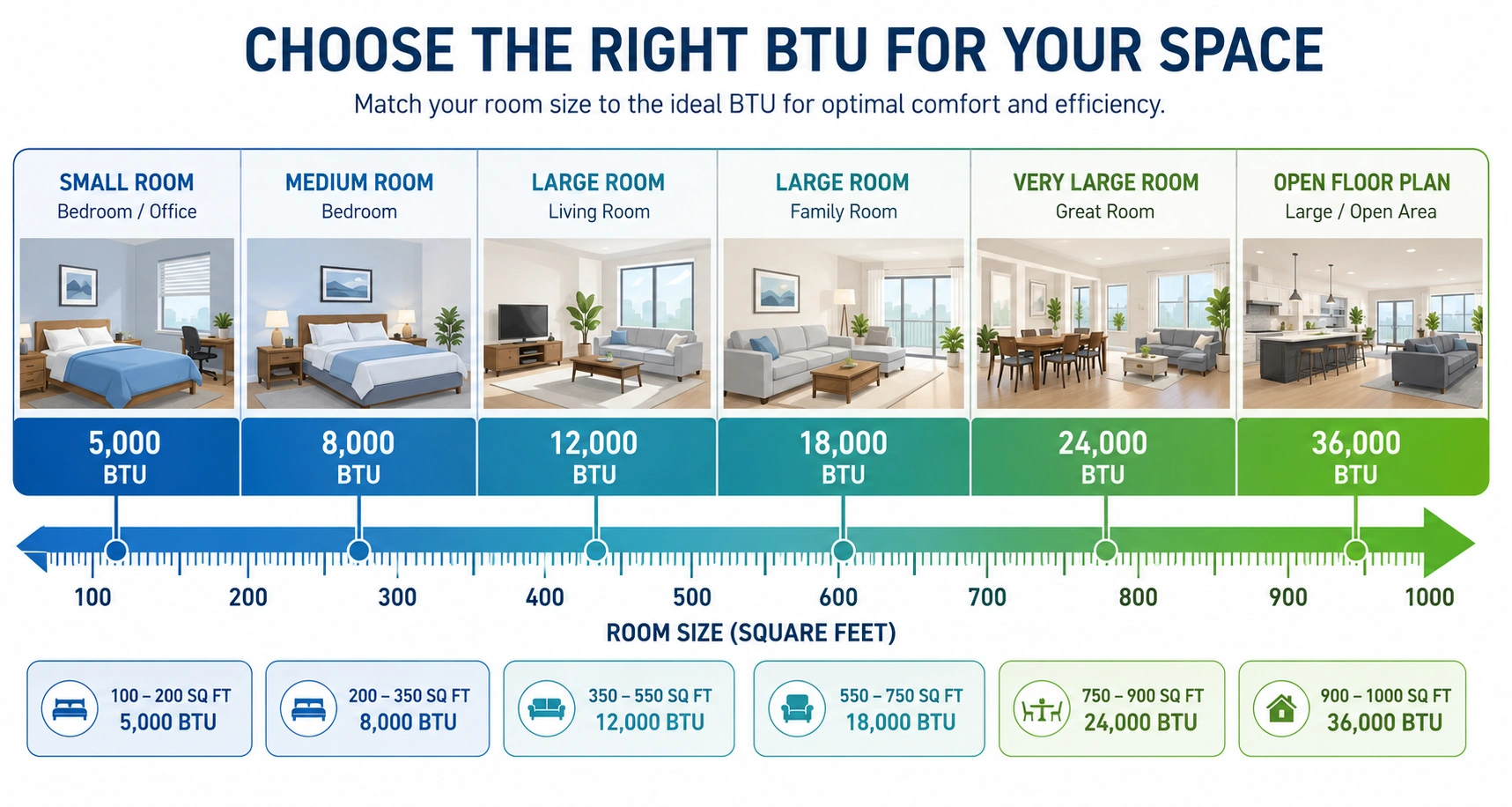
| Room Size (sq ft) | Recommended BTU | Ton Equivalent | Best AC Type |
|---|---|---|---|
| 100–150 | 5,000–6,000 BTU | 0.4–0.5 ton | Window or Portable |
| 150–250 | 7,000–8,000 BTU | 0.6–0.7 ton | Window or Portable |
| 250–350 | 9,000–10,000 BTU | 0.75–0.8 ton | Window or Mini-Split |
| 350–500 | 12,000–14,000 BTU | 1.0–1.2 tons | Mini-Split |
| 500–700 | 18,000 BTU | 1.5 tons | Mini-Split or Central |
| 700–1,000 | 24,000 BTU | 2.0 tons | Mini-Split or Central |
| 1,000–1,500 | 30,000–36,000 BTU | 2.5–3.0 tons | Central or Multi-Zone |
| 1,500–2,500 | 36,000–48,000 BTU | 3.0–4.0 tons | Central AC |
| 2,500+ | 48,000–60,000+ BTU | 4.0–5.0+ tons | Central AC |
Adjustment factors that change your BTU requirement:
Add 10% BTU if the room is heavily sun-exposed (especially south or west-facing windows). Add 600 BTU per additional person beyond the first two occupants. Add 4,000 BTU if the room is a kitchen (heat from cooking appliances). Reduce by 10% if the room is heavily shaded. Add 10–20% for rooms with cathedral or vaulted ceilings. For a comprehensive whole-home calculation, a professional Manual J load calculation is the industry gold standard.
Common Sizing Mistake: Many buyers assume "bigger is better" and purchase an oversized unit. This causes the AC to cool the room too quickly, shut off before dehumidifying the air, then cycle back on repeatedly. The result is a room that feels cold and clammy, higher energy bills, and a compressor that wears out years before its expected lifespan. Always size accurately — learn more about the consequences of wrong sizing.
Understand Efficiency Ratings (SEER, EER, HSPF)
Efficiency ratings determine how much cooling you get per dollar spent on electricity. The difference between a low-efficiency and high-efficiency unit can mean hundreds of dollars per year in energy savings. However, higher efficiency comes at a higher purchase price, so the key is finding the sweet spot where the energy savings pay back the premium within a reasonable timeframe.
There are three primary ratings you will encounter. Understanding each one prevents you from overpaying for efficiency you do not need or under-buying and wasting money on monthly bills.
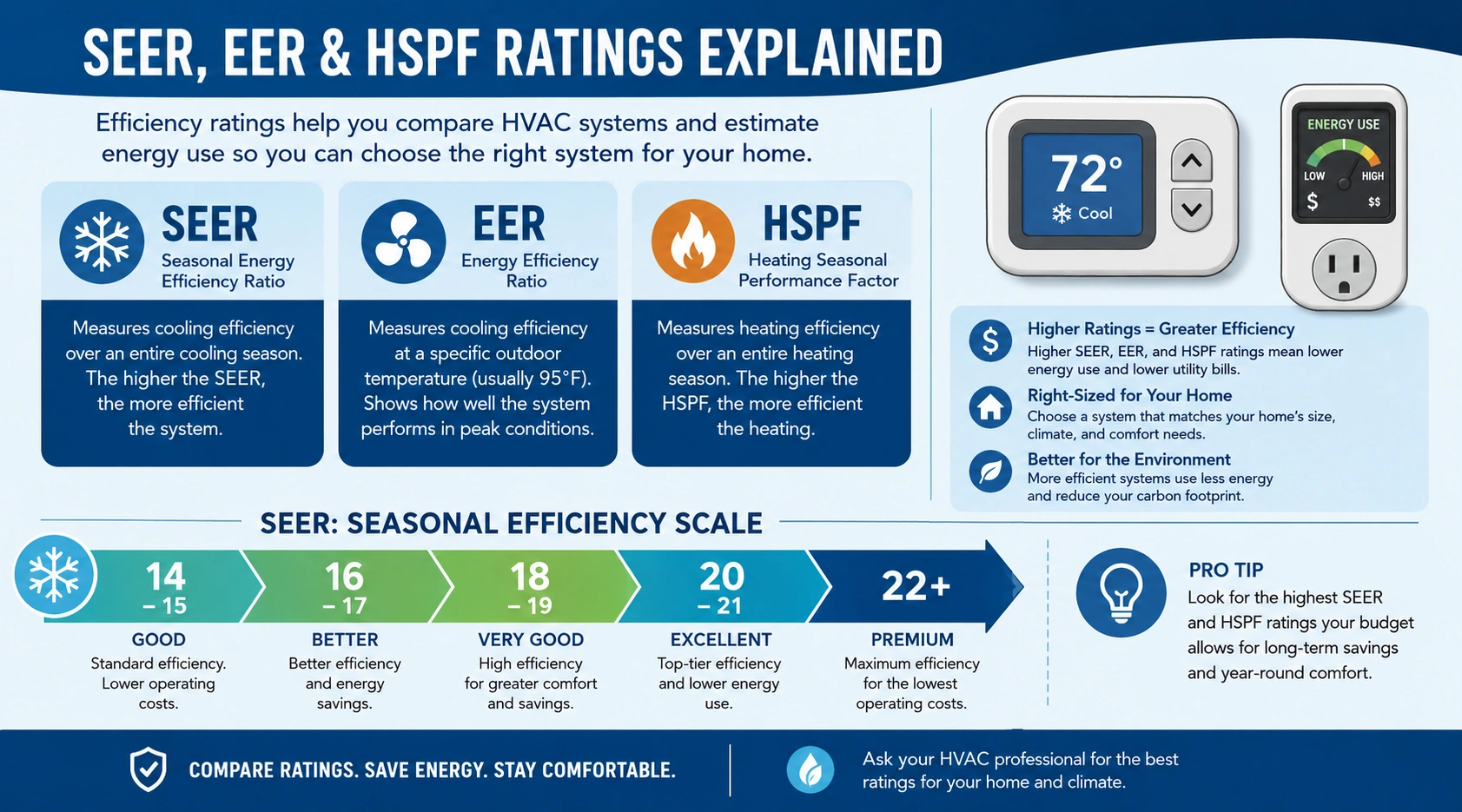
SEER Rating vs. Annual Energy Cost (2-Ton / 24,000 BTU Central AC)
Which SEER should you buy? For moderate climates with 3–4 months of cooling, a 15–16 SEER unit offers the best value. For hot climates (Arizona, Texas, Florida) where the AC runs 6+ months, investing in 18–20+ SEER units can save $300–$600 annually and pay for themselves within 3–5 years. Look for ENERGY STAR certified models, which meet strict efficiency guidelines set by the EPA. Also note the new SEER2 standards from the DOE, which use updated testing procedures for more accurate real-world efficiency numbers.
Inverter Technology Bonus: Inverter AC units with variable-speed compressors maintain a more consistent temperature and use significantly less electricity than non-inverter (fixed-speed) models. They are especially worthwhile if you plan to use the AC for many hours daily. Compare the full benefits in our inverter vs non-inverter comparison.
Check Electrical Requirements
Before purchasing any air conditioner, you must verify that your home's electrical system can support it. This step is frequently overlooked and can turn a simple AC purchase into an expensive electrical upgrade project. The voltage, amperage, and circuit breaker requirements vary dramatically between AC types and capacities.
The two voltage categories in US homes are 110V vs 240V. Understanding which your AC needs — and whether your home has the appropriate outlet and circuit — is non-negotiable.
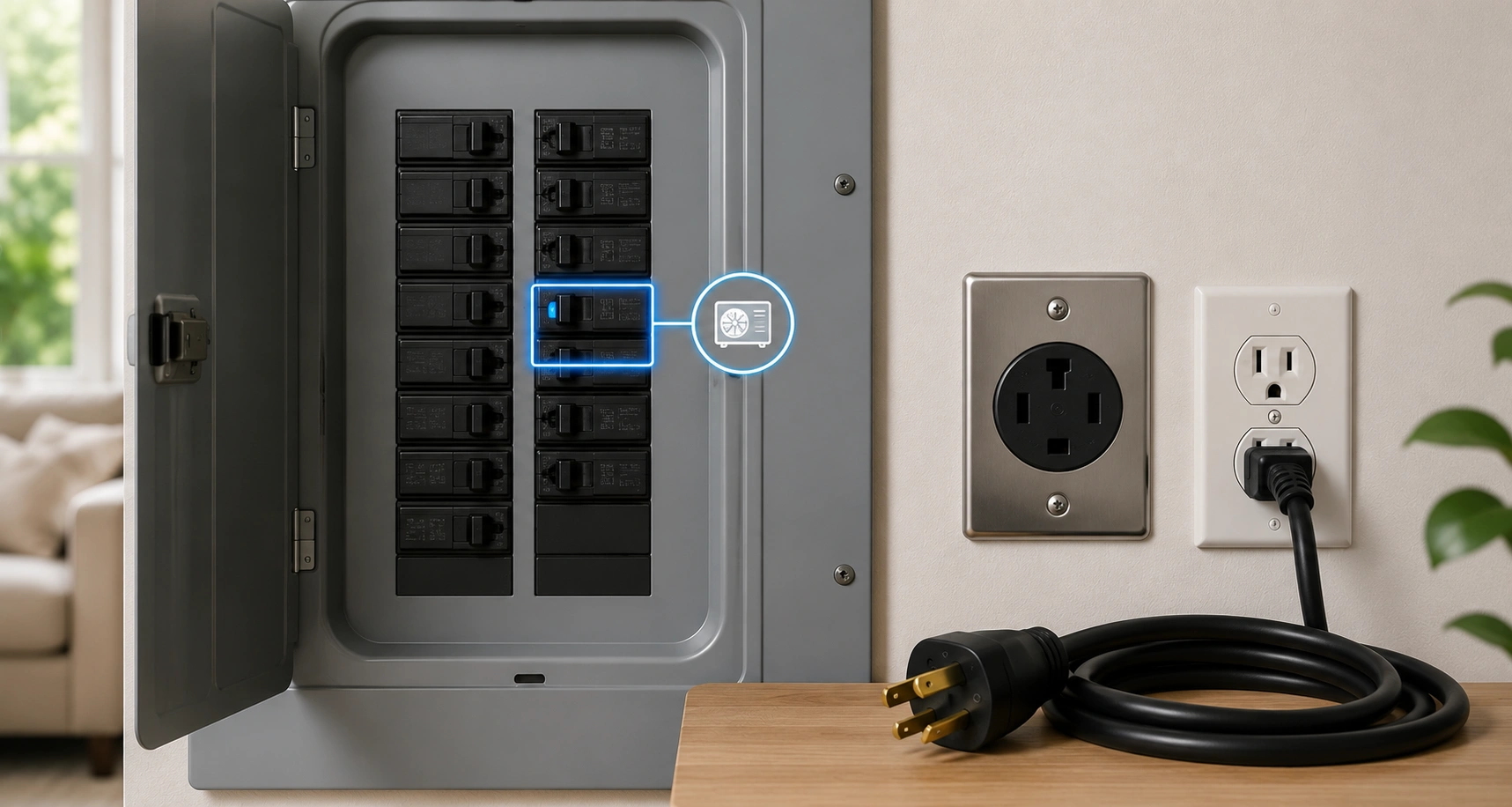
| AC Type & Capacity | Voltage | Typical Amps | Breaker Size | Outlet Type |
|---|---|---|---|---|
| Window AC (5,000–8,000 BTU) | 115V | 4–7 amps | 15A | Standard 3-prong |
| Window AC (10,000–12,000 BTU) | 115V | 8–12 amps | 15A or 20A | Standard or T-slot |
| Window AC (15,000+ BTU) | 230V | 10–15 amps | 20A | 6-20R or 6-30R |
| Portable AC (8,000–14,000 BTU) | 115V | 7–12 amps | 15A | Standard 3-prong |
| Mini-Split (9,000–12,000 BTU) | 115V or 230V | 5–15 amps | 15A or 20A | Dedicated circuit |
| Mini-Split (18,000–36,000 BTU) | 230V | 15–30 amps | 20A–40A | Dedicated circuit |
| Central AC (2–5 tons) | 230V | 15–50 amps | 30A–60A | Dedicated circuit |
Critical Safety Warning: Never plug a high-amperage AC into an extension cord or a power strip — this creates a serious fire hazard. If your room does not have a nearby outlet with the correct amperage, you will need to have your electrical panel checked and potentially hire a licensed electrician. See our guide on when you need an electrician for AC installation and learn about proper amps and breaker sizes.
Plan Your Total Budget
The sticker price of an AC unit is only a fraction of your total cost. Installation, electrical upgrades, permits, and ongoing maintenance can add 30–60% to the initial purchase price. Planning your complete budget upfront prevents surprise expenses and helps you compare options accurately.
The table below breaks down realistic total costs for each AC type, including unit price and professional installation where applicable. For a detailed breakdown, see our AC installation cost estimate guide.
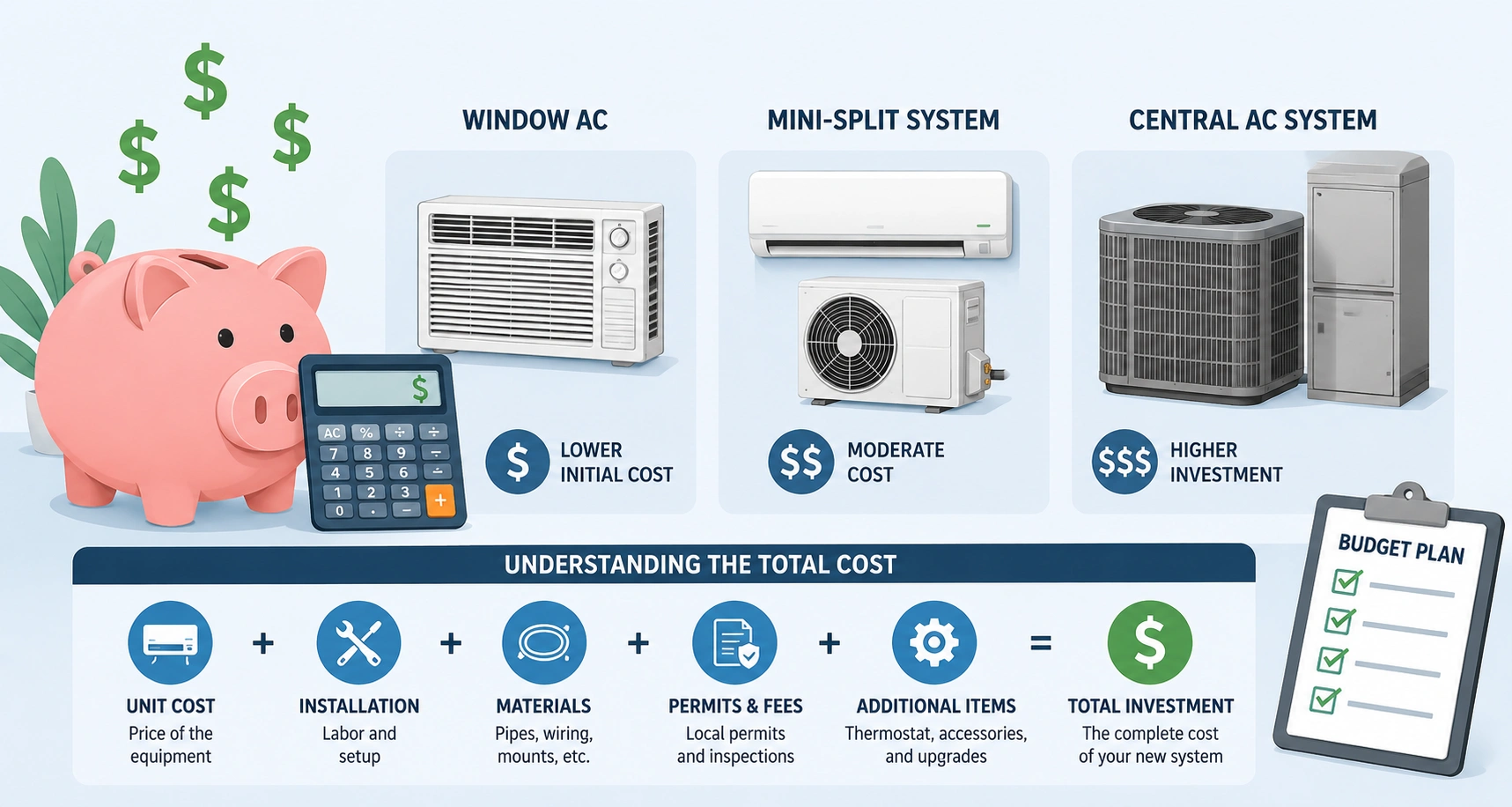
| AC Type | Unit Cost | Installation | Total Cost | Best For |
|---|---|---|---|---|
| Window AC | $150–$500 | DIY ($0) | $150–$500 | Budget buyers |
| Portable AC | $300–$800 | DIY ($0) | $300–$800 | Renters |
| Through-the-Wall | $300–$700 | $200–$500 | $500–$1,200 | Bedrooms |
| Mini-Split (Single Zone) | $1,000–$2,500 | $500–$2,000 | $1,500–$4,500 | Mid-range |
| Mini-Split (Multi-Zone) | $2,500–$5,500 | $1,000–$3,000 | $3,500–$8,500 | Multi-room |
| Central AC (Replace) | $3,500–$7,500 | $1,500–$5,000 | $5,000–$12,500 | Whole home |
| Central AC (New Install) | $3,500–$7,500 | $3,000–$8,000 | $6,500–$15,500 | New construction |
Additional costs to budget for: Electrical panel upgrades ($300–$1,500 if your panel cannot handle the new AC load), building permits ($50–$300 depending on your municipality — check whether you need a permit), and a concrete pad for the outdoor unit ($200–$500 for central AC). You may also qualify for HVAC tax credits and rebates that can offset 10–30% of the total cost, especially for high-efficiency systems. Timing matters too — see the best time to buy an AC for seasonal pricing strategies.
Evaluate Smart and Advanced Features
Modern air conditioners come with a range of features that go beyond basic cooling. While some are gimmicks, others provide genuine comfort improvements, energy savings, or convenience that justify the extra cost. Focus on features that directly address your specific needs rather than paying for every available option.

Wi-Fi & Smart Control
Control your AC from your smartphone, set schedules, and monitor energy usage remotely. Especially valuable if you want to start cooling before arriving home. See AC with Wi-Fi & smart control options.
Low Noise Operation
Noise levels range from 40 dB (whisper-quiet) to 65+ dB (loud conversation). For bedrooms and home offices, prioritize units under 50 dB. Explore quiet AC recommendations.
Variable-Speed Compressor
Variable-speed AC units adjust cooling output in real time, maintaining precise temperatures and using 20–40% less energy than single-stage or two-stage systems.
Built-In Air Purification
Some units include HEPA filters, ionizers, or UV-C light to remove allergens, dust, and bacteria. Worth considering for allergy sufferers. See AC with air purifier options.
Self-Cleaning Mode
Automated coil cleaning functions reduce mold and bacteria buildup, extending lifespan and maintaining efficiency. Less manual maintenance required. See AC with self-cleaning.
Heat Pump Function
An AC with heat pump provides both cooling and heating, eliminating the need for a separate heater. Ideal for mild-winter climates. Compare heat pump vs air conditioner.
Feature Priority Guide: If you are on a tight budget, prioritize correct sizing and a reasonable SEER rating over smart features. A perfectly sized 15 SEER unit will outperform an oversized 20 SEER unit with every bell and whistle. For maximum energy efficiency, focus on variable-speed compressor technology. For convenience, Wi-Fi control is the single most useful smart feature and typically adds only $50–$150 to the price.
Navigate Installation and Contractor Selection
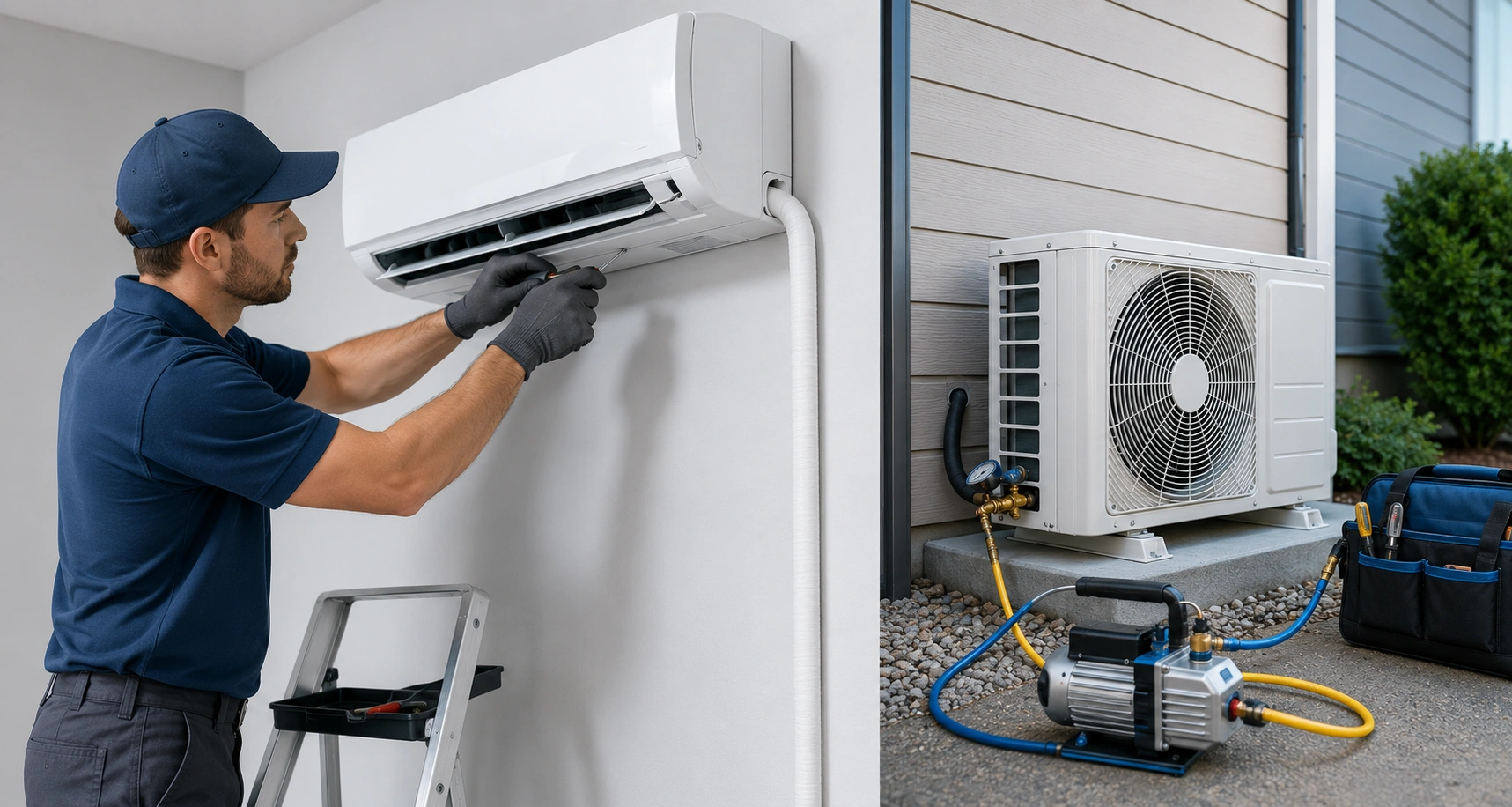
Installation quality has an enormous impact on AC performance. Studies show that up to 50% of new AC systems operate below their rated efficiency due to poor installation. An improperly charged refrigerant system, incorrectly sized ductwork, or poor airflow design can reduce cooling capacity by 15–30% and shorten equipment life by years.
For window and portable ACs, installation is typically DIY and takes 30–60 minutes. For everything else — mini-splits, central AC, through-the-wall units — professional installation is strongly recommended and often required to maintain the warranty.
How to choose the right HVAC contractor:
Get at least three written estimates from licensed, insured contractors. Verify their license and insurance — see our guide on HVAC license and insurance requirements. Ask about their experience with your specific AC type, whether they perform a Manual J load calculation before recommending a size, and whether they handle permit applications. Our complete guide to choosing an HVAC contractor provides a detailed checklist of questions to ask and red flags to watch for.
Key installation considerations: Proper indoor and outdoor unit placement affects both performance and noise. The refrigerant line set length impacts efficiency — longer lines reduce capacity. The installer must vacuum the system properly before releasing refrigerant. Avoid common installation mistakes by being informed about the process. After installation, follow our new AC testing guide and review the questions to ask your installer before they leave.
Avoid Scams: Be wary of contractors who give a quote over the phone without visiting your home, recommend a size without performing a load calculation, or pressure you into a same-day decision. Learn to identify and avoid AC scams. Also understand the difference between going with a local HVAC company vs a big box store — local contractors often provide better service and more personalized support.
Understand Warranty and Long-Term Costs
A good warranty protects your investment for years, but only if you understand its terms and fulfill your obligations. Most AC warranties cover the compressor for 10 years and other parts for 5–10 years, but these extended warranties typically require registration within 30–60 days of installation and proof of annual professional maintenance.
Read our complete AC warranty explained guide to understand what is typically covered and what is not. Key points to verify before purchasing include: whether the warranty is transferable (important if you sell your home), whether it covers labor in addition to parts, and whether it requires installation by a certified dealer.
Typical AC Warranty Coverage
Long-term cost of ownership: Beyond the purchase and installation, budget for annual maintenance ($100–$300 for a maintenance plan), filter replacements ($10–$30 every 1–3 months), and potential repairs. A well-maintained AC lasts 15–20 years, while a neglected unit may fail in 8–10 years. When repairs become frequent or expensive, compare the cost of replacing vs repairing your AC. Also consider the expected lifespan — see how long an AC typically lasts and the annual service cost you should expect.
Pro Tip: Always complete your warranty registration immediately after installation. Take photos of the unit's serial number, installation date, and all warranty documents. Keep a maintenance log with dates and details of every service visit — this documentation is essential if you ever need to file a warranty claim. You can find a local HVAC contractor for ongoing maintenance to keep your warranty valid.
Final Buying Checklist
Before clicking "Buy Now" or signing a contractor agreement, run through this checklist. Every item has been covered in this guide — if you cannot check it off, go back and review the relevant section. This is your final safeguard against a costly mistake.
Pre-Purchase Verification
Ready to Find Your Perfect AC?
Browse our curated recommendations below, filtered for quality, value, and verified customer satisfaction. Every product listed has been evaluated against the criteria in this guide.
View Recommended Products


