Best Air Conditioner for Every Room & Space
From bedrooms to warehouses — find the right AC type, capacity, and features for any room in your home or business
CALCULATE YOUR BTU NEEDSOne Size Does Not Fit All
Choosing an air conditioner without considering the specific room or space it will serve is one of the most common — and costly — mistakes homeowners and business owners make. A unit that works perfectly in a 150 sq ft bedroom would struggle to cool a 500 sq ft living room, and an oversized unit in a small home office will short-cycle, wasting energy and failing to dehumidify properly.
Every space has unique characteristics that directly impact which type of air conditioner will perform best: square footage, ceiling height, insulation quality, window count and orientation, occupancy levels, heat-generating equipment, and sun exposure all play critical roles. Understanding these factors before purchasing ensures you get the right BTU capacity and the most suitable AC type for your situation.
This guide breaks down every major room and space category — residential, commercial, and specialty — so you can make a confident, well-informed decision before spending your money.
Key Factors That Determine the Right AC for Any Space
Before diving into specific rooms, it is important to understand the universal factors that influence every AC purchasing decision. These apply whether you are cooling a small bedroom or a large commercial warehouse.
Room Size & Volume
Square footage is the starting point, but ceiling height matters too. A room with 12-ft ceilings needs more cooling power than one with 8-ft ceilings of the same floor area. Use our BTU calculator for precise sizing.
Heat Load Sources
Windows facing south or west, electronics, cooking appliances, lighting, and even the number of occupants add heat that your AC must overcome. Server rooms and kitchens are extreme examples of high internal heat load.
Insulation & Air Leakage
Older homes with poor insulation, gaps around windows, and uninsulated attics lose cooled air rapidly. Spaces with good insulation can use smaller, more efficient units. This directly affects whether you need a 12,000 BTU unit or an 18,000+ BTU system.
Electrical Capacity
Larger units require 240V circuits with appropriate breaker sizes. Understanding your electrical panel limitations is essential — check our guide on 110V vs 240V AC units and amps and breaker sizing before buying.
Noise Tolerance
Bedrooms and home offices demand quiet operation (below 50 dB), while garages and warehouses can tolerate louder units. A quiet air conditioner typically costs more but makes a significant difference in noise-sensitive spaces.
Usage Pattern
Is the space occupied 24/7 (server room) or only occasionally (guest room)? For intermittent use, a non-inverter AC may be sufficient. For constant cooling, an inverter AC offers superior efficiency and comfort.
Air Conditioners for Every Room in Your Home
Residential spaces vary dramatically in size, purpose, and cooling requirements. A bedroom needs whisper-quiet operation for sleep, while a living room must handle larger areas and frequent door openings. Below is a detailed breakdown of each major residential room type.


Bedroom
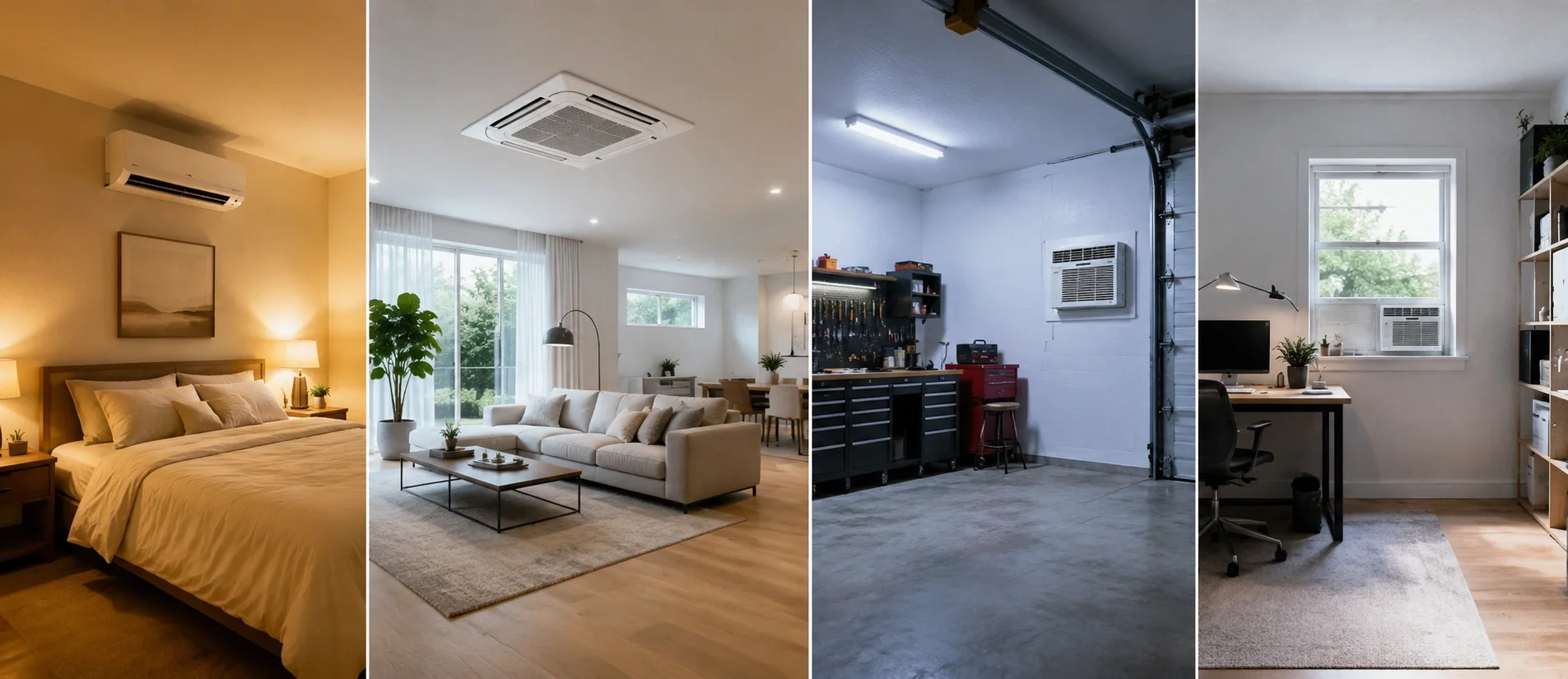
The top priority is low noise — ideally under 42 dB. A 5,000–6,000 BTU window unit or 8,000–10,000 BTU mini-split works for most bedrooms. Inverter technology provides steady, quiet cooling without the on-off cycling that disrupts sleep. Budget range: $150–$800.
Full Bedroom AC Guide →
Living Room
Living rooms are typically the largest room in a home and have open doorways connecting to kitchens or hallways. A 12,000–14,000 BTU unit is common for standard living rooms, while open-concept spaces may need 18,000–24,000 BTU. Mini-splits and portable units are both popular options. Budget range: $300–$1,500.
Full Living Room AC Guide →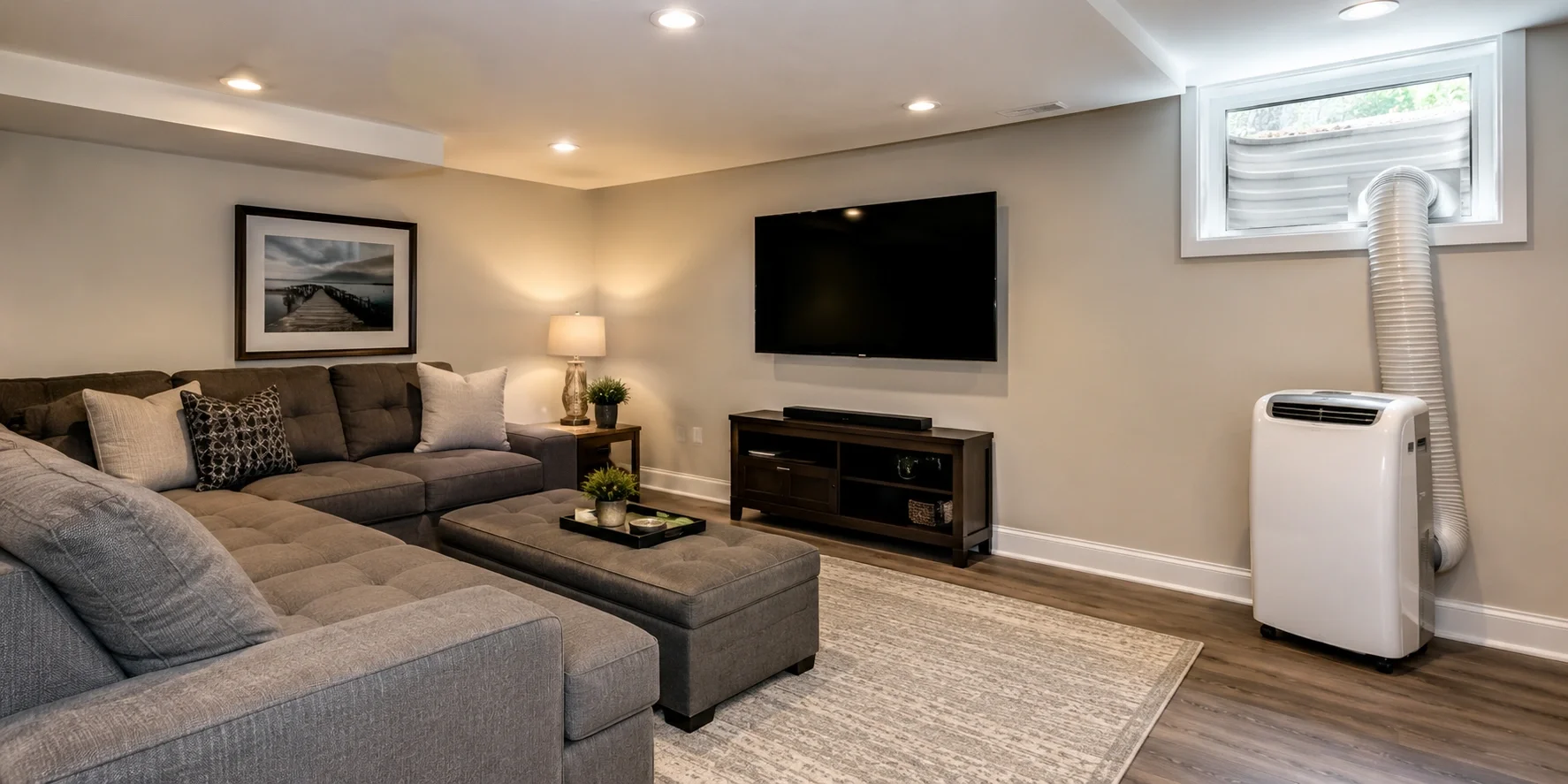
Basement
Basements present unique challenges: high humidity, limited ventilation, and below-grade positioning that makes traditional exhaust setups difficult. Dehumidification capability is just as important as cooling. A portable AC with built-in dehumidifier or a dedicated mini-split with dry mode is ideal. Budget range: $250–$1,200.
Full Basement AC Guide →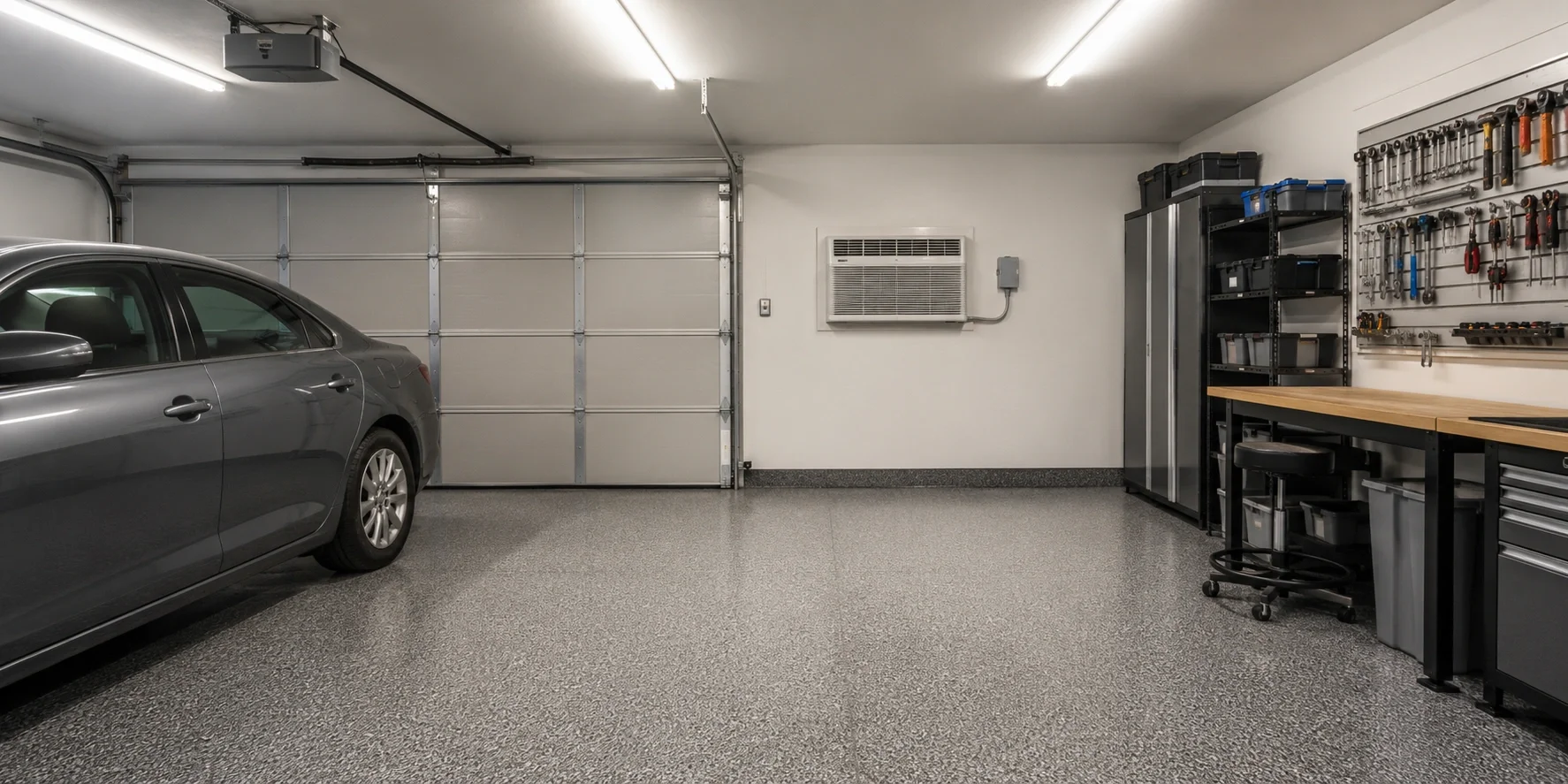
Garage
Garages are poorly insulated, have large garage doors that leak air, and often contain heat-generating tools or vehicles. You typically need 20–30% more BTU than the square footage suggests. A through-the-wall AC or 18,000–24,000 BTU mini-split is recommended for a standard two-car garage. Budget range: $400–$2,000.
Full Garage AC Guide →
Home Office
Computers, monitors, and other electronics generate significant heat in a small space. A 5,000–6,000 BTU unit is usually sufficient for a 100–150 sq ft office, but factor in an extra 500–1,000 BTU for equipment heat. Quiet operation and smart thermostat control are valuable features. Budget range: $150–$700.
Full Home Office AC Guide →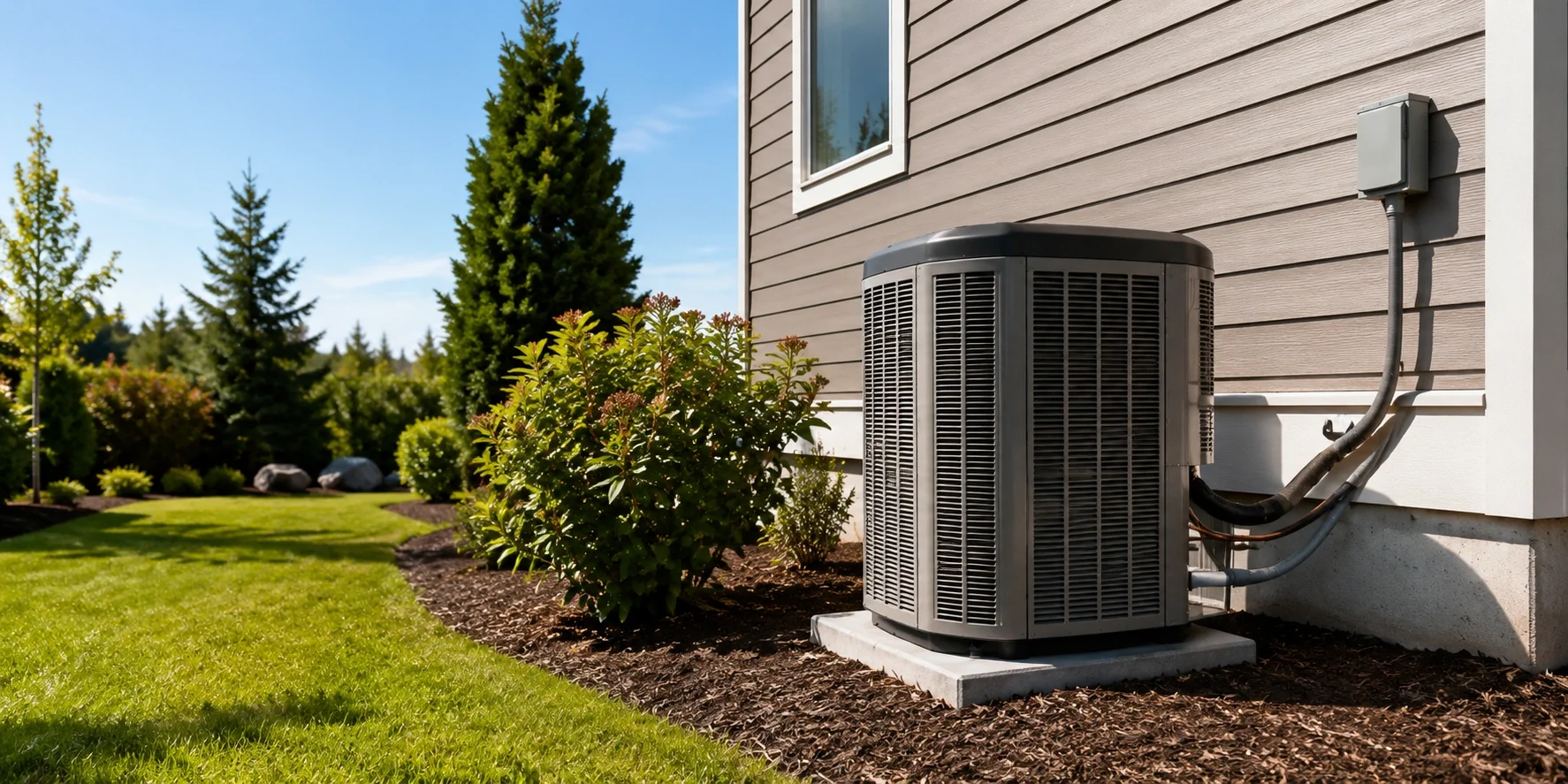
Whole House
For comprehensive cooling across all rooms, a central air conditioning system or a multi-zone ducted mini-split is the most effective solution. Proper sizing requires a Manual J load calculation performed by a professional. Budget range: $3,000–$8,000+ including installation.
Full Whole House AC Guide →💡 Multi-Room Consideration: Zoning Systems
If you need to cool multiple rooms with different temperature preferences, consider HVAC zoning systems that allow independent temperature control in different areas. This is far more efficient than overcooling the entire house to keep one room comfortable. Ductless mini-split systems with multiple indoor units are another excellent zoning solution, especially for homes without existing ductwork.
Residential Room Sizing Quick Reference
The table below provides a starting point for BTU requirements. Always adjust upward for high ceilings, poor insulation, large windows, or additional heat sources. For precise calculations, use our BTU calculator by room size.
| Room Type | Typical Size | Recommended BTU | Best AC Type | Key Priority |
|---|---|---|---|---|
| Bedroom | 100–250 sq ft | 5,000–8,000 BTU | Window, Mini-Split | Low noise (<42 dB) |
| Living Room | 250–500 sq ft | 10,000–18,000 BTU | Mini-Split, Portable | Even temperature distribution |
| Basement | 300–800 sq ft | 10,000–24,000 BTU | Portable, Mini-Split | Dehumidification |
| Garage | 400–600 sq ft | 18,000–24,000 BTU | Through-the-Wall, Mini-Split | High heat load handling |
| Home Office | 80–150 sq ft | 5,000–7,000 BTU | Window, Portable | Quiet + equipment heat offset |
| Whole House | 1,500–3,000+ sq ft | 36,000–60,000+ BTU | Central AC, Ducted Mini-Split | Even cooling, zoning |
Air Conditioning for Business & Commercial Environments
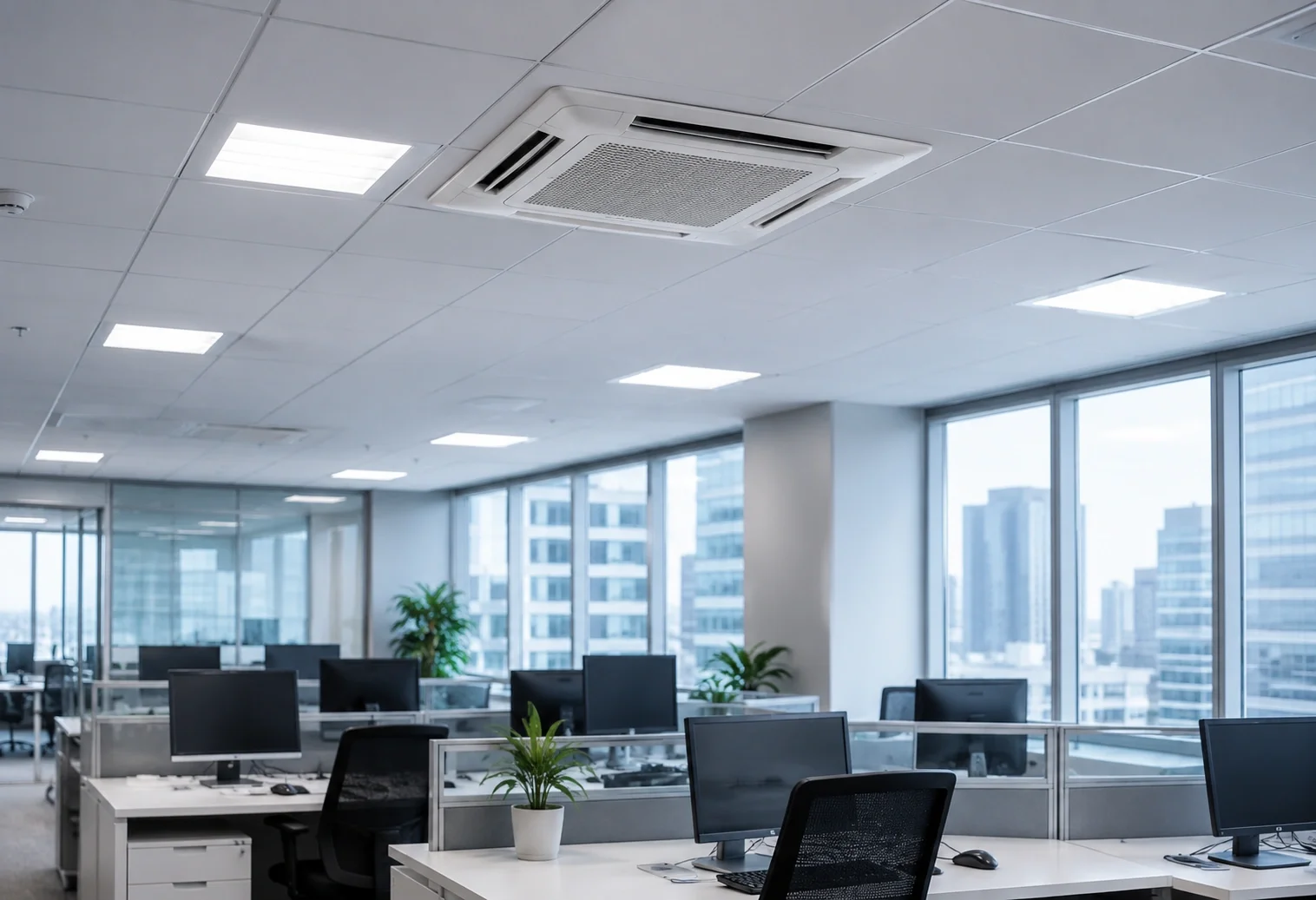
Commercial spaces demand significantly more robust cooling solutions than residential rooms. Higher occupancy, larger volumes, extended operating hours, and stricter comfort requirements mean that undersizing or choosing the wrong system type can lead to unhappy customers, lost productivity, and increased energy costs. Commercial systems must also comply with building codes and often require professional installation with proper permits.
The right SEER rating becomes especially important for commercial applications where the AC runs 8–16 hours daily. Investing in a high-ENERGY STAR certified system with variable-speed compressor technology can save businesses thousands of dollars annually in electricity costs. Additionally, zoning systems allow different areas — such as a dining room versus a kitchen — to maintain different temperatures from a single system.

Office Building
Employee comfort directly impacts productivity. Central systems with zoning are standard for large offices, while ceiling cassette or ducted mini-splits suit smaller offices. Budget: $5,000–$25,000+ depending on size.
Full Office AC Guide →
Restaurant
Kitchens generate enormous heat from ovens, grills, and dishwashers. Separate cooling zones for the dining area and kitchen are essential. The kitchen typically needs specialized exhaust hoods plus make-up air systems. Dining areas benefit from ceiling cassettes for even distribution. Budget: $8,000–$40,000+.
Full Restaurant AC Guide →
Retail Store
Customer comfort influences purchasing behavior. Stores with large glass storefronts face high solar heat gain. Ducted mini-splits or packaged units work well. Position supply vents away from display areas to prevent product damage. Budget: $3,000–$15,000+.
Full Retail Store AC Guide →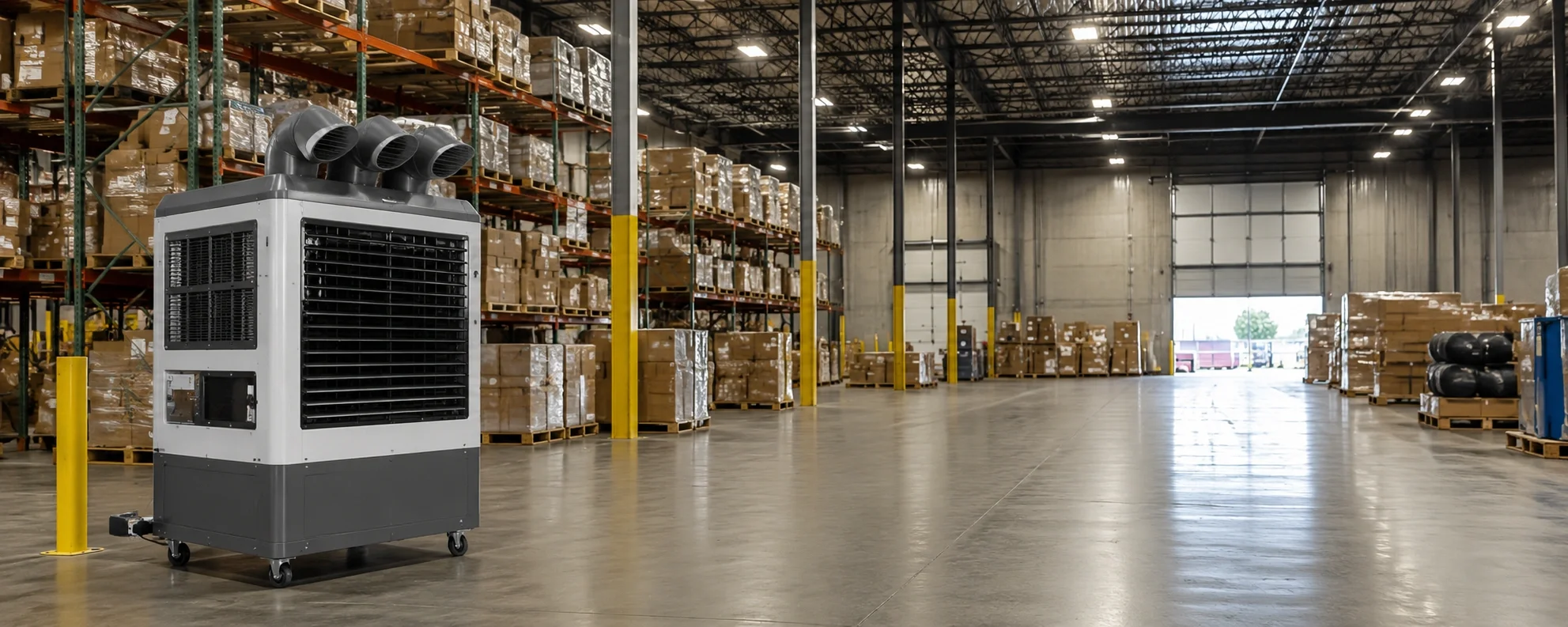
Warehouse
Warehouses have massive volumes, high ceilings, loading dock doors, and often heat-generating equipment. Full cooling is rarely practical — spot cooling for workstations and evaporative cooling or large industrial units are more cost-effective. Budget: $5,000–$50,000+.
Full Warehouse AC Guide →
Gym & Fitness Center
Dozens of active people generate tremendous body heat and humidity. High airflow and rapid cooling are critical. Systems need 30–50% more capacity than standard calculations suggest. Variable-speed systems handle the fluctuating load well. Budget: $5,000–$20,000+.
Full Gym AC Guide →
Server Room
Equipment generates continuous, concentrated heat 24/7. Temperature must stay between 64–80°F with tight humidity control (45–55% RH). Precision cooling or dedicated mini-split systems with backup power are essential. Budget: $2,000–$15,000+.
Full Server Room AC Guide →Cooling Solutions for Challenging & Unique Spaces
Some spaces defy standard cooling approaches. Attics bake under direct roof exposure, sunrooms act like greenhouses, and RVs have extremely limited electrical capacity. These specialty environments require creative solutions and careful planning to achieve comfortable temperatures efficiently.

Attic
Attics face extreme heat gain from the roof — temperatures can reach 130°F+ in summer. Proper insulation and ventilation are prerequisites before adding AC. A mini-split or floor-mounted unit works best since ductwork is rarely feasible. Expect to need 25–40% more BTU than standard sizing. Budget: $800–$3,000.
Full Attic AC Guide →
Sunroom
Large glass surfaces create a greenhouse effect, amplifying solar heat gain dramatically. The AC must handle rapid temperature swings throughout the day. A mini-split with strong cooling and dehumidification is ideal. Window films and shades can reduce the cooling load by 30–40%. Budget: $600–$2,500.
Full Sunroom AC Guide →
RV & Camper
RVs have thin walls, minimal insulation, and limited electrical capacity (typically 30A or 50A service). Roof-mounted RV air conditioners (13,500–15,000 BTU) are standard. For boondocking, consider low-wattage portable units or low-wattage AC options paired with generators or solar. Budget: $500–$2,000.
Full RV AC Guide →
Multi-Zone Homes
Homes with rooms that have vastly different cooling needs benefit from zoning systems that divide the home into independent temperature zones. This eliminates the problem of some rooms being too cold while others remain warm. Multi-zone mini-split systems with 2–8 indoor units are the most flexible solution. Budget: $3,000–$12,000+.
Full Zoning Guide →Common Mistakes When Choosing AC for a Room
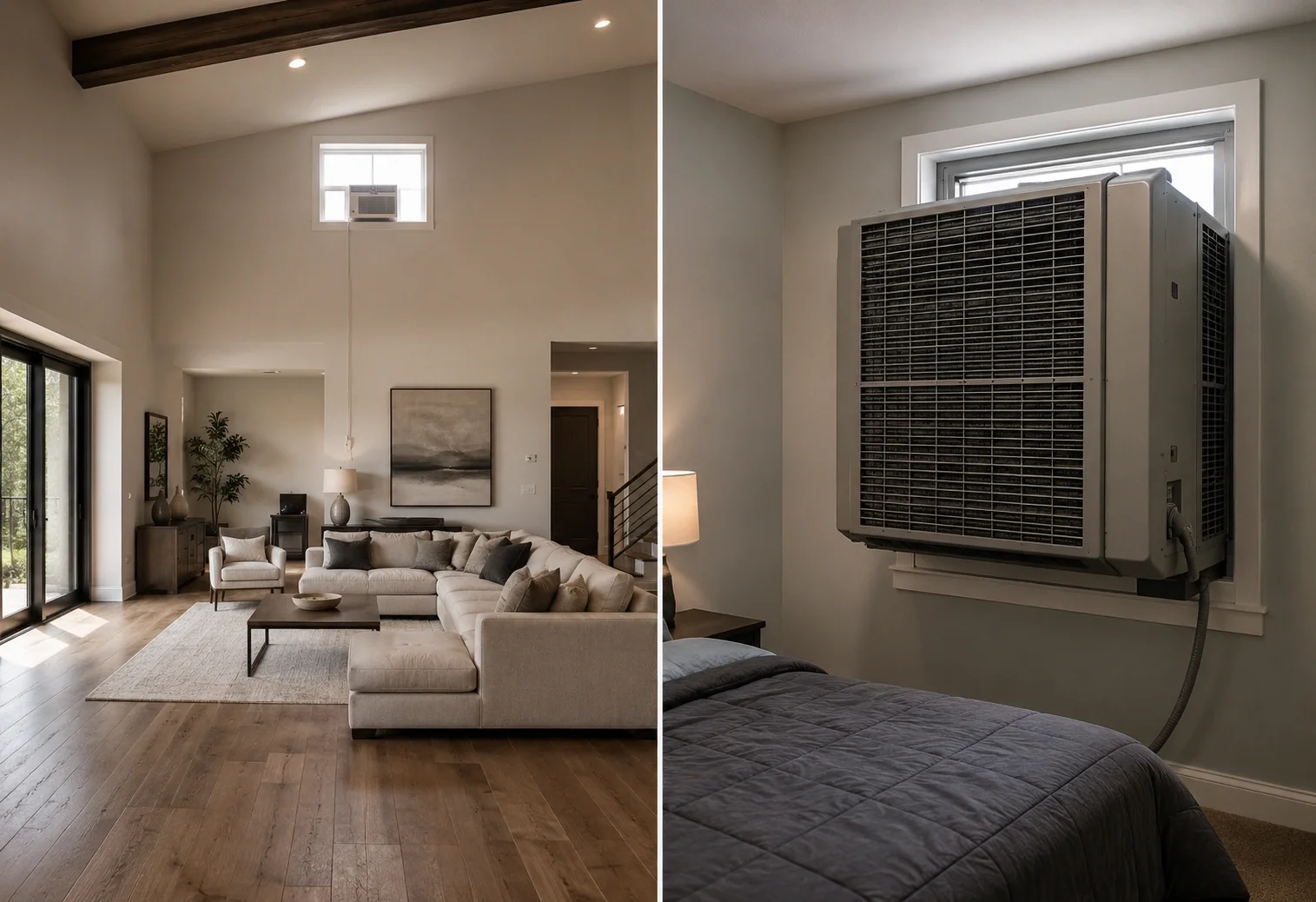
Understanding what goes wrong helps you avoid expensive errors. Here are the most frequent mistakes people make when selecting an air conditioner for a specific room or space:
⚠️ The #1 Mistake: Ignoring the Heat Load
Many people size their AC based solely on square footage and end up with a unit that cannot handle the actual cooling demand. A south-facing room with large windows may need 40–50% more BTU than a north-facing room of the same size. Always account for sun exposure, window area, occupancy, and equipment heat. Learn more about what happens when your AC is too big or too small.
Choosing the wrong AC type for the space. Putting a window AC in a room with no suitable window, or using a portable AC in a basement where the exhaust hose configuration is problematic, leads to poor performance and frustration. Match the AC type to the physical constraints of the room.
Neglecting electrical requirements. A 15,000 BTU portable unit may require a dedicated 20A circuit, and larger mini-splits need 240V wiring. Failing to check your electrical panel capacity before purchasing can result in tripped breakers or the need for costly electrical upgrades. Review breaker sizing requirements and consult an electrician if needed.
Overlooking noise levels. A unit rated at 55 dB might seem acceptable on paper, but in a quiet bedroom at night, that level is noticeably disruptive. Always check the decibel rating and look for specifically quiet models for noise-sensitive spaces like bedrooms, nurseries, and home offices.
Skipping professional load calculation for large spaces. While online calculators work well for single rooms, any space over 1,000 sq ft or an entire home deserves a proper Manual J load calculation. This accounts for all variables — wall orientation, insulation R-values, window types, duct losses — to produce an accurate sizing recommendation.
Ductwork & Zoning: Maximizing Comfort Across Multiple Rooms

If you are cooling multiple rooms from a single system, the design of your ductwork and whether you implement zoning will have a massive impact on comfort and energy costs. Poorly designed ductwork can lose 20–30% of cooled air through leaks and improper routing, forcing your system to work harder and consume more electricity.
For homes with existing ductwork, sealing and insulating ducts is often the single most cost-effective improvement you can make. Our guide on how to seal air ducts covers the process step by step. For homes without ductwork, ductless mini-split systems eliminate duct losses entirely and provide independent temperature control for each room.
Proper ductwork design ensures balanced airflow to every room. Common problems include undersized supply runs to distant rooms, inadequate return air pathways, and flex duct that is kinked or compressed. If you are adding AC to a home that previously had only heating ductwork, the existing system may be insufficient — heating ducts are often smaller than what cooling requires due to the higher air volumes needed for cooling.
Room AC Selection Checklist
Before purchasing any air conditioner for a specific room or space, work through this checklist to ensure you have covered all the critical factors:
- Measure the room's exact square footage and note ceiling height — use our BTU calculator for a baseline recommendation
- Identify all heat sources: windows (direction and size), electronics, appliances, lighting, and expected occupancy
- Assess insulation quality — check walls, attic, and windows for air leaks and consider whether upgrades are needed
- Verify your electrical panel has adequate capacity — check voltage requirements and breaker sizing for your chosen unit
- Determine the best AC type for the space's physical constraints — window, portable, mini-split, through-the-wall, or central
- Set your noise tolerance level — prioritize low-decibel models for bedrooms and offices
- Consider usage patterns — choose inverter technology for spaces used 8+ hours daily for better efficiency
- Check if a permit is required for your installation type and location
- Compare SEER ratings — higher SEER means lower operating costs over the unit's lifespan
- Get multiple installation quotes from qualified contractors — learn how to choose an HVAC contractor and how to get accurate quotes
Ready to Find the Right AC for Your Space?
Now that you understand what makes each room unique, explore our in-depth guides for your specific space. Each guide includes detailed BTU calculations, product comparisons, installation tips, and real-world cost estimates to help you make the best possible choice.