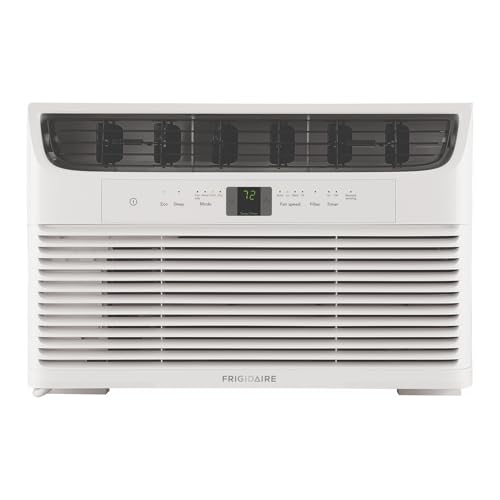
Complete Window Air Conditioner Guide
Master everything about window AC units: correct BTU sizing, efficiency ratings (SEER/EER), inverter technology, installation steps, maintenance, and the best models for your room — all in one place.
Shop Top Window ACs →Why choose a window air conditioner? Window AC units remain one of the most affordable, effective cooling solutions for apartments, bedrooms, home offices, and living rooms. They install directly into a window frame, vent hot air outside, and cool single rooms efficiently. With modern advances like inverter technology and ENERGY STAR certification, today's window ACs are quieter and more energy-efficient than ever.
1. BTU Sizing: Find the Perfect Capacity for Your Room
Choosing the right BTU (British Thermal Unit) is the most critical step. An undersized unit runs constantly without cooling properly; an oversized unit cycles on/off too frequently, wasting energy and failing to dehumidify. Use this BTU guide based on room size:
| Room Size (sq ft) | Recommended BTU | Typical Rooms |
|---|---|---|
| 100 – 150 sq ft | 5,000 – 6,000 BTU | Small bedroom, home office |
| 150 – 250 sq ft | 7,000 – 8,000 BTU | Guest room, studio apartment |
| 250 – 350 sq ft | 9,000 – 10,000 BTU | Master bedroom, living room |
| 350 – 450 sq ft | 11,000 – 12,000 BTU | Large living room, open kitchen |
| 450 – 550 sq ft | 13,000 – 14,000 BTU | Family room, small apartment |
Adjust BTU upward by 10% if the room is heavily shaded or has high ceilings; reduce by 10% for very shaded rooms. For deeper understanding, read our how to size an air conditioner guide or use the interactive BTU calculator by room size.
2. Energy Efficiency: SEER, EER & Inverter Benefits
SEER & EER Ratings
Window AC efficiency is measured by EER (Energy Efficiency Ratio) and SEER (Seasonal Energy Efficiency Ratio). Higher values = lower electricity bills. Look for units with an EER of 11 or above and ENERGY STAR® certification. The latest SEER2 standards ensure real-world performance.
Inverter Window AC
Traditional window ACs turn the compressor on/off (fixed speed). Inverter window ACs vary compressor speed, maintaining consistent temperature, using up to 40% less energy, and operating much quieter — ideal for bedrooms. Compare inverter vs non-inverter to decide.
If you plan to run the AC for long hours daily, invest in an inverter window AC or a model with high EER (≥12). For occasional use, a standard unit with decent EER is cost-effective.
3. Installation & Electrical: What You Need to Know
Most window ACs run on standard 115V (110V) household outlets. Larger units (15,000+ BTU) may require a 230V (240V) dedicated circuit. Before purchasing, verify your window dimensions and outlet location. Installation is DIY-friendly but requires careful sealing and support brackets.
- Check window width: most units fit double-hung windows 23–36 inches wide.
- Need an extension support bracket for heavy units (over 60 lbs).
- Learn about 110V vs 240V air conditioner differences.
- Ensure your circuit breaker can handle the amps — review amps and breaker size for AC.
- For permanent installation, you might need a permit: do I need an AC permit?
Proper installation prevents air leaks, improves efficiency, and reduces noise. Read our complete installation guide for step-by-step photos.
4. Smart Features & Comfort Upgrades
Modern window air conditioners come packed with features that improve convenience and air quality:
Wi-Fi & Smart Control
Control your AC from anywhere using a smartphone app, voice commands (Alexa/Google Assistant), and schedule cooling. See top AC with Wi-Fi & smart control models.
Ultra-Quiet Operation
Sleep mode and insulated compressor compartments reduce noise to as low as 42 dB – library quiet. Browse quiet air conditioner recommendations.
Other valuable features: built-in air purifiers, dehumidification mode (pints per hour), self-cleaning functions, and energy-saving eco modes. If allergies are a concern, consider an AC with air purifier.
5. Maintenance & Common Problems
Regular maintenance keeps your window AC running efficiently for 8–10 years. Clean or replace the filter every 2–4 weeks during peak season. Also clean condenser coils annually and check for water leakage.
- How to clean AC filter — the single most effective maintenance task.
- Seasonal AC checklist before summer starts.
- If AC not cooling enough, check AC not cooling solution.
- Water dripping inside? Read AC leaking water solution.
- Strange noises? AC making noise solution.
For more energy-saving strategies, explore reduce AC electricity bill and use ceiling fan with AC tips.
6. Window AC vs Alternatives: Which is Best for You?
While window ACs are excellent for many homeowners, other options may suit specific situations:
- Portable air conditioner: No permanent installation, but less efficient and noisier.
- Ductless mini-split AC: More expensive upfront, but quiet, efficient, and permanent — ideal for home additions.
- Central air conditioning: Best for whole-home cooling, requires ductwork.
- Through-the-wall AC: Similar to window units but fits a sleeve in an exterior wall.
If you’re renting, a temporary AC for renters guide may help. For whole-house approaches, see whole house AC system.
Final expert advice: Measure your room accurately, check your electrical capacity, compare EER ratings, and decide between inverter vs standard. Top brands like Midea, LG, Frigidaire, and GE offer reliable window ACs with 1-5 year warranties. For a limited budget, check budget air conditioner and AC under $500 pages. For premium efficiency, browse most energy efficient AC.