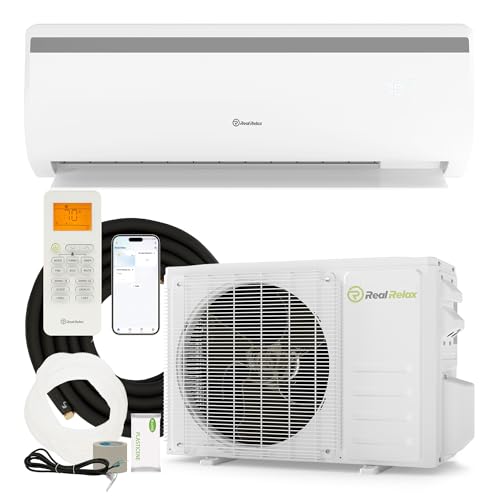
What Is SEER Rating? Your Complete Guide to AC Efficiency
Understand how SEER ratings impact your electricity bills, comfort, and long-term savings — plus expert advice to choose the right efficiency level for your home.
SEER (Seasonal Energy Efficiency Ratio) measures an air conditioner’s cooling output divided by total electric energy input over a typical cooling season. The higher the SEER rating, the more energy-efficient the unit. Since January 2023, the U.S. Department of Energy (DOE) introduced SEER2 standards with more rigorous testing procedures, but the core principle remains the same: higher SEER = lower operating costs.
Why SEER Rating Matters for Your Home
Choosing an air conditioner without understanding efficiency ratings can cost you thousands in unnecessary electricity bills. The SEER rating directly affects your monthly cooling expenses, environmental footprint, and overall comfort. For most homeowners, investing in a higher SEER unit pays for itself within 3–7 years through energy savings alone. Modern inverter AC technology often achieves superior SEER ratings compared to traditional systems, making them the preferred choice for energy-conscious buyers.
If you're comparing central air conditioning systems, the SEER number becomes even more critical because central units run for longer periods and cool larger spaces. Similarly, ductless mini-split AC units often boast some of the highest SEER ratings available — some exceeding 30 SEER — ideal for zone cooling and maximum efficiency.
SEER Rating Scale: What Do the Numbers Mean?
Minimum SEER standards vary by region, but here’s how different ratings translate into real-world efficiency and savings.
| SEER Rating Range | Efficiency Level | Best For | Estimated Annual Savings vs. 14 SEER |
|---|---|---|---|
| 14 – 15 SEER | Basic / Minimum (Southern US) | Budget replacements, mild climates, low usage | Baseline |
| 16 – 18 SEER | High Efficiency | Moderate climates, average cooling season (4–6 months) | 15–25% |
| 19 – 22 SEER | Premium Efficiency | Hot climates (Texas, Florida, Arizona), high electricity rates | 30–40% |
| 23+ SEER | Ultra-Efficient (Inverter) | Whole-home or multi-zone, maximum savings, eco-conscious | 45–55% |
SEER vs SEER2: Important Update (DOE 2023)
Since January 1, 2023, the Department of Energy requires all new AC units to be tested under the SEER2 standard, which uses higher static pressure to better reflect real-world installation conditions. SEER vs SEER2: New DOE Standards explains the key differences: typically, a SEER2 rating is about 5–10% lower than the legacy SEER number for the same unit. For example, a 16 SEER unit may now be labeled as 15.2 SEER2. Always compare SEER2 to SEER2 when shopping for new equipment to ensure apples-to-apples efficiency comparisons.
How to Choose the Right SEER Rating for Your Needs
The “best” SEER rating depends on your local climate, electricity costs, how long you plan to stay in your home, and your budget. Use these guidelines:
Recommended: 14–16 SEER
Units like standard window air conditioner or entry-level central AC. Payback period is longer, so high upfront cost isn’t justified.
Recommended: 17–20 SEER
Invest in inverter AC technology or high-efficiency central systems. Energy savings will quickly offset higher initial price.
Recommended: 20+ SEER
Look for ductless mini-split AC units or premium variable speed AC systems. Maximum efficiency reduces monthly bills drastically.
Recommended: 18+ SEER
Even in moderate climates, a high-SEER heat pump vs air conditioner comparison often favors heat pumps with high SEER and HSPF ratings for year-round savings.
SEER Ratings Across Different AC Types
Not all air conditioner types achieve the same SEER ceilings. Here’s what you can expect:
- Central Air Conditioning: Typical SEER range: 14–26. Top-tier variable-speed models reach 24+ SEER.
- Ductless Mini-Split AC: Highest efficiency, often 20–33 SEER. Perfect for older homes without ducts.
- Window Air Conditioner: Lower SEER (usually 10–15) but improving with inverter window units now reaching 15–18 SEER.
- Portable Air Conditioner: Least efficient, typically 8–12 SEER. Only recommended for occasional or rental use.
- Packaged AC Unit: Similar to central AC, SEER 14–20+ depending on compressor technology.
Upfront Cost vs. Long-Term Savings: SEER Economics
📊 Quick Payback Estimator: For every 2-point increase in SEER (e.g., from 14 to 16 SEER), expect an upfront cost increase of roughly $500–$1,000 for a 3-ton central AC. Annual savings typically range $60–$150 per 2 SEER points, depending on local electricity rates and usage. Break-even often occurs in 4–7 years — well within the 15–20 year lifespan of a modern AC.
Consider also HVAC tax credits and rebates: many high-SEER units (16+ SEER2 for split systems) qualify for federal tax credits up to $600 or local utility rebates, reducing the net cost significantly.
Other Efficiency Ratings You Should Know
While SEER is the primary seasonal metric, two other ratings matter depending on your climate and system type:
- EER (Energy Efficiency Ratio): Measures efficiency at peak outdoor temperature (95°F). Crucial for very hot climates where AC runs at max capacity most of the time.
- HSPF (Heating Seasonal Performance Factor): For heat pumps, HSPF indicates heating efficiency. If you're buying an AC with heat pump, look for HSPF ratings of 8.5 or higher.
ENERGY STAR Certification & SEER Requirements
The ENERGY STAR certified AC program sets higher efficiency thresholds than federal minimums. As of 2026, central AC units must achieve at least 16 SEER2 (≈17 legacy SEER) to earn the ENERGY STAR label. Choosing an ENERGY STAR model ensures at least 15% more efficiency than standard models, and many most energy efficient AC units exceed 20 SEER2. If you’re searching for the highest SEER air conditioner, look at mini-splits or premium inverter-driven central systems.
Debunking 3 Common SEER Myths
Truth: In very cold climates with short cooling seasons (e.g., Maine or Minnesota), upgrading from 14 to 20 SEER may take 12+ years to recoup costs. Run the numbers based on your cooling hours.
Truth: Proper sizing and installation are equally critical. An oversized AC with high SEER will still cycle inefficiently. Always perform a Manual J load calculation before buying.
Truth: While many high-SEER units use inverter compressors, some two-stage or variable-speed units also achieve SEER 18-20. But inverter AC technology typically delivers the highest SEER and comfort.
Quick Answers to SEER Questions
🔹 What is a good SEER rating in 2026?
For most US homes, 16-18 SEER (≈15-17 SEER2) provides excellent balance of upfront cost and savings. For hot climates, aim for 18+ SEER.
🔹 Is 14 SEER still legal?
Yes, but only in northern regions. Southern states require minimum 15 SEER2 (≈16 legacy SEER) as of 2023.
🔹 Does higher SEER mean cooler air?
No — SEER doesn’t affect cooling capacity. A 14 SEER and 20 SEER unit with same BTU cool equally, but the 20 SEER uses less electricity.
🔹 Should I replace my working 10 SEER AC?
If your system is older than 12 years and you live in a hot climate, upgrading to 18+ SEER can cut your cooling bill by 40-50%. The replace vs repair cost analysis often favors replacement.
Ready to choose the perfect efficiency level? Browse our recommended AC units by SEER rating, type, and budget. Or use our BTU calculator and whole-home sizing guide to narrow down your options.