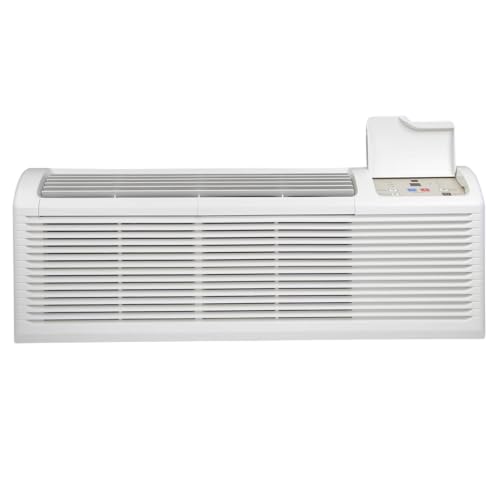
20,000 BTU Through the Wall Air Conditioner: Complete Guide
Everything you need to know about selecting, installing, and maintaining a powerful 20,000 BTU through-the-wall air conditioner for large rooms and open spaces.
START LEARNINGAC Units Guide Philosophy: We believe that well-informed customers make the right decisions. Learn first, understand your needs, then choose the right product. This is where you learn before buying.
What Is a 20,000 BTU Through the Wall Air Conditioner?
A 20,000 BTU through the wall air conditioner is a high-capacity cooling unit designed to be permanently installed into an exterior wall. Unlike window units that block part of your view and can be removed seasonally, through-the-wall models offer a cleaner, more integrated appearance and typically provide superior insulation and security.
With 20,000 British Thermal Units (BTU) of cooling power, these units are engineered for large rooms, open-plan living areas, or commercial spaces. This capacity level sits at the upper end of residential through-the-wall cooling, making it an excellent choice for spaces that standard 8,000–12,000 BTU units simply cannot handle efficiently.
The through-the-wall design means the unit is mounted inside a sleeve that is built into the wall cavity. This approach offers several practical advantages: the unit can be serviced or replaced without major structural work, the installation is more secure than a window-mounted unit, and the aesthetic result is much cleaner. Many models in this category also include heat pump functionality, providing year-round climate control from a single unit.
For homeowners dealing with large master bedrooms, spacious living rooms, or finished basements, a 20,000 BTU through-the-wall unit delivers the cooling muscle needed without the ductwork requirements of a central system. It is a practical middle ground between portable units (which struggle with large spaces) and full central air conditioning (which requires significant infrastructure).
How Much Space Can a 20,000 BTU AC Cool?
Understanding the cooling capacity of a 20,000 BTU unit is essential for making the right choice. As a general rule, air conditioners require approximately 20 BTU per square foot of living space. Based on this guideline, a 20,000 BTU through-the-wall air conditioner is suitable for rooms ranging from 800 to 1,000 square feet, depending on several environmental factors.
However, square footage alone does not tell the complete story. Several variables can affect how effectively a 20,000 BTU unit cools a given space:
- Ceiling height: Standard 8-foot ceilings are assumed in the basic calculation. Rooms with vaulted or cathedral ceilings may require a higher-capacity unit.
- Insulation quality: Well-insulated homes retain cool air more effectively, allowing a 20,000 BTU unit to handle a larger area. Poorly insulated spaces may need a more powerful unit or additional cooling support.
- Window area and sun exposure: Large south- or west-facing windows that receive direct sunlight can significantly increase the cooling load. Consider window treatments or shade to reduce solar heat gain.
- Occupancy and heat-generating appliances: Rooms that regularly host many people or contain heat-producing equipment (such as home offices with multiple computers or kitchens) will have a higher cooling demand.
- Climate zone: Homes in hotter climates will naturally require more cooling capacity than those in milder regions.
If your space is at the upper end of the capacity range (around 1,000 square feet), it is wise to consider whether a slightly higher-capacity unit or a supplemental cooling source might be needed during peak summer conditions. Conversely, if your room is significantly smaller (under 700 square feet), a 20,000 BTU unit may cycle on and off too frequently, which can reduce efficiency and shorten the unit's lifespan.
Key Features to Look For in a 20,000 BTU Through the Wall AC
When evaluating 20,000 BTU through-the-wall air conditioners, certain features distinguish a good unit from a great one. Here are the key considerations:
⚡ Energy Efficiency (EER & SEER)
Look for units with a high Energy Efficiency Ratio (EER). In this capacity class, an EER of 10.0 or higher is considered solid, while values above 11.0 represent excellent efficiency. Higher efficiency translates to lower energy consumption over the unit's lifespan. Many modern models also carry ENERGY STAR certification, indicating they meet strict federal efficiency guidelines.
🔥 Heat Pump Functionality
Many premium 20,000 BTU through-the-wall units include a built-in heat pump, allowing them to provide both cooling in summer and heating in cooler months. This dual functionality makes them a versatile year-round climate control solution, particularly useful in regions with mild winters.
🎛️ Smart Controls & Programmability
Modern units often feature digital displays, programmable timers, and remote controls. Some high-end models offer Wi-Fi connectivity, enabling control via smartphone apps and integration with smart home systems. These features add convenience and can help optimize energy use by allowing precise scheduling.
💨 Airflow & Fan Settings
Multiple fan speeds and adjustable louvers allow you to direct cool air where it is needed most. Look for units with at least three fan speeds and the ability to oscillate or adjust airflow direction. A "fan-only" mode is also useful for circulating air without cooling.
🔇 Noise Level
Higher-capacity units tend to produce more noise than smaller ones, but quality models are designed to minimize operational sound. Check decibel ratings if quiet operation is a priority—values under 55 dB are generally considered quiet for this capacity class.
🛡️ Durability & Build Quality
Since through-the-wall units are permanently installed, build quality matters. Look for corrosion-resistant coils, sturdy cabinets, and reliable compressors. A durable construction ensures the unit withstands years of exposure to outdoor elements and continuous operation.
Pros and Cons of 20,000 BTU Through the Wall Air Conditioners
✅ Advantages
- Powerful cooling: 20,000 BTU effectively cools large rooms and open spaces that smaller units cannot handle.
- Permanent installation: Once installed, the unit stays in place without blocking windows or requiring seasonal removal.
- Security: Through-the-wall installations are more secure than window units, as they cannot be easily pushed in or removed from outside.
- Cleaner aesthetics: No window obstruction; the unit integrates into the wall for a neat appearance.
- Heat pump options: Many models offer heating functionality, providing year-round comfort.
- Better insulation: Properly installed through-the-wall units seal tightly, preventing drafts better than window units.
❌ Considerations
- Installation complexity: Requires cutting into an exterior wall and installing a sleeve—best handled by a professional.
- Not portable: Once installed, the unit stays in place; it cannot be moved to another room.
- Higher upfront investment: The unit itself and professional installation represent a more significant initial commitment than portable or window alternatives.
- Noise levels: Larger capacity units can be louder than smaller models, though quality units manage noise well.
- Wall requirements: Not all walls are suitable; masonry or certain frame walls may require reinforcement or special sleeves.
Installation Considerations for 20,000 BTU Through the Wall Units
Installing a 20,000 BTU through-the-wall air conditioner is a more involved process than setting up a portable or window unit. Proper installation is critical for performance, safety, and longevity. Here are the key factors to consider:
- Wall sleeve: A wall sleeve is a metal frame installed into the wall opening. The AC unit slides into this sleeve. Sleeves must match the unit's dimensions—common sizes for this capacity include 26-inch and 22-inch widths. Always verify compatibility between the unit and sleeve.
- Electrical requirements: A 20,000 BTU unit typically requires a dedicated 230/240-volt circuit with a 20-amp or 30-amp breaker. Confirm your home's electrical panel can support this addition. Most units come with a specific plug type (often a 6-20P or 6-30P), so ensure a matching outlet is installed by a licensed electrician.
- Wall type and structural support: Through-the-wall installation works with wood-frame, brick, and masonry walls, but the approach differs. Brick and masonry require core drilling or cutting and may need a lintel or reinforcement. Wood-frame walls need proper framing to support the unit's weight and prevent sagging.
- Outdoor clearance: The rear of the unit must have adequate airflow clearance. Avoid installing where the exhaust is blocked by fences, shrubs, or adjacent structures.
- Drainage: Ensure proper drainage for condensate. Many units have a built-in drain or require a slight downward tilt toward the outside. In humid climates, consider a condensate drain kit to direct water away from the wall.
- Permits and professional help: Many municipalities require permits for cutting into exterior walls and adding electrical circuits. Hiring a licensed HVAC contractor and electrician ensures the job is done safely and to code.
If you are replacing an existing through-the-wall unit, the process is simpler: measure the existing sleeve dimensions and ensure the new unit is compatible. Some manufacturers offer "universal" fit sleeves, but it is always best to verify.
20,000 BTU Through the Wall vs. Other Cooling Options
To help you understand where a 20,000 BTU through-the-wall unit fits in the broader market, here is a comparison against other common cooling solutions:
| Feature | 20,000 BTU Through the Wall | Window AC (12,000 BTU) | Portable AC (14,000 BTU) | Central AC (2 Ton) |
|---|---|---|---|---|
| Best For | Large rooms, open spaces | Medium rooms | Small to medium rooms | Whole home |
| Cooling Capacity | 20,000 BTU | 12,000 BTU | 14,000 BTU | 24,000 BTU |
| Installation | Permanent wall sleeve | Window mount | No installation (hose vent) | Ductwork required |
| Portability | None | Seasonal removal | Fully portable | None |
| Aesthetics | Clean, integrated | Blocks window | Floor-standing | Out of sight |
| Efficiency | Good to excellent | Good | Fair | Excellent |
For homes without ductwork, a 20,000 BTU through-the-wall unit offers a compelling balance of power, efficiency, and aesthetic integration. It is particularly well-suited to older homes, additions, or rooms where running ductwork is impractical.
Maintenance Tips for Long-Term Performance
Proper maintenance ensures your 20,000 BTU through-the-wall air conditioner operates efficiently and lasts for years. Here are essential maintenance practices:
- Clean or replace the air filter monthly: A clogged filter restricts airflow and reduces efficiency. Most units have washable filters; clean them with warm water and mild detergent, and let them dry completely before reinstalling.
- Inspect and clean the outdoor coil annually: Dust, dirt, and debris can accumulate on the condenser coil, reducing heat exchange. Gently clean with a soft brush or coil cleaner, following the manufacturer's instructions.
- Check the condensate drain: Ensure the drain line is clear of debris and flowing freely. A clogged drain can cause water to back up and damage the unit or wall.
- Schedule professional servicing: An annual inspection by an HVAC technician can catch potential issues early, including refrigerant leaks, electrical problems, and worn components.
- Keep the area around the unit clear: Trim shrubs and remove obstructions from the outdoor side to maintain proper airflow.
- Seal gaps around the sleeve: Over time, weatherstripping or sealant around the wall sleeve may degrade. Check and reseal as needed to prevent air leaks and moisture intrusion.
Regular maintenance not only extends the unit's lifespan but also keeps energy consumption in check. A well-maintained 20,000 BTU unit will operate more quietly and cool more effectively than a neglected one.
Ready to Choose the Right 20,000 BTU Through the Wall AC?
Explore our curated selection of top-rated models from trusted brands, featuring energy-efficient designs and advanced features for large-space cooling.
VIEW RECOMMENDED MODELSFrequently Asked Questions
A 20,000 BTU unit is generally suitable for rooms between 800 and 1,000 square feet, assuming standard 8-foot ceilings and average insulation. Factors such as ceiling height, window area, sun exposure, occupancy, and local climate can affect the effective cooling area. For rooms larger than 1,000 square feet or with high heat loads, consider a higher-capacity unit or supplemental cooling.
Yes, most 20,000 BTU units require a dedicated 230/240-volt circuit with a 20-amp or 30-amp breaker. They typically use a specific plug type (such as 6-20P or 6-30P), so a matching outlet must be installed. A licensed electrician should handle the electrical work to ensure safety and code compliance. Never plug a 230-volt unit into a standard 115-volt outlet.
It depends on the existing wall sleeve dimensions. If the sleeve is large enough to accommodate the new unit's dimensions, replacement is straightforward. Measure the sleeve's width, height, and depth, and compare them to the specifications of the new unit. Some manufacturers offer universal sleeves or adapters. If the existing sleeve is too small, enlarging the wall opening may be necessary—a job for a qualified contractor.
Larger-capacity air conditioners inherently produce more sound than smaller units due to the larger compressor and fan. However, modern high-quality 20,000 BTU models are designed to minimize noise. Decibel ratings for this class typically range from 55 to 65 dB, depending on the fan speed and model. Premium units with sound-dampening features can operate at the lower end of this range. If quiet operation is a priority, look for models with low decibel ratings and features like vibration isolation.
Many models in this capacity class include a heat pump or electric heating element, providing both cooling and heating from a single unit. This dual functionality is especially useful in regions with mild to moderate winters. If you need heating capability, look for models explicitly described as "with heat" or "heat pump." Keep in mind that heating performance decreases in very cold outdoor temperatures, so a backup heating source may be needed in harsh climates.