
20 Inch Wide Through the Wall Air Conditioner
Everything you need to know about 20 inch wide through-the-wall AC units: sleeve fit, BTU sizing, efficiency ratings, installation requirements, and how to choose the right model for a bedroom, office, or rental unit.
VIEW RECOMMENDED MODELSWhy the 20 inch width matters: In through-the-wall air conditioning, width is not a cosmetic detail — it is the single measurement that determines whether a unit will fit your existing wall sleeve. This guide is written for readers who already know they need a narrower chassis and want a clear, practical path from measurement to purchase.
What Is a 20 Inch Wide Through the Wall Air Conditioner?
A 20 inch wide through the wall air conditioner is a self-contained cooling unit designed to be installed permanently inside a wall sleeve rather than in a window frame. The “20 inch wide” specification refers to the outer cabinet width, which is the dimension that must align with the interior of your wall sleeve. These units are a popular choice for rooms where window space is limited, for multi-story buildings where window mounting is restricted, and for property owners who want a cleaner, more permanent installation than a traditional window air conditioner.
Compared with standard window units, through-the-wall models sit flush with the interior wall, reduce drafts around the frame, and are more difficult to remove — a meaningful security advantage for ground-floor rooms and rental properties. The 20 inch chassis size is one of the more common narrow formats, often chosen when a full-size sleeve is unavailable or when a compact installation is required.
How to Measure for a 20 Inch Wide Unit
Before comparing models, measure the sleeve, not the wall opening. The interior width of the sleeve is the dimension that must accept the chassis. Use a metal tape measure and record three values: interior width, interior height, and interior depth. Compare these against the manufacturer’s chassis dimensions, which are usually listed in the specification sheet. Allow a small clearance on each side for the chassis to slide in without binding.
If you are installing a new sleeve rather than replacing an existing unit, the rough wall opening must be framed to match the sleeve’s exterior dimensions. This is structural work and should follow the manufacturer’s installation manual. For a broader look at the category, see our through-the-wall AC overview.
| Measurement | What to Record | Why It Matters |
|---|---|---|
| Sleeve interior width | Usually slightly above 20 inches | Determines whether the chassis slides in |
| Sleeve interior height | Match to chassis height | Prevents gaps and vibration |
| Sleeve interior depth | Match to chassis depth | Ensures proper airflow and sealing |
| Electrical circuit | Voltage, amperage, outlet type | Confirms the unit can run safely |
BTU Sizing for 20 Inch Wide Units
Most 20 inch wide through-the-wall models fall in the 8,000 to 12,000 BTU range, which suits rooms from roughly 150 to 400 square feet under average conditions. A 14,000 BTU model in this width class can handle larger or sun-exposed rooms, but it may demand a 230 volt circuit. Capacity should be matched to the room’s heat load, not simply to its floor area. High ceilings, west-facing windows, poor insulation, and kitchen appliances all raise the required capacity.
Oversizing is a common mistake: an oversized unit cools quickly but cycles on and off frequently, which leaves the room feeling clammy and increases wear on the compressor. Undersizing leaves the unit running continuously without reaching the set temperature. A room-by-room load calculation is the reliable method. Our AC sizing guide explains the process, and the BTU calculator by room size gives a quick reference.
Efficiency Ratings: What to Look For
Through-the-wall units are rated with the same efficiency metrics as other room air conditioners. SEER measures seasonal cooling efficiency, while EER measures efficiency at a single test condition and is often the more relevant figure for room units that run in hot weather. Higher ratings mean lower energy use for the same cooling output, but the difference is most meaningful in rooms where the unit runs for many hours a day.
Look for an ENERGY STAR listing if efficiency is a priority. The SEER rating guide and the ENERGY STAR certified AC overview explain how the ratings translate into real-world savings. Inverter-driven models are increasingly available in the through-the-wall format and can modulate compressor speed for steadier temperatures and quieter operation.
Market Tiers: Finding the Right Fit for Your Needs
Through-the-wall units are positioned across three broad market tiers. The descriptors below replace any numeric figures and reflect relative position in the category.
Entry-Level
Essential tier models focus on core cooling with mechanical or basic electronic controls. Solid choice for a secondary room, a rental unit, or a space where cooling is seasonal and usage hours are moderate.
Mid-Range
Balanced tier models add programmable thermostats, remote controls, sleep modes, and improved filtration. Feature-rich for the class and a sensible fit for a primary bedroom or home office used daily.
High-End Tier
Top-tier models offer inverter compressors, higher efficiency ratings, quieter operation, and smart controls. A long-term investment for rooms with heavy year-round cooling demand.
Match the tier to how the room is used. An entry-level unit is a reasonable fit for a guest room, while a high-end tier model earns its place in a room that runs for eight or more hours a day through the cooling season.
Installation Requirements and Considerations
Installing a through-the-wall unit involves the sleeve, the electrical supply, and the exterior drainage path. The sleeve must be level and firmly framed; the unit must sit on a slight outward slope so condensate drains away from the interior. Electrical requirements vary by capacity: smaller units may run on a 115 volt dedicated circuit, while larger models typically need 230 volts. Confirm the circuit before purchase, because adding a circuit is a licensed electrician’s task.
Sealing around the sleeve is important for both efficiency and comfort. Gaps allow hot outdoor air to enter and let cooled air escape, which undermines the unit’s rating. Follow the manufacturer’s instructions for flashing and caulking, and check the seal again after the first cooling season. For detailed electrical guidance, see our 110V vs 240V AC unit comparison and the amps and breaker size guide.
Maintenance for Long-Term Performance
Through-the-wall units are exposed to outdoor conditions on one side and indoor air on the other, so maintenance has two fronts. Indoors, clean or replace the air filter every two to four weeks during heavy use. A clogged filter reduces airflow, lowers efficiency, and can cause the evaporator coil to freeze. Outdoors, keep the condenser grille clear of leaves, pollen, and debris, and rinse the coil gently at the start of each cooling season.
Annually, inspect the sleeve seal, check the drain path for blockages, and look for vibration or unusual noise that may indicate loose mounting hardware. A professional service check every one to two years verifies refrigerant charge and electrical connections. Our AC maintenance guide and the seasonal AC checklist cover the full routine.
20 Inch Through the Wall vs Other Cooling Formats
The main alternative is a window air conditioner, which is generally easier to install and to remove but blocks part of the window and can be a security concern on lower floors. A ductless mini-split is quieter and more efficient but requires refrigerant line work and a professional installation. A portable air conditioner is the most flexible option but is less efficient and needs a window vent.
The through-the-wall format sits between these options: more permanent and secure than a window unit, simpler than a mini-split, and tidier than a portable unit. For rooms where the wall sleeve already exists, it is usually the most practical choice.
Who Should Choose a 20 Inch Wide Model
- Homeowners replacing an existing unit: the sleeve is already in place, and a matching 20 inch chassis is the least disruptive replacement.
- Apartment and condo owners: building rules often prohibit window-mounted units, while through-the-wall installation is permitted or already provided.
- Rental property managers: a fixed unit is harder to remove and less of a security risk than a window unit.
- Home offices and bedrooms: a flush installation frees window space and reduces drafts around the frame.
- Rooms with restricted window access: basement rooms, interior offices, and rooms with large fixed glazing benefit from a wall installation.
Recommended 20 Inch Wide Through the Wall Air Conditioners
⚠️ AFFILIATE DISCLOSURE: This website contains affiliate links. As an Amazon Associate, we earn from qualifying purchases. If you make a purchase through these links, we may receive a small commission at no additional cost to you. Read our full affiliate policy.

LG 10,000 BTU Through the Wall Air Conditioner, 115V, Cools up to 440 Sq. Ft. for Bedroom, Living Room, Apartment, with Remote, 3 Cool & Fan Speeds, Wall AC Unit, White
Check price on Amazon
ROVSUN Smart 12000 BTU Through the Wall Air Conditioner with Heat, Wall AC Unit & Heater Combo with Remote, APP & Voice Control & Timer Function, Compatible with Alexa/Google Assistant, 230V/60Hz
Check price on Amazon
Durastar 12,000 BTU Through the Wall 208/230V Air Conditioner and Remote | 10600 BTU Supplemental Heating, Coverage area 550 square feet
Check price on Amazon
OLMO 8,000 BTU 115V Through-the-Wall AC, Cooling Only, Built-In Smart Kit | Air Conditioner, R-32 Eco-Friendly Refrigerant, Remote Included, 0.67 Ton
Check price on Amazon
Frost King 2-Piece Quilted Indoor Air Conditioner Cover, Large, fits units up to 20" x 28"
Check price on Amazon
Durastar 8,000 BTU Through the Wall 115V Air Conditioner and Remote | Coverage area 700 square feet
Check price on Amazon
ROVSUN Smart 10000 BTU Through the Wall Air Conditioner with Heat, Wall AC Unit & Heater Combo with Remote, APP & Voice Control & Timer Function, Compatible with Alexa/Google Assistant, 230V/60Hz
Check price on Amazon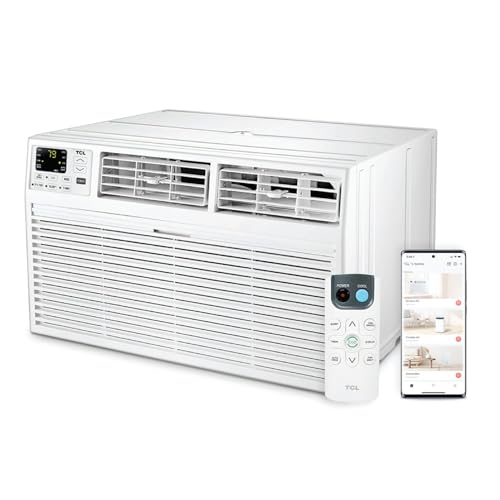
TCL 8,000 BTU Smart Through-the-Wall Air Conditioner with Heater,115V WiFi | 115V, Wall Mounted, Heater, Dehumidifier, Remote Control, Works with Alexa and Google Assistant, Rooms up to 450 Sq.Ft.
Check price on AmazonFrequently Asked Questions
What does 20 inch wide mean for a through the wall air conditioner?
The 20 inch width refers to the outer cabinet dimension of the unit, which must match the wall sleeve opening. Width is the most critical measurement because it determines whether the chassis slides into the existing sleeve. Always measure the sleeve’s interior width, not the exterior wall opening, before choosing a model.
Do I need a specific wall sleeve for a 20 inch wide through the wall AC?
Yes. A 20 inch wide chassis requires a compatible sleeve, typically measuring about 20.5 inches in interior width to allow clearance. Some brands use proprietary sleeve dimensions, so confirm that the sleeve and the unit share the same platform before purchase. Universal sleeves exist but may need an adapter frame.
What BTU range is available for 20 inch wide through the wall air conditioners?
Most 20 inch wide models fall between 8,000 and 12,000 BTU, which covers rooms roughly 150 to 400 square feet. Higher-capacity units in this width class may reach 14,000 BTU. Match BTU to room size and heat load rather than assuming bigger is better.
Can a 20 inch wide through the wall AC run on 115 volts?
Some models are available in 115 volt configurations, while larger capacities typically require 230 volts. Check the electrical specification and confirm your circuit, breaker, and outlet type before installation. A dedicated circuit is recommended for reliable operation.
How do I maintain a through the wall air conditioner?
Clean or replace the air filter every two to four weeks during heavy use, inspect and clean the condenser and evaporator coils annually, keep the exterior grille free of debris, and check the sleeve seal for gaps. Schedule a professional service check every one to two years to verify refrigerant charge and electrical connections.
Final Thoughts
A 20 inch wide through the wall air conditioner is a practical, permanent cooling solution when the sleeve already exists or when building rules favor wall installation. The decision comes down to four checks: confirm the sleeve interior width, size the BTU to the room’s heat load, verify the electrical supply, and choose a tier that matches how often the room is used. Readers who follow those steps will have a straightforward installation and a unit that performs as expected for years.