AC for the Room: Choosing the Right Air Conditioner
Everything you need to pick, size, and place a room air conditioner that cools effectively without wasting energy.
Start With SizingQuick summary: The right AC for the room depends on three things: the square footage of the space, the heat load created by windows and occupants, and the physical constraints of where the unit can be installed. Get those three right and the rest of the decision becomes straightforward.
Room Sizing and BTU: The Foundation of Good Cooling
Every decision about an AC for the room starts with load calculation. An undersized unit runs continuously and never reaches the set temperature, while an oversized unit cools too quickly and cycles on and off, leaving the room humid and uncomfortable. Neither scenario is acceptable for long-term comfort, and both waste energy in different ways.
The most practical starting point is square footage. The table below gives a baseline that works for typical residential rooms with standard eight-foot ceilings, average insulation, and one or two occupants.
| Room Size | Baseline BTU | Typical Space |
|---|---|---|
| Up to 150 sq ft | 5,000 - 6,000 BTU | Bedroom, small office, studio nook |
| 150 - 250 sq ft | 8,000 - 10,000 BTU | Primary bedroom, living area, home office |
| 250 - 400 sq ft | 12,000 - 14,000 BTU | Large bedroom, open living room, small studio |
| 400 - 600 sq ft | 18,000 - 24,000 BTU | Open-plan living and dining, large studio |
Adjusting for Real-World Conditions
The baseline is a starting point, not a final answer. Several factors push the requirement upward:
- Ceiling height: For ceilings above eight feet, add roughly 10 percent for each additional foot of height. A room with twelve-foot ceilings holds significantly more air volume than the square footage suggests.
- Sun exposure: South- or west-facing windows with heavy afternoon sun can raise the load by 10 to 20 percent. Shade trees, awnings, or reflective window film can reduce this.
- Occupants: Add roughly 600 BTU for each person beyond the first two. A home office with two people working all day behaves differently than a bedroom with one occupant.
- Kitchen spaces: Add roughly 4,000 BTU to account for cooking appliances and added humidity.
- Attic or top-floor rooms: Heat gain from above is significant. Treat these rooms as one size category larger than their square footage suggests.
AC Types for a Single Room
Once the load is known, the next question is which type of unit fits the physical space and the way the room is used. There is no universal best answer, only the best fit for the constraints.
Window Air Conditioners
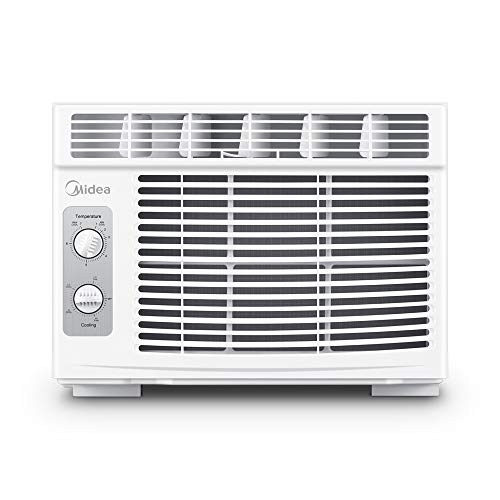
A window unit is the most direct solution when the room has a suitable double-hung window and the installation can be secured properly. It combines the evaporator, compressor, and condenser in one chassis, so there is no refrigerant line to run. Cooling delivery is immediate and maintenance access is simple. The trade-offs are visible: the unit occupies part of the window, produces noticeable noise inside the room, and blocks the view. For rooms where the window is the only viable installation point, this remains the most practical choice. More detail lives in the single-room AC overview.
Portable Air Conditioners
Portable units are the flexible option. They roll between rooms, require only a window or sliding door for the exhaust hose, and need no permanent modification to the building. That flexibility comes with compromises: cooling capacity per unit of energy is generally lower than a window unit, the exhaust hose introduces some heat gain, and the compressor noise sits inside the room. They are the right answer for renters, rooms with unusual window shapes, and spaces where a permanent installation is not allowed. The renter-friendly cooling guide covers this category in depth.
Ductless Mini-Split Systems
A mini-split separates the noisy compressor outdoors from the quiet indoor air handler. The result is the quietest and most efficient single-room cooling available, with precise temperature control and optional heat pump operation. The installation is professional work: a wall penetration, a refrigerant line set, and electrical work. Once installed, it is the most comfortable and least intrusive option for a dedicated room. If the room is a bedroom where silence matters, this is usually the right answer.
Through-the-Wall Units
When a room has no suitable window but does have an exterior wall, a through-the-wall unit can be installed permanently. It behaves like a window unit but is built into the wall cavity, freeing the window entirely. This is common in hotels and older apartment buildings with sleeve provisions. Installation is more involved than a window unit and requires wall modification.
Efficiency Ratings That Matter for a Room Unit
Efficiency directly affects how much energy the unit consumes over a season. For a room unit that runs daily during summer, the difference between an entry-level efficiency rating and a high-efficiency rating compounds quickly.
- SEER2: The seasonal efficiency rating used for central and mini-split systems. Higher numbers mean more efficient cooling across a range of outdoor temperatures. The SEER rating explained guide covers how the scale works and what the current DOE minimums are.
- EER2: The efficiency at a single high outdoor temperature. This matters most in hot climates where the unit runs at full capacity for long stretches.
- CEER: The efficiency rating used for window and portable units, combining seasonal performance into one number. Look for units that exceed the federal minimum comfortably.
- ENERGY STAR: A certification that the unit meets efficiency thresholds above the minimum. For room units, this is a useful shortcut when comparing models in the same tier.
Inverter-driven compressors are the key technology behind high efficiency in modern units. Instead of cycling on and off at full power, an inverter compressor varies its speed to hold the set temperature. The result is steadier comfort, lower humidity swings, and meaningful energy reduction over a season. The inverter versus non-inverter comparison explains when the difference is worth the higher tier.
Features Worth Having in a Room AC
Feature lists can be long, but only a handful of features change the day-to-day experience of using the unit.
- Programmable or smart thermostat control: Scheduling cooling around occupancy avoids running an empty room. Smart controls add remote adjustment and usage tracking.
- Sleep mode: Gradually raises the set temperature overnight, which matches how body temperature drops during sleep and reduces energy use.
- Dehumidification mode: Useful in humid climates and basement rooms where moisture is as much a problem as temperature.
- Washable filter with an accessible door: Maintenance frequency matters more than filter sophistication. A filter that is easy to remove gets cleaned on schedule.
- Quiet operation rating: For bedrooms and offices, the sound level in decibels is one of the most important specifications on the sheet.
- Auto-restart after power interruption: A small feature that matters in areas with grid instability.
Features that sound impressive but rarely affect the decision: multi-speed fans with many increments, decorative lighting, and app integrations that duplicate the remote control. Focus on control, quietness, and maintainability.
Placement and Installation for a Room AC
Placement determines how evenly the room cools. The general principles are consistent across unit types.
- Mount high, aim across the room: Cool air sinks. Placing the supply high and directing airflow across the space rather than down at the floor produces more even temperatures.
- Avoid direct sun on the unit: A window unit in direct afternoon sun works harder to reject heat. Shade the outdoor portion where possible.
- Keep the outdoor side clear: For window and portable units, the exhaust side needs unobstructed airflow. For mini-splits, the outdoor unit needs clearance on all sides and should not be boxed in.
- Do not block the return or supply: Furniture, curtains, and shelving in front of the air path reduce performance and can cause short cycling.
- Consider the electrical circuit: Larger room units may require a dedicated circuit. Check the nameplate amperage against the circuit before installation.
For permanent installations, the indoor and outdoor placement guide covers clearance distances and orientation in more detail. If the unit will be installed professionally, the AC installation guide walks through the process and what to verify afterward.
Product Tiers Explained
Room AC models fall into recognizable market tiers. The descriptors below replace any discussion of specific figures and stay valid as the market evolves.
Essential Tier
Basic cooling with a standard mechanical or simple electronic control. Suitable for guest rooms, occasional-use spaces, and situations where the unit runs only during the hottest weeks.
Expect straightforward operation and fewer convenience features. Maintenance access is usually simple.
Balanced Tier
Improved efficiency, quieter operation, and a fuller feature set including scheduling, sleep mode, and better filtration. This is the tier most households settle on for a primary bedroom or living area.
The compressor and fan mechanisms are generally more refined than entry-level designs.
High-End Tier
Inverter-driven performance, the lowest noise levels, smart controls, and the highest efficiency ratings in the category. Appropriate for rooms used daily and for households that intend to keep the unit for many seasons.
Durable construction and better sealing reduce long-term maintenance.
When comparing within a tier, look at the efficiency rating, the noise specification, and the warranty terms rather than feature count. A well-specified mid-tier unit often delivers a better experience than a feature-heavy entry-level model. For a broader buying framework, the AC shopping guide covers what to verify before purchase.
Common Mistakes When Choosing an AC for a Room
- Sizing by square footage alone. Sun exposure, ceiling height, and occupancy change the requirement substantially. Run the adjustment factors before committing.
- Oversizing to "be safe." An oversized unit cools the air before it removes humidity, leaving the room cold and clammy. It also cycles frequently, which adds wear.
- Ignoring the noise specification. A unit that performs well on paper but disrupts sleep is not a good fit for a bedroom, regardless of other strengths.
- Skipping the electrical check. Larger units draw more current. Confirm the circuit capacity before installation rather than after the breaker trips.
- Neglecting filter maintenance. A clogged filter reduces airflow, lowers efficiency, and can freeze the evaporator coil. The AC maintenance guide covers the routine.
- Placing the unit where airflow is blocked. Curtains and furniture in front of the supply defeat the purpose of the installation.
If the room already has a unit that is underperforming, the AC troubleshooting guide helps separate installation problems from equipment faults before calling for service.
Frequently Asked Questions
What size AC do I need for a single room?
For a typical room up to 150 square feet, a 5,000 to 6,000 BTU unit is generally sufficient. Rooms between 150 and 250 square feet usually need 8,000 to 10,000 BTU, while larger rooms of 250 to 400 square feet benefit from 12,000 to 14,000 BTU. Adjust upward for sunny exposures, high ceilings, or rooms with many occupants.
Which type of AC is best for cooling one room?
The best type depends on your situation. Window AC units are the most straightforward for rooms with a suitable window. Portable AC units offer flexibility and can move between rooms. Mini-split systems deliver the quietest and most efficient single-room cooling but require professional installation. Choose based on window availability, noise tolerance, and installation constraints.
Where should I place a room air conditioner?
Mount the indoor unit high on a wall or in a window that is not exposed to direct afternoon sun. Keep the outdoor unit shaded and free of obstruction, with adequate clearance for airflow. Avoid placing the AC directly above heat sources or electronics, and ensure the airflow path is not blocked by furniture.
How do I calculate BTU for a room with unique features?
Start with a baseline of about 20 BTU per square foot. Add 10 percent for rooms with high ceilings above eight feet, add 10 percent for south- or west-facing windows with heavy sun, and add roughly 600 BTU for each additional occupant beyond two people. For kitchen spaces, add 4,000 BTU to account for appliance heat.
Is an inverter AC worth it for a single room?
For a room that is cooled daily through the season, an inverter unit is usually the better long-term choice. It holds temperature more steadily, reduces humidity swings, and consumes less energy than a fixed-speed unit of comparable capacity. For occasional-use rooms, a fixed-speed unit in a lower tier can be a reasonable fit. The inverter versus non-inverter comparison lays out the trade-offs.
Can a portable AC cool a room as well as a window unit?
For the same stated capacity, a window unit generally delivers more usable cooling because the compressor and condenser are outside the room. A portable unit discharges some heat into the room through its chassis and exhaust arrangement. Portable units remain the right answer when installation flexibility matters more than peak efficiency.
Ready to Compare Room AC Options?
Use the sizing table and tier framework above to narrow your shortlist, then review the recommended units below with your room's square footage and installation constraints in mind.
View Recommended Units