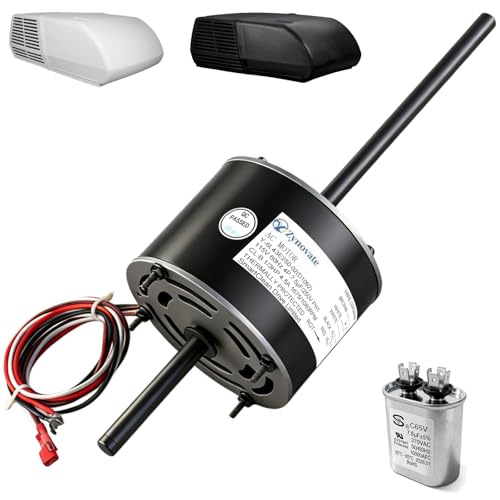
AC Unit Fan Motor Replacement: What to Expect and How to Plan
Learn how to recognize a failing fan motor, understand the replacement process, compare motor tiers, and decide whether to repair or replace your system.
START WITH DIAGNOSISAC Units Guide Philosophy: A fan motor is one of the most common replacement parts in an air conditioning system. Understanding what it does, why it fails, and how replacement is planned helps you ask better questions and make a confident decision before any work begins.
What Does the AC Fan Motor Do?
A typical residential air conditioning system uses two fan motors. The condenser fan motor sits in the outdoor unit and pulls air across the condenser coil to release heat absorbed from your home. The blower motor (also called the indoor fan motor) moves air through the ductwork and across the evaporator coil, delivering cooled air to your rooms. Both motors are essential — if either one stops, the system either stops cooling or cannot distribute cold air.
When a fan motor fails, the symptom is not always obvious to a homeowner. Some failures are gradual and show up as reduced airflow, while others are sudden and loud. Recognizing the signals early prevents secondary damage, such as a frozen evaporator coil or a compressor that overheats and shuts down on high pressure.
Signs That an AC Fan Motor Needs Replacement
The symptoms below apply to both condenser fan motors and indoor blower motors. A single symptom does not always confirm a failed motor, but two or more together strongly suggest the motor is the cause.
- Outdoor fan not spinning. The compressor may hum or run briefly, but no heat is discharged from the outdoor unit. This often ends in a high-pressure trip.
- Humming without airflow. A buzzing or humming sound from the outdoor unit with no fan rotation usually points to a seized bearing or a failed run capacitor.
- Weak or inconsistent indoor airflow. Rooms take longer to cool, or airflow stops and restarts. This is typical of a worn blower motor.
- Burning or hot-wire smell. Overheated windings produce a distinct electrical odor. Stop running the system and have it inspected.
- Ice on the indoor coil or refrigerant lines. Restricted airflow from a failing blower causes the evaporator coil to freeze.
- Motor housing too hot to touch. Motors normally run warm, but extreme heat suggests bearing wear or winding degradation.
- Erratic fan speed. The fan may start slowly, stop abruptly, or change speed without a command from the thermostat.
Common Causes of Fan Motor Failure
Understanding why motors fail helps you protect the replacement. If the root cause is not corrected, the new motor may fail early.
- Worn bearings. Bearings lose lubrication over time, causing friction, heat, and eventually seizure. Older motors with oil ports benefit from periodic lubrication.
- Capacitor failure. A weak or failed run capacitor prevents the motor from starting or causes it to draw excess current.
- Dirty coils and restricted airflow. Clogged filters and dirty condenser coils force the motor to work harder and run hotter.
- Electrical issues. Power surges, loose connections, and voltage fluctuations stress motor windings.
- Moisture intrusion. Outdoor motors are exposed to rain and humidity; failed seals allow water into the motor housing.
- Age. Most fan motors are rated for a service life of roughly 10 to 15 years under normal conditions.
Condenser Fan Motor vs Blower Motor: What Changes
The replacement process differs depending on which motor has failed. The table below summarizes the practical differences so you can follow a technician's explanation more easily.
| Factor | Condenser Fan Motor (Outdoor) | Blower Motor (Indoor) |
|---|---|---|
| Location | Outdoor unit, on top of the cabinet | Air handler or furnace, inside the home |
| Typical access | Remove the fan grille and disconnect wiring | Open the blower compartment; may require duct access |
| Common failure signs | Fan not spinning, humming, compressor tripping | Weak airflow, frozen coil, blower noise |
| Motor matching | Horsepower, RPM, rotation, voltage, frame size | Horsepower, RPM, rotation, voltage, mounting, ECM vs PSC |
| Typical tier of replacement motor | Mid-range to premium, depending on exposure | Mid-range to high-end tier for ECM blowers |
| Secondary risks | Compressor overheating if fan stays off | Frozen coil, water damage, limit switch trips |
For a deeper look at the indoor side, see the guide on AC handler blower motor replacement.
How Fan Motor Replacement Is Planned
Replacement is a structured job, not a simple swap. The technician's goal is to match the new motor to the system's electrical and airflow requirements so the equipment runs reliably for years.
- Confirm the diagnosis. The technician tests the motor windings, capacitor, and control board to confirm the motor is the fault — not the capacitor, contactor, or thermostat.
- Record motor specifications. Horsepower, RPM, voltage, rotation direction, frame size, shaft diameter, and mounting style are recorded from the nameplate.
- Select the correct replacement. The new motor must match or exceed the original specifications. For ECM blower motors, the control module must be compatible with the air handler.
- Isolate power and recover access. Power is shut off at the disconnect. The fan blade, mounting brackets, and wiring are removed carefully.
- Install the new motor. The motor is mounted, the fan blade is repositioned at the correct depth, and wiring is connected per the diagram.
- Replace the capacitor if needed. A new run capacitor is often installed alongside a new motor to protect the investment.
- Test and verify. The technician checks amp draw, rotation, airflow, and temperature split to confirm the system is operating within specification.
Motor Tiers: What Different Quality Levels Mean
Replacement fan motors are available at different quality levels. The tier you choose affects durability, noise, and how well the motor tolerates heat and moisture. The descriptors below are relative to the category and are not tied to any specific figure.
Entry-Level
Basic replacement motors suitable for light-duty use and mild climates. Solid choice for a straightforward condenser fan swap where the original motor had a short service life.
Mid-Range
Better bearings and improved sealing compared with entry-level motors. A balanced tier for most residential condenser and PSC blower applications.
Premium
Heavy-duty construction, enhanced moisture protection, and tighter tolerances. A long-term investment for systems in harsh climates or high-cycle households.
For ECM blower motors, the tier conversation shifts toward control-module compatibility and programming rather than raw motor construction. A mid-tier ECM motor with the correct module is often a better fit than a premium motor with the wrong control interface.
Repair or Replace the Whole System?
A failed fan motor does not automatically mean the system is finished. The decision depends on the age and condition of the equipment, the refrigerant type, and how many other components are near the end of their service life.
- Repair the motor when the system is under roughly 10–12 years old, the compressor and coils are healthy, and this is the first major failure.
- Consider full replacement when the system is older, uses an obsolete refrigerant, has a failing compressor, or has had repeated breakdowns in recent seasons.
- Ask for a comparison between the motor replacement and a new high-efficiency system so you can weigh the long-term direction of the equipment.
If the compressor is also suspect, the guide on AC unit compressor replacement explains how the two decisions interact. When the motor is the only fault, replacement is usually the more sensible path.
How to Choose an HVAC Contractor for the Job
Because the job involves electrical work and correct motor matching, the contractor matters as much as the part. Use these questions when requesting quotes.
- Will you test the capacitor and control board before replacing the motor?
- Will the replacement motor match the original horsepower, RPM, rotation, and voltage?
- Is the new motor covered by a parts warranty, and for how long?
- Will you verify airflow and temperature split after installation?
- Do you offer a maintenance visit to prevent repeat failures?
Homeowners comparing service options can review broader repair considerations in the guide on air conditioning unit repair.
Preventive Maintenance After Replacement
A new motor lasts longer when the system around it is kept clean and properly charged. The habits below are simple and high-impact.
- Replace or clean air filters on schedule to protect the blower motor from restricted airflow.
- Keep the outdoor unit clear of leaves, grass clippings, and debris so the condenser fan can move air freely.
- Schedule a seasonal tune-up that includes capacitor testing and amp-draw checks.
- Listen for new noises after replacement — a rubbing fan blade or loose mount should be corrected promptly.
- Consider a maintenance plan for older systems to catch motor wear before it becomes a mid-summer failure.
Frequently Asked Questions
What are the signs that an AC fan motor needs replacement?
Common signs include the outdoor fan not spinning, a humming sound without airflow, overheating of the motor housing, a burnt wire smell, erratic fan speed, and the compressor shutting down due to high head pressure. Indoor blower motor failure often shows as weak airflow, ice on the evaporator coil, or the system running but not cooling.
Can I replace an AC fan motor myself?
It is possible for a confident DIYer with electrical experience, but it involves high-voltage capacitors, correct motor matching (horsepower, RPM, rotation, voltage, frame size), and proper wire connections. Mistakes can damage the new motor, the control board, or create a safety hazard. Many homeowners choose a licensed HVAC technician for this job.
How long does an AC fan motor typically last?
A well-maintained fan motor often lasts 10 to 15 years. Factors that shorten life include dirty coils, restricted airflow, frequent short cycling, voltage fluctuations, and lack of lubrication on older motors. Regular maintenance and clean filters help extend motor life.
Should I repair or replace an AC with a failed fan motor?
If the AC is otherwise in good condition and under 10–12 years old, replacing the fan motor is usually the sensible path. If the system is older, uses obsolete refrigerant, has a failing compressor, or has repeated breakdowns, putting the motor replacement budget toward a new high-efficiency system may be the better long-term decision.
Why does a fan motor fail?
Fan motors fail from worn bearings, electrical winding burnout, capacitor failure, overheating due to restricted airflow, moisture intrusion, and power surges. Dirty condenser coils and clogged filters are common root causes because they make the motor work harder and run hotter.