AC Unit for a 1500 Sq Ft House: Complete Sizing & Selection Guide
Understand how much cooling capacity a 1500 sq ft home needs, which system types make sense, and how efficiency, climate, and installation details shape the final choice.
Explore the Buying GuideQuick orientation: A 1500 sq ft home generally falls in the 2.5 to 3 ton range (roughly 30,000 to 36,000 BTU). That said, the right answer is never a single number. Climate zone, insulation, window area, ceiling height, duct condition, and occupancy all influence the final sizing decision.
Why Correct Sizing Matters for a 1500 Sq Ft Home
Oversized and undersized systems both cause problems. An oversized unit cools the air quickly but may not remove enough humidity, leading to a clammy feeling and frequent short cycling. An undersized unit runs constantly during peak heat, struggles to hold the set temperature, and wears out faster. For a mid-sized home like 1500 sq ft, the margin for error is narrow enough that a proper load calculation is worth the effort. If you want to understand the broader sizing process, the guide on how to size an air conditioner walks through the key factors.
BTU Rule of Thumb for 1500 Sq Ft
A common starting point is about 20 BTU per square foot of living space, adjusted for climate and construction. Applied to 1500 sq ft, that gives a baseline around 30,000 BTU. In hotter climates or poorly insulated homes, the requirement can climb toward 36,000 BTU. In milder climates with good insulation and shading, it may sit slightly lower. Treat these numbers as an early estimate, not a final decision.
| Home Condition | Indicative Range | Notes |
|---|---|---|
| Well-insulated, shaded, mild climate | ~30,000 BTU (2.5 ton) | Lower load; avoid oversizing to protect humidity control |
| Average insulation, mixed climate | ~30,000–34,000 BTU (2.5–3 ton) | Most common band for a 1500 sq ft home |
| Hot climate, large windows, poor insulation | ~34,000–36,000 BTU (3 ton) | Higher load; consider efficiency upgrades before upsizing |
System Types That Fit a 1500 Sq Ft House
Three main paths dominate for this home size: central AC, ductless mini-splits, and a hybrid approach. Each has trade-offs in installation complexity, zoning flexibility, and long-term efficiency.
Central Air Conditioning
Best when the home already has ductwork or when a full duct system is feasible. Delivers uniform cooling and integrates with a single thermostat. Efficiency depends heavily on duct sealing and insulation. Learn more about central air conditioning and how duct quality affects performance.
Ductless Mini-Split
Ideal for homes without ducts, additions, or room-by-room zoning. A multi-zone setup can cover a 1500 sq ft house with two to four indoor heads. Installation is less invasive than full ductwork. See the ductless mini-split AC overview for configuration options.
Window / Portable (Targeted)
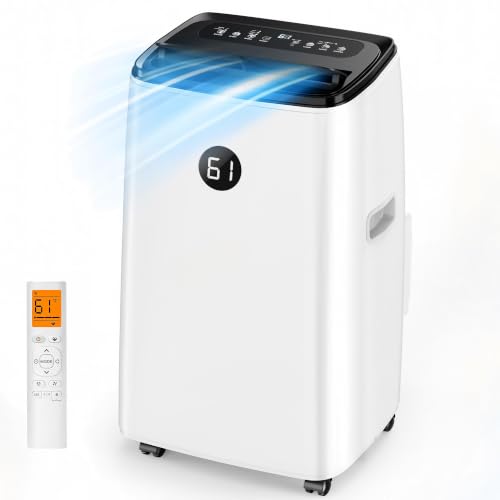
Not a whole-home solution at this size, but useful for a single room or as a supplement. Window units suit bedrooms and home offices; portable units add flexibility but are less efficient overall. Compare window air conditioners and portable air conditioners for targeted cooling.
Efficiency Ratings: What to Prioritize
Efficiency matters more as system size grows, because a 2.5 to 3 ton system runs longer hours. Modern minimums are expressed as SEER2, and higher-tier systems often pair improved compressors with variable-speed fans and better coil design. If you want a deeper explanation, the guide on SEER ratings breaks down how the numbers translate into real-world performance.
- Entry-level tier: Meets current minimums; suitable for mild climates and moderate usage.
- Mid-range tier: Better part-load efficiency; often the sweet spot for a 1500 sq ft home.
- High-end tier: Variable-speed or two-stage operation, quieter performance, stronger humidity control.
Also consider the difference between inverter AC and fixed-speed systems. Inverter-driven compressors modulate output, which tends to improve comfort and efficiency in mid-sized homes with varying loads.
Installation Factors That Change the Outcome
Even a correctly sized system can underperform if installation is rushed. Duct leakage, refrigerant charge errors, and poor placement of the outdoor unit are common culprits. Reviewing common installation mistakes before hiring a contractor helps you ask the right questions. If you are comparing quotes, the installation cost breakdown explains what a proper installation should include.
- Duct condition: Leaky ducts can waste a significant share of cooling capacity.
- Outdoor unit placement: Shade and airflow affect efficiency and lifespan.
- Thermostat strategy: A programmable or smart thermostat improves part-load performance.
- Electrical readiness: Confirm panel capacity before selecting a system.
Climate and Home Variables to Weigh
Two homes of the same square footage can have very different cooling loads. The biggest variables are climate zone, insulation quality, window area and orientation, ceiling height, and the number of occupants. Homes with west-facing glass or poorly sealed attics often need the upper end of the range. Homes with shade trees, upgraded insulation, and sealed ducts can often stay at the lower end.
Side-by-Side Comparison
| System | Best For | Zoning Flexibility | Installation Complexity | Typical Tier Position |
|---|---|---|---|---|
| Central AC | Homes with ducts; uniform whole-home cooling | Moderate (zone dampers possible) | Higher (ductwork, electrical, permits) | Mid-range to high-end tier |
| Ductless Mini-Split | No ducts; room-by-room control; retrofits | High (multi-zone heads) | Moderate (line sets, wall penetrations) | Balanced to premium tier |
| Window / Portable | Single rooms; supplemental cooling | Low (per-unit only) | Low (plug-in or window mount) | Entry-level tier |
Still Comparing System Types?
Review the broader buying framework to align sizing, efficiency, and installation expectations before you commit.
Open the Buying GuideFrequently Asked Questions
What size AC unit do I need for a 1500 sq ft house?
Most 1500 sq ft homes fall in the 2.5 to 3 ton range, roughly 30,000 to 36,000 BTU. Climate, insulation, window area, and duct condition can shift the requirement. A Manual J load calculation is the most reliable way to confirm the exact size.
Is a central AC or mini-split better for a 1500 sq ft home?
Central AC suits homes with existing ductwork and uniform cooling needs. Ductless mini-splits work well for homes without ducts, room-by-room zoning, and simpler retrofits. Both can be efficient when correctly sized and installed.
What SEER rating should I look for?
Choose a system that meets or exceeds current SEER2 minimums in your region. Mid-range and high-end tier systems often deliver better part-load efficiency, quieter operation, and stronger humidity control, which matters in a home of this size.
How many tons is a 1500 sq ft AC unit?
Commonly 2.5 to 3 tons. Climate zone, insulation quality, sun exposure, and duct condition can shift the requirement, so a professional load calculation is recommended before finalizing.
Can I cool a 1500 sq ft house with window units?
Window units are typically room-specific solutions. Cooling an entire 1500 sq ft home with window units is possible in mild climates but usually less efficient and less comfortable than a central or mini-split system. They are best used as supplements or for single-room cooling.