Covering AC Unit in Winter: Complete Protection Guide
Everything you need to know about protecting your outdoor air conditioner during the cold season — the right covers, the correct method, and the mistakes that can damage your system.
START LEARNINGWhy Cover an AC Unit in Winter
Your outdoor condenser unit sits exposed to the elements year-round. During winter, it faces a different set of threats than in summer. Understanding these threats explains why a proper winter cover is a worthwhile investment in the longevity of your system.
Protection from snow and ice
Heavy snow accumulation on top of the unit can bend the fan grille and put stress on the fan motor. Ice dams that form on and around the cabinet can crack plastic components and force their way into seams. A cover sheds snow and prevents ice from bonding directly to the unit's surfaces.
Debris and pest exclusion
Falling leaves, twigs, and seed pods collect inside the cabinet and clog the condenser fins. Rodents and insects look for sheltered cavities during cold months, and the inside of an outdoor unit is an attractive refuge. A properly fitted cover seals the top opening while still allowing air circulation.
Dirt, pollen, and airborne grime
Even in winter, wind carries dust and pollen that settle on the coils. A layer of grime on the condenser fins reduces heat transfer efficiency when the cooling season returns. Covering the unit keeps the coils cleaner, which means less cleaning work in spring.
Extending equipment lifespan
Condenser cabinets are built with weather-resistant coatings, but years of freeze-thaw cycles, UV exposure, and moisture intrusion gradually degrade seals, fasteners, and electrical connections. Seasonal protection slows that wear and supports a longer service life for the entire system.
When to Cover and When to Wait
Timing matters. Covering too early can trap heat and moisture during mild fall days, while covering too late exposes the unit to the first snow and freeze. Use the following guidance to choose the right moment.
The right window
- After the cooling season ends: Once you are confident you will not run the air conditioner again this year, it is safe to cover the outdoor unit.
- Before the first hard freeze: Cover the unit before temperatures drop consistently below freezing, so ice does not form inside the cabinet before protection is in place.
- After a final cleaning: Remove debris, rinse the coils if needed, and let the unit dry fully before installing the cover.
When to delay covering
- If you still use the AC occasionally: Some households run the system during warm fall days. Never cover a unit that may still operate.
- During a heat pump's heating season: A heat pump runs in winter to provide heat. Do not cover a heat pump that is actively heating your home.
- Immediately after rain or washing: Let the unit dry completely before covering to avoid trapping moisture.
Types of Winter AC Covers
Not all covers serve the same purpose. The right choice depends on your climate, the unit's location, and whether you need full enclosure or top-only protection.
| Cover Type | Best For | Key Characteristics |
|---|---|---|
| Top-only mesh cover | Mild winters, debris protection | Breathable mesh; keeps leaves and snow out of the top opening while allowing airflow |
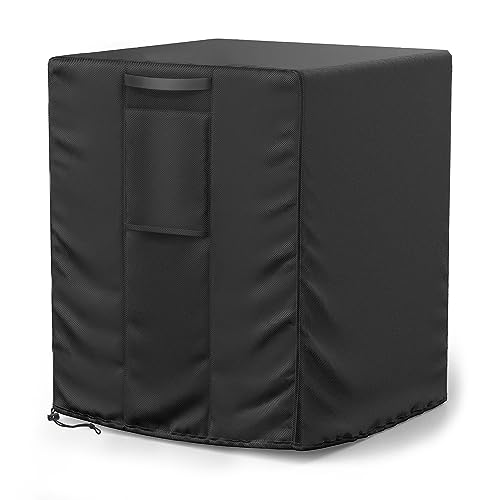
| Full breathable fabric cover | Snowy climates, full seasonal protection | Water-resistant outer layer with ventilation panels; covers top and sides |
| Reinforced vinyl or canvas cover | Heavy snow and ice regions | Heavy-duty construction, reinforced seams, adjustable straps for a snug fit |
| Hard-shell or rigid cover | Areas with falling branches and hail | Impact-resistant top panel; usually combined with breathable side panels |
| Custom-fit branded cover | Owners who want a precise fit | Tailored to the unit's dimensions; premium materials and finished edges |
What to look for in any cover
- Breathability: Vent panels or mesh sections that allow moisture vapor to escape.
- Water resistance: A water-resistant outer shell that sheds snow and rain without absorbing it.
- Secure fit: Straps, drawstrings, or elastic hems that keep the cover in place during windstorms.
- UV-stable material: Fabric that will not become brittle after a season of sun exposure.
- Correct sizing: A cover that fits the cabinet dimensions without sagging or stretching.
Cover Materials Compared
The material determines how well the cover balances protection with ventilation. Here is how the most common options compare in practical terms.
Heavy-duty mesh
Entry-level covers are often made from UV-stabilized mesh. Mesh is highly breathable and lets moisture escape freely, which makes it a solid choice for top-only protection and for climates with mild winters. It keeps out leaves and large debris but does not block wind-driven snow from the sides.
Laminated fabric with ventilation panels
Mid-range covers combine a water-resistant outer fabric with mesh vent panels. This design sheds snow and rain from above while allowing air to circulate through the sides. It is a balanced tier choice for most residential installations in snowy regions.
Reinforced canvas and vinyl
High-end tier covers use heavier canvas or reinforced vinyl with stitched seams and adjustable straps. They resist tearing, hold their shape in wind, and handle heavy snow loads. These covers are well-specified for regions with severe winter weather and for units placed in exposed locations.
Rigid panels
Top-tier and commercial-grade options sometimes incorporate rigid panels to deflect falling branches or hail. These are practical where the unit sits under trees. A rigid top combined with breathable sides offers the strongest protection against impact without sacrificing airflow.
Step-by-Step Installation
Installing a winter cover takes only a few minutes, but doing it correctly protects both the unit and the cover itself. Follow these steps in order.
- Turn off the system. Switch the AC off at the thermostat and, if accessible, at the dedicated disconnect box near the outdoor unit.
- Clean the unit first. Remove leaves, twigs, and debris from the top and sides. Rinse the condenser coils gently and let the unit dry completely before covering.
- Inspect for damage. Look for bent fan blades, cracked cabinet panels, or loose fasteners. Addressing small issues now prevents bigger problems in spring.
- Choose the correct cover size. The cover should fit over the cabinet with a little slack for airflow but not so loosely that wind catches it.
- Position the cover. Place it over the top of the unit first, then pull the sides down evenly. Make sure vent panels are not blocked by the cabinet or nearby objects.
- Secure the straps. Tighten drawstrings or straps so the cover stays in place during storms. Check that no strap crosses the fan opening in a way that could interfere with airflow.
- Verify ventilation. Confirm that air can still move through the vent panels. The cover should not create an airtight seal around the base of the unit.
Common Mistakes to Avoid
Most winter cover problems come from a handful of avoidable errors. Check your approach against this list before the cold season arrives.
Using airtight plastic sheeting
Wrapping the unit in plastic traps condensation inside the cabinet. Moisture condenses on cold metal surfaces and accelerates rust on coils, fasteners, and electrical components. Always use a breathable cover.
Covering a heat pump that is still running
A heat pump provides heating in winter and must remain uncovered while it operates. Covering an active heat pump starves it of airflow and can cause the system to fail. If your system heats and cools, confirm its operating mode before covering.
Skipping the pre-cover cleaning
Covering a dirty unit seals in debris and moisture against the coils. Clean the unit first, let it dry, and then install the cover.
Leaving the cover on in spring
Forgetting to remove the cover before the first warm day can lead to a covered unit being switched on. Set a reminder or tie the removal to your spring maintenance routine.
Ignoring the base and surrounding area
Water pooling around the base of the unit can freeze and shift the pad. Clear snow and ice away from the base and ensure the ground slopes away from the unit.
Using a cover that is too small or too large
An undersized cover stretches and tears; an oversized cover flaps in the wind and can pull loose. Measure the cabinet and choose the correct size.
Heat Pumps and Cold-Climate Systems
Heat pumps and cold-climate air conditioners require different treatment because they may operate year-round. The key distinction is whether the system is idle or active during winter.
Heat pumps in heating mode
A heat pump extracts heat from outdoor air in winter, which means the outdoor unit runs and must remain uncovered. Snow and ice should be cleared from around the unit, but the cabinet itself should be left open to airflow.
Cold-climate heat pumps
Systems rated for low-temperature operation are designed to run in freezing conditions. Do not cover them during the heating season. Instead, focus on keeping the area around the unit clear of snow and ice.
Dual-purpose systems
If your system provides both heating and cooling, establish a clear schedule: cover it only when it is fully idle for the season, and remove the cover before the first heating or cooling demand.
Winter Maintenance Checklist
A cover is one part of winter preparation. Pair it with these maintenance tasks to protect the entire system.
- Clear snow from around the unit: Keep a few feet of clearance on all sides so the unit can breathe if it runs.
- Check the cover after storms: Re-secure straps and remove heavy snow buildup from the top of the cover.
- Inspect the base pad: Make sure the concrete or composite pad is level and free of cracks.
- Look for pest activity: Check for droppings or nesting material near the unit and address entry points.
- Schedule spring maintenance: Book a professional tune-up before the cooling season so the system is ready when the cover comes off.
- Keep the area clear of stored items: Do not lean ladders, tarps, or garden equipment against the covered unit.
Frequently Asked Questions
Should I cover my AC unit in winter?
What type of cover is best for an AC unit in winter?
When should I cover my AC unit for winter?
Can I run my AC with a cover on?
Is it bad to cover an AC unit with a tarp?
Do I need to cover a window AC unit in winter?
Protect Your System Before the First Freeze
Choosing the right cover is a simple step that protects a long-term investment. Review the options above, match the cover to your climate, and install it correctly to keep your outdoor unit in solid condition through the cold season.
Explore Winter Cover Options