Different Kinds of Air Conditioning Units
A complete, research-friendly guide to the major types of air conditioning systems — how each works, where it fits best, and what to weigh before you decide.
Explore the TypesWhy this guide exists: If you already know you need cooling but are unsure which system category fits your room, home layout, or climate, this page walks through the different kinds of air conditioning units side by side so you can shortlist the right one with confidence.
The Main Types at a Glance
Air conditioning has evolved far beyond a single box in a window. Today, the different kinds of air conditioning units span compact single-room coolers, flexible portable models, elegant ductless systems, and whole-home central setups. Each category solves a different problem — and choosing the wrong one often leads to uneven cooling, unnecessary energy use, or installation headaches. Below, we break down each type with its strengths, trade-offs, and ideal scenarios.
1. Window Air Conditioners Entry-Level
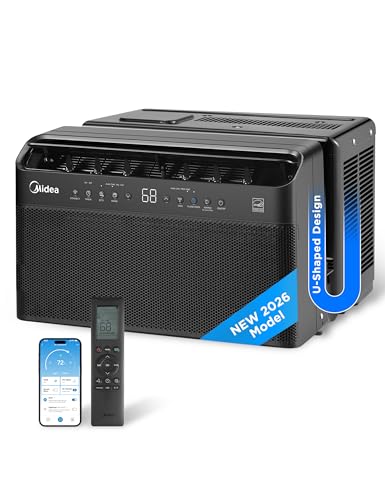
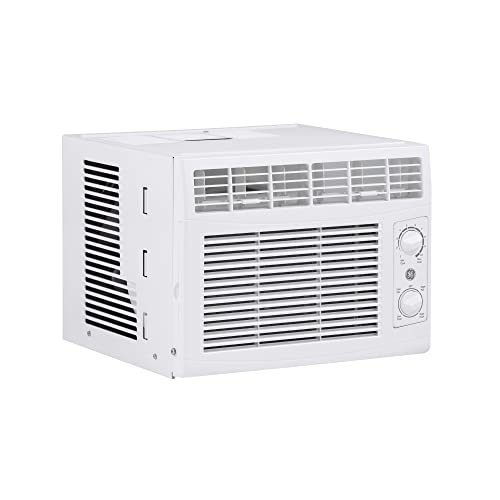
Window units are the classic single-room solution. The entire system — compressor, condenser, evaporator, and controls — sits in one chassis installed in a double-hung window. They draw outside air across the condenser and blow cooled air directly into the room. Because they are self-contained, there is no refrigerant line running through walls and no outdoor condenser to mount separately.
Modern window units include variable-speed compressors, smart thermostats, and washable filters. They remain one of the most straightforward options among the different types of window air conditioners, and they suit renters because installation is reversible.
Strengths
- Simple installation in a standard window
- Self-contained — no separate outdoor unit
- Straightforward to remove and store seasonally
- Good fit for single rooms and apartments
Trade-offs
- Blocks part of the window and natural light
- Can be heavy and awkward to lift
- Security and sealing require extra care
- Noisier than ductless systems in many cases
2. Portable Air Conditioners Starter Tier
Portable units are freestanding floor models on casters. They cool the air inside the room and exhaust hot air through a hose kit vented out a window or wall opening. Because they are mobile, they can follow you from the living room to the bedroom — a practical advantage in homes without ductwork or fixed window space.
Within the different types of portable air conditioners, dual-hose designs are generally more efficient than single-hose models because they separate intake and exhaust airflow. Self-evaporating models reduce how often you need to drain condensate, and inverter-driven portable units offer smoother compressor operation.
Strengths
- Moves between rooms on casters
- No permanent window modification required
- Often includes dehumidification and fan modes
- Useful for rooms without suitable window AC support
Trade-offs
- Single-hose models create negative pressure
- Condensate may need manual draining
- Floor footprint and hose routing take planning
- Generally less efficient than mini-splits
3. Ductless Mini-Split Systems Mid-Range to Premium
A ductless mini-split pairs an outdoor condenser with one or more indoor air-handling heads mounted on a wall, ceiling, or floor. Refrigerant lines and a drain connect the two through a small wall penetration. Because there is no ductwork, there are no duct losses — a key reason mini-splits are among the most efficient different types of air conditioning system available for single rooms and multi-zone homes.
Multi-zone configurations let you cool several rooms independently from one outdoor unit. Inverter compressors modulate speed to hold a steady temperature, and many heads include heat-pump capability for year-round use. For homes without existing ducts, this category frequently outperforms other different types of air conditioning units in both comfort and efficiency.
Strengths
- No ductwork — ideal for retrofits and older homes
- High efficiency and precise temperature control
- Zone-by-zone cooling in multi-head setups
- Quieter indoor operation than window units
Trade-offs
- Professional installation is strongly recommended
- Higher upfront positioning than window units
- Indoor heads need visible wall or ceiling space
- Refrigerant line routing must be planned
4. Central Air Conditioning High-End Tier
Central air conditioning uses a single outdoor condenser paired with an indoor air handler and a network of ducts. Cooled air is distributed through supply registers and returned through return grilles. This is the standard for whole-home comfort in regions with long cooling seasons, and it can be integrated with heating, ventilation, and air-quality equipment.
Among the different types of central air conditioners, split systems are the most common, while packaged systems combine all components in one outdoor cabinet. Zoning dampers can divide the home into independent comfort areas.
Strengths
- Whole-home cooling from one system
- Ductwork can support heating and air quality add-ons
- Outdoor and indoor equipment can be placed away from living areas
- Supports zoning for room-by-room control
Trade-offs
- Requires existing or new ductwork
- Duct losses reduce efficiency if the network is leaky
- Installation is a major project
- Not practical for every home layout
5. Through-the-Wall Air Conditioners Essential Tier
Through-the-wall units install into a sleeve built into an exterior wall. They function much like window units but free up the window itself. This makes them popular in hotels, apartments, and rooms where window placement is unsuitable or where security is a concern.
They are a distinct category among the different kinds of air conditioning units because the wall sleeve becomes a permanent part of the building envelope. Replacement units can be swapped into an existing sleeve, which simplifies upgrades over time.
Strengths
- Keeps the window free for light and views
- Sleeve allows straightforward future replacement
- Good option where window AC is not workable
- Often more secure than window-mounted units
Trade-offs
- Requires cutting a wall opening during install
- Sleeve dimensions must match the unit
- Less flexible to relocate than portable units
- Wall repair is needed if the unit is removed
6. Floor-Mounted Air Conditioners Mid-Tier
Floor-mounted units sit low on the wall or on the floor and are common in ductless configurations. They are especially useful in rooms with limited high-wall space, sloped ceilings, or large windows. The low profile can also improve air mixing in tall rooms.
They often appear in the same product family as ductless mini-splits, making them one of the more design-flexible different types of air conditioning units for retrofits.
Strengths
- Works where wall or ceiling space is limited
- Good air distribution in tall rooms
- Available in ductless multi-zone systems
Trade-offs
- Floor space is occupied
- Less common in some markets, limiting model choice
- Requires careful placement to avoid obstructions
7. Ceiling Cassette Units Professional-Grade
Ceiling cassettes recess into a drop ceiling and distribute air in multiple directions through adjustable louvers. They are common in commercial spaces, offices, and open-plan homes where even air distribution matters more than wall space.
They belong to the ductless family but offer a cleaner visual profile than wall-mounted heads. For buyers comparing different types of air conditioning system for larger open areas, cassettes are worth shortlisting.
Strengths
- Even, multi-directional air distribution
- Out of the way of furniture and walls
- Clean appearance in finished ceilings
Trade-offs
- Requires sufficient ceiling depth
- Installation complexity is higher
- Not suitable for every residential ceiling type
Side-by-Side Comparison
| Type | Best For | Installation | Efficiency Tier | Maintenance Level |
|---|---|---|---|---|
| Window AC | Single rooms, apartments, renters | DIY-friendly in standard windows | Entry-level | Low |
| Portable AC | Rooms without fixed window space, temporary cooling | DIY, hose venting needed | Starter tier | Low to moderate |
| Ductless Mini-Split | Single rooms, multi-zone homes, no-duct retrofits | Professional recommended | Mid-range to premium | Moderate |
| Central AC | Whole-home cooling with existing ducts | Professional project | High-end tier | Moderate to high |
| Through-the-Wall | Hotels, apartments, wall-sleeve rooms | Wall opening required | Essential tier | Low to moderate |
| Floor-Mounted | Rooms with limited high-wall space | Professional recommended | Mid-tier | Moderate |
| Ceiling Cassette | Open-plan spaces, offices, commercial rooms | Professional, ceiling depth needed | Professional-grade | Moderate |
How to Narrow Down Your Choice
Before selecting among the different kinds of air conditioning units, work through these practical filters. They will remove most of the guesswork and keep your shortlist focused.
Room Size and Cooling Capacity
Cooling capacity is measured in BTU (British Thermal Units). A unit that is too small will run continuously; one that is oversized will short-cycle and leave the room feeling clammy. Measure the floor area, then account for ceiling height, sun exposure, and the number of occupants. For a deeper walkthrough, see the guide on how to size an air conditioner and the BTU calculator by room size.
Ductwork Availability
If the home already has ducts, central AC is a natural candidate. If not, ductless categories — mini-splits, floor-mounted units, and cassettes — avoid the disruption of installing new duct runs. This single factor often eliminates half the options immediately.
Efficiency and Operating Profile
Higher SEER ratings indicate greater seasonal efficiency. Inverter compressors modulate speed for steadier temperatures and lower energy draw. Learn more in the overview of what a SEER rating means and the comparison of regular AC versus inverter AC.
Noise, Placement, and Lifestyle
Bedroom installations favor quieter systems, which generally points toward ductless heads. Renters benefit from reversible installations like window and portable units. Homeowners planning long-term comfort often find the higher-end tiers more satisfying for whole-home or multi-zone needs.
Frequently Asked Questions
What are the main different kinds of air conditioning units?
The main categories are window units, portable units, ductless mini-splits, central systems, through-the-wall units, floor-mounted units, and ceiling cassettes. Each differs in installation requirements, distribution method, and ideal use case.
Which type is best for a single room?
Window units and ductless mini-splits are the most common choices for single rooms. Window units are simpler to install; mini-splits are quieter and more efficient but require professional installation.
Do portable air conditioners work as well as window units?
Dual-hose portable units come close, but single-hose models can lose efficiency due to negative pressure. For consistent single-room cooling where a window is available, window units often have an efficiency edge.
Can I cool a whole house without ducts?
Yes. Multi-zone ductless mini-split systems are a common solution for whole-home cooling in homes without ductwork. They pair one outdoor unit with several indoor heads, each controlled independently.
Which type is quietest?
Ductless mini-split indoor heads are generally the quietest option among the different kinds of air conditioning units. Central systems are quiet inside the room but can transmit noise through ductwork, while window and portable units tend to be louder.