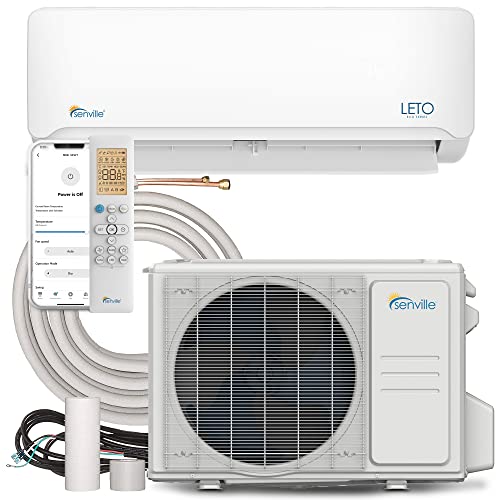
Ductless Mini Split Heat Pumps: Complete Guide
Everything you need to know about ductless mini split heat pumps — how they work, efficiency ratings, sizing, and how to choose the right system for year-round comfort.
START LEARNINGWhy Ductless Mini Split Heat Pumps? These systems deliver both heating and cooling through a single, highly efficient unit — without the need for bulky ductwork. They are an ideal solution for homes without existing ducts, room additions, and spaces where zoned comfort matters most.
How Ductless Mini Split Heat Pumps Work
A ductless mini split heat pump consists of two main components: an outdoor compressor/condenser unit and one or more indoor air-handling units (heads). Refrigerant lines connect the two, allowing the system to transfer heat rather than generate it. In cooling mode, the system absorbs heat from indoor air and releases it outside. In heating mode, the process reverses — even cold outdoor air contains heat energy that the pump can extract and move indoors.
Unlike traditional central systems that rely on a network of ducts, a ductless mini split delivers conditioned air directly into each room. This eliminates duct losses — which can account for a significant portion of energy waste in ducted systems — and enables precise room-by-room temperature control. To explore how these systems compare with ducted options, see ductless mini split air conditioners and heating.
Key Advantages of Ductless Heat Pump Systems
Year-Round Comfort
One system provides both heating and cooling. Modern cold-climate models operate efficiently even in sub-freezing temperatures, making them a viable primary heating source in many regions.
High Efficiency
Without duct losses, every unit of energy consumed translates more directly into conditioned air. Many top-tier models achieve very high SEER2 and HSPF2 ratings, delivering substantial long-term energy savings.
Zoned Control
Each indoor head operates independently, so you can condition only the rooms you use. This avoids the inefficiency of heating or cooling an entire house when only one area needs attention.
Simple Installation
Only a small hole (typically 3 inches) is needed for refrigerant and electrical lines. There is no ductwork to design, seal, or maintain — which simplifies retrofits in older homes.
Quiet Operation
Indoor units operate very quietly, often at sound levels comparable to a whisper. The compressor is located outdoors, keeping noise out of living spaces.
Improved Air Quality
Multi-stage filtration in indoor heads captures dust, allergens, and particles. Without ducts to accumulate debris, the air delivered to each room stays cleaner.
Understanding Efficiency Ratings for Heat Pumps
When evaluating ductless mini split heat pumps, two ratings matter most for year-round performance. SEER2 (Seasonal Energy Efficiency Ratio) measures cooling efficiency, while HSPF2 (Heating Seasonal Performance Factor) measures heating efficiency. Higher numbers indicate greater efficiency. The U.S. Department of Energy updates minimum standards periodically, and ENERGY STAR certified models exceed those baseline requirements.
| Tier | Cooling Efficiency (SEER2) | Heating Efficiency (HSPF2) | Best For |
|---|---|---|---|
| Entry-Level | Meets federal minimum | Meets federal minimum | Moderate climates, occasional use, secondary spaces |
| Mid-Range | Above minimum, ENERGY STAR eligible | Above minimum, ENERGY STAR eligible | Primary living areas, most climate zones |
| High-End | Very high SEER2 ratings | Excellent cold-climate performance | Whole-home primary systems, harsh winters, long-term efficiency |
For a deeper look at SEER ratings and how they translate to real-world performance, visit the high SEER air conditioner resource page.
Sizing and Installation Considerations
Correct sizing is critical. An undersized system will struggle to maintain comfort during extreme temperatures, while an oversized system may short-cycle, leading to uneven temperatures and unnecessary wear. A professional load calculation (Manual J) accounts for square footage, ceiling height, insulation, window area, and local climate. For a starting point on capacity requirements, see the guide to how to size an air conditioner.
Installation involves mounting the outdoor unit on a sturdy pad or wall bracket, positioning indoor heads high on walls or ceilings, and running refrigerant lines through a small wall penetration. While some DIY kits exist, proper evacuation of the line set and refrigerant charging require specialized tools and training. A professional installation ensures the system operates at its rated efficiency and preserves the manufacturer warranty. For a detailed overview of the installation process, refer to the ductless mini split system cost guide, which covers the full scope of a typical installation.
Ductless vs. Ducted Heat Pumps: Which Is Right for You?
The choice between ductless and ducted systems depends largely on the existing infrastructure of your home. If you have a well-sealed, properly sized duct system in place, a ducted heat pump may integrate seamlessly. However, if your home lacks ducts — common in older homes, additions, and homes with hydronic or baseboard heating — adding ductwork can be invasive and expensive. In those cases, a ductless mini split heat pump system is often the most practical and efficient solution.
Ductless systems also excel in zoned comfort scenarios. If you have rooms that are consistently too hot or too cold, or if you want to condition an isolated space like a garage, basement, or sunroom without extending the existing HVAC system, a ductless setup offers flexibility that ducted systems cannot match. For a broader comparison, see ductless mini split heat pump system and ducted mini split guides.
Maintenance Tips for Long-Term Performance
Clean or Replace Filters Monthly
Clogged filters restrict airflow and reduce efficiency. Most indoor heads have washable filters that should be rinsed every few weeks during heavy use seasons.
Keep the Outdoor Unit Clear
Remove leaves, debris, and obstructions from around the outdoor unit. Ensure at least two feet of clearance on all sides for proper airflow.
Schedule Annual Professional Service
A technician should inspect refrigerant levels, clean coils, check electrical connections, and verify overall system performance once per year.
Frequently Asked Questions
Can a ductless mini split heat pump heat my whole house?
Yes, with proper sizing and a multi-zone configuration. A single outdoor unit can connect to multiple indoor heads, allowing you to condition an entire home. For larger homes or extreme climates, a professional load calculation will determine the appropriate capacity and number of zones.
How long do ductless mini split heat pumps last?
With regular maintenance, a quality system typically operates for 15 to 20 years. The compressor is the most critical component, and its lifespan depends on installation quality, usage patterns, and routine servicing.
Do ductless heat pumps work in very cold climates?
Modern cold-climate heat pumps are designed to operate efficiently in temperatures well below freezing. Some models maintain full heating capacity down to 5°F or lower. Look for systems specifically rated for cold-climate performance if you live in a region with harsh winters.
Is a ductless mini split heat pump noisy?
Indoor units are very quiet — often in the 19–30 dB range, depending on fan speed. The outdoor unit produces some sound, but it is isolated from living areas.
Ready to Explore Your Options?
Review our curated selection of ductless mini split heat pumps below to find the right system for your home.
VIEW RECOMMENDED SYSTEMS