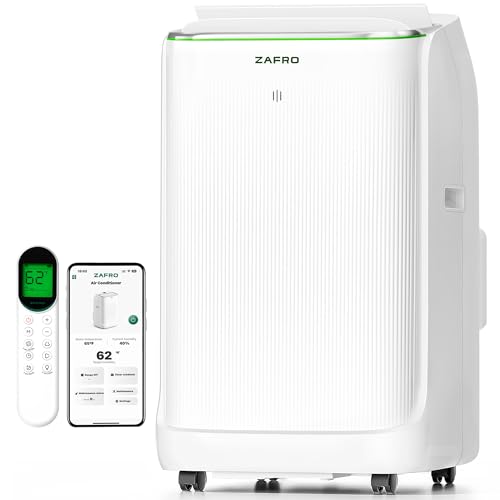
Energy Saving Portable Air Conditioner: The Complete Guide
Everything you need to know before choosing a portable AC that cools efficiently, keeps power use in check, and fits your space, your usage habits, and your long-term goals.
A portable air conditioner offers a simple way to cool a room without ducts, permanent installation, or major renovation. However, not every portable unit is efficient. An energy saving portable air conditioner can make a noticeable difference in daily comfort and electricity use, especially when you understand the ratings, features, and sizing principles behind it. This guide walks you through what matters most, from CEER ratings and BTU sizing to placement, maintenance, and the feature sets that define reliable models. By the end, you will be ready to compare options with confidence and choose a unit that fits your needs.
How Portable ACs Use Energy
Portable air conditioners work like other ACs: they move heat from inside to outside using a refrigerant cycle. A compressor, condenser, evaporator, and fan work together to cool the air. The key difference is that portable units exhaust hot air through a window kit using a hose, and they draw room air to cool the condenser before expelling it. This design affects efficiency because some cooled indoor air is used in the cooling process and then sent outside, creating negative pressure that pulls warm air back into the room.
Because of this, portable ACs are generally less efficient than window units or mini-splits of similar capacity. That does not mean they are a poor choice; it means efficiency should be a priority when comparing models. A well-designed energy saving portable air conditioner minimizes air loss, uses a variable-speed or inverter compressor when possible, and includes features like auto-restart, programmable timers, and smart thermostats that reduce unnecessary runtime.
Understanding this cycle helps you evaluate claims. A unit that cools effectively while cycling the compressor less often, and that keeps the exhaust path short and well-sealed, will usually use less energy over a season than a less efficient model with similar BTU.
Efficiency Ratings: CEER and Beyond
Efficiency ratings give you a way to compare portable ACs objectively. For portable units, the most relevant metric is the Combined Energy Efficiency Ratio (CEER). CEER combines the unit's cooling capacity with its power input, adjusted for standby and off-mode power use. A higher CEER indicates a more efficient unit. When comparing models with the same BTU, a higher CEER generally means lower energy consumption for the same cooling output.
Other ratings you may encounter include EER (Energy Efficiency Ratio) and SEER (Seasonal Energy Efficiency Ratio). SEER is typically used for central systems and mini-splits, while EER is a steady-state measure. Portable ACs often list CEER because it accounts for different operating modes. If you see a model marketed as an energy efficient portable air conditioner, check the CEER value and compare it within the same BTU class.
Also look for ENERGY STAR certification. ENERGY STAR portable ACs meet efficiency requirements set by the U.S. Department of Energy. These units are verified to use less energy than standard models. Keep in mind that a high-efficiency unit paired with poor installation or oversized capacity can still waste energy. Ratings are a starting point, not the whole story.
Sizing by BTU: Match the Unit to the Room
BTU (British Thermal Units) measures cooling capacity. Choosing the right BTU is one of the most important steps for efficiency. An undersized unit runs continuously and may never reach the set temperature. An oversized unit cools quickly but cycles on and off frequently, which wastes energy and removes less humidity. For portable ACs, the goal is a unit that runs steadily and maintains comfort without constant cycling.
As a general guide, use about 20 BTU per square foot for a standard room with average ceiling height and insulation. Adjust upward for sunny rooms, kitchens, rooms with many windows, or spaces with high occupancy. Adjust downward for shaded rooms or basements. For example, a 250-square-foot room may need around 5,000 to 6,000 BTU, while a 400-square-foot space may need 8,000 to 10,000 BTU. Always check the manufacturer's recommended room size and consider the unit's CEER alongside its capacity.
If you are unsure about sizing, a professional load calculation is the most accurate approach. For a quick estimate, measure the room, note sun exposure and window count, and use the manufacturer's sizing chart as a reference. Matching capacity to the space is the foundation of efficient operation.
Features That Save Energy
Modern portable ACs include features designed to reduce energy use. Here are the ones that matter most:
- Inverter or variable-speed compressor: These adjust speed to maintain temperature instead of cycling on and off. They often use less energy and maintain more stable comfort.
- Programmable timer and sleep mode: Scheduling operation around your routine prevents unnecessary cooling when no one is in the room.
- Smart thermostat and Wi-Fi control: Remote control and scheduling help you avoid running the unit when it is not needed.
- Auto-restart and energy-saving mode: These features reduce power draw during idle periods and resume settings after a power interruption.
- High CEER rating: A higher CEER means more cooling per unit of electricity, which directly supports energy saving.
- Efficient fan settings: Multiple fan speeds and an auto fan mode allow the unit to use lower fan speeds when full cooling is not required.
Prioritize features that match your habits. If you are away during the day, a programmable timer or Wi-Fi control will likely save more energy than a slightly higher CEER. If you need continuous cooling, a variable-speed compressor can make a meaningful difference in both comfort and consumption.
Placement and Installation Tips
Installation and placement affect efficiency as much as the unit's specifications. A portable AC needs to exhaust hot air outside, typically through a window. Keep the exhaust hose as short and straight as possible. Avoid kinks and long runs, which reduce airflow and force the unit to work harder. Seal the window kit properly to prevent warm outdoor air from entering and cooled indoor air from escaping.
Place the unit on a level surface and keep it away from obstacles that block airflow. Do not place it near heat sources or in direct sunlight if possible. Ensure the air intake and exhaust are unobstructed. If the unit has a drain option, use it according to the manual to avoid overflow and to maintain cooling performance. For rooms with high humidity, proper drainage also helps the unit run efficiently.
Consider the room's layout. Portable ACs cool the space they are in, so if you need to cool multiple rooms, you will need to move the unit or choose a different cooling solution. Using a fan to circulate air can improve comfort without lowering the thermostat further.
Maintenance for Long-Term Efficiency
Regular maintenance keeps a portable AC running efficiently. Clean or replace the air filter according to the manufacturer's schedule. A clogged filter restricts airflow, reduces cooling capacity, and increases energy use. Check the exhaust hose and window kit for leaks or damage. Clean the condenser and evaporator coils as recommended; dust and debris reduce heat transfer and force the compressor to work harder.
Inspect the drain system if your unit collects condensate. Standing water can lead to odors and reduced performance. Store the unit properly during the off-season, and cover it to prevent dust buildup. If the unit has a reusable filter, wash it gently and let it dry completely before reinstalling. Schedule professional servicing if you notice reduced cooling, unusual noises, or frequent cycling.
Maintenance is not just about longevity; it is a direct way to preserve the energy efficiency you paid for. A well-maintained energy saving portable air conditioner will perform closer to its rated efficiency over its service life.
Comparing Portable ACs: A Practical Framework
When comparing models, use a consistent framework. Start with capacity and CEER. Then review features that align with your usage. Finally, consider build quality, warranty, and ease of maintenance. To keep comparisons clear, use tier descriptors instead of numerical pricing. For example:
- Entry-level tier: Basic cooling with standard features; suitable for occasional use in smaller rooms.
- Mid-range tier: Better efficiency ratings, programmable timers, and improved airflow; a balanced choice for regular use.
- High-end tier: Inverter compressors, smart controls, and premium filtration; designed for frequent use and steadier efficiency.
- Premium tier: Top efficiency within the category, advanced controls, and robust construction; ideal for those who prioritize long-term performance.
This tier approach helps you compare value without relying on fluctuating figures. Look for models that are competitive within their class and well-specified for the category. A mid-range unit with a high CEER for its capacity can be a better choice than a high-end unit with features you will not use.
Also consider noise levels, drainage options, and window kit compatibility. If you need to move the unit between rooms, check weight and caster quality. If you plan to use it in a bedroom, prioritize quiet operation and a reliable sleep mode.
Common Mistakes to Avoid
- Oversizing the unit: An oversized portable AC cools quickly but cycles frequently, wasting energy and removing less humidity.
- Ignoring CEER: Focusing only on BTU can lead you to a less efficient model. Compare CEER within the same capacity class.
- Poor window sealing: Gaps around the exhaust kit let hot air in and cool air out, forcing the unit to run longer.
- Blocking airflow: Placing the unit too close to walls or furniture restricts intake and exhaust, reducing efficiency.
- Skipping maintenance: Dirty filters and coils increase energy use and reduce cooling performance.
- Using the wrong mode: Running the unit in fan-only mode when cooling is needed, or leaving it on when the room is empty, wastes energy.
Being aware of these pitfalls helps you get the most from your portable AC and supports the energy savings you expect from an efficient model.
Frequently Asked Questions
What does CEER mean on a portable air conditioner?
CEER stands for Combined Energy Efficiency Ratio. It measures cooling output relative to power input, including standby and off-mode consumption. A higher CEER indicates a more efficient portable AC.
How many BTU do I need for a portable AC?
Use about 20 BTU per square foot as a baseline, then adjust for sun exposure, ceiling height, and occupancy. A 250-square-foot room typically needs 5,000 to 6,000 BTU, while a 400-square-foot room may need 8,000 to 10,000 BTU.
Are portable ACs less efficient than window units?
Generally, yes. Portable ACs use some indoor air to cool the condenser and exhaust it outside, which can create negative pressure. However, a well-designed energy saving portable air conditioner with proper installation can still be a practical and efficient choice for many rooms.
Does an inverter compressor make a portable AC more efficient?
Inverter compressors adjust speed to maintain temperature rather than cycling on and off. This can improve efficiency and comfort, especially during long cooling sessions. Look for inverter models if you plan to use the unit frequently.
How can I reduce energy use when using a portable AC?
Seal the window kit properly, keep the exhaust hose short and straight, clean the filter regularly, use a programmable timer or smart thermostat, and match the BTU to the room size. Avoid running the unit in empty rooms and use fans to circulate air.
Should I drain a portable AC for better efficiency?
Follow the manufacturer's instructions. In humid conditions, draining condensate helps maintain cooling performance and prevents overflow. Some units evaporate condensate automatically; others require manual draining.
Ready to Choose an Energy Saving Portable Air Conditioner?
You now have the framework to evaluate portable ACs with confidence. Start with the right BTU for your room, check the CEER rating, and prioritize features that match your daily routine. Pay attention to installation and maintenance, because those steps preserve efficiency over time. When you are ready to compare models, use the tier descriptors and specification checklists in this guide to identify the unit that best fits your space and usage. Explore the recommended options below to take the next step.
Editorial Note: This guide is for educational purposes. Specifications and availability may change. Always verify details with the manufacturer before purchasing.