
My AC Unit Turns On But No Cold Air: What to Check First
Your air conditioner hums, the fan spins, but the room stays warm. This guide walks you through the most likely causes, the checks you can do safely, and the point where a licensed technician should take over.
See Common CausesQuick reality check: An AC that powers on but blows warm air is usually dealing with one of three problems — restricted airflow, a refrigerant issue, or a failed electrical component. The good news is that the first category (airflow) is something most homeowners can inspect safely, while refrigerant and compressor issues require professional handling.
When you say "my AC unit turns on but no cold air," the symptom is specific: the system is receiving power, the indoor blower is moving air, and often the outdoor condenser fan is spinning — yet the air coming from the vents is room temperature or warm. That combination narrows the diagnosis considerably compared with an AC that does not turn on at all. Before diving into causes, confirm what "on" means for your system: Is the indoor blower running? Is the outdoor unit fan spinning? Is the compressor making its usual low hum? Those observations will help you follow the right troubleshooting path below.
Common Causes When an AC Runs But Blows Warm Air
The following causes are listed roughly in the order you should check them — from simplest and safest to most complex. If you have a working AC that refuses to blow cold air, this sequence usually identifies the culprit within the first few steps.
1. Clogged or Dirty Air Filter
A restricted filter starves the evaporator coil of airflow. The coil gets too cold, frosts over, and cooling stops. This is the single most common and easiest fix.
2. Thermostat Set Incorrectly
Fan-only mode, a mis-set schedule, or a thermostat reading that is off by several degrees can make the system run without calling for cooling.
3. Dirty Condenser Coil
The outdoor coil releases heat. When it is coated with dirt, leaves, or grass clippings, the system cannot shed heat and supply air stays warm.
4. Frozen Evaporator Coil
Ice on the indoor coil blocks airflow. Usually caused by low refrigerant or restricted airflow — both need attention beyond a simple reset.
5. Low Refrigerant Charge
A leak reduces the refrigerant available to absorb heat indoors. The system runs continuously but cannot meet the thermostat setpoint.
6. Failed Capacitor
A weak start or run capacitor can prevent the compressor from engaging even though the condenser fan still spins. The unit appears on, but no compression occurs.
7. Faulty Compressor
The compressor is the heart of the cooling cycle. If it fails to start or has internal damage, the system moves air but cannot produce cold refrigerant.
8. Blocked or Leaky Ductwork
Cold air may be produced but lost in the attic or crawlspace before reaching your rooms. Disconnected ducts and heavy leaks cause warm delivery air.
9. Tripped Breaker or Blown Fuse
A partial power issue can energize the indoor blower while leaving the outdoor compressor unpowered — the unit appears on but cooling never starts.
10. Seized Condenser Fan Motor
If the outdoor fan does not spin, heat cannot be rejected. The compressor may overheat and shut down on internal protection.
Step-by-Step Checks You Can Do Safely
Follow these steps in order. Each one is safe for a typical homeowner with no specialized tools. Stop and call a technician if you reach a step that involves refrigerant lines, electrical panels beyond the breaker switch, or opening the outdoor unit cabinet.
- Confirm the thermostat mode. Set the mode to COOL (not FAN or HEAT), lower the setpoint at least 5°F below room temperature, and wait 10–15 minutes. Replace thermostat batteries if the display looks dim or behaves erratically.
- Inspect and replace the air filter. Hold it up to a light source — if you cannot see through it, replace it. A clean filter restores airflow and is the fix in a large share of "no cold air" cases.
- Check the indoor blower. With the fan set to AUTO or ON, confirm air is coming from the supply registers. Weak airflow points to a filter, duct, or blower issue rather than refrigerant.
- Look at the outdoor unit. The condenser fan should be spinning and you should feel warm air blowing off the top. If the fan is still, or the compressor is silent, note that for the technician.
- Clear the area around the outdoor unit. Remove leaves, grass clippings, and debris within about two feet. Rinse the coil fins gently with a garden hose (power off first).
- Check the breaker. Look for a tripped breaker in the main panel that feeds the outdoor unit. Reset it once. If it trips again, stop and call a professional — repeated tripping indicates a fault.
- Inspect for ice. If you see frost on the indoor coil, the refrigerant lines, or the outdoor unit, turn the system off at the thermostat and let it thaw before calling a technician. Running a frozen system can damage the compressor.
- Listen for unusual sounds. Clicking, buzzing, or grinding from the outdoor unit often signals a failing capacitor, contactor, or fan motor — all professional repairs.
Symptom-to-Cause Quick Reference
The table below helps you match what you are observing to the most probable cause. Use it as a starting point — a technician's diagnostic tools will confirm the exact fault.
| What You Observe | Most Likely Cause | Typical Tier of Repair |
|---|---|---|
| Weak airflow from vents, system runs constantly | Clogged filter or restricted ductwork | Essential tier — DIY filter change or duct sealing |
| Outdoor fan spins, compressor silent, warm air indoors | Failed capacitor or contactor | Mid-tier — professional electrical repair |
| Ice on indoor coil or refrigerant lines | Low refrigerant or airflow restriction | High-end tier — leak search and recharge |
| System short-cycles, never reaches setpoint | Low charge or oversized/undersized unit | High-end tier — diagnostic and correction |
| Outdoor fan not spinning, compressor hot | Seized fan motor or tripped internal overload | Mid-range to high-end tier — motor replacement |
| Cold air at the unit but warm at the registers | Duct leaks or disconnected duct | Essential to mid-tier — duct repair |
When "No Cold Air" Points to a Bigger System Problem
Sometimes the symptom is not isolated to a single failed part. If your AC unit is running but not cooling the whole house, or if multiple rooms stay warm while one room cools, the issue may be system-wide: an undersized unit, a failing compressor, or a refrigerant circuit that has lost its charge over years. In those cases, a technician will typically perform a pressure check, measure superheat and subcooling, and evaluate whether repair or replacement makes more sense.
Homeowners in apartments often face a different constraint: the outdoor unit may be shared or inaccessible. If you live in a rental, document the symptom and contact your landlord or building maintenance. You can read more about AC problems in an apartment setting to understand what falls under your responsibility versus the property owner's.
For central systems, the diagnosis often starts at the air handler. If the indoor blower is running but the outdoor unit is silent, the fault is almost always in the outdoor circuit — capacitor, contactor, compressor, or power supply. You can compare your symptoms against a broader list of central AC running but not cooling scenarios to see which pattern matches yours.
Related Troubleshooting Guides
What a Technician Will Typically Check
If your own checks do not resolve the problem, a professional visit usually follows a predictable sequence. Understanding it helps you ask better questions and avoid unnecessary repairs.
- Refrigerant pressures: Comparing suction and discharge pressures against the manufacturer's chart confirms whether the charge is low, high, or normal.
- Superheat and subcooling: These measurements reveal whether the system is properly charged and whether the metering device is working.
- Electrical components: Capacitors, contactors, and relays are tested for continuity and capacitance within specification.
- Compressor windings: Resistance checks and amp draw readings indicate whether the compressor is healthy or failing.
- Airflow measurement: Static pressure and temperature split across the evaporator coil confirm whether airflow is adequate.
- Duct inspection: Visual and pressure checks for disconnected, crushed, or leaking ducts, especially in attics and crawlspaces.
If the technician finds a refrigerant leak, the repair usually involves locating the leak, repairing or replacing the affected component, evacuating the system, and recharging to the manufacturer's specification. This is a not-cooling-properly scenario where partial fixes rarely last — the leak must be addressed, not just topped off.
Preventing the Problem From Returning
Once the immediate fault is repaired, a few habits will keep cold air flowing:
- Replace filters on schedule. Every 1–3 months for standard filters, more often in dusty homes or with pets.
- Schedule annual maintenance. A spring tune-up catches weak capacitors, dirty coils, and low charge before the cooling season peaks.
- Keep the outdoor unit clear. Trim vegetation, remove debris, and rinse the coil gently each season.
- Seal duct leaks. Even small leaks in unconditioned spaces can rob a meaningful share of cooling capacity.
- Watch for early warning signs. Rising energy bills, longer run times, and uneven room temperatures often precede a full loss of cooling.
Homeowners who prefer to understand the equipment before calling for service often benefit from a refresher on how the refrigeration cycle works and why airflow matters so much. That background makes it easier to describe symptoms accurately and to evaluate a technician's recommendations.
Recommended Air Conditioners for Reliable Cooling
⚠️ AFFILIATE DISCLOSURE: This website contains affiliate links. As an Amazon Associate, we earn from qualifying purchases. If you make a purchase through these links, we may receive a small commission at no additional cost to you. Read our full affiliate policy.

Windowless Portable Air Conditioner for Room, Evaporative Air Cooler w/7H Timer, 4 Modes & 3 Speeds, Swamp Cooler air conditioner with remote, Portable ac Unit no Window no Hose Needed, Pearl
Check price on Amazon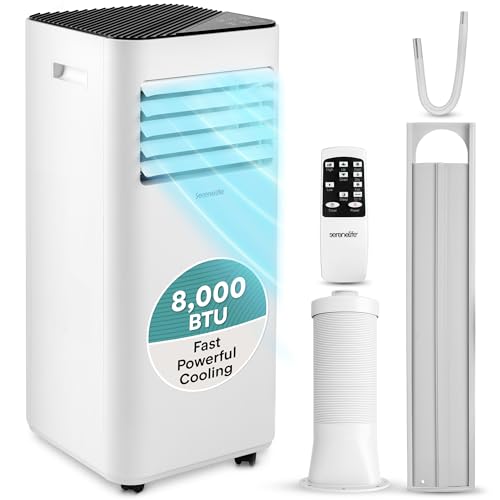
SereneLife SLPAC180W 8000 BTU Portable Air Conditioner - 3-in-1 Compact Standing Air Conditioner for Room Up to 300 Sq. Ft. - Floor AC Unit with Remote Control - Universal Casters, Window Mount Kit
Check price on AmazonFrequently Asked Questions
Why does my AC turn on but not blow cold air?
The most common reasons are a clogged air filter, low refrigerant charge, a dirty condenser coil, a faulty compressor, a broken capacitor, or a thermostat set incorrectly. Start with the filter and thermostat, then inspect the outdoor unit's fan and listen for the compressor.
Can a dirty filter cause my AC to stop cooling?
Yes. A clogged filter restricts airflow across the evaporator coil, causing the coil to freeze and the system to lose cooling capacity. Replacing the filter is the simplest and safest first troubleshooting step.
How do I know if my AC is low on refrigerant?
Signs include weak airflow, hissing or bubbling near the line set, ice on the indoor coil or outdoor line, and the system running continuously without reaching the setpoint. Only a licensed technician can confirm and recharge refrigerant — and a leak must be located first.
When should I call a professional for an AC that runs but blows warm air?
Call a professional if basic checks (filter, thermostat, breaker, outdoor unit clearance) do not resolve the issue, if you see ice on the coils, if you hear unusual noises, or if refrigerant or electrical components may be involved. These are not DIY repairs.
Is it safe to keep running my AC if it blows warm air?
For a short diagnostic period, yes. But if the system is frozen, short-cycling, or the compressor is struggling, continued operation can cause further damage. Turn the system off at the thermostat and call for service.
Ready to Restore Cold Air?
If you have checked the filter, thermostat, breaker, and outdoor unit clearance and the problem persists, it is time for a professional diagnostic. Browse our recommended air conditioners for reliable replacement options, or review the troubleshooting guides linked throughout this page to narrow down your symptom.
Explore Air Conditioner Options