
New Air Conditioning System: Complete Buyer's Guide
Everything a research-stage buyer needs to know before committing to a new cooling system — from system types and sizing to efficiency ratings, installation steps, and product selection.
Explore System TypesWhy this guide exists: Replacing or installing a new air conditioning system is a long-term decision that affects comfort, energy use, and home value. Most visitors arrive here already knowing they want a new system but still unsure about which type, size, or efficiency level fits their home. This guide walks through each decision in order — technology, sizing, efficiency, installation, and final product selection — so you can move from research to purchase with confidence.
System Types at a Glance
| System Type | Best For | Tier Positioning | Key Consideration |
|---|---|---|---|
| Central Air Conditioning | Whole-home cooling with existing ductwork | Mid-range to premium | Requires duct inspection and proper load calculation |
| Ductless Mini-Split | Homes without ducts or room-by-room zoning | Entry-level to premium | One outdoor unit can serve multiple indoor heads |
| Window AC | Single rooms and short-term cooling needs | Entry-level tier | Simple installation; limited to window-adjacent rooms |
| Portable AC | Renters and spaces without permanent mounting | Entry-level to mid-tier | Needs venting; less efficient than fixed systems |
| Packaged Unit | Homes with limited indoor space or roof-mount options | Mid-range to commercial-grade | All components housed in one outdoor cabinet |
Choosing the Right System Type
The first decision in any new air conditioning system project is the system architecture. Each type solves a different physical constraint, so the right choice depends on your home's ductwork, available electrical capacity, and how many zones you want to cool independently.
Central Air Conditioning
Central systems remain the standard for whole-home comfort where ductwork already exists. A new central system pairs an outdoor condenser with an indoor air handler or furnace coil, distributing cooled air through supply and return ducts. When properly designed, central systems offer the most uniform temperature control across a home. The critical variable is duct quality — leaking or undersized ducts can undermine even a high-efficiency condenser, so a duct inspection should always precede a central system purchase.
Ductless Mini-Split Systems
Mini-splits have become a mainstream choice for new installations because they sidestep ductwork entirely. A single outdoor unit connects to one or more wall-mounted, ceiling cassette, or floor-mounted indoor heads via a small refrigerant line set. This makes them ideal for older homes, additions, and rooms that are difficult to cool with a central system. Multi-zone mini-splits allow independent temperature control per room, which is a significant comfort advantage in homes with uneven occupancy patterns.
Window and Portable Units
For single rooms, rentals, or temporary needs, window and portable air conditioners remain practical. Window units are the simplest to install and generally more efficient than portable units of comparable capacity. Portable units offer flexibility and no permanent mounting, but they require a window vent kit and tend to run louder. Neither is a substitute for a whole-home system, but both serve specific use cases well.
Packaged Systems
Packaged units combine the condenser, evaporator, and often the heating components in a single outdoor cabinet, typically installed on the roof or a concrete pad. They are common in homes with limited indoor mechanical space and in light commercial applications. Packaged systems are available across entry-level through commercial-grade tiers, with efficiency varying considerably between models.
Practical tip: If your existing system is struggling and you are weighing repair against replacement, review the common failure symptoms first — for example, an AC unit that runs but does not cool or a central air system that is on but not blowing — because some issues are repairable while others signal it is time for a new system.
Sizing a New Air Conditioning System Correctly
Sizing is the single most consequential technical decision in a new installation, and it is also the one most often done incorrectly. Capacity that is too small leaves the home uncomfortable on peak days; capacity that is too large causes short cycling, poor humidity control, and premature wear.
The professional standard is a Manual J load calculation, which accounts for square footage, ceiling height, insulation values, window area and orientation, air infiltration, and local design temperatures. A rule-of-thumb estimate based only on square footage is a starting point at best. If you want to understand the sizing logic before speaking with a contractor, review the capacity ranges commonly associated with room sizes — for instance, 8,000–10,000 BTU systems for medium rooms and 12,000–14,000 BTU systems for larger rooms — but treat those ranges as orientation, not as a substitute for a proper load calculation.
For whole-home projects, the sizing question becomes more complex. Homes around 1,200 square feet and homes around 3,000 square feet require fundamentally different system architectures, not just different capacities. If you are planning a larger installation, it helps to understand how system requirements scale for a 3,000 square foot house before evaluating specific models.
Understanding Efficiency Ratings
Every new air conditioning system sold in the United States is rated on efficiency scales that directly affect long-term operating performance. The three ratings that matter most are SEER2, EER2, and — for heat pump systems — HSPF2.
- SEER2 measures seasonal cooling efficiency across a range of outdoor temperatures. Higher SEER2 values indicate a more efficient system over a cooling season.
- EER2 measures efficiency at a specific peak-load condition. It is a better indicator of performance on the hottest days than SEER2 alone.
- HSPF2 applies to heat pumps and measures heating-season efficiency. If you are considering a system that also heats, this rating matters as much as SEER2.
Minimum efficiency thresholds are set by the DOE and vary by region. Entry-level compliant systems meet the minimum and are a reasonable fit for mild climates with modest cooling loads. Mid-range systems typically add variable-speed compressors and better humidity control. Premium and top-tier systems combine the highest efficiency ratings with advanced controls and quieter operation. Choosing between these tiers is a matter of climate severity, usage patterns, and how long you intend to stay in the home.
It is also worth understanding the regulatory direction of the industry. Refrigerant transitions and updated efficiency standards mean that a new system installed today will be judged against future thresholds, so selecting a model that exceeds current minimums is a sound long-term decision.
Features Worth Prioritizing
Beyond type and efficiency, several features materially affect day-to-day satisfaction with a new system.
Variable-Speed and Inverter Compressors
Inverter-driven compressors modulate output continuously rather than cycling on and off at full capacity. This produces steadier temperatures, better dehumidification, and quieter operation. The difference is most noticeable in shoulder seasons when cooling demand is low but a single-stage system would still cycle at full power. If quiet, consistent comfort is a priority, inverter technology is the feature to prioritize.
Smart Thermostats and Controls
Modern systems pair well with programmable and smart thermostats that optimize scheduling and remote control. A new system installed with an outdated thermostat leaves efficiency on the table. Many manufacturers now offer proprietary communicating controls that unlock diagnostics and zone management features not available with generic thermostats.
Filtration and Air Quality
Higher-MERV filtration and built-in air purification options have become more common in residential systems. If anyone in the household has allergies or respiratory sensitivity, filtration capability is worth evaluating alongside cooling performance.
Noise Ratings
Outdoor unit sound levels vary considerably between tiers. Premium models are engineered for quieter operation, which matters if the condenser sits near a patio, bedroom window, or property line.
The Installation Process
Installation quality determines whether a new system performs to its rated specifications. A premium-tier system installed poorly will underperform an entry-level system installed correctly. The process generally follows these stages:
- Load calculation and system design. The contractor performs a Manual J calculation, reviews ductwork if applicable, and specifies equipment and line-set routing.
- Electrical and permit review. The installer confirms the electrical panel can support the new system and obtains required permits. Many municipalities require inspection before the system is energized.
- Removal of old equipment. Existing components are removed and refrigerant is recovered per EPA regulations.
- Installation and connection. New equipment is set, line sets are routed and brazed, and the system is evacuated and charged.
- Commissioning and testing. The installer verifies refrigerant charge, airflow, temperature differential, and control operation before handoff.
Before signing a contract, ask for the load calculation, confirm the model numbers being quoted, and verify the contractor's licensing and insurance. A written quote should specify equipment tiers, warranty terms, and whether ductwork or electrical work is included.
Maintaining a New System
A new system's efficiency and lifespan depend heavily on routine maintenance. The essentials are straightforward: replace or clean filters on the manufacturer's recommended interval, keep the outdoor unit clear of debris, and schedule an annual professional inspection that includes coil cleaning, refrigerant charge verification, and condensate drain checks.
Homeowners should also learn the early warning signs of trouble. Water where it should not be — an air conditioner leaking water inside — or a system that cannot keep up with peak heat, such as an AC that falls behind on hot days, are indicators worth addressing before they escalate. Catching these issues early preserves both comfort and the equipment warranty.
Recommended New Air Conditioning Systems
⚠️ AFFILIATE DISCLOSURE: This website contains affiliate links. As an Amazon Associate, we earn from qualifying purchases. If you make a purchase through these links, we may receive a small commission at no additional cost to you. Read our full affiliate policy.

Rellytech Mini Split AC/Heating System, 18000 BTU, 19 SEER2 208-230V | Ductless air conditioner, energy efficient, pre-charged system, up to 1250sq.ft coverage, inverter heating and cooling
Check price on Amazon
Mitsubishi 18,000 BTU SEER 18 Wall Mount Ductless Mini-Split Inverter Cool & Heat Pump System 1.5 Ton Energy Efficient ~ NEW System
Check price on Amazon
Rellytech Mini Split AC/Heating System, 12000 BTU, 19 SEER2 115V/110V | Ductless air conditioner, energy efficient, pre-charged system, up to 750sq.ft coverage, inverter heating and cooling
Check price on Amazon
AC Installation Mistakes: Why New Air Conditioning Systems Fail (Practical HVAC Guides for Homeowners)
Check price on Amazon
Mitsubishi 24,000 BTU SEER 16 Wall Mount Ductless Mini-Split Inverter Cool & Heat Pump System 2 Ton Energy Efficient NEW R-454B System
Check price on Amazon
Refrigerant Charging & Service Procedures for Air Conditioning Workbook 2nd Edition
Check price on Amazon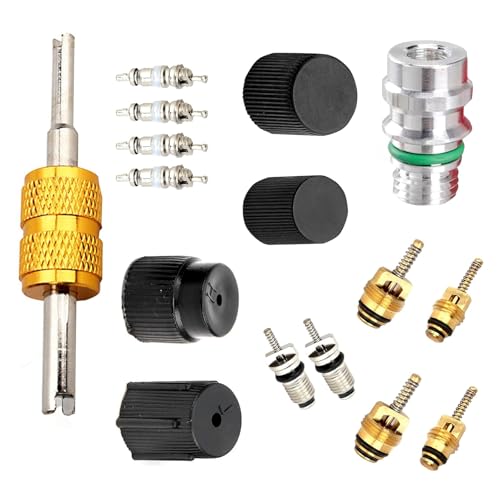
Downhill 16 PCS Air Condition Valve Core Kit, R134A A/C Ducts Pressure Caps and Service Valves, Universal AC System Charging Port Maintain Accessories, for Most Cars, Trucks, SUVs (Black)
Check price on AmazonFrequently Asked Questions
How do I choose the right size for a new air conditioning system?
Sizing should be based on a Manual J load calculation that accounts for square footage, ceiling height, insulation, window area, and local climate. A properly sized system runs efficiently and controls humidity; an oversized or undersized unit leads to comfort and efficiency problems.
What SEER2 rating should a new air conditioning system have?
New systems must meet the minimum SEER2 thresholds set by the DOE for their region. Choosing a higher-SEER2 system within your budget usually means better long-term efficiency, while entry-level compliant models are sufficient for mild climates.
How long does installing a new air conditioning system take?
A straightforward replacement of a central system typically takes one to two days. Ductless mini-split installations or projects that require new ductwork, electrical upgrades, or permit inspections can take longer.
Can I replace my old AC with a ductless mini-split system?
Yes. Ductless mini-splits are an excellent option for homes without ductwork or for adding zoned comfort to specific rooms. They require a professional assessment of electrical capacity, mounting locations, and line-set routing before installation.
What maintenance does a new air conditioning system need?
Regular filter changes, seasonal coil cleaning, condensate drain checks, and annual professional inspections keep a new system running efficiently and help preserve its warranty coverage.
Ready to Compare Systems?
Review the recommended systems above, confirm your sizing needs with a load calculation, and compare efficiency ratings across tiers before making your final selection.
View Recommended Systems