
Thermostat Set to Cool But AC Not Turning On? Here's the Fix
Your thermostat says "cool," but your outdoor unit stays silent. We'll walk you through the 10 most common reasons why your air conditioner won't start and how to fix them safely.
START DIAGNOSISBefore You Panic: A non-starting AC is often caused by a simple issue you can fix yourself. From tripped breakers to clogged drain lines, this guide can help you avoid an unnecessary diagnostic service call fee. Always prioritize safety—turn off the AC breaker before inspecting electrical components.
Why Won't My AC Kick On Even Though the Thermostat is Set to Cool?
You hear the thermostat click, maybe feel the faintest hum, but the refreshing blast of cold air never arrives. This scenario is frustrating, especially during the peak of summer. The good news is that the problem lies within a specific sequence of events that must happen for your AC to run. If any link in that chain is broken, the system stalls.
Your AC system is a loop of communication and power. The thermostat sends a low-voltage signal to the air handler (indoor unit) and condenser (outdoor unit). This signal triggers relays, contactors, and motors. A break in this chain can be electrical, mechanical, or safety-related. Understanding the basics of how your AC works is the first step to a precise diagnosis.
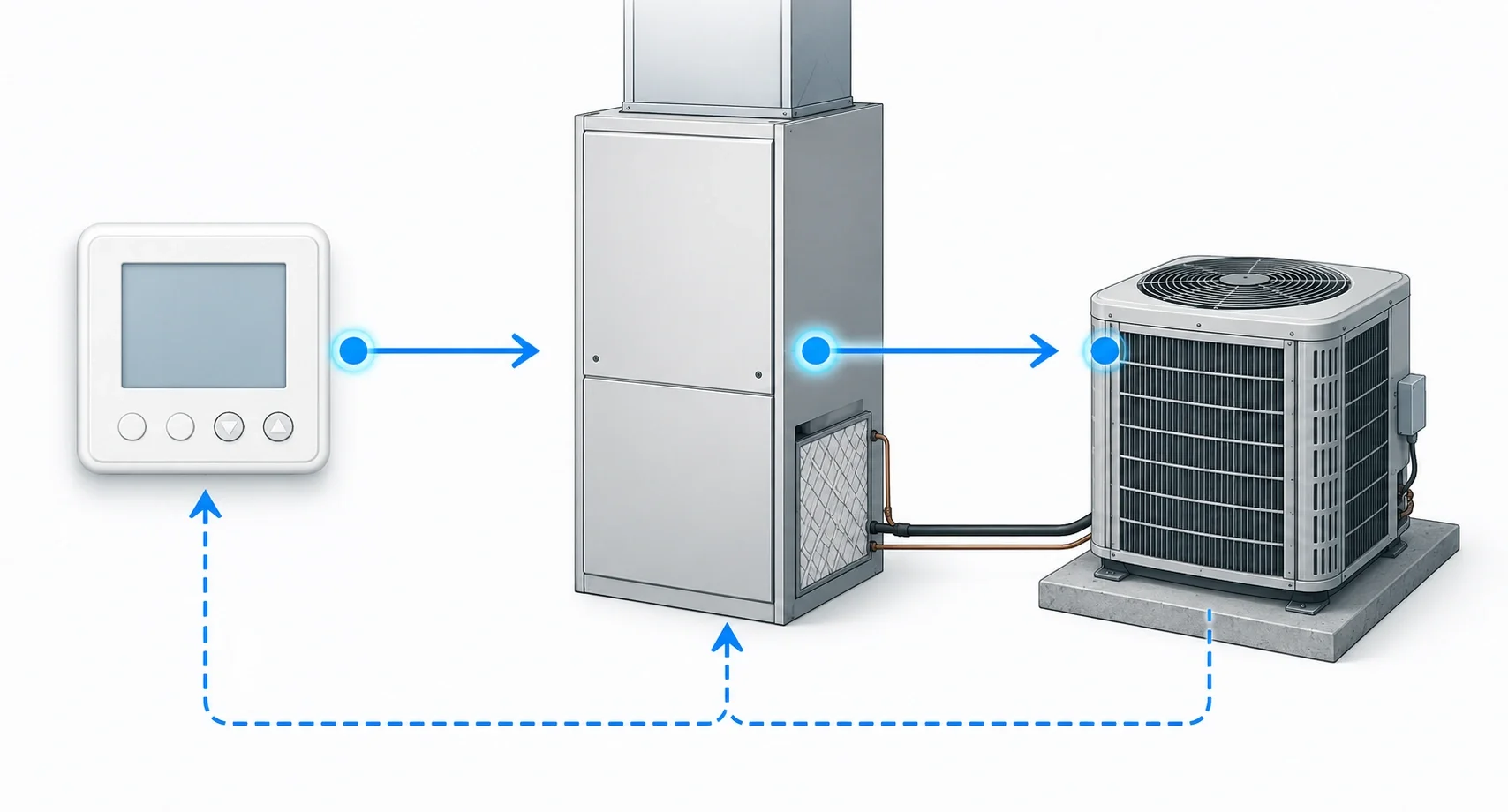
Quick Diagnostic Checklist
Start with the basics. Run through these five common culprits before diving into more complex troubleshooting. These checks alone resolve a large share of AC not starting complaints.
| Checkpoint | What to Look For | Quick Fix |
|---|---|---|
| Thermostat Power | Blank screen or flashing low-battery icon | Replace batteries; check for a tripped float switch if powered by the system |
| Circuit Breakers | AC breaker in the "OFF" or middle position | Firmly flip the breaker to OFF, then back to ON |
| Safety Switches | Water in the drain pan, float switch is up | Clear the clogged condensate drain line; dry the safety switch |
| Air Filter | Filter is gray, clogged, or caked with dust | Replace the filter to restore proper airflow |
| Disconnect Box | Outdoor disconnect box is in the "OFF" position or fuse is blown | Flip the disconnect box to ON; replace blown fuses |
10-Step DIY Troubleshooting: From Easiest to Advanced
We've ordered these steps from the simplest checks to more involved diagnostics. Always turn the power off at the breaker before inspecting any wiring or components to prevent electric shock.
Verify the Thermostat Settings
It sounds obvious, but the solution might be right at your fingertips. Ensure the system mode is set to "Cool" and the fan is set to "Auto". If the fan is set to "On," air will blow continuously, but the outdoor unit will cycle off when the temperature is met, leading to confusion. Make sure the set temperature is at least 5°F below the current room temperature displayed on the screen.
If the thermostat screen is blank, it’s likely a power issue. Many digital thermostats run on batteries, but some draw power from the furnace circuit. A tripped float switch (see Step 3) can also cut power to the thermostat entirely. Learning the ins and outs of your programmable thermostat prevents unnecessary service calls.
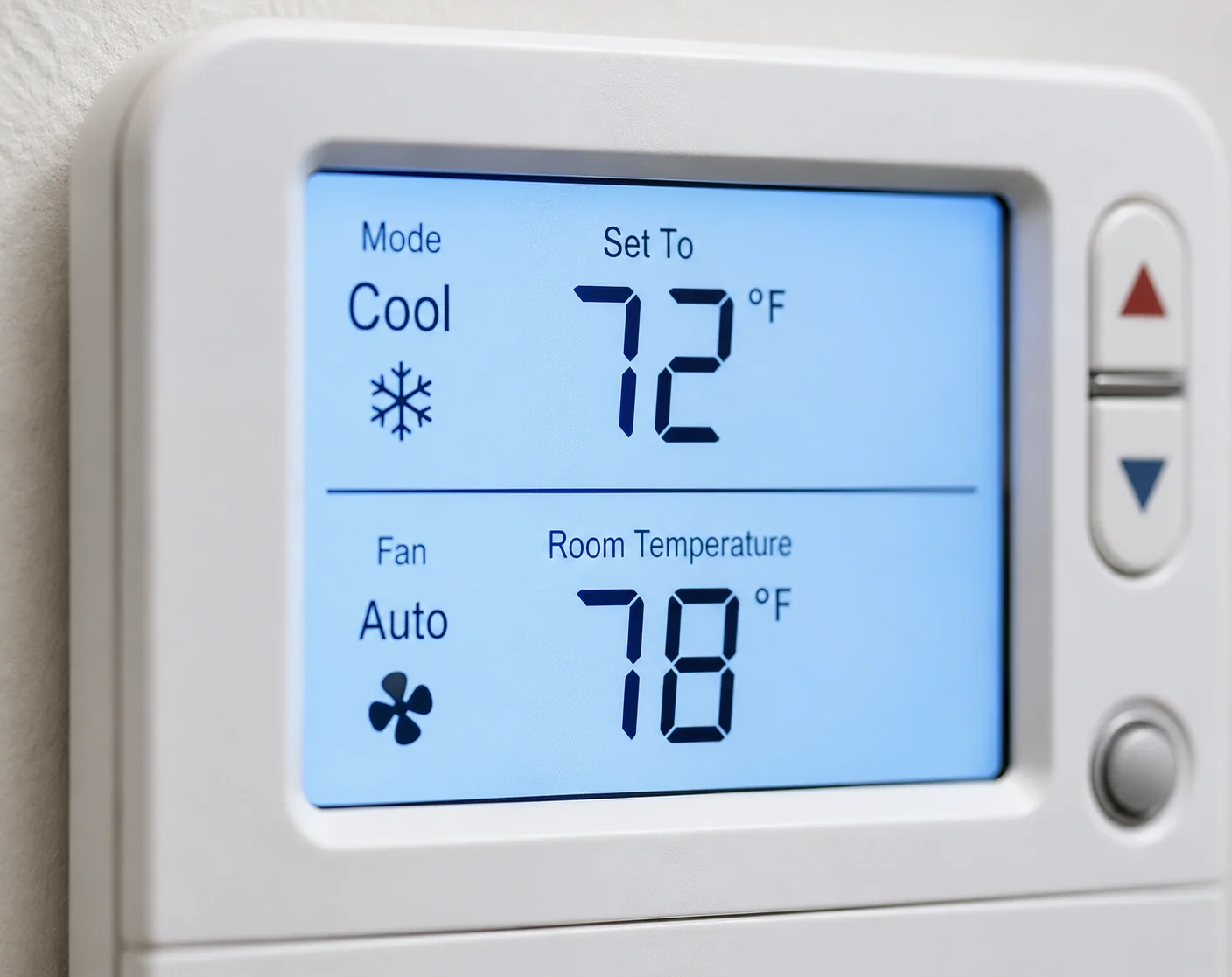
Check the Circuit Breaker Panel
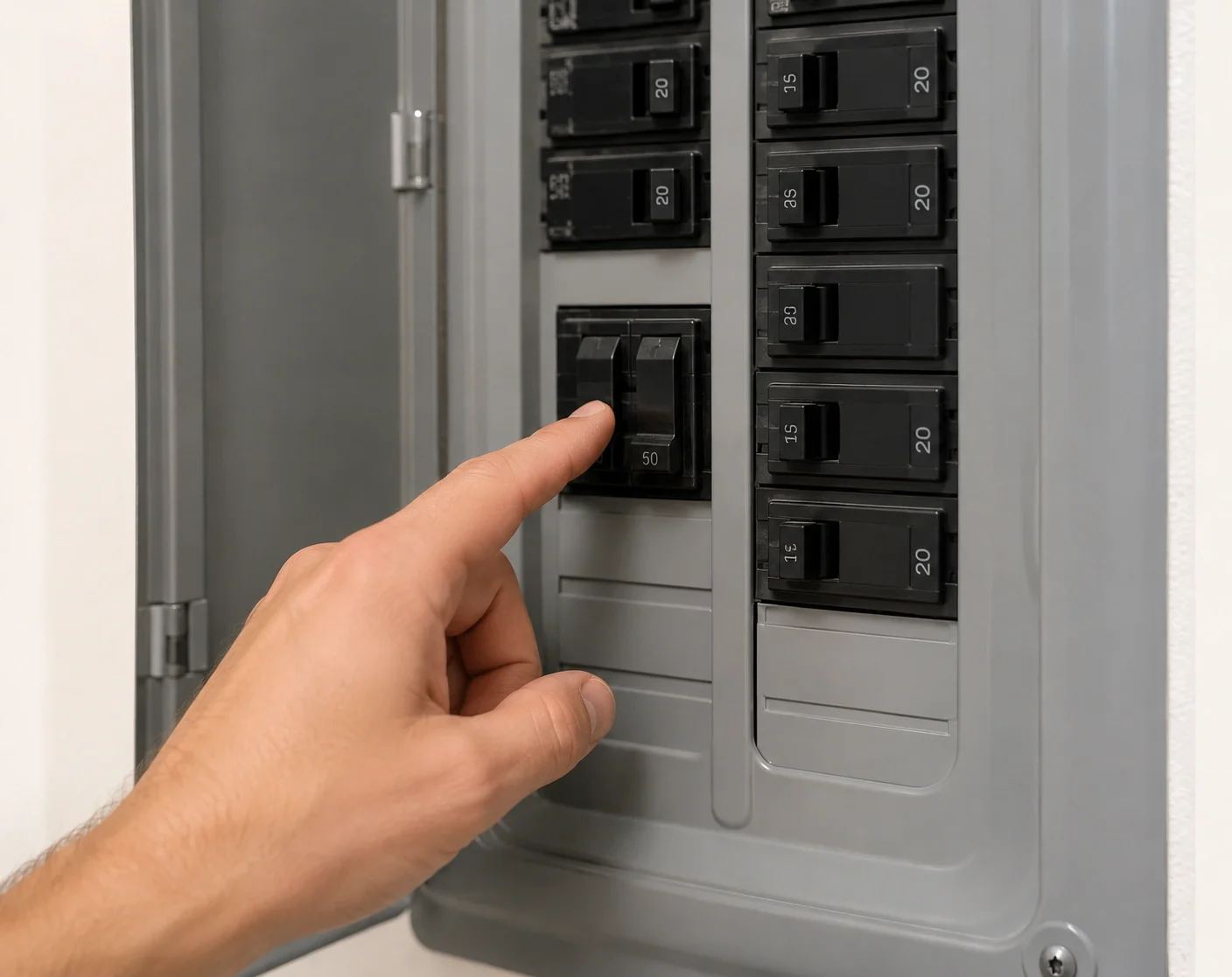
Your AC runs on two separate breakers: one for the indoor air handler and one for the outdoor condenser. A power surge, a dirty condenser coil causing an overload, or a weak breaker can trip one or both. Locate your main electrical panel. The AC breakers are usually a double-pole breaker (two switches tied together). If one is in the middle or "OFF" position, flip it firmly to OFF, wait ten seconds, then flip it back to ON.
If the breaker trips again immediately, do not reset it again. This indicates a serious short circuit or ground fault in the compressor or wiring that requires professional attention. For more on this, read our guide on proper AC amps and breaker sizing.
Inspect the Condensate Float Switch
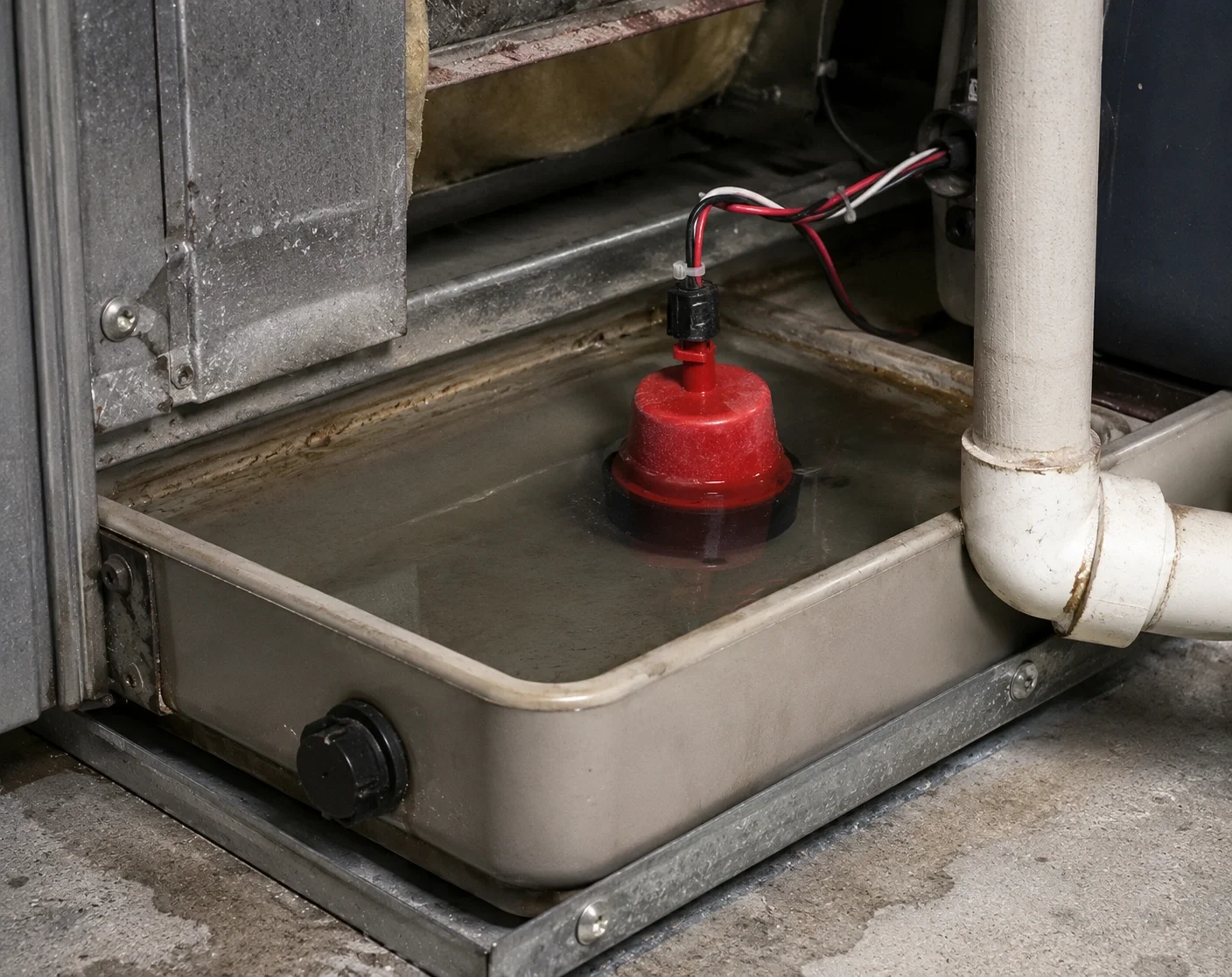
This is a hidden culprit that mimics a total power failure. When your AC cools, it removes humidity, creating condensation. A clogged drain line causes water to back up into a drain pan. A safety device called a float switch then rises like a buoy, breaking the electrical circuit to prevent a catastrophic water overflow. The thermostat may go completely blank, or the outdoor unit simply won't start.
Find your indoor air handler. Look for a white PVC pipe and a small component with wires attached near the drain pan. If water is present, you need to clear the AC drain line blockage. After clearing the clog and drying the pan, the switch should reset automatically.
Look at the Outdoor Disconnect Box
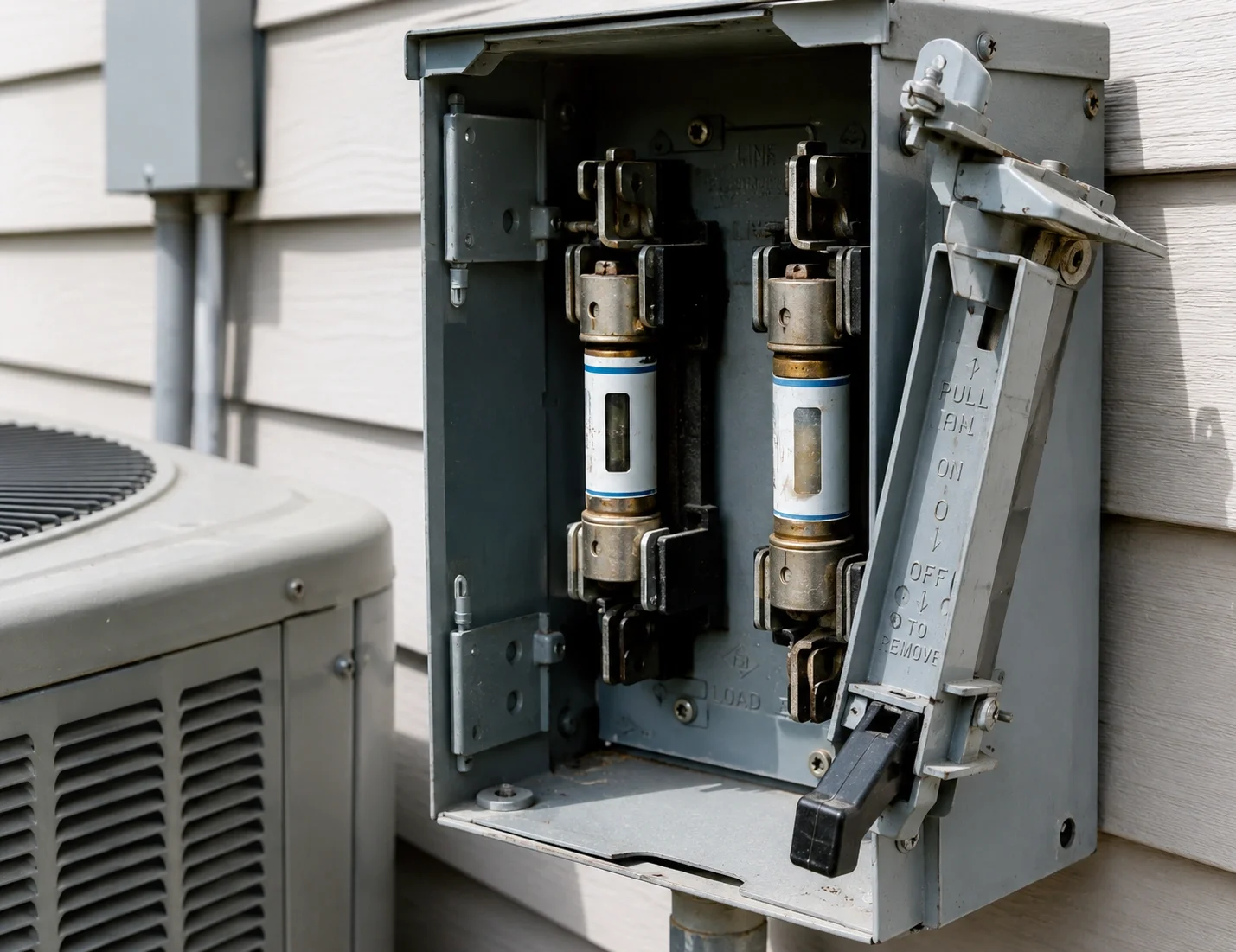
Next to your outdoor condenser unit, there’s a gray metal box mounted on the wall. This is the service disconnect. It often contains a pull-out handle or a lever. Occasionally, this gets switched off during yard work or by mistake. Open the box and ensure the disconnect is fully seated in the "ON" position. Some disconnects use cartridge fuses. With the main breaker OFF, you can check the fuses with a multimeter for continuity; a blown fuse looks cloudy or broken internally.
Replace a Dirty Air Filter
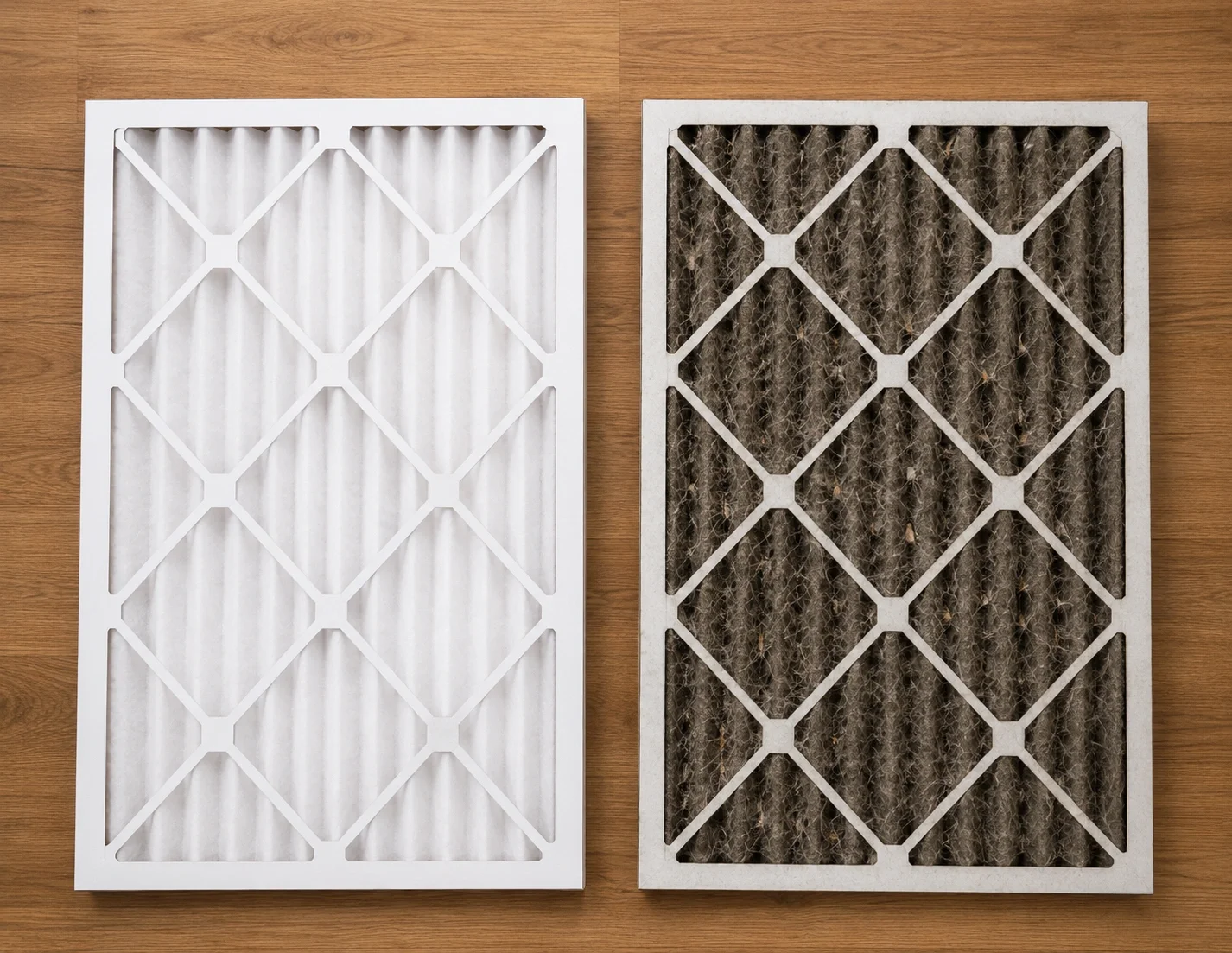
A severely clogged air filter restricts airflow across the evaporator coil. This can cause the coil to freeze into a solid block of ice. When the system senses low airflow or a pressure drop from ice, its internal safety limit switches will prevent the compressor from running to protect it from liquid refrigerant damage. If your system starts after a long break but then stops, turn it off and check the indoor coil for ice through the panel. Replace the filter immediately and knowing when to replace your AC filter is a low-cost way to prevent major breakdowns.
Test the Capacitor (Visual Check)
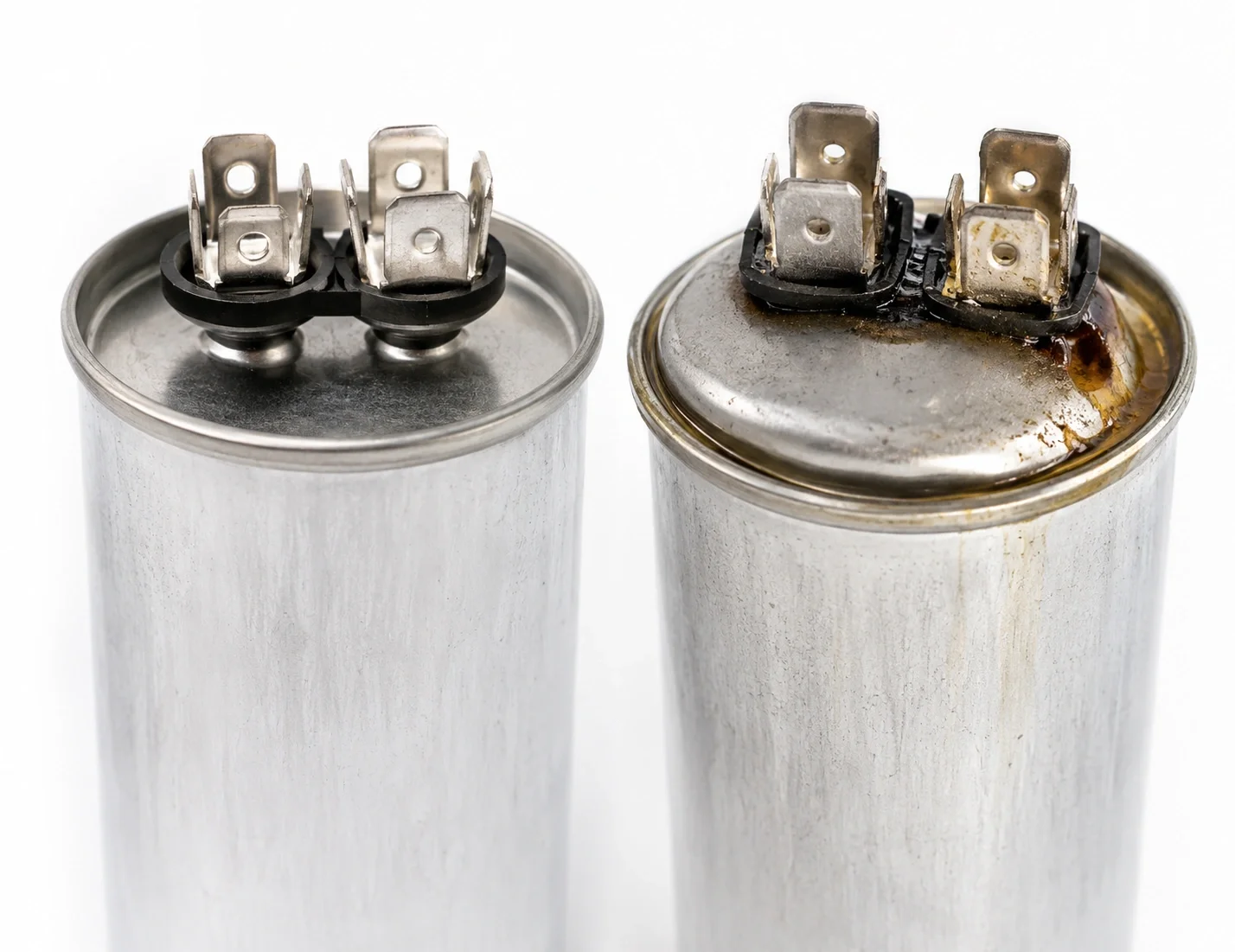
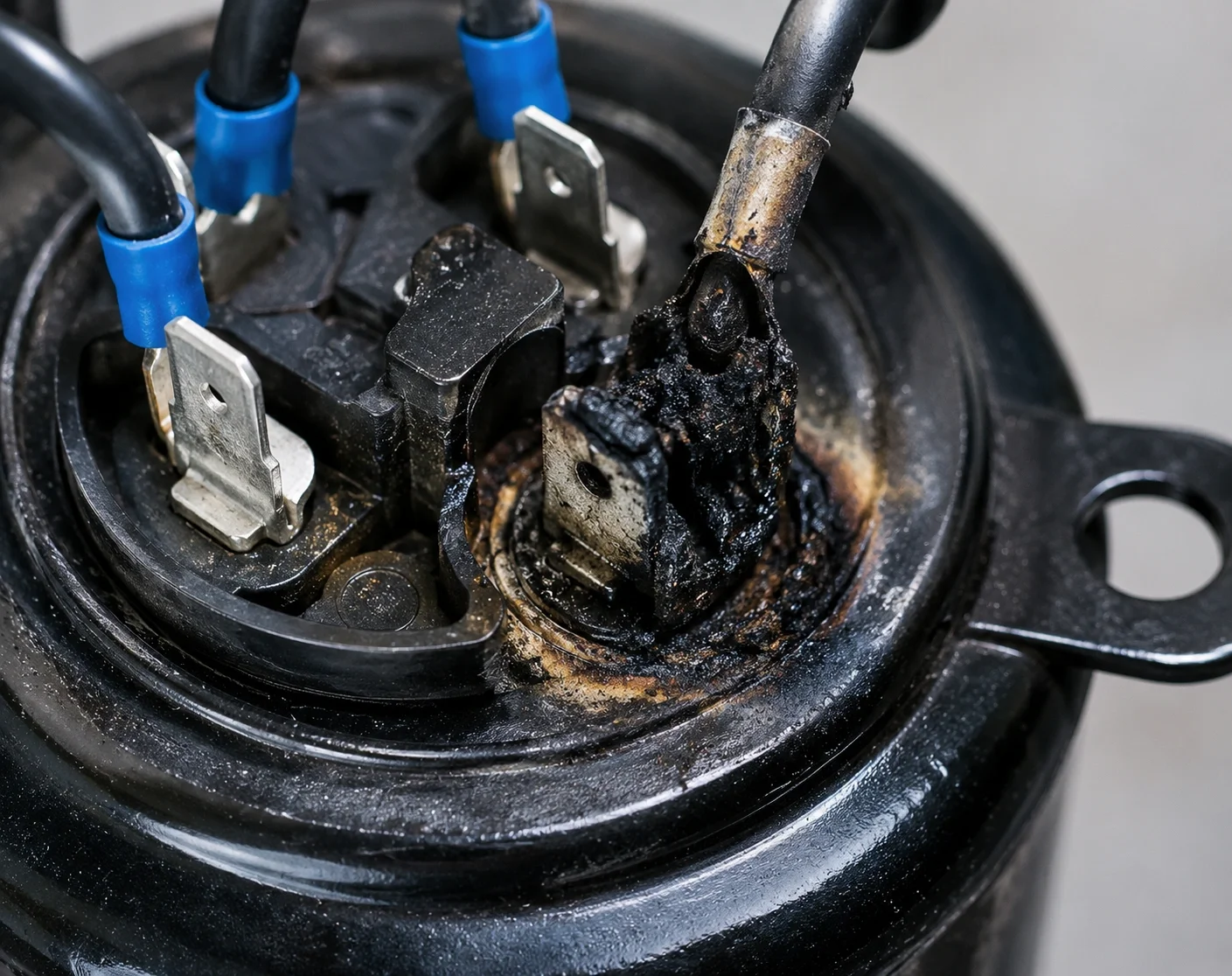
The capacitor is a cylinder-shaped component in the outdoor unit that provides the jolt of power to start the compressor and fan motor. A failing capacitor is the most common cause of an AC that hums but won't start. With the power OFF at the main breaker and the disconnect box, remove the access panel on the condenser. Look at the capacitor. If it’s bulging, oozing oil, or has a swollen top, it is dead and needs replacing.
A capacitor can be tested with a multimeter that reads microfarads (µF), but if you see physical damage, it's done. Replacing a capacitor is an entry-level repair in terms of part complexity and effort, but because it stores a dangerous charge even when power is off, many homeowners prefer to call a pro. This is a standard part of an annual AC service tune-up.
Inspect the Contactor
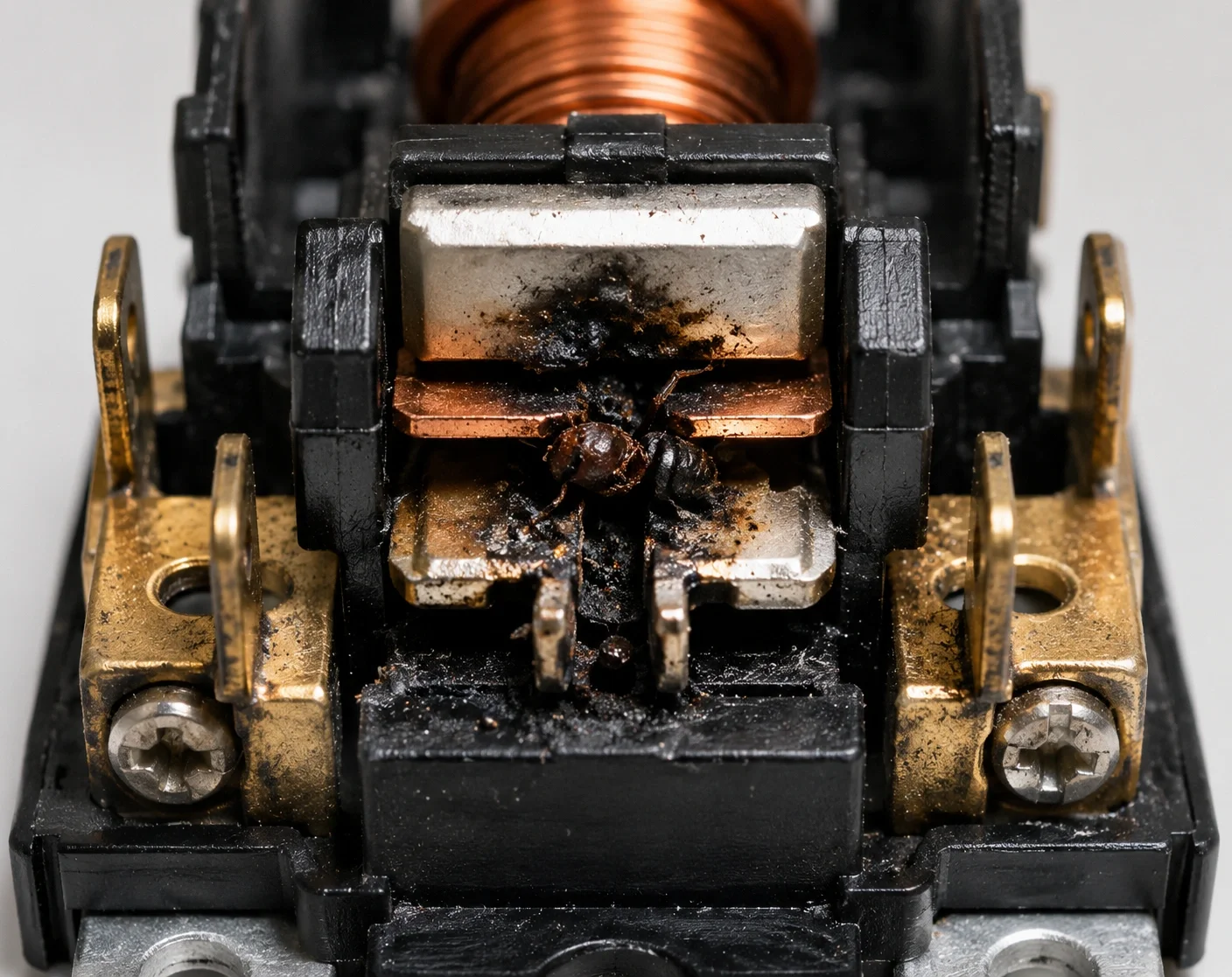
The contactor is a relay switch in the outdoor unit. When the thermostat sends the "cool" signal, the contactor magnetizes and slams a set of contacts together to send high voltage to the compressor and fan. Over time, ants, spiders, or earwigs can crawl between the contacts and get electrocuted, preventing the connection. Pitting and burning on the contacts can also happen after years of use. With the power OFF, look for charred spots or a bug carcass between the plates. If you find one, cleaning it may restore function temporarily, but replacement is the best long-term fix.
Check the Thermostat Wiring
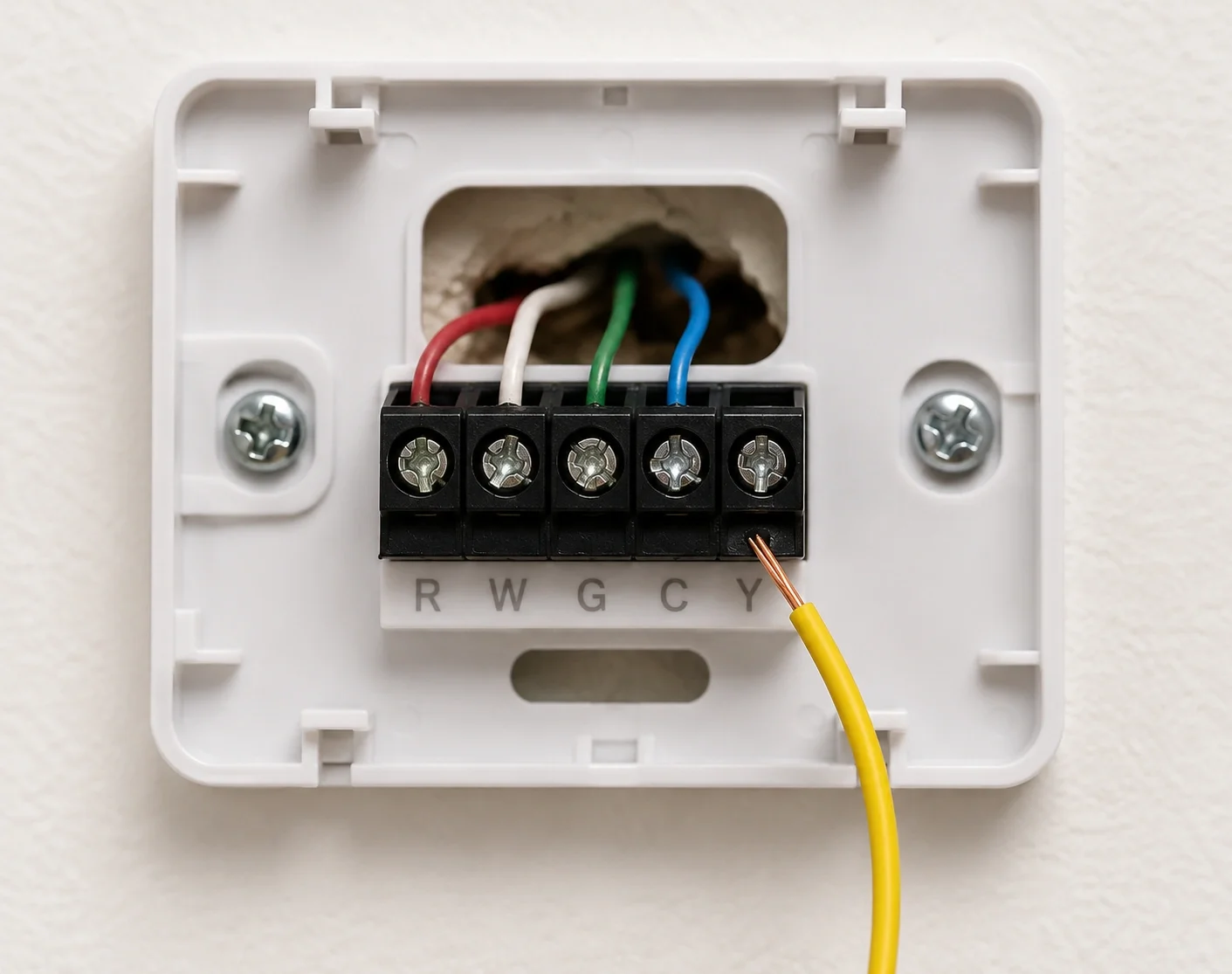
If the outdoor unit doesn't even try to start, the low-voltage signal might not be reaching it. Remove the thermostat face plate. Look for a wire on the "Y" terminal (cooling signal) and "C" terminal (common wire). Ensure the wire is securely screwed down. Then, go to your furnace's control board and find the corresponding thermostat wires. Look for any loose wire nuts. A common DIY test is to disconnect the Y and R wires and touch them together briefly; if the condenser starts, the wiring is good, and the thermostat is bad. However, if you aren't experienced with this, it's best to call a certified HVAC technician.
Check for a Tripped High-Pressure Reset Switch
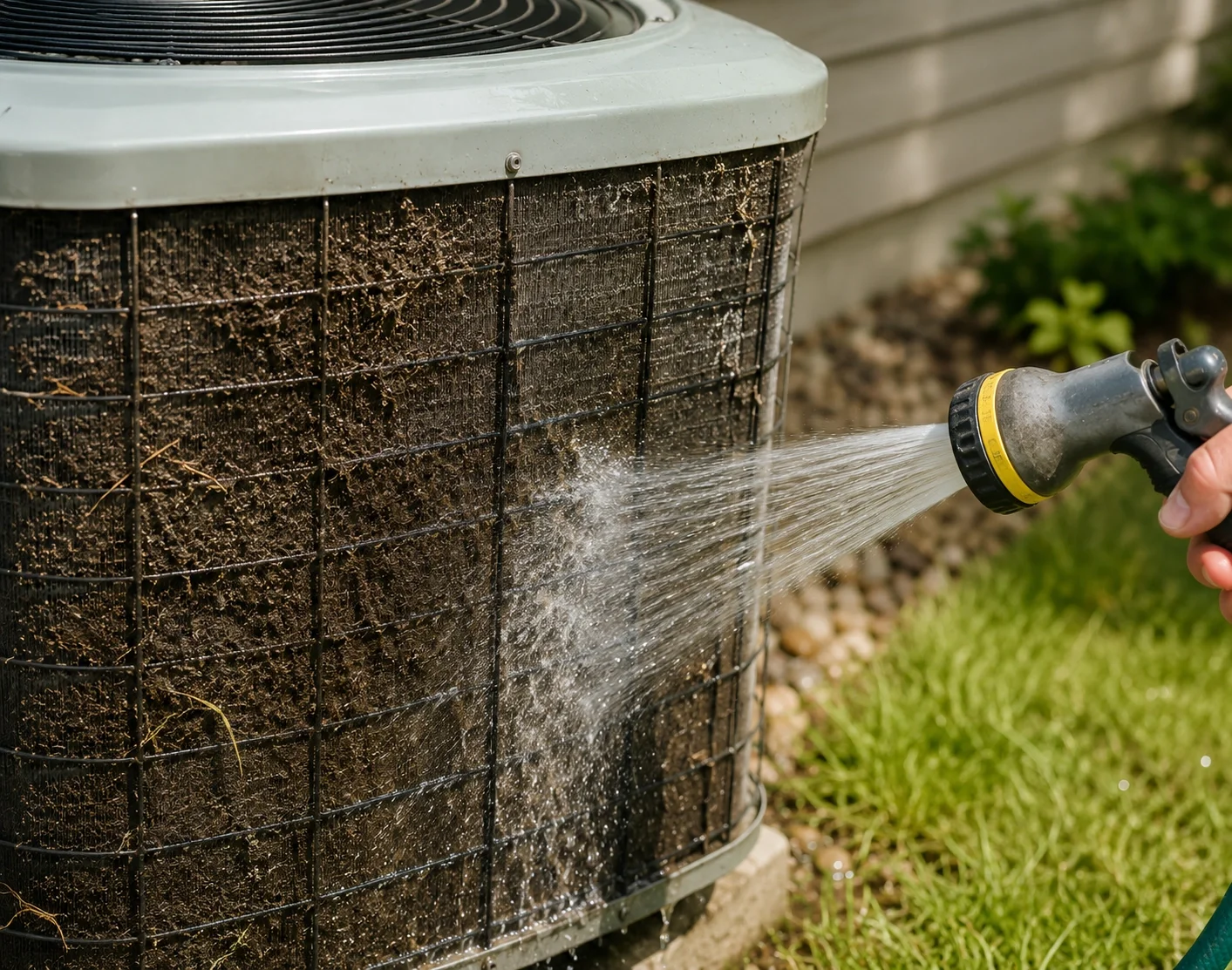
Some AC units, especially newer inverter technology models, have a high-pressure safety switch. This switch can trip if the condenser coil is extremely dirty or if the condenser fan motor isn't spinning fast enough on a hot day. The fix might be as simple as washing the outdoor coil gently with a garden hose. Let it dry completely, then press the reset button (a small red button typically located near the refrigerant lines) if your unit has one.
Evaluate the Compressor Itself
If the fan runs outside but the compressor doesn't engage (you won't hear the distinctive low hum), and the capacitor and contactor are fine, the compressor may have failed internally. A compressor can seize up mechanically or burn out electrically. A telltale sign is a "hard start" kit installed previously. You can hear a brief buzz followed by a click, then silence. This is the compressor's internal overload protector cycling. At this point, you're looking at a major, high-end repair or a system replacement. Review our cost comparison for AC compressor replacement vs. a new unit to make an informed decision.
When to Stop and Call a Professional
Safety is paramount. If you encounter any of these situations, put down the tools and contact a licensed HVAC contractor:
- The breaker immediately trips after resetting it.
- You find visible refrigerant leaks (oily, greasy residue on lines) or smell a pungent chemical odor.
- The compressor is humming loudly but not starting, indicating a potential mechanical failure.
- You are uncomfortable working inside the electrical panel or with a multimeter.
Most diagnostic service calls fall into an entry-level tier for professional service. Use our checklist to find a trusted HVAC contractor near you. A faulty AC that won't turn on is often a relatively low-complexity fix if it's a capacitor or contactor (entry-level repair tier), but a failed compressor pushes the project into the high-end repair tier and may warrant considering a full system replacement.
Preventing Future No-Starts
Reliability comes from preventative care. Many of the issues that cause an AC not to start stem from neglect during the off-season. Here’s how to protect your system year-round:
Seasonal Tune-Ups
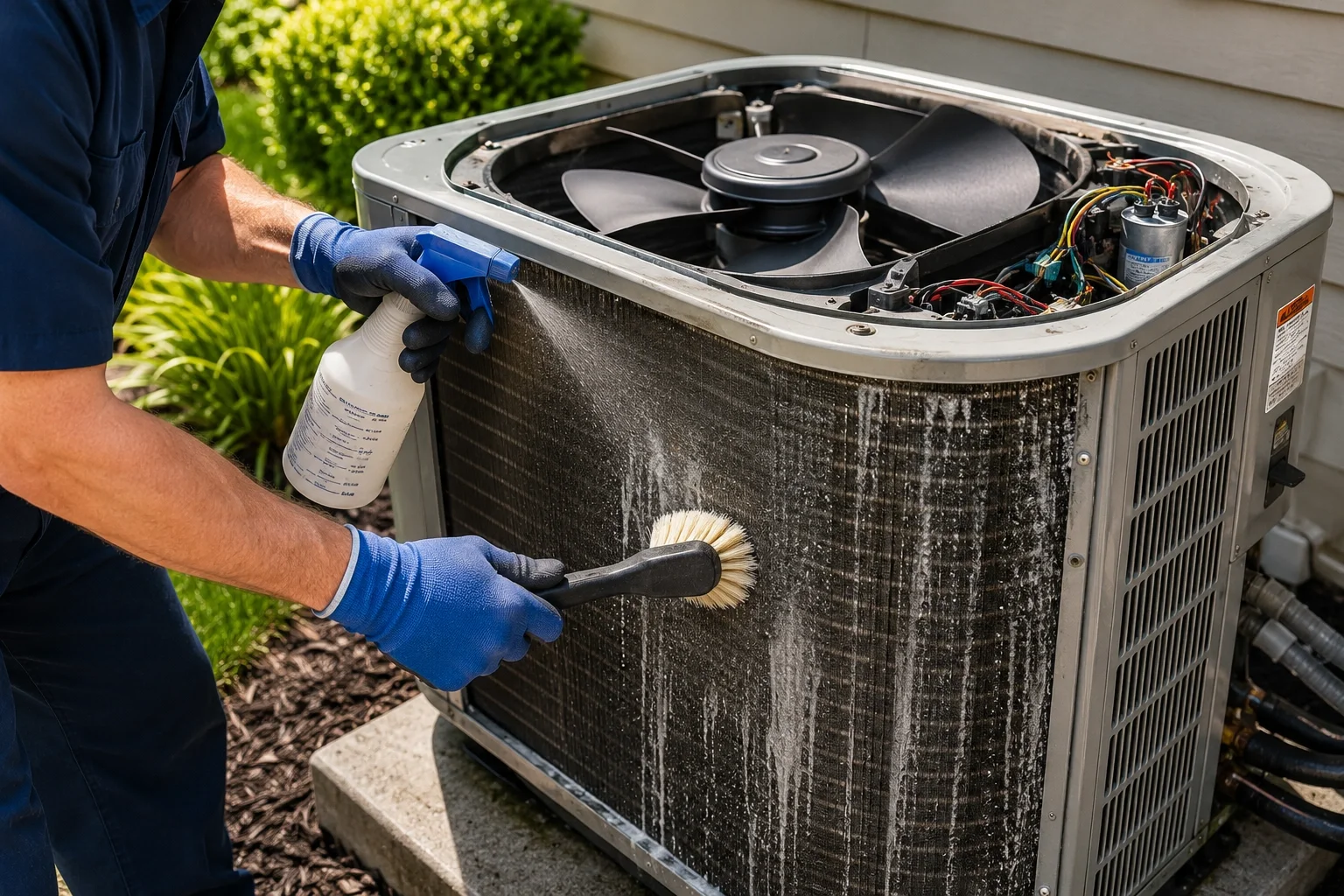
A professional seasonal AC maintenance checklist catches loose electrical connections and low refrigerant before they leave you sweating.
Smart Monitoring
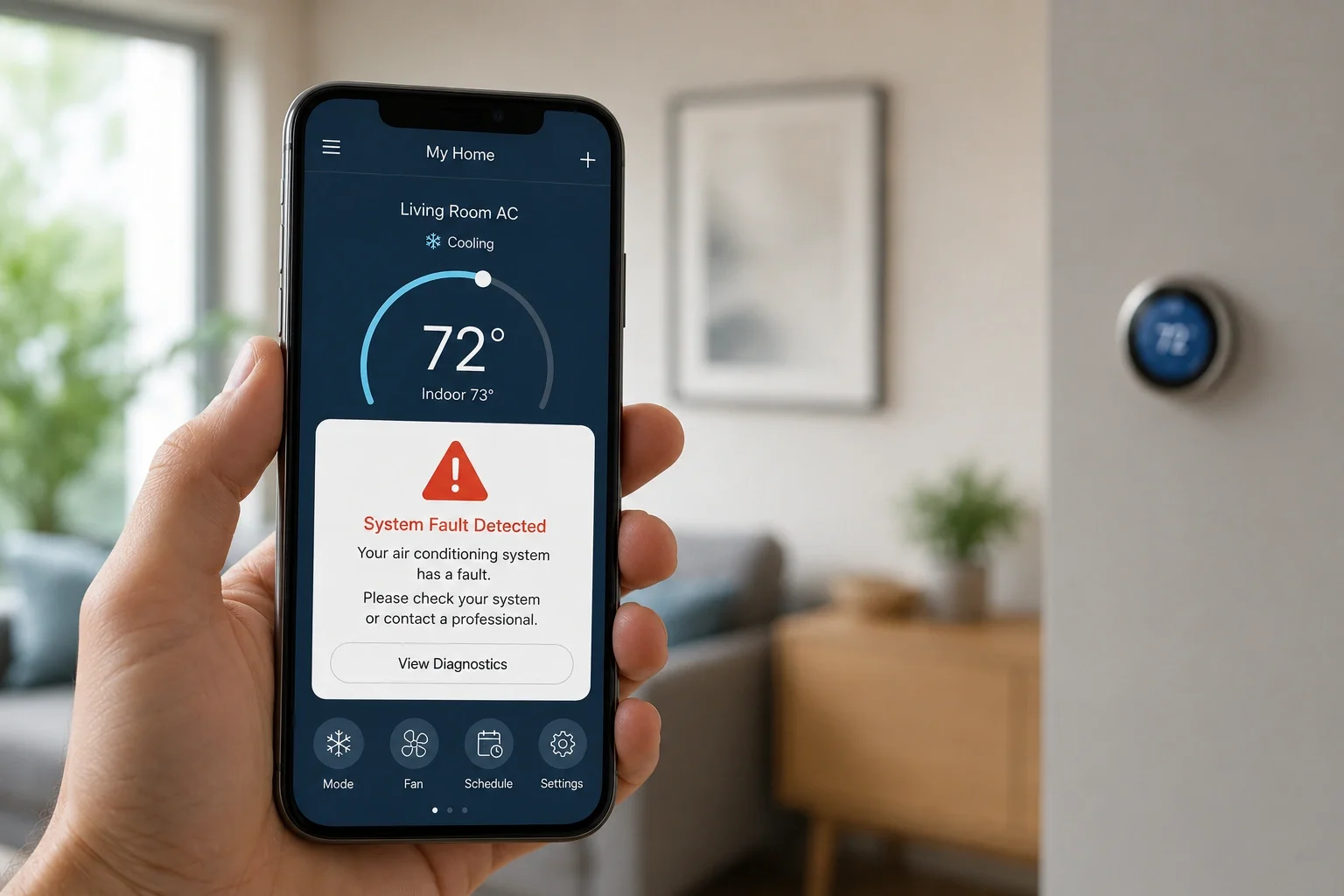
Upgrade to an AC unit with smart Wi-Fi controls that sends diagnostic alerts to your phone the moment a fault code appears.
Electrical Protection
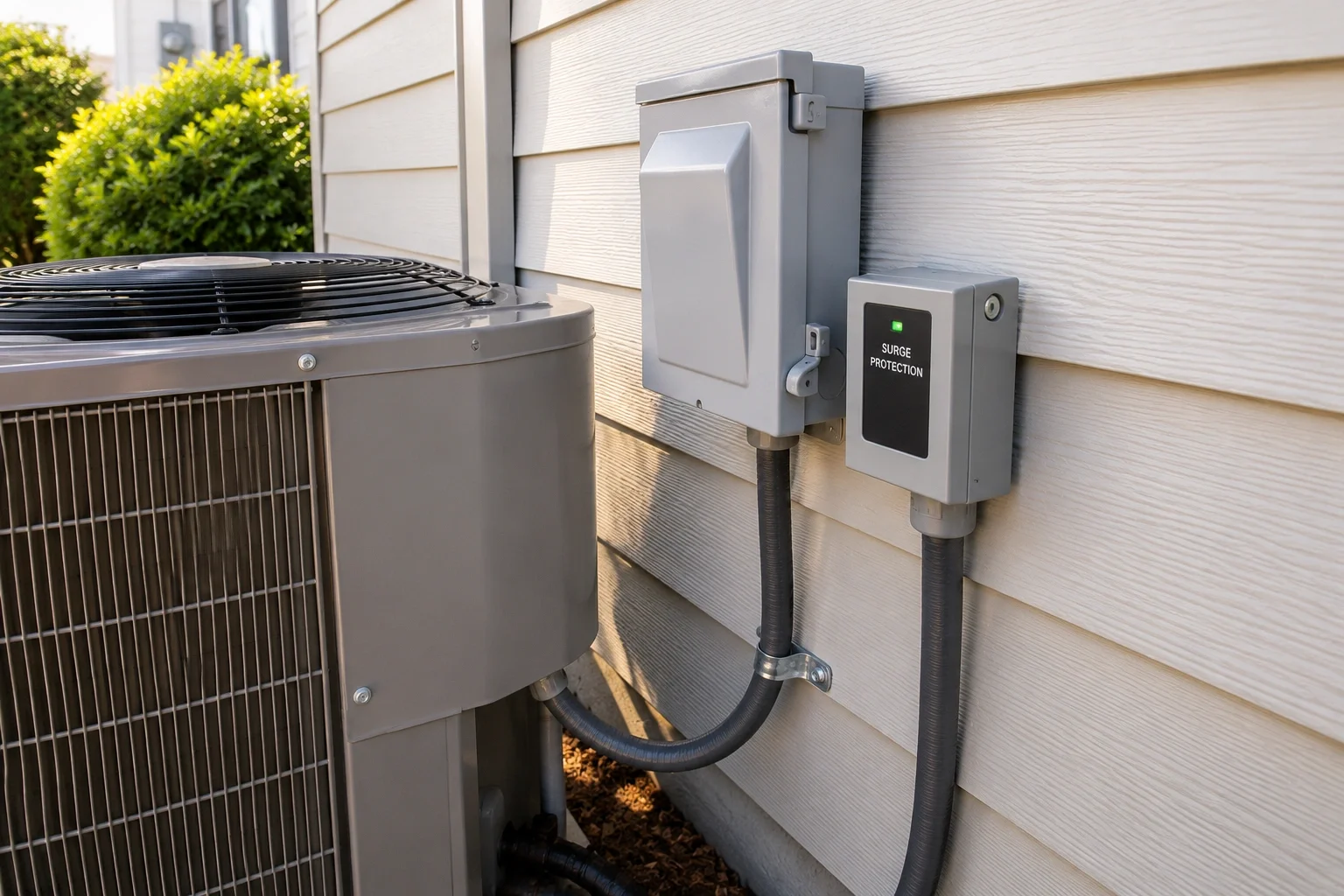
Power surges kill control boards and capacitors. Ask an electrician about installing an HVAC-specific surge protector at the disconnect box to safeguard your home's critical systems.


