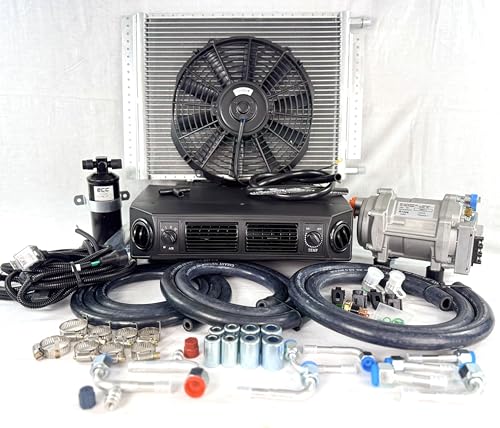
Where to Buy Freon for Car Air Conditioner
Your complete guide to sourcing automotive refrigerant safely, legally, and from the right suppliers
Understanding Car AC Refrigerant: If your car's air conditioner is blowing warm air, it may be low on refrigerant — commonly referred to as "freon" even though the term covers several chemical formulas. This guide explains the refrigerant types used in vehicles, where to source them, and the legal framework you need to understand before attempting a recharge.
Why Car AC Refrigerant Matters
Your vehicle's air conditioning system relies on a closed loop of refrigerant to absorb heat from the cabin and release it outside. Over time, small leaks can develop at seals, hoses, and fittings, causing the system to lose charge and blow warm air. Knowing the correct refrigerant for your vehicle — and where to obtain it — is the first step toward restoring cold air.
The two primary automotive refrigerants in circulation today are R-134a, which has been the standard for vehicles manufactured roughly between 1995 and 2021, and R-1234yf, a newer, lower-global-warming-potential refrigerant now used in most new vehicles. Older vehicles may still use R-12, which is heavily restricted. Identifying the correct type before shopping is essential to avoid damaging your system.
Common Refrigerant Types for Car Air Conditioners
| Refrigerant | Typical Vehicle Era | Key Characteristics | Availability |
|---|---|---|---|
| R-134a | 1995–2021 (most vehicles) | Widely used, readily available, requires EPA Section 609 certification for purchase in the US | Entry-level access; sold at auto parts stores to certified buyers |
| R-1234yf | 2021 and newer (most vehicles) | Lower global warming potential, mildly flammable (A2L class), increasingly common | Mid-tier availability; expanding at auto parts retailers |
| R-12 | Pre-1995 vehicles | Ozone-depleting, production banned in the US; only reclaimed stock is legal | Restricted; requires professional handling and certification |
Note that the term "freon" is a trademarked brand name that has become a generic shorthand. When shopping, always look for the specific chemical designation (R-134a or R-1234yf) rather than relying on the brand name alone.
Where to Buy Freon for Car Air Conditioner
In the United States, the sale of automotive refrigerant is regulated by the EPA under Section 609 of the Clean Air Act. This means you cannot simply purchase R-134a or R-1234yf off a shelf without proof of certification — but there are several legitimate channels through which certified individuals and professionals can obtain it.
⚠️ Legal Requirements for Buying Automotive Refrigerant
Under EPA regulations, anyone purchasing or handling automotive refrigerant in the United States must hold a valid Section 609 certification. This applies to R-134a and R-1234yf. Sellers are required to verify certification before completing a sale. Attempting to purchase refrigerant without certification — or purchasing it for someone who is not certified — can result in significant fines. Always confirm that your certification is current before shopping, and never vent refrigerant into the atmosphere.
How to Identify the Right Refrigerant for Your Car
- Check the under-hood label: Most vehicles have a sticker on the radiator support or underside of the hood specifying the refrigerant type and system charge capacity.
- Consult your owner's manual: The manual lists the refrigerant specification and often the recommended service interval.
- Inspect the service ports: R-134a systems use quick-connect ports with a specific diameter; R-1234yf ports are smaller and differently shaped to prevent cross-contamination.
- Look up by model year: As a rule of thumb, vehicles from the mid-1990s through roughly 2021 use R-134a, while most 2021+ vehicles use R-1234yf. Verify against your specific model.
- Never mix refrigerants: Using the wrong type can damage the compressor, seals, and other components, leading to costly repairs.
DIY Recharge vs. Professional Service
If you hold a Section 609 certification, a DIY recharge using a quality recharge kit can be a practical route for topping off a system that has lost a small amount of charge. However, refrigerant does not "wear out" — if your system is low, it has leaked. A proper repair addresses the leak first; simply adding refrigerant without fixing the leak is a temporary measure and may mask a larger problem.
For systems that have lost significant charge, that use R-1234yf, or that show signs of component failure, professional service is the safer and more sustainable choice. A technician will recover the existing refrigerant, perform a leak test, evacuate the system, and recharge it to the exact specification — all while complying with environmental regulations. When in doubt, consulting a certified professional protects both your vehicle and your legal standing.
Related Reading: If you are also researching refrigerant for home cooling systems, you can explore our guides on where to buy freon for your air conditioner and where to buy R-22 freon for home AC units. These resources cover the residential side of refrigerant sourcing and the regulatory differences between automotive and home HVAC systems.
Frequently Asked Questions
Can I buy freon for my car at a regular auto parts store?
Yes, many auto parts stores carry R-134a and increasingly R-1234yf. However, federal law requires that you present a valid EPA Section 609 certification at the time of purchase. Without certification, the store cannot legally sell refrigerant to you.
Is it legal to buy freon online?
Yes, provided the seller verifies your EPA Section 609 certification before shipping. Reputable online retailers will require your certification number during checkout. Purchasing from an unverified source is both a legal risk and a quality risk, since counterfeit or mislabeled refrigerant is a known problem.
What is the difference between R-134a and R-1234yf?
R-134a has been the dominant automotive refrigerant since the mid-1990s, while R-1234yf is a newer formulation with a much lower global warming potential. R-1234yf is now standard in most new vehicles. They are not interchangeable — using the wrong one can damage your system.
How do I get EPA Section 609 certification?
Section 609 certification is available through several EPA-approved testing organizations. The process typically involves a short online course and exam covering refrigerant handling, environmental rules, and safety procedures. Once certified, you can legally purchase and handle automotive refrigerant.
Why is my car AC losing refrigerant?
Refrigerant loss almost always indicates a leak at a seal, hose, O-ring, or component. Small leaks may be slow, requiring a recharge every season; larger leaks will cause rapid cooling loss. A professional leak test is the reliable way to identify and fix the source.
Can I use a recharge kit from a big-box store?
Recharge kits are sold at many retailers, but in the US they are subject to the same certification requirement. If you hold a Section 609 credential, a quality kit can be a practical way to top off a low system. If you do not hold certification, plan to have the service performed by a professional.
Ready to Restore Cold Air in Your Car?
Whether you are certified and ready to recharge or prefer to hand the job to a professional, understanding your refrigerant options is the first step. Browse our recommended automotive AC products below to find the right refrigerant and recharge supplies for your vehicle.
View Recommended ProductsFinal Thoughts
Buying freon for your car air conditioner is straightforward once you know your refrigerant type, understand the certification requirement, and choose a reputable source. Auto parts retailers, online marketplaces, and professional HVAC distributors all serve legitimate roles depending on your certification status and volume needs. For most vehicle owners, the safest path is to confirm the refrigerant specification, verify whether you hold Section 609 certification, and either source the refrigerant from a verified seller or schedule service with a trusted technician.
Because refrigerant handling is both an environmental and a legal matter, taking the time to follow the rules protects your vehicle, your wallet in the long run, and the atmosphere. With the right information in hand, you can make a confident decision about where to buy freon for your car air conditioner and how to approach the recharge process.