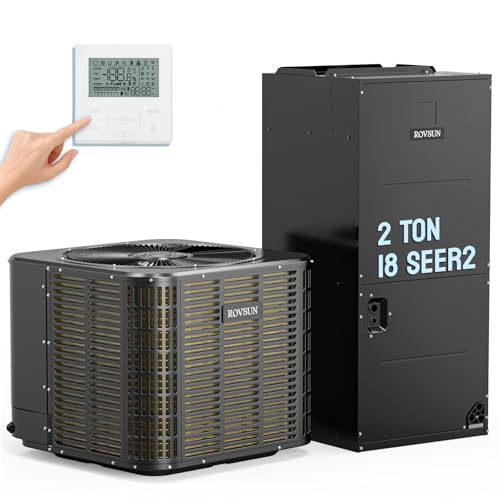
2 Ton Air Conditioning Unit Cost: What Buyers Should Understand
Researching a 2-ton system? This guide explains the variables that shape the investment, helps you match the unit to your home, and shows how to evaluate tiers so you can choose with confidence before you buy.
START WITH SIZINGWhy this matters: A 2-ton air conditioner is one of the most common residential sizes, but the overall investment varies widely depending on efficiency, build quality, and installation conditions. Understanding the moving parts helps you avoid overspending on features you do not need — and avoid underspending on a system that fits your home.
In This Guide
What a 2 Ton AC Actually Covers
A 2-ton air conditioner delivers 24,000 BTU per hour of cooling capacity. That places it in the middle of the residential range, making it a common choice for moderately sized homes. In practice, the right fit depends less on square footage alone and more on how much heat your home gains — through windows, walls, roof, and occupancy.
As a rough starting point, a 2-ton system is often considered for homes in the 1,000 to 1,400 square foot range. However, this is only a preliminary indicator. A well-insulated home with few windows may need less capacity, while a home with large west-facing windows or a hot climate may need more. A professional load calculation is the reliable way to confirm whether a 2-ton system is appropriate for your space.
- Climate zone: Hotter climates increase the cooling load and may push requirements beyond 2 tons.
- Insulation & air sealing: Poor insulation raises the load and can make a 2-ton unit work harder than intended.
- Window area & orientation: Large glass areas, especially west-facing, add significant heat gain.
- Ceiling height & layout: Open layouts and high ceilings change how air distributes and how much capacity is needed.
- Occupancy & appliances: Kitchens and rooms with electronics add internal heat.
If you are still comparing sizes, you can explore a related guide on 2 ton air conditioner systems to understand model families and common configurations, or review a broader overview of 2 ton air conditioning systems for whole-home context.
Key Factors That Shape the Investment
There is no single figure that applies to every 2-ton installation because the total investment is a combination of equipment and labor. The most useful approach is to understand each variable so you can evaluate quotes on equal footing.
| Factor | What It Affects | Buyer Tip |
|---|---|---|
| Efficiency tier | Higher-efficiency equipment typically carries a higher upfront figure but can reduce long-term energy use. | Match efficiency to your climate and how long you plan to stay. |
| Compressor technology | Single-stage, two-stage, and variable-speed designs differ in comfort and complexity. | Variable-speed systems cost more upfront but offer smoother temperature control. |
| Brand positioning | Entry-level, mid-range, and premium brands sit at different points in the market. | Compare warranty coverage, not just brand name. |
| Ductwork condition | Existing ducts may need sealing, repair, or replacement. | Ask for a duct inspection as part of the quote. |
| Electrical work | Panel upgrades or new circuits may be required. | Confirm whether electrical work is included. |
| Labor rates | Regional labor differences affect installation figures. | Get multiple quotes and compare scope line by line. |
Because these variables interact, two quotes for what appears to be the same 2-ton system can look quite different. One may include a higher-efficiency condenser, a new line set, and permit handling, while another may exclude those items. Reading the scope carefully is more important than comparing headline figures.
Understanding Product Tiers
Instead of focusing on a single number, it helps to think in terms of market tiers. These descriptors reflect where a product sits relative to others in the category and are more stable than any specific figure.
- Entry-level tier: Basic single-stage systems with standard efficiency. Solid choice for mild climates or secondary spaces where comfort demand is moderate.
- Mid-range tier: Two-stage or higher-efficiency single-stage systems. A balanced option offering better comfort and efficiency without top-tier complexity.
- High-end tier: Variable-speed systems with advanced controls and higher efficiency. Best for homeowners prioritizing quiet operation and consistent temperatures.
- Premium tier: Top-of-category systems with the most advanced features, longest warranties, and refined build quality.
When comparing quotes, ask which tier each model belongs to. A mid-range model typically offers smoother operation and better efficiency than an entry-level unit, while a high-end system adds finer control and quieter performance. The right tier depends on your comfort priorities and how long you intend to stay in the home.
Installation & Site Considerations
Installation quality has a direct impact on how well a 2-ton system performs and how long it lasts. Two homes with the same equipment can have very different outcomes depending on how carefully the system is sized, placed, and commissioned.
- Load calculation: A proper Manual J calculation confirms that 2 tons is the right capacity. Skipping this step risks oversizing or undersizing.
- Line set and refrigerant: Correct line length and proper vacuuming protect compressor life and efficiency.
- Indoor and outdoor placement: Clearances, airflow, and sun exposure affect performance and noise.
- Duct sealing: Leaky ducts waste capacity. Sealing and balancing improve delivered comfort.
- Thermostat and controls: A compatible thermostat with proper configuration ensures the system runs as intended.
- Permits and inspections: Confirm that the installer handles required permits and final checks.
If your project involves replacing an older system, it is worth reviewing guidance on whether to repair or replace, and how to compare quotes fairly. A well-documented installation scope is a strong signal of a professional contractor.
Efficiency Ratings Explained
Efficiency ratings help you compare how much cooling a system delivers relative to the energy it consumes. For central systems, SEER2 is the current standard, while EER2 reflects performance at peak conditions. Higher ratings generally correspond to higher-tier equipment.
| Rating | What It Measures | Why It Matters |
|---|---|---|
| SEER2 | Seasonal efficiency across a range of conditions | Useful for comparing annual energy use between models |
| EER2 | Efficiency at peak design conditions | Important in hot climates where the system runs near peak often |
| HSPF2 | Heating efficiency for heat pump systems | Relevant if the 2-ton system includes a heat pump |
Higher efficiency is not automatically the right choice for every home. In mild climates with short cooling seasons, the long-term benefit of top-tier efficiency may be limited. In hot climates with long run times, higher-efficiency equipment is often a worthwhile long-term investment.
System Types Available in 2 Ton
A 2-ton capacity is available across several system types. The right choice depends on whether your home has ductwork, how much space you have outdoors, and whether you need heating as well as cooling.
- Central split system: The most common configuration, pairing an outdoor condenser with an indoor air handler or furnace. Requires ductwork.
- Heat pump system: Provides both cooling and heating. A strong option in climates with moderate winters.
- Ductless mini-split: Ideal for homes without ducts or for additions. Can be more efficient in targeted zones.
- Packaged unit: A single outdoor cabinet containing all components. Common in certain home layouts and manufactured housing.
If your home lacks ductwork or you are cooling a specific area, a ductless approach may be more practical than a full central installation. If you already have ducts in good condition, a central split system is usually the most straightforward path.
Strengths & Trade-offs of a 2 Ton System
Strengths
- Well-matched to many mid-sized homes
- Broad selection across tiers and brands
- Efficient operation when properly sized
- Compatible with zoning and smart controls
- Parts and service widely available
Trade-offs
- Oversizing can cause short cycling and poor humidity control
- Undersizing leaves rooms uncomfortable on hot days
- Ductwork condition can add to overall scope
- High-end tiers carry a higher upfront investment
- Installation quality strongly affects outcomes
The most important takeaway is that sizing accuracy and installation quality matter as much as the equipment tier. A mid-range system installed correctly will outperform a premium system installed poorly.
Frequently Asked Questions
What size home does a 2 ton air conditioner cool?
A 2-ton system is typically considered for homes in the 1,000 to 1,400 square foot range, but climate, insulation, window exposure, and ceiling height all influence the actual requirement. A professional load calculation is the reliable way to confirm the right size.
What factors affect the 2 ton air conditioning unit cost?
The overall investment depends on efficiency tier, compressor technology, brand positioning, ductwork condition, electrical requirements, and local labor rates. Comparing quotes line by line is the best way to evaluate value.
Is a 2 ton AC enough for a two-story home?
It depends on total square footage and layout. Many two-story homes exceed 1,400 square feet and may need a larger system or a zoned setup. A load calculation is the only reliable way to confirm.
How long does a 2 ton air conditioning unit last?
With proper installation and routine maintenance, a well-built 2-ton system typically lasts 12 to 18 years. Premium and high-end tier units often reach the upper end of that range when serviced regularly.
Should I choose a higher-efficiency 2 ton system?
Higher efficiency is often a worthwhile long-term investment in hot climates with long cooling seasons. In milder climates with shorter run times, a mid-range system may offer a better balance of comfort and efficiency.
Can I replace just the outdoor unit with a 2 ton condenser?
Mixing components from different systems can reduce efficiency and may void warranties. In most cases, matching the indoor and outdoor components is the better approach. A qualified contractor can advise on compatible options.
Ready to Compare 2 Ton Systems?
Use the product section below to explore models across tiers, then compare features, efficiency ratings, and warranty coverage before you decide. Checking availability and reading full specifications is the best next step.
EXPLORE OPTIONS