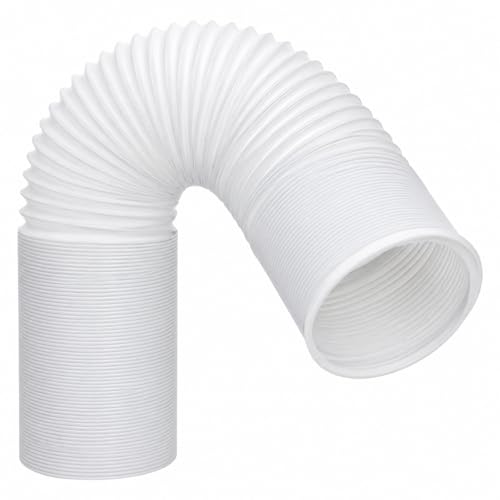
5 Inch Exhaust Hose for Portable Air Conditioner
Everything you need to know about the industry-standard 5 inch exhaust hose: sizing, compatibility, installation, maintenance, and how to pick the right portable AC that uses one.
EXPLORE COMPATIBLE UNITSWhy the 5 inch hose matters: The exhaust hose is the single most overlooked component of a portable air conditioner. A correctly sized 5 inch hose lets hot air escape efficiently, keeps cooling performance steady, and prevents your unit from working harder than it should. This guide explains exactly what a 5 inch exhaust hose does, which portable ACs use it, and how to choose a compatible model with confidence.
What Is a 5 Inch Exhaust Hose?
A 5 inch exhaust hose is a flexible duct that connects the hot-air exhaust port on the back of a portable air conditioner to a window kit or wall vent. Its job is simple but critical: move heat and humidity out of the room so the unit can keep cooling the air inside.
The "5 inch" measurement refers to the nominal diameter of the hose opening and the coupling that fits into the AC's exhaust port. In practice, most 5 inch portable AC hoses measure slightly over 5 inches at the connector, which is why the coupling—not just the hose—must match your unit. If you are replacing a hose, always confirm the port diameter and the coupling style before ordering.
Portable air conditioners in the 8,000 to 14,000 BTU range are the most common users of 5 inch hoses. Larger units sometimes use 6 inch hoses, while compact models may use 4 inch hoses. The 5 inch size is effectively the residential standard for single-hose and dual-hose portable units.
Why the 5 Inch Diameter Matters for Performance
Hose diameter directly affects airflow resistance. A hose that is too narrow restricts exhaust airflow, raising static pressure and forcing the compressor and fan to work harder. A hose that is too wide can be awkward to seal and may not fit the unit's port. The 5 inch size is a carefully balanced standard: wide enough to move a high volume of hot air, compact enough to route through a typical window kit.
Three practical consequences follow from hose diameter:
- Cooling efficiency: A properly matched 5 inch hose keeps exhaust airflow within the unit's design range, so cooling output stays consistent.
- Energy use: Restricted airflow makes the unit run longer to reach the set temperature. Matching the hose to the port avoids that inefficiency.
- Noise and vibration: An undersized or poorly sealed hose can whistle or vibrate. A correctly fitted 5 inch hose runs quieter.
If your unit's manual specifies a 5 inch exhaust hose, do not substitute a 4 inch hose "to save space." The mismatch will cost you cooling performance. Similarly, do not stretch a 5 inch hose beyond its recommended length. Most manufacturers cap total hose length at around 9 feet; beyond that, airflow losses become noticeable.
Key Specifications of a 5 Inch Portable AC Hose
Nominal Diameter
5 inches (about 127 mm) at the hose opening. Couplings measure slightly larger to lock into the exhaust port.
Typical Length
Most hoses ship at 5 to 7 feet. Maximum recommended total run is usually around 9 feet.
Material
Flexible PVC or polypropylene with a spiral wire core, often with a heat-resistant inner layer.
Coupling Type
Threaded or bayonet-style connectors. Match the coupling to your AC's exhaust port.
Heat Rating
Exhaust air can reach well above room temperature; quality hoses are rated for continuous warm-air service.
Compatibility
Standard for most 8,000–14,000 BTU single-hose and dual-hose portable air conditioners.
Which Portable ACs Use a 5 Inch Exhaust Hose?
Most residential portable air conditioners in the mid-capacity range use a 5 inch exhaust hose. The table below maps common capacity bands to hose sizes so you can check compatibility at a glance. Use it as a starting point, then confirm with your unit's manual or by measuring the exhaust port.
| Portable AC Capacity | Typical Hose Size | Common Use | Tier Positioning |
|---|---|---|---|
| 5,000–7,000 BTU | 4–5 inch | Small bedrooms, home offices | Essential Tier |
| 8,000–10,000 BTU | 5 inch | Medium rooms, apartments | Entry-Level |
| 12,000–14,000 BTU | 5 inch | Large rooms, open living areas | Mid-Range |
| 15,000–18,000 BTU | 5–6 inch | Large spaces, dual-hose units | High-End Tier |
If you are shopping for a portable unit and want to stay within the 5 inch hose standard, focus on models in the 8,000 to 14,000 BTU range. These units are widely available, use the most common hose size, and replacement hoses are easy to find. Larger units that use 6 inch hoses are also available, but replacements are less universal.
How to Install a 5 Inch Exhaust Hose Correctly
Proper installation is what turns a good hose into good cooling. Follow these steps for a clean, efficient setup:
- Position the unit first. Place the portable AC near the window or vent where the hose will exit. Keep the unit at least 12 inches from walls so intake and exhaust are not blocked.
- Attach the hose to the AC. Twist or push the hose coupling into the exhaust port until it locks. Most 5 inch hoses use a threaded or bayonet connector that seats with a quarter turn.
- Route the hose to the window. Keep the run as short and straight as possible. Avoid sharp bends, loops, or kinks, which restrict airflow.
- Seal the window kit. Insert the window panel and close the window against it. Seal gaps with the included foam or weatherstripping so hot outdoor air does not leak back in.
- Check the slope. The hose should slope slightly downward toward the window so condensation can drain out rather than pool inside the unit.
- Test airflow. Turn the unit on and feel the exhaust at the window. Strong, steady warm airflow means the hose is seated and unobstructed.
If you need a longer run, add an extension rather than forcing a single hose to stretch. Keep the combined length within the manufacturer's limit—usually around 9 feet—and support the hose so it does not sag or crimp.
Maintaining Your 5 Inch Exhaust Hose
Exhaust hoses are low-maintenance, but a few habits keep them working well season after season:
- Inspect for kinks and cracks at the start of each cooling season. Small cracks leak hot air and reduce efficiency.
- Clean the hose interior with a damp cloth and mild detergent if you notice dust buildup. Let it dry fully before reinstalling.
- Check the couplings for wear. A loose connector lets exhaust air escape into the room, which defeats the purpose of the hose.
- Store the hose coiled loosely during the off-season. Tight coils can deform the spiral wire core and create permanent kinks.
If your hose develops a persistent kink, a torn outer layer, or a cracked coupling, replace it. A replacement 5 inch hose is a straightforward swap and restores full exhaust airflow.
Choosing a Portable AC That Uses a 5 Inch Hose
When you are researching a portable air conditioner, the hose size is a practical filter that narrows the field to units with widely available replacement parts. Here is how to evaluate candidates:
- Check the BTU rating against room size. Match capacity to your square footage so the unit does not run constantly. Our guide on how to size an air conditioner walks through the calculation.
- Confirm the hose diameter in the specs. Look for "5 inch exhaust hose" or measure the port. If the listing does not state it, check the manual or ask the seller.
- Decide between single-hose and dual-hose designs. Dual-hose units separate intake and exhaust air, which improves efficiency in larger rooms.
- Look for a complete window kit. A hose is only as good as its seal. Units that include adjustable window panels and foam seals are easier to set up.
- Consider inverter models for steadier operation. An inverter compressor modulates speed instead of cycling on and off, which pairs well with a well-sealed 5 inch hose setup.
For larger rooms or open-plan spaces, a higher-capacity unit may be the better fit. If you are comparing options, our overview of 15,000 BTU portable air conditioners covers the next step up in capacity and the hose sizes those units typically use.
Ready to Compare Compatible Portable ACs?
Browse recommended portable air conditioners that use the 5 inch exhaust hose standard, complete with window kits and replacement hose availability.
VIEW RECOMMENDED UNITSFrequently Asked Questions
What portable air conditioner uses a 5 inch exhaust hose?
Most portable air conditioners in the 8,000 to 14,000 BTU range use a 5 inch exhaust hose. This diameter is the industry standard for single-hose and dual-hose portable units designed for residential use.
Can I extend a 5 inch exhaust hose for a portable air conditioner?
Yes, you can extend a 5 inch exhaust hose, but keep the total length under 9 feet. Longer runs increase static pressure, reduce cooling efficiency, and may cause the compressor to work harder.
How do I know if my portable AC needs a 5 inch hose?
Measure the exhaust port diameter on the back of your unit. A 5 inch hose fits a port that measures about 5 inches across. Refer to your owner's manual or measure the existing hose coupling for confirmation.
Can I use a 4 inch hose on a portable AC that calls for a 5 inch hose?
No. A smaller hose restricts exhaust airflow, raises static pressure, and reduces cooling performance. Always match the hose diameter to the exhaust port specified by the manufacturer.
Where should the exhaust hose vent to?
Vent the hose to the outdoors through a window kit, wall vent, or door vent. Never vent into an enclosed space such as an attic, garage, or another room—the heat and humidity have to leave the building.