
15000 BTU Portable Air Conditioner: The Complete Buyer's Guide
Everything you need to know before choosing a 15000 BTU portable air conditioner for large rooms, open-plan living areas, and spaces without ductwork. Understand sizing, hose configurations, efficiency, and real-world performance.
VIEW RECOMMENDED MODELSWhat This Guide Covers
What Is a 15000 BTU Portable Air Conditioner?
A 15000 BTU portable air conditioner is a freestanding cooling unit that delivers roughly 15,000 British Thermal Units of cooling capacity per hour. That places it in the upper mid-range of the portable AC category — noticeably more powerful than common 8,000–10,000 BTU models, yet still plug-and-play for most households. Unlike a window unit, it does not need permanent installation, and unlike a central system, it does not require ductwork.
Because of its higher capacity, this class of portable AC is designed for larger single rooms: open-plan living areas, master bedrooms, home offices with heat-generating equipment, finished basements, and converted garages. Many units in this range also include dehumidification, fan-only modes, and programmable timers, which makes them versatile across seasons.
If you are still comparing capacities, our broader overview of the 15000 BTU air conditioner category explains how this class fits alongside window and through-the-wall alternatives. For readers weighing a slightly smaller unit, the 14000 BTU portable air conditioner guide is a useful comparison point.
Room Size and Realistic Coverage
Manufacturers typically rate a 15000 BTU portable air conditioner for 500 to 700 square feet. That number is a starting point, not a guarantee. Real-world performance depends on several variables that are easy to overlook:
- Ceiling height: A room with 10-foot ceilings holds more air than the same footprint with 8-foot ceilings.
- Sun exposure: West- and south-facing rooms with large windows absorb significantly more heat.
- Insulation quality: Older homes with single-pane windows and limited insulation will need more capacity or a more efficient unit.
- Occupancy and appliances: A home office with multiple monitors, a server, or frequent guests generates extra heat load.
- Kitchen adjacency: Open-plan layouts that include a kitchen often need extra headroom in capacity.
As a rule of thumb, if your space is at the upper end of the coverage range and has any of the above heat-load factors, consider a dual-hose model or be prepared to run the unit continuously during peak afternoon hours. For a full breakdown of how BTU maps to square footage, see our guide on how to size an air conditioner.
| Capacity | Typical Room Size | Best For |
|---|---|---|
| 8,000–10,000 BTU | 150–350 sq ft | Bedrooms, small offices, studios |
| 12,000–14,000 BTU | 350–500 sq ft | Medium living rooms, master suites |
| 15,000 BTU | 500–700 sq ft | Large living rooms, open-plan areas, basements |
| 18,000 BTU and above | 700+ sq ft | Very large open spaces, multi-room use |
Single-Hose vs Dual-Hose: Why It Matters at This Capacity
At 15000 BTU, the hose configuration has a bigger impact on performance than at lower capacities. There are two common designs:
Single-hose models
A single-hose unit draws indoor air to cool the condenser and exhausts hot air outside through one hose. This is simple and usually more compact, but it creates negative pressure in the room — air that was already cooled gets pulled out, and warm outdoor air is drawn in through gaps. In practice, single-hose 15000 BTU units can struggle in hot, humid climates unless the room is well sealed.
Dual-hose models
A dual-hose unit uses one hose to bring in outside air for the condenser and a second hose to exhaust hot air. Because it does not consume conditioned indoor air, it maintains better room pressure, cools faster, and is generally more efficient. For a 15000 BTU unit, dual-hose is the preferred configuration when the budget tier allows it.
Single-Hose — Strengths & Trade-offs
- More compact footprint
- Simpler setup with one window opening
- Typically entry-level tier
- Creates negative room pressure
- Less efficient in extreme heat
Dual-Hose — Strengths & Trade-offs
- Faster, more consistent cooling
- No negative pressure penalty
- Better for humid climates
- Requires wider window venting
- Usually mid-range or premium tier
If you are comparing configurations across capacities, the same logic applies to our 14000 BTU portable unit with heat and remote control, which is a useful reference for hose design and heating features.
Efficiency, Energy Use, and Running Considerations
Portable air conditioners are rated differently from central systems. Instead of SEER, you will often see a CEER (Combined Energy Efficiency Ratio) or a simple BTU-per-watt figure. At the 15000 BTU tier, efficiency varies meaningfully between models.
- Compressor quality: Rotary compressors are generally more efficient and quieter than reciprocating designs.
- Inverter technology: Some premium portable units now use variable-speed compressors, which modulate output instead of cycling on and off.
- Electrical draw: Most 15000 BTU units draw roughly 1,200–1,500 watts under full load. Check the amp rating and whether a dedicated circuit is recommended.
- Standby features: Auto-restart, timers, and sleep modes reduce unnecessary runtime.
Running a 15000 BTU portable AC for extended periods is a real energy commitment. If you want to understand how efficiency ratings translate into long-term use, our explainer on SEER ratings provides context, even though it primarily applies to central and mini-split systems.
Installation and Venting Basics
One of the main reasons buyers choose a portable AC is installation flexibility. A 15000 BTU portable unit typically requires:
- A nearby window or sliding door for the exhaust hose.
- A window vent kit (usually included) that seals the opening around the hose.
- Clearance around the unit for airflow — usually 12–18 inches on all sides.
- A level surface, since most units have caster wheels and internal drainage.
Most units use a 5-inch or 6-inch exhaust hose. Longer hose runs reduce efficiency, so position the unit as close to the window as practical. If you need a replacement or extension, our note on 5-inch exhaust hoses for portable air conditioners explains compatibility considerations.
For rooms where window installation is not ideal, some buyers consider a through-the-wall approach instead. Our comparison of the 15,000 BTU portable air conditioner and the 15000 BTU through-the-wall option is helpful if you are weighing permanent versus temporary installation.
Maintenance, Drainage, and Long-Term Care
Portable AC maintenance is straightforward, but at 15000 BTU the moisture load is higher, so drainage deserves attention.
Drainage options
- Manual tank: Empty when the full indicator appears. In humid weather, this can be every few hours.
- Continuous drain: Connect a hose to the drain port and route it to a floor drain or outside. This is the preferred setup for long daily use.
- Self-evaporative systems: Some units evaporate a portion of condensate through the exhaust, reducing how often you need to drain.
Filter care
Clean the air filter every two to four weeks during heavy use. A clogged filter reduces airflow, forces the compressor to work harder, and can lead to overheating or premature failure. Most filters are removable and washable.
Seasonal storage
Before storing the unit for the off-season, drain all water, clean the filter, and wipe down the exterior. Store upright in a dry space. Our broader AC maintenance guide covers additional best practices that apply across unit types.
Who Should Choose a 15000 BTU Portable Air Conditioner?
This capacity class is a strong fit for specific situations:
- Renters who cannot install a window or central system.
- Open-plan living areas where a smaller unit would run continuously without reaching the set temperature.
- Finished basements and converted garages that lack ductwork.
- Home offices with heat-generating equipment and limited window options.
- Older homes where adding ductwork is impractical.
It is less suitable for whole-home cooling or for rooms that are consistently above 700 square feet with high heat loads. In those cases, a mini-split or central system is the more appropriate long-term investment. If you are exploring those alternatives, our guides on the 18000 BTU mini-split heat pump and the 15000 BTU window air conditioner provide useful comparisons.
Market Tier Guide: Choosing Without Focusing on Price
Instead of comparing listings by price, it helps to think in terms of market tiers. The descriptors below are relative and consistent across this guide.
| Tier | Typical Characteristics | Best For |
|---|---|---|
| Entry-level | Single-hose design, basic mechanical or simple digital controls, manual drainage, standard rotary compressor | Occasional use in smaller or well-sealed rooms |
| Mid-range | Dual-hose or improved single-hose design, digital controls, remote, timer, continuous drain option | Daily use in living rooms and home offices |
| Premium | Dual-hose, inverter or variable-speed compressor, quieter operation, smart features, better filtration | Extended daily use, bedrooms, noise-sensitive spaces |
| Professional-grade | Heavy-duty build, higher airflow, commercial-style controls, robust drainage systems | Workshops, server-adjacent rooms, light commercial use |
Mid-range models usually offer the best balance for most households. Premium and professional-grade tiers justify themselves when the unit will run for many hours a day or when quiet operation is essential.
Recommended 15000 BTU Portable Air Conditioners
⚠️ AFFILIATE DISCLOSURE: This website contains affiliate links. As an Amazon Associate, we earn from qualifying purchases. If you make a purchase through these links, we may receive a small commission at no additional cost to you. Read our full affiliate policy.
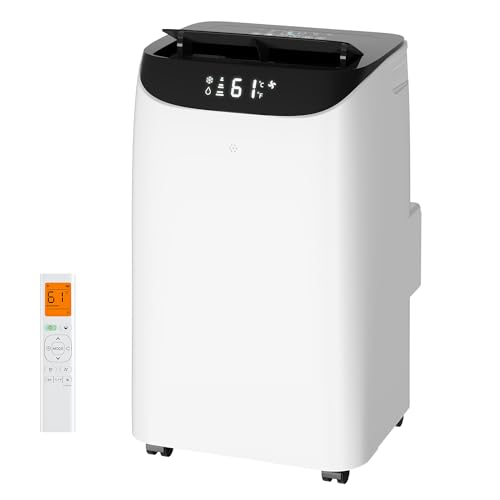
Inverter 16000 BTU Portable Air Conditioner, 3 in 1 Portable Ac Unit Cools Up for Rooms 850 Sq. Ft, Dual Hose Standing AC for Bedrooms with Dehumidifier, Fan, Quiet Sleep Mode, Remote Control
Check price on Amazon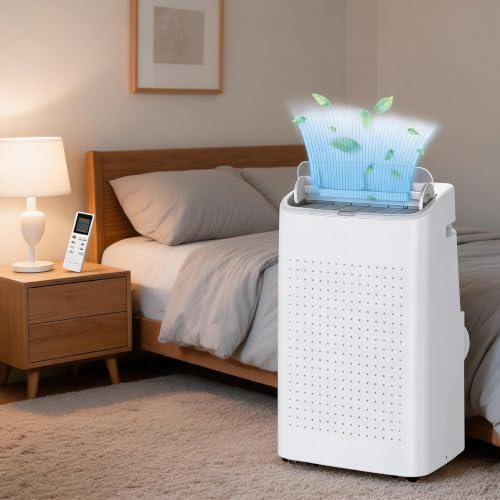
SLEKVERSA 15000 BTU Portable Air Conditioner – 3-in-1 Cooling, Fan & Dehumidifier for Rooms up to 850 Sq. Ft, with Sleep Mode, Remote, 24H Timer & Window Kit – White
Check price on Amazon
14,000 BTU Portable Air Conditioner with WiFi & Remote Control, Cools Up to 700 Sq.Ft, Auto-Evaporation Low Noise Portable AC Unit for Large Room, Office, Garage, White
Check price on Amazon
BLACK+DECKER Smart Portable Air Conditioner with Heat, 14,000 BTU, White | 10,200 BTU SACC Cooling, 12,000 BTU Heating for Rooms up to 700 Sq. Ft., 4-in-1 Portable AC, Fan and Dehum
Check price on Amazon
BLACK+DECKER Smart Portable Air Conditioner, 14,000 BTU, BPACT14WT, White | 10,200 BTU SACC for Rooms up to 700 Sq. Ft., Smart 3-in-1 Portable AC, Fan and Dehum with Follow Me Remote
Check price on Amazon
Garvee 15000 BTU Portable Air Conditioner with Cooling, Dehumidifier, Fan | 3-in-1 AC Unit, 24-Hour Timer, Remote Control & Full Window Installation Kit for Home, Office & Large Room, 850 Sq Ft, 115V
Check price on Amazon
16000 BTU Portable Air Conditioners with WiFi, App Control & Dehumidifier | Enjoy versatile comfort with cooling, fan, dehumidifier, sleep mode and 24H timer, plus smart app and remote operation.
Check price on Amazon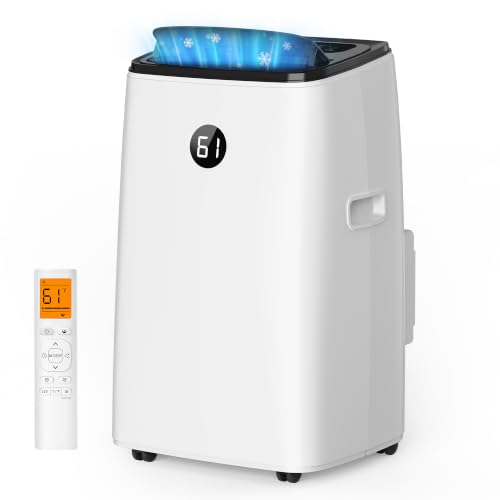
AGTANA 14000 BTU Portable Air Conditioner for Large Room up to 700 Sq. Ft, 3-in-1 Self-Evaporating AC with Fan & Dehumidifier, Floor Standing Portable AC Unit with Remote Control, Auto Swing, White
Check price on AmazonFrequently Asked Questions
What size room does a 15000 BTU portable air conditioner cool?
A 15000 BTU portable air conditioner is generally designed for rooms between 500 and 700 square feet. Actual performance depends on ceiling height, insulation, sun exposure, and the number of occupants or heat-generating appliances in the room. In spaces with heavy heat loads, treat the upper end of that range as the practical limit.
Is a dual-hose 15000 BTU portable AC better than a single-hose model?
Yes, in most cases. Dual-hose models draw outside air to cool the condenser and exhaust hot air separately, which avoids pulling conditioned indoor air out of the room. The result is faster cooling, less negative pressure, and better efficiency — especially in hot or humid climates. Single-hose units are more compact and simpler to set up, but they are generally entry-level tier.
Does a 15000 BTU portable air conditioner need a special electrical outlet?
Most 15000 BTU portable units run on a standard 115V household circuit, but many draw enough current that a dedicated 15-amp or 20-amp breaker is recommended. Always check the manufacturer's electrical requirements and avoid sharing the circuit with high-draw appliances such as microwaves or space heaters.
How often should I drain a 15000 BTU portable air conditioner?
In humid conditions, the internal tank can fill within a few hours of continuous operation. Most units include a continuous drain port that accepts a hose, which is the recommended setup for extended daily use. If you rely on the internal tank, empty it whenever the full indicator appears — never let it overflow.
Can a 15000 BTU portable AC cool more than one room?
Not effectively. Portable air conditioners cool the space they are placed in, and cooling multiple rooms requires open doorways and strong airflow, which reduces overall performance. For multi-room cooling, a mini-split system with multiple indoor heads or a central system is a better long-term solution.
How noisy is a 15000 BTU portable air conditioner?
Noise levels vary by tier. Entry-level units often produce around 55–60 dB at high fan speed, while premium and inverter-driven models can run closer to 50 dB or lower on medium settings. If the unit will be used in a bedroom, prioritize models with quieter compressors and adjustable fan speeds.
Does a 15000 BTU portable AC also dehumidify?
Yes. Portable air conditioners remove moisture from the air as part of the cooling process. Many 15000 BTU models also include a dedicated dehumidify mode that runs the fan and compressor without full cooling, which is useful in humid shoulder seasons.