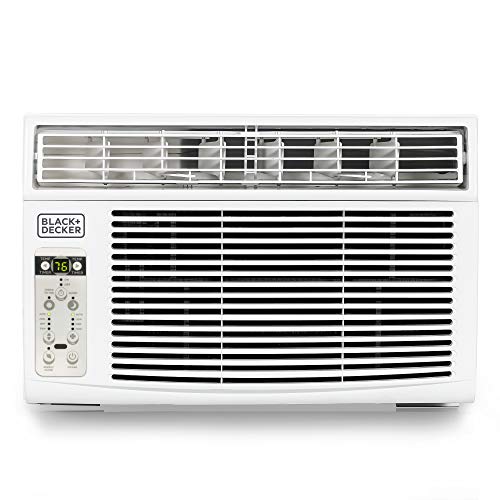
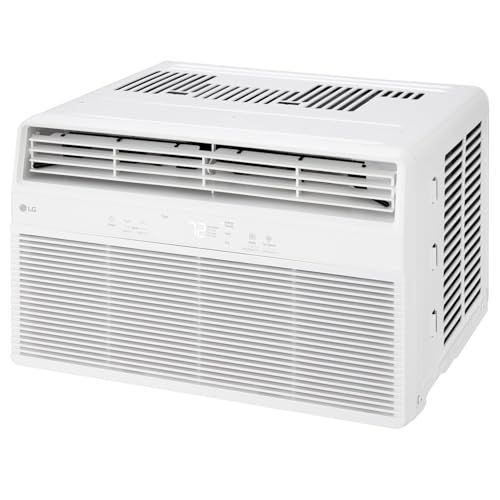
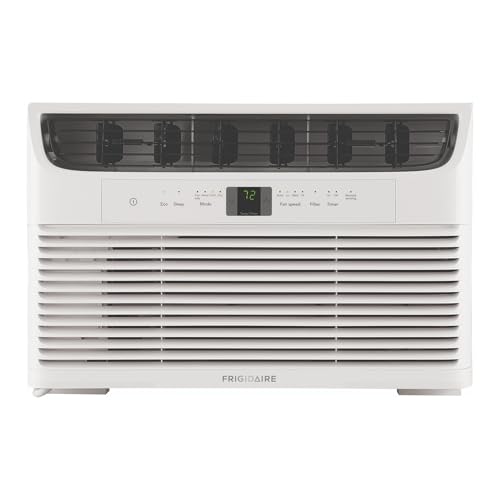
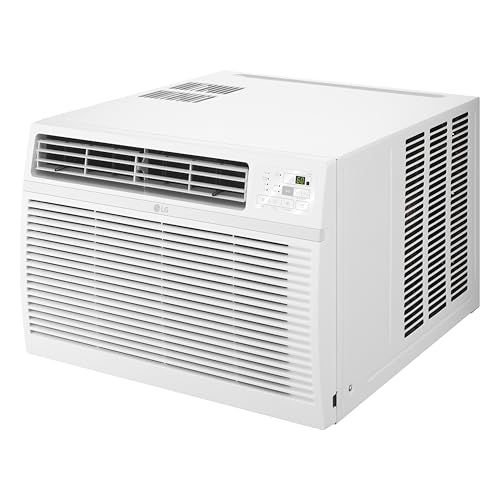
8000 BTU Window Air Conditioners for Sale: The Complete Buyer's Guide
Everything you need to know before choosing an 8000 BTU window air conditioner — sizing, efficiency, installation, and how to match the right unit to your room.
Research-backed guidance for homeowners, renters, and first-time buyers.
Why 8000 BTU is the sweet spot for medium rooms: If you're cooling a bedroom, home office, or living area between 300 and 350 square feet, an 8000 BTU window air conditioner is often the most balanced choice. It provides meaningful cooling power without the oversized electrical draw of larger units — and it remains one of the most widely available window AC capacities on the market today.
What Does 8000 BTU Mean for Your Room?
BTU, or British Thermal Unit, measures how much heat an air conditioner can remove from a space in one hour. An 8000 BTU window air conditioner is engineered to cool approximately 300 to 350 square feet under standard conditions. That range assumes an 8-foot ceiling, average insulation, and moderate sun exposure.
Real-world performance depends on several variables. A south-facing room with large windows, poor insulation, or multiple occupants may need a unit rated slightly higher than the baseline. Conversely, a shaded, well-insulated bedroom may cool comfortably with an 8000 BTU unit even at the upper end of the square footage range. If you're comparing capacities across the market, our overview of 8000–10,000 BTU air conditioners breaks down how each step up in capacity changes cooling coverage.
| Room Condition | Recommended Adjustment | Practical Implication |
|---|---|---|
| Standard room, average insulation | Use 8000 BTU as rated (300–350 sq ft) | Balanced cooling and efficiency |
| Heavy sun exposure or large windows | Consider stepping up to 10,000 BTU | Compensates for solar heat gain |
| Well-shaded, insulated bedroom | 8000 BTU may cover up to 350 sq ft | Quiet, efficient operation |
| Kitchen or room with appliances | Add capacity for heat-generating equipment | Prevents the unit from running continuously |
| Multiple occupants or frequent traffic | Size toward the upper end of the range | Maintains comfort during peak use |
Market Tiers for 8000 BTU Window Air Conditioners
The 8000 BTU window AC category spans a wide range of build quality and feature sets. To help you orient yourself without relying on transient market figures, we classify units into three universal tiers based on construction, feature depth, and intended use.
Essential Tier
Mechanical controls, basic cooling modes, and straightforward installation. A solid choice for seasonal use in a bedroom or guest room where advanced features are unnecessary.
Balanced Tier
Digital displays, remote control, programmable timers, and improved fan speeds. These units typically offer better efficiency ratings and quieter operation than entry-level models.
Top-Tier
Smart connectivity, inverter compressors, advanced air filtration, and premium sound dampening. Designed for daily use in primary living spaces where comfort and efficiency are priorities.
Mid-range models usually offer the most balanced combination of features and durability for typical households. Entry-level units remain a practical option for low-demand rooms, while premium models justify their position through quieter operation, smarter controls, and longer service life. If noise is a concern, our guide to quiet air conditioners explains which design features actually reduce sound output.
Efficiency Ratings: What to Look For
Window air conditioners are rated using the Combined Energy Efficiency Ratio (CEER), which replaced the older EER metric for window units. A higher CEER means more cooling output per unit of electricity consumed. For an 8000 BTU unit used regularly through the summer, the efficiency rating has a direct impact on long-term energy use.
ENERGY STAR certified models meet stricter efficiency thresholds than standard units. If the air conditioner will run daily for several months each year, prioritizing an ENERGY STAR model is a worthwhile long-term investment. Our breakdown of energy efficiency ratings (SEER, EER, HSPF) explains how these metrics differ across cooling and heating systems, and our dedicated page on window air conditioner energy efficiency ratings goes deeper into what the numbers mean in practice.
Installation and Electrical Requirements
Most 8000 BTU window air conditioners are designed for 115V household circuits, which makes them compatible with standard US outlets. However, because the compressor draws significant current during startup, the unit should ideally be on a dedicated circuit. Check the amperage rating on the unit's specification label and confirm that your breaker and wiring can handle the load.
Installation itself is straightforward for a single-hung or double-hung window. Most units include a mounting bracket or support kit, and the window sash secures the unit in place. For sliding or casement windows, a specialized bracket or a different form factor may be needed. If you prefer a permanent installation that doesn't occupy window space, a 8000 BTU through-the-wall air conditioner is a comparable alternative that mounts directly into an exterior wall.
- Window type: Confirm the unit fits your window's width and height range before ordering.
- Circuit capacity: Verify the outlet is on a circuit rated for the unit's amperage.
- Drainage: Most units evaporate condensate, but some require a slight downward tilt for drainage.
- Support: Use the included bracket or an aftermarket support to prevent the unit from shifting.
- Sealing: Weatherstripping around the window frame prevents cool air loss and pest entry.
Smart Features and Comfort Additions
Modern 8000 BTU window units increasingly include features that were once limited to premium central systems. Wi-Fi connectivity allows scheduling and remote control through a smartphone app, which is especially useful for cooling a bedroom before you arrive home. Models with built-in air purification add another layer of comfort for allergy-sensitive households.
If remote management matters to you, explore our overview of AC units with Wi-Fi and smart control. For households dealing with dust, pollen, or pet dander, air conditioners with built-in air purifiers combine cooling with filtration. These features don't change the fundamental 8000 BTU cooling capacity, but they do affect daily usability and perceived air quality.
Ready to Compare 8000 BTU Window AC Options?
Browse our curated selection of 8000 BTU window air conditioners currently available, organized by tier and feature set to help you shortlist the right unit for your room.
View Available ModelsBuying Checklist Before You Order
Before finalizing a purchase, run through this checklist to avoid the most common mistakes buyers make with 8000 BTU window air conditioners.
| Checkpoint | What to Confirm | Why It Matters |
|---|---|---|
| Room size | Measure length × width; confirm 300–350 sq ft range | Prevents short-cycling or insufficient cooling |
| Window dimensions | Compare unit width/height with window opening | Ensures the unit fits and installs safely |
| Efficiency rating | Check CEER and ENERGY STAR status | Reduces long-term energy consumption |
| Electrical circuit | Verify 115V outlet and amperage capacity | Prevents breaker trips and unsafe overloads |
| Noise level | Review decibel ratings for bedroom use | Affects sleep quality and daily comfort |
| Features | Decide on remote, timer, Wi-Fi, or filtration needs | Matches the unit to your actual usage patterns |
Frequently Asked Questions
What size room does an 8000 BTU window air conditioner cool?
An 8000 BTU window air conditioner is typically rated for rooms between 300 and 350 square feet, depending on ceiling height, insulation quality, sun exposure, and the number of occupants or heat-generating appliances in the space.
Is an 8000 BTU window AC good for a bedroom?
Yes. An 8000 BTU window air conditioner is a popular choice for master bedrooms and medium-sized rooms. It delivers enough cooling capacity for a typical bedroom while remaining manageable in terms of electrical requirements and window installation.
What SEER rating should I look for in an 8000 BTU window AC?
Look for a combined energy efficiency ratio (CEER) of at least 12 for standard models, or choose an ENERGY STAR certified unit for better efficiency. Higher efficiency ratings reduce long-term energy consumption and are worth prioritizing for units used daily.
Can an 8000 BTU window air conditioner run on a standard 115V outlet?
Most 8000 BTU window air conditioners are designed for 115V circuits, which is the standard household voltage in the US. However, always verify the amperage rating and ensure the unit is on a dedicated circuit to prevent breaker trips.
How does an 8000 BTU window AC compare to a portable unit?
Window units are generally more efficient because the compressor and condenser sit outside the conditioned space, exhausting heat directly outdoors. Portable units exhaust through a hose and can be less efficient due to heat leakage and air pressure imbalances. For a permanent or semi-permanent installation, a window unit is typically the better performer.
Final Thoughts
An 8000 BTU window air conditioner remains one of the most practical cooling solutions for medium-sized rooms. It sits in a comfortable middle ground: powerful enough to cool a bedroom or home office effectively, yet compact enough to install without structural modifications or major electrical work. By matching capacity to your actual room conditions, prioritizing efficiency, and confirming installation requirements in advance, you can select a unit that delivers reliable comfort for years.
If you're still exploring the broader category, our 8000–10,000 BTU air conditioner guide covers the next capacity step, while the 5000–6000 BTU range is better suited to smaller rooms. For those considering a wall-mounted alternative, the through-the-wall AC guide explains how that form factor differs in installation and performance.