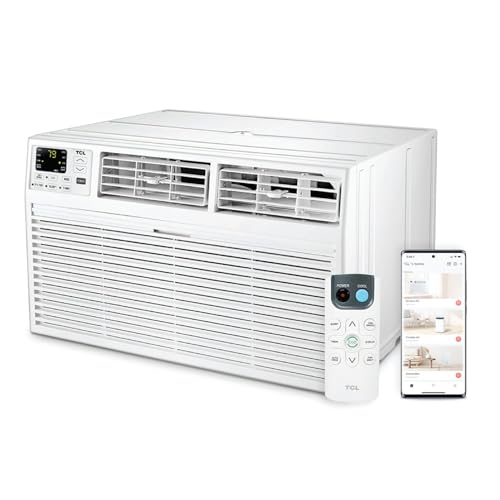
8000 BTU Through the Wall Air Conditioner: The Complete Guide
Discover how an 8000 BTU through the wall AC can deliver efficient, permanent cooling for medium-sized rooms. Learn about sizing, installation, efficiency ratings, and how to choose the right model for your home.
VIEW TOP PICKSWhy consider an 8000 BTU through the wall air conditioner? Unlike window units that block your view and portable units that take up floor space, a through-the-wall AC is installed permanently into an exterior wall. This frees up your window, reduces noise, and provides a cleaner look. An 8000 BTU model is the sweet spot for cooling rooms between 300 and 350 square feet, making it ideal for bedrooms, living rooms, and home offices.
What Is an 8000 BTU Through the Wall Air Conditioner?
An 8000 BTU through the wall air conditioner is a self-contained cooling unit designed to be mounted inside a sleeve that is built into an exterior wall. The unit pulls in indoor air, cools it, and releases heat outside through the back of the unit. Because it is installed through the wall rather than in a window, it offers several distinct advantages:
- Permanent installation: Once installed, the unit stays in place year-round, and you can leave the window free for natural light and ventilation.
- Improved security: There is no window opening for intruders to exploit.
- Quieter operation: The wall sleeve and insulation help dampen noise compared to window units.
- Cleaner aesthetic: Flush-mounted design looks more integrated into the home's exterior.
With 8000 BTUs of cooling power, this class of unit is designed for medium rooms. If your room is smaller (under 250 square feet), you might consider a 6000 BTU through the wall air conditioner. For larger spaces, an 12000-14000 BTU AC or a 15000 BTU through the wall air conditioner may be more appropriate.
Is 8000 BTU the Right Size for Your Room?
Cooling capacity is measured in British Thermal Units (BTU). As a general rule of thumb, an 8000 BTU air conditioner can effectively cool a room between 300 and 350 square feet, depending on factors such as ceiling height, insulation, sun exposure, and the number of occupants. Here is a quick reference:
| Room Size (sq ft) | Recommended BTU |
|---|---|
| 150 – 250 | 6,000 – 8,000 BTU |
| 250 – 350 | 8,000 – 10,000 BTU |
| 350 – 450 | 10,000 – 12,000 BTU |
If your room is on the larger side of the 8000 BTU range or has high ceilings, large windows, or poor insulation, you may need to step up to a 8000-10000 BTU AC. Conversely, if your room is smaller or well-shaded, an 8000 BTU unit might be slightly oversized, which can lead to short cycling and inefficient dehumidification. For a deeper dive into sizing, read our guide on how to size an air conditioner.
Understanding Efficiency Ratings: SEER and EER
When shopping for an 8000 BTU through the wall air conditioner, you will encounter two key efficiency metrics: SEER (Seasonal Energy Efficiency Ratio) and EER (Energy Efficiency Ratio). For room air conditioners, EER is the more relevant metric because it measures efficiency at a specific outdoor temperature (95°F). A higher EER means the unit uses less electricity to produce the same amount of cooling.
ENERGY STAR certified models typically have an EER of 12.0 or higher. While these units may be positioned in the mid-tier or premium segment of the market, they are a worthwhile investment for long-term energy savings. To understand the differences between these ratings, see our detailed articles on what is SEER rating and energy efficiency ratings.
Installation Considerations for Through the Wall AC Units
Installing a through the wall air conditioner is more involved than installing a window unit. It requires cutting an opening in an exterior wall and installing a wall sleeve, which is typically a metal or plastic frame that holds the unit. Here are the key steps and considerations:
- Choose the right location: The wall must be structurally sound and able to support the unit's weight. Avoid walls with plumbing, wiring, or other obstructions.
- Check for clearance: Ensure there is enough space outside for proper airflow and that the unit is not blocked by fences, shrubs, or other structures.
- Electrical requirements: Most 8000 BTU units require a dedicated 115V circuit. Check the amperage requirements and consult a licensed electrician if needed. Our article on 110V vs 240V AC unit explains the differences.
- Permits and codes: Some municipalities require a permit for through-the-wall installations. Learn more in our guide on how to get an AC permit.
If you are not comfortable with DIY installation, hiring a professional HVAC contractor is recommended. For tips on selecting a contractor, read our article on how to choose an HVAC contractor.
Key Features to Look For in an 8000 BTU Through the Wall AC
Modern through-the-wall air conditioners come with a range of features. Here are the most important ones to consider:
- Remote control and programmable thermostat: Allows you to adjust settings from across the room and set schedules for energy savings. Some models are compatible with a thermostat that controls heat and cool.
- Wi-Fi and smart control: Enables remote operation via smartphone apps and voice assistants. See our guide on AC with Wi-Fi and smart control.
- Air purification: Some units include filters that reduce dust, pollen, and other allergens. Learn about AC with air purifier.
- Quiet operation: Look for models with low decibel ratings, especially if the unit is in a bedroom. Our article on quiet air conditioner provides more details.
- Heat pump option: Some through-the-wall units offer both cooling and heating, making them a year-round solution. A combination air conditioner and heater can be a great choice for mild climates.
Maintenance Tips for Longevity and Performance
To keep your 8000 BTU through the wall air conditioner running efficiently, regular maintenance is essential:
- Clean or replace the air filter every 2–4 weeks during peak season. A clogged filter restricts airflow and reduces efficiency. See our guide on how to clean AC filter.
- Inspect and clean the coils annually. Dust and debris on the coils can reduce cooling capacity. Learn how to clean condenser coils.
- Check the seals around the wall sleeve. Ensure there are no gaps that let in outside air, which can waste energy.
- Schedule professional maintenance every year or two. A technician can check refrigerant levels, electrical connections, and overall performance. For cost expectations, see our article on AC annual service.
Common Issues and Troubleshooting
If your through-the-wall AC is not performing as expected, here are some common problems and solutions:
- AC not cooling: Check the filter, thermostat settings, and condenser coils. If the problem persists, it may be a refrigerant leak or compressor issue. See our guide on AC not cooling solutions.
- Water leaking: A clogged drain tube or improper installation angle can cause water to leak. Read AC leaking water solutions.
- Strange noises: Loose parts, fan blade obstructions, or compressor problems can cause noise. See AC making noise solutions.
- Unpleasant odors: Mold or mildew in the unit or ductwork can cause smells. Learn about AC smells bad solutions.
Through the Wall vs. Window vs. Mini-Split: Which Is Best?
When deciding on an 8000 BTU air conditioner, it helps to compare it with other common types:
| Feature | Through the Wall | Window AC | Ductless Mini-Split |
|---|---|---|---|
| Installation | Permanent, requires wall sleeve | Temporary, window-mounted | Professional, wall-mounted indoor + outdoor unit |
| Window blockage | No | Yes | No |
| Noise level | Moderate | Moderate to high | Low |
| Efficiency | Good | Good | Excellent |
For a more detailed comparison, see our article on through the wall AC and ductless mini-split AC. If you are considering a mini-split, you might also look at mini-split with thermostat options.
Top 8000 BTU Through the Wall AC Models: Tier Overview
The market for 8000 BTU through the wall air conditioners includes options across different tiers. Here is a breakdown of what to expect from each tier:
- Entry-level tier: These models offer basic cooling functions and mechanical controls. They are a solid choice for budget-conscious buyers who need reliable cooling without extra features.
- Mid-range tier: Expect digital controls, remote operation, and programmable timers. These units often have slightly higher EER ratings and better build quality.
- Premium tier: Features may include Wi-Fi connectivity, smart home integration, air purification filters, and quieter operation. These are well-specified for the category and offer the best balance of efficiency and convenience.
- High-end tier: Top-tier models may include heat pump functionality, advanced filtration, and the highest efficiency ratings. They represent a long-term investment for year-round comfort.
For specific model recommendations, see the product section below.
Related Guides and Resources
Explore more of our in-depth guides to make an informed decision:
- 8000 BTU Window Air Conditioners – If you prefer a window-mounted option.
- 8000 BTU 115V Quiet Eco Smart Window AC – A feature-rich alternative.
- Small Room Window AC Reviews – For smaller spaces.
- What Is Air Conditioning? – A beginner's guide.
- Heating, Ventilation, and Air Conditioning System – Understanding the bigger picture.
- ENERGY STAR Window AC with Remote – Efficiency-focused options.
Frequently Asked Questions (FAQ)
1. Can an 8000 BTU through the wall AC cool a living room?
Yes, an 8000 BTU unit is suitable for a living room up to approximately 350 square feet, provided the room has standard ceiling height and average insulation. If your living room is larger or has many windows, you may need a higher BTU unit.
2. How difficult is it to install a through the wall air conditioner?
Installation requires cutting an opening in an exterior wall and installing a sleeve. It is more complex than a window unit and often requires professional help. If you are handy and have the right tools, you can do it yourself, but hiring a pro ensures proper sealing and electrical work.
3. What is the difference between an 8000 BTU and a 10000 BTU through the wall unit?
The main difference is cooling capacity. An 8000 BTU unit is for rooms up to 350 sq ft, while a 10000 BTU unit can cool up to about 450 sq ft. If your room is on the border, consider factors like sun exposure and occupancy. For more options, see our 10000 BTU 115V window air conditioner guide.
4. Do 8000 BTU through the wall ACs come with a heat option?
Some models do include a heat pump or electric heating element. These are often called combination air conditioner and heater units. They are useful for mild climates where heating is occasionally needed.
5. How often should I clean the filter on my through the wall AC?
During periods of heavy use, clean or replace the filter every two to four weeks. This ensures optimal airflow and energy efficiency. For more maintenance tips, refer to our seasonal AC checklist.
Disclaimer
Some of the content on this site uses AI assistance. Information is provided for educational purposes only. We are not responsible for any losses resulting from the use of this information. By using this site, you waive any right to bring legal claims against us arising from your use of the information provided. If you do not agree, please do not use this site. Read the full disclaimer.