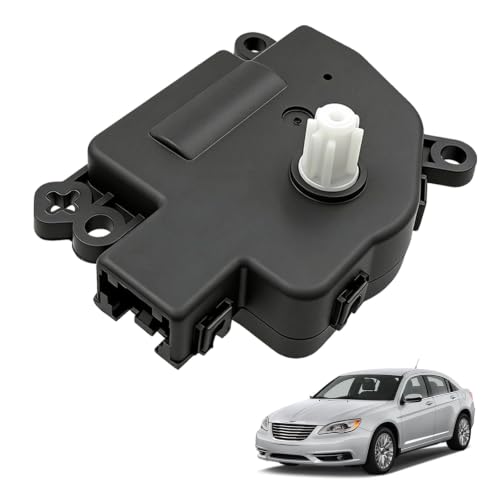
AC Actuator Replacement: Symptoms, Process, and Tier Guide
If your air conditioner runs but some rooms never get the cooling they deserve, the problem may not be the compressor or refrigerant. A small but critical component — the AC actuator — could be the culprit. This guide explains what an actuator does, how to recognize failure symptoms, how the replacement process works, and how to choose the right actuator tier for your system so you can restore balanced airflow and confident climate control.
Quick summary: An AC actuator is a motorized damper or blend-door controller. When it fails, airflow becomes uneven, vents stick, and the system may click or buzz. Diagnosis involves checking the thermostat, observing damper movement, and reading fault codes. Replacement ranges from a straightforward DIY swap on accessible zone dampers to a technician-led job inside the air handler.
What Is an AC Actuator?
An AC actuator is a small electric motor assembly that positions dampers, valves, or blend doors inside an HVAC system. In zoned homes, actuators open and close dampers so cooled air reaches only the rooms that need it. In split systems and packaged units, blend-door actuators mix return air and conditioned air to reach the temperature set on the thermostat. Some actuators are simple two-position devices (fully open or fully closed), while others are modulating units that move in small increments for precise temperature control.
Because the actuator sits between your thermostat's command and the actual airflow, a worn or failed unit throws the entire balance off. Understanding the component helps you describe the problem clearly to a technician and decide whether replacement is the right next step. If you are still mapping out your system's parts, our overview of the condenser and air handler relationship is a useful companion read.
Common Symptoms of a Failing AC Actuator
Actuator failures rarely announce themselves with a single dramatic event. Instead, they produce a cluster of symptoms that gradually worsen. Watch for the following:
- Uneven cooling between rooms. One room stays warm while others cool normally, even though the thermostat is set correctly. This often points to a zone damper actuator that no longer opens fully.
- Clicking or buzzing near the air handler. A repeated clicking sound when the system starts or stops suggests the actuator motor is trying to move but cannot reach its position.
- Vents that never close or never open. If a register blows air constantly regardless of zone settings, the actuator may be stuck.
- Temperature that will not match the setpoint. Blend-door actuator failure can cause the system to deliver air that is too warm or too cold because mixing is stuck at one position.
- Fault codes on a smart thermostat. Many modern thermostats report damper or actuator faults directly, which shortens the diagnostic process considerably.
- System short-cycling. When an actuator fails to modulate properly, the system may satisfy or miss the setpoint too quickly and cycle on and off. This behavior overlaps with other faults, so compare it against our guide on an AC compressor that cycles on and off before assuming the actuator is at fault.
How to Diagnose an Actuator Problem
Diagnosis follows a logical sequence. Before touching the actuator, rule out simpler causes:
- Check the thermostat and batteries. A thermostat that is not sending commands can mimic actuator failure. Confirm the thermostat is powered and responding.
- Inspect the air filter. A clogged filter restricts airflow and can create symptoms that look like damper problems. Our guide on the AC unit filter explains how to check and replace it.
- Observe the actuator during a call for cooling. With the panel safely removed, watch whether the actuator arm moves when the thermostat changes zones or setpoints. No movement, or movement that stalls partway, indicates a fault.
- Listen for mechanical noise. Clicking, grinding, or buzzing from the actuator housing is a strong signal of internal gear wear.
- Read fault codes. If your system has a communicating thermostat or control board, retrieve stored fault codes. This is the fastest confirmation path.
- Test with a multimeter (advanced). A technician can measure voltage at the actuator connector to confirm whether the control board is sending the correct signal. If voltage is present but the actuator does not move, the actuator is the failed component.
If diagnosis points to a broader airflow or cooling problem rather than a single actuator, our troubleshooting library on common AC problems helps you narrow down the cause before committing to a repair path.
AC Actuator Replacement Process
The replacement process depends on where the actuator lives. Zone damper actuators mounted on external ductwork are the most accessible. Blend-door actuators inside the air handler require more disassembly. In all cases, the general workflow is similar:
- Power down the system at the thermostat and the breaker to eliminate electrical risk.
- Identify the failed actuator using the diagnostic steps above, then note the model number and connector type. Matching the replacement to the original specification prevents calibration problems.
- Remove the actuator. Most units are held by two to four screws and a single wiring harness. Label the wires before disconnecting.
- Install the replacement. Seat the actuator on its shaft or damper linkage, secure the screws, and reconnect the harness.
- Calibrate and test. Many actuators self-calibrate on first power-up. Run a full heating and cooling cycle and verify that each zone and damper responds correctly.
- Document the repair. Record the model number and date so future maintenance is easier, and check whether the replacement affects your coverage by reviewing how AC warranties work.
A professional technician typically completes a single accessible actuator replacement in a short service visit. Jobs that require air-handler disassembly take longer, and the total scope depends on how many actuators are replaced at once.
Choosing the Right Actuator Tier
Actuators are not all built to the same standard. Rather than shopping by a single number, think in terms of market tiers. The table below maps each tier to its typical use case and build characteristics so you can match the component to your system and expected duty cycle.
| Tier | Best For | Build Characteristics |
|---|---|---|
| Entry-level | Single-zone systems, occasional-use rooms, basic damper control | Standard plastic housing, basic motor, adequate for low cycle counts; good value for its tier |
| Mid-range | Multi-zone homes, daily heating and cooling cycles | Reinforced housing, smoother gear mechanism, better positional accuracy, feature-rich for its class |
| Premium | Whole-home zoning, smart thermostats, frequent modulation | Durable construction, quiet operation, precise modulation, solid choice for demanding schedules |
| Commercial-grade | Light commercial spaces, large multi-zone systems, continuous operation | Heavy-duty motor, metal-reinforced linkage, weather-resistant coating, professional-grade service life |
As a general rule, mid-range and premium actuators offer noticeably smoother and more reliable movement than entry-level units, and commercial-grade models are built for the heaviest duty cycles. Match the tier to how often your system cycles and how many zones depend on each actuator. A long-term investment in a higher tier often pays off through fewer repeat repairs.
DIY vs Professional Replacement
Whether you tackle the job yourself depends on actuator location and your comfort with HVAC panels. Accessible zone dampers on external ductwork are within reach for many homeowners who are careful with wiring and calibration. Blend-door actuators inside the air handler, communicating-system actuators, and any job that requires refrigerant-side work should go to a licensed technician.
If your system shows broader symptoms such as water leaks, strange noises, or inconsistent cooling, it is worth having a professional inspect the whole system rather than replacing one part in isolation. Our resources on air conditioner service and repair and AC unit tune-ups explain what a thorough inspection covers.
Preventing Future Actuator Failures
- Keep filters clean. Restricted airflow forces actuators and dampers to work harder. See our AC unit filter guide for a replacement schedule.
- Schedule seasonal maintenance. A technician can lubricate linkages and verify actuator travel before small issues become failures.
- Use a smart thermostat correctly. Avoid rapid, repeated setpoint changes that force actuators through unnecessary full-travel cycles.
- Watch for early symptoms. Address clicking or uneven cooling promptly rather than waiting for complete failure.
Frequently Asked Questions
What does an AC actuator do?
An AC actuator is a motorized component that opens, closes, or modulates dampers and blend doors. It controls how much air flows through ducts and how hot and cold air mix before reaching a room.
How do I know if my AC actuator is failing?
Look for uneven cooling between rooms, clicking or buzzing near the air handler, vents that never fully open or close, and temperature that will not match the setpoint. Fault codes on a smart thermostat can confirm the diagnosis.
Can I replace an AC actuator myself?
Accessible zone damper actuators are within reach for a careful DIYer. Actuators inside the air handler or blend-door assemblies usually require panel removal and calibration and are best handled by a licensed technician.
How long does an AC actuator typically last?
A well-made actuator commonly lasts many years of normal operation. Entry-level actuators may wear out sooner in high-cycle systems, while premium and commercial-grade actuators are built for heavier duty cycles.