AC Blowing Cold Air Outside and Warm Air Inside? Here's Why
Complete troubleshooting guide: 7 common causes, DIY fixes you can try today, and when it's time to call a professional HVAC technician
SEE COMMON CAUSESQuick Fact: When your outdoor AC unit blows cold air while your home stays warm, it almost always indicates a reversed refrigeration cycle or a serious component failure. This is not normal operation — even in winter — and requires immediate attention to prevent further damage.
Understanding the Problem: Why Is Cold Air Coming Out of My Outdoor Unit?
Under normal operation, your air conditioner's outdoor unit (the condenser) should expel hot air. This is because the system extracts heat from inside your home and releases it outside. When you feel cold air blowing from the outdoor unit while warm air comes from your indoor vents, something has gone fundamentally wrong with the heat transfer process.
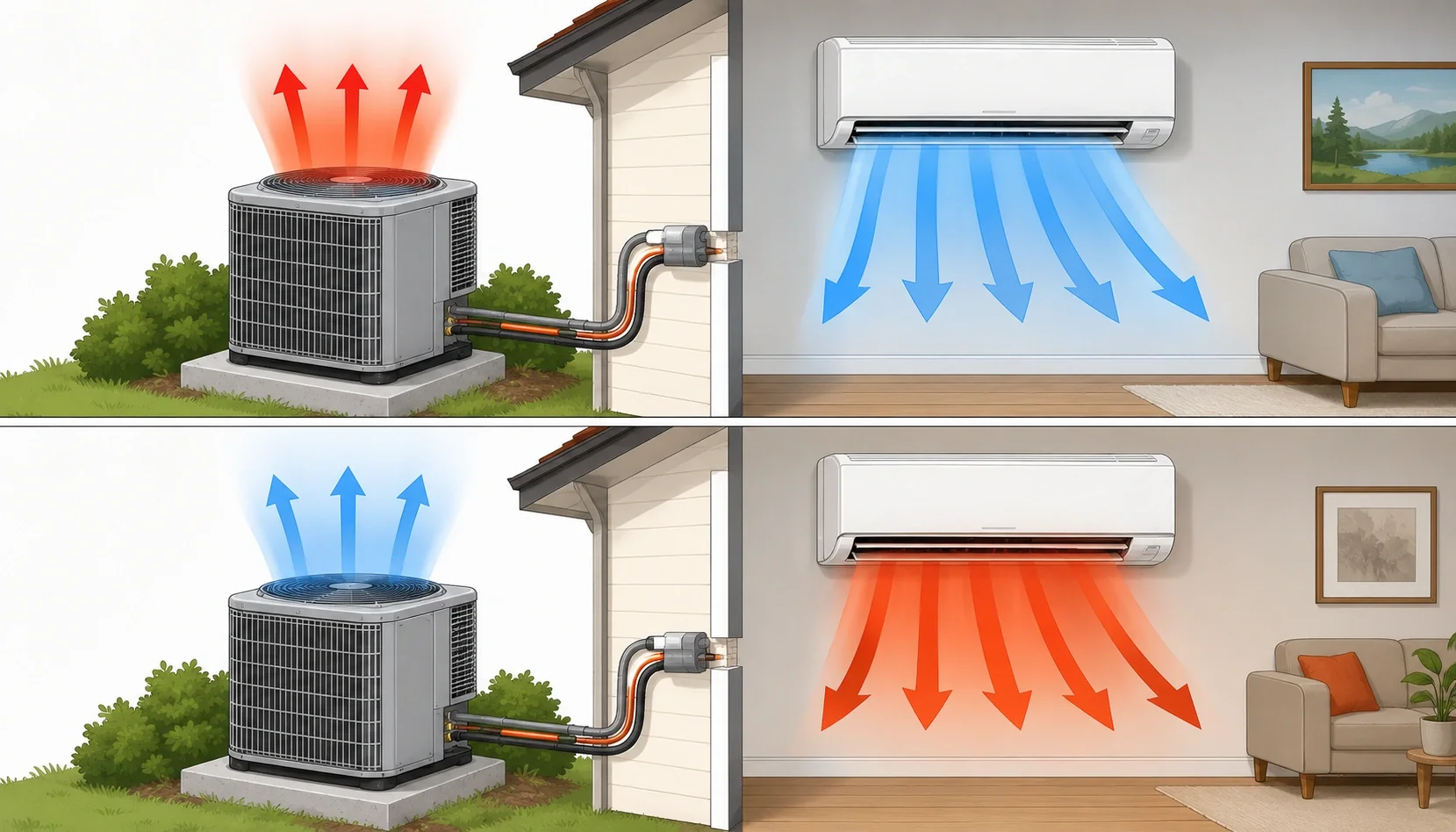
This issue commonly occurs in two scenarios: with heat pump systems that have malfunctioned in their reversing valve, or with standard air conditioners experiencing a refrigerant flow problem. Understanding which scenario applies to your system is the first step toward a solution.
Common Symptoms You May Notice
Before diving into specific causes, confirm whether you're experiencing these telltale signs:
- Cold air from outdoor unit: The condenser fan is blowing noticeably cold or cool air instead of warm air
- Warm or room-temperature air from indoor vents: Your home isn't cooling down despite the system running
- System runs continuously: The AC never seems to reach the set temperature on your thermostat
- Higher than normal energy usage: The system works harder but delivers no cooling
- Ice formation on the indoor unit or refrigerant lines: Frost or ice may appear on components that should be warm
If these symptoms match your situation, continue reading. If your issue differs slightly, you may want to explore our guide on AC blowing cool air but not cooling the house for alternative diagnoses.
7 Reasons Your AC Is Blowing Cold Air Outside
We've ranked these causes from most common to least common, along with whether you can fix it yourself or need professional help.
1. Heat Pump Reversing Valve Stuck in Cooling Mode
If you own a heat pump system, this is the most likely culprit. The reversing valve controls whether your system operates in heating or cooling mode. When it becomes stuck in the cooling position during winter, it will extract heat from inside your home and dump it — along with cold air — outside.
2. Incorrect Thermostat Wiring or Settings
Sometimes the problem is simpler than you think. If your thermostat was recently replaced or if wires have come loose, the signal sent to your outdoor unit may be incorrect, causing reversed operation.
3. Refrigerant Flow Restriction or Low Charge
When refrigerant levels are critically low or there's a blockage in the refrigerant lines, the pressure balance in your system shifts dramatically. This can cause the evaporator coil to become too warm (producing warm indoor air) while the condenser coil becomes unusually cold.
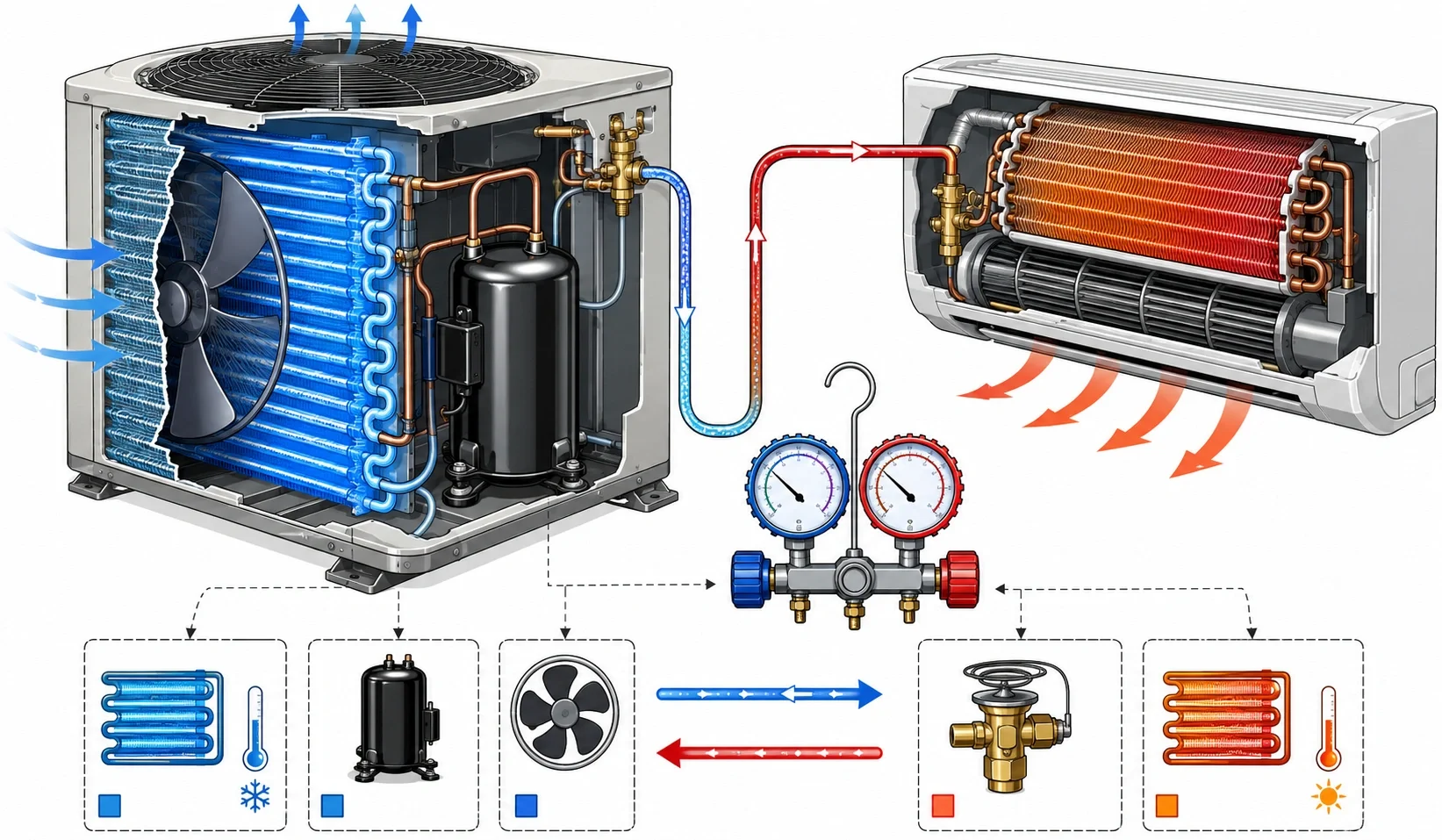
4. Failed Compressor Running in Reverse
In rare cases, a compressor's internal components can fail in a way that causes it to pump refrigerant in the wrong direction. This is more common in older single-stage AC units that have experienced significant wear.
5. Dirty or Clogged Indoor Evaporator Coil
When the indoor evaporator coil is covered in dirt and debris, it cannot absorb heat effectively from your home's air. This causes the refrigerant to return to the outdoor unit still cold, resulting in cold air being expelled outside while your home receives inadequately cooled air.
6. Outdoor Unit Installed in Extreme Cold Without Low-Ambient Kit
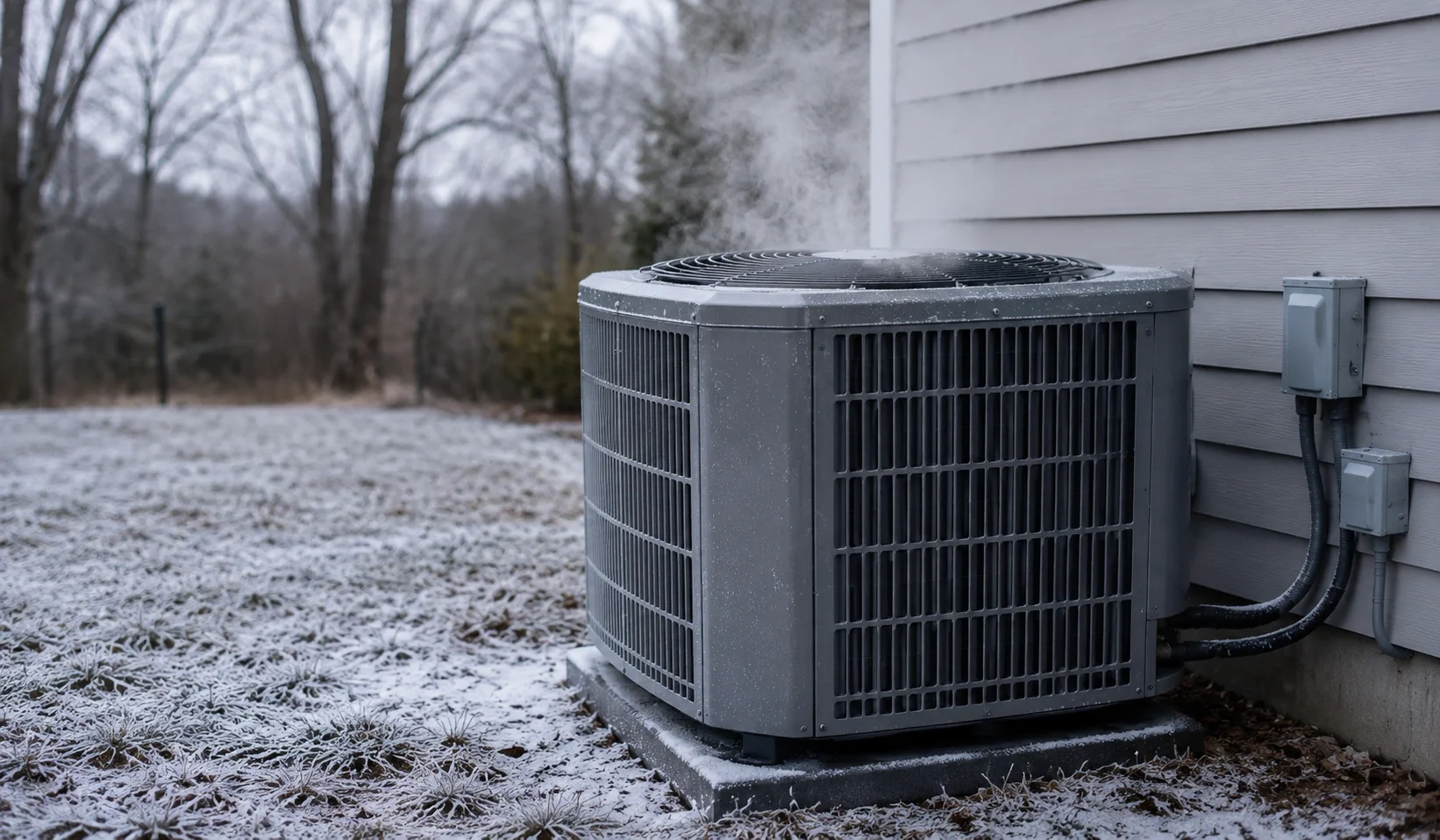
Standard air conditioners are designed to operate above 60°F outdoors. When temperatures drop below this threshold, the refrigerant pressure drops and the system may appear to run backward. This is a common issue for homeowners who try to run their AC during unseasonably cold weather.
7. Control Board or Electrical Malfunction
The control board in your outdoor unit manages all electrical signals. If it malfunctions due to a power surge, moisture damage, or component failure, it may send incorrect signals that reverse the normal operation cycle.
When to Call an HVAC Professional
While some causes can be investigated by a handy homeowner, many require specialized tools and expertise. Here's a quick decision guide:
| Situation | DIY or Pro? | Action |
|---|---|---|
| Thermostat setting or wiring issue | ✅ DIY Possible | Check settings and visible wiring. Replace batteries. |
| Dirty evaporator coil | ✅ DIY Possible | Clean with coil cleaner and soft brush. Turn power off first. |
| Suspected refrigerant leak | ❌ Professional Only | Requires EPA certification. Call a licensed technician. |
| Reversing valve not switching | ❌ Professional Only | Requires electrical testing and potential valve replacement. |
| Compressor issues | ❌ Professional Only | Complex repair. Get multiple quotes; consider system replacement. |
| Control board failure | ❌ Professional Only | Requires diagnostic tools and brand-specific parts. |
For any issue involving refrigerant, electrical components, or compressor internals, we strongly recommend finding a qualified HVAC contractor near you. You can also review our guide on when to call an HVAC technician for more detailed guidance.
Preventing This Problem in the Future
The best defense against unexpected AC malfunctions is regular maintenance. Here are proactive steps you can take:
- Schedule bi-annual professional maintenance: Spring for cooling season and fall for heating season. A typical AC maintenance plan is a mid-range investment that catches small issues before they become major failures.
- Change or clean filters monthly: A clogged filter restricts airflow across the evaporator coil, contributing to temperature imbalances. Learn when to replace your AC filter based on your specific filter type.
- Keep outdoor unit clear: Maintain at least 2 feet of clearance around the condenser. Remove leaves, grass clippings, and debris regularly. Proper indoor and outdoor unit placement is critical for efficiency.
- Follow a seasonal checklist: Our seasonal AC maintenance checklist covers everything from coil cleaning to refrigerant line inspection.
- Install a surge protector: Power surges are a leading cause of control board failure. A dedicated HVAC surge protector is an affordable, entry-level investment that can prevent major repairs down the line.
Frequently Asked Questions
Can I still run my AC if it's blowing cold air outside?
It's not recommended. Running the system in this state can cause further damage, particularly to the compressor. Turn off the system at the thermostat and the circuit breaker until you can diagnose the problem.
Is this problem covered by my home warranty?
Most home warranties cover HVAC components if the failure is due to normal wear and tear. Review your policy and check your AC warranty details. Manufacturer warranties typically cover the compressor and parts for several years, but not labor.
How long does it take to fix this issue?
Simple fixes like thermostat adjustment take minutes. Refrigerant recharge takes 1–2 hours. Compressor or reversing valve replacement can take 4–8 hours and may require a follow-up visit.
Should I replace my AC instead of repairing it?
Consider the rule of thumb: multiply the repair cost by the age of your unit. If the result exceeds the typical replacement threshold, replacement is often the better long-term investment. For more guidance, read our comparison of AC replacement vs. repair.