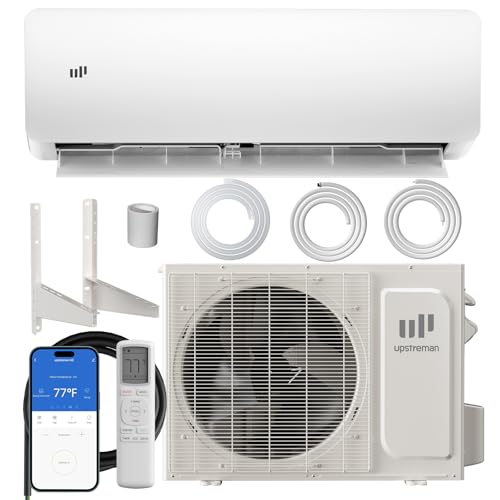
AC for the Basement: Complete Cooling Guide for Below-Grade Spaces
Understand basement-specific cooling challenges, choose the right system type, size it correctly, and control humidity for a comfortable, healthy lower level.
EXPLORE COOLING OPTIONSWhy basements need a different cooling approach: Below-grade spaces are partially insulated by surrounding soil, which keeps them cooler than the rest of the house but also traps moisture. Standard cooling assumptions often do not apply. This guide explains how to match an air conditioner to basement conditions so the space stays dry, comfortable, and energy-efficient.
Unique Cooling Challenges in a Basement
Basements behave differently from above-grade rooms. Before selecting a system, it helps to understand the specific conditions that affect cooling performance and indoor air quality.
- Naturally cooler temperatures: Soil contact keeps basement air cooler, so the cooling load is usually lower than a similarly sized room upstairs. Oversizing is a common mistake that leads to short cycling and poor dehumidification.
- High humidity: Moisture migrates through foundation walls and floors. Even when the air feels cool, relative humidity can remain high, creating a damp, musty environment that encourages mold growth.
- Limited ventilation: Many basements have few windows or rely on a single stairwell opening. Without mechanical ventilation, stale air and odors can accumulate.
- Ductwork complications: Finished basements may not be connected to the home's central duct system, and extending ducts can be disruptive or impractical.
- Window and wall constraints: Window units require a suitable opening at or above grade, which many basements lack. Through-the-wall installation may be an option but requires structural work.
Basement Cooling System Options Compared
Several system types can cool a basement, each with distinct strengths and limitations. The right choice depends on whether the basement is finished, how large the space is, whether ductwork exists, and whether humidity control is a priority.
Ductless Mini-Split System
Ductless mini-splits are frequently the best fit for basements. An indoor air handler mounts on a wall or ceiling, and a small line set connects to an outdoor condenser. Because there are no ducts, installation avoids disrupting finished ceilings and walls. Many mini-splits include dedicated dehumidification modes and variable-speed compressors that maintain consistent temperature and moisture levels. They also allow the basement to be zoned independently from the rest of the home. For basements without existing ductwork, this is often the most practical long-term solution. See our related guide on AC for older homes without ducts for additional context.
Portable Air Conditioner
Portable units are the simplest option for temporary or small basement spaces. They require only a window or vent opening for the exhaust hose and can be moved between rooms. However, portable units are generally less efficient than other types, take up floor space, and need a way to drain condensate. Models with built-in dehumidification can help with moisture, but performance is limited in larger or very humid basements. They are best suited to single-room or occasional use.
Window Air Conditioner
Window units are a viable choice only when the basement has a suitable window or wall opening. Many basements have small, high windows that cannot accommodate a standard unit. In those cases, a through-the-wall installation may be required. Window units cool effectively and are straightforward to operate, but they do not address humidity as thoroughly as a dedicated dehumidifier or mini-split. They also block natural light and can be challenging to secure.
Central Air Conditioning with Ductwork
If the basement is already connected to the home's duct system, extending central cooling to the lower level may be the simplest path. However, central systems are sized for the whole house, and basements often receive inconsistent airflow. Balancing dampers and ensuring adequate return air are essential. If the basement is not ducted, adding ductwork is usually disruptive and may not be justified compared with a ductless solution.
Through-the-Wall Air Conditioner
Through-the-wall units are permanently installed in an exterior wall opening. They are more secure than window units and do not block windows. Installation requires cutting into the foundation or framed wall, which is a significant structural consideration. This option works well when a suitable exterior wall is available and a permanent, built-in solution is preferred.
Comparison Table
| System Type | Best For | Ductwork Required | Humidity Control | Installation Complexity |
|---|---|---|---|---|
| Ductless Mini-Split | Finished basements, independent zoning | No | Strong (dedicated dry mode) | Moderate (professional install) |
| Portable AC | Small rooms, temporary needs | No | Limited to moderate | Low (DIY-friendly) |
| Window AC | Basements with suitable windows | No | Limited | Low to moderate |
| Central AC | Basements already connected to ducts | Yes | Depends on system and controls | High if ducts must be added |
| Through-the-Wall AC | Permanent installation with exterior wall access | No | Limited | High (structural modification) |
How to Size an AC for a Basement
Sizing a basement air conditioner correctly is critical. An oversized unit cools the air quickly but does not run long enough to remove moisture, leaving the space cold and clammy. An undersized unit runs continuously and may not maintain the desired temperature during humid periods.
Basements generally require less cooling capacity per square foot than above-grade rooms because surrounding soil moderates temperature. However, the exact load depends on insulation, window area, ceiling height, and how the space is used. A room-by-room BTU calculator can provide a starting estimate, but a professional Manual J load calculation is the most reliable method.
- Measure the space accurately: Include all finished areas, alcoves, and stairwells.
- Account for below-grade conditions: Reduce the calculated load compared with an above-grade room of the same size.
- Factor in occupancy and equipment: A home office, gym, or media room adds heat gain.
- Consider humidity load: In damp basements, dehumidification capacity matters as much as cooling capacity.
For a broader walkthrough of sizing principles, refer to our guide on AC sizing for the whole home. If you are unsure whether a unit is too large or too small for the space, the article on AC not cooling properly explains common symptoms of sizing errors.
Humidity Control: The Most Overlooked Factor
Cooling alone does not solve basement moisture problems. In fact, an air conditioner that cools without running long enough can make a basement feel damp. Effective moisture management usually requires a combination of approaches.
- Choose a system with dehumidification: Ductless mini-splits with dry mode or variable-speed operation are well suited to maintaining consistent humidity.
- Add a dedicated dehumidifier: A standalone dehumidifier is often the most effective way to control basement moisture, especially in unfinished or very damp spaces.
- Seal foundation cracks and gaps: Reducing moisture entry at the source lowers the load on cooling and dehumidification equipment.
- Ensure drainage is directed away from the foundation: Proper grading and downspout extensions help keep the basement dry.
- Monitor relative humidity: A simple hygrometer helps you keep the space within a comfortable range and identify when additional dehumidification is needed.
Installation Considerations for Basement AC
Installing cooling equipment in a basement involves several practical considerations that differ from above-grade installations.
- Condensate drainage: Basements are below the grade line, so gravity drainage may not be possible. A condensate pump is often required to move water upward to a drain.
- Electrical capacity: Verify that the electrical panel can support the new circuit. Ductless mini-splits and central systems typically require a dedicated circuit. Our guide on AC electrical problems covers common issues to watch for.
- Outdoor unit placement: For mini-splits and central systems, the outdoor condenser should be positioned with adequate clearance and away from debris. Placement guidance is available in our article on AC indoor and outdoor placement.
- Permits and professional installation: Refrigerant handling and structural modifications generally require licensed professionals and may require permits. Review our AC installation guide before starting.
Maintenance Tips for Basement Cooling Equipment
Basement equipment faces conditions that can accelerate wear, particularly dust and moisture. A consistent maintenance routine extends equipment life and preserves performance.
- Clean or replace filters regularly: Dust accumulates quickly in basements. Follow the manufacturer's schedule, and check more often in unfinished spaces.
- Inspect and clean coils: Dirty coils reduce efficiency and can lead to frozen coils. Our articles on AC evaporator and AC frozen coils solution explain what to look for.
- Check condensate drainage: Clear the drain line and inspect the condensate pump if one is installed. Blockages can cause water damage.
- Schedule annual service: A professional inspection catches refrigerant issues, electrical problems, and mechanical wear before they become major repairs. See our AC maintenance guide for a seasonal checklist.
- Monitor for unusual noises or smells: Grinding, rattling, or musty odors can indicate mechanical problems or mold growth. Our guide on AC making noise solution covers common causes.
Common Basement AC Problems and Quick Fixes
Below-grade installations can develop issues that are less common in above-grade rooms. Recognizing the symptoms early helps avoid costly repairs.
- Unit runs but the basement stays humid: The system may be oversized or lacking dehumidification capacity. Consider a dedicated dehumidifier or a system with a dry mode.
- Water around the unit: Check the condensate drain and pump. If water is pooling persistently, review AC leaking water solution.
- Musty odors: Moisture and microbial growth may be present in the unit or ductwork. Our article on AC smells bad solution outlines cleaning and prevention steps.
- Insufficient cooling: Confirm the unit is appropriately sized and that filters and coils are clean. If the issue persists, see AC not cooling solution.
What to Look for When Choosing a Basement AC
When comparing models, focus on features that address basement-specific conditions rather than general cooling specifications alone.
- Dehumidification capability: Look for variable-speed compressors, dedicated dry modes, or the ability to pair with a standalone dehumidifier.
- Correct capacity: Use a load calculation that accounts for below-grade conditions. Avoid choosing a unit by square footage alone.
- Drainage flexibility: Confirm whether the unit supports a condensate pump or gravity drain suited to your basement layout.
- Installation requirements: Check wall or window requirements, line set length limits, and electrical specifications before committing to a type.
- Efficiency and long-term operation: Higher-efficiency systems generally deliver better long-term performance, particularly in spaces used frequently. Review our guide on AC shopping guide for a structured comparison approach.
Frequently Asked Questions
What is the best type of AC for a basement?
Ductless mini-split systems are often the best choice because they require no ductwork, handle humidity well, and allow independent zoning. Portable and window units suit smaller or temporary needs, while central AC works if the basement is already connected to the home's duct system.
How do I size an AC for a basement?
Basements typically need less cooling capacity than above-grade rooms of the same size because surrounding soil moderates temperature. Use a BTU calculator adjusted for below-grade conditions, and verify with a Manual J load calculation for the most accurate result.
Do basements need dehumidification along with AC?
Yes. Basements are naturally humid, and cooling alone does not always control moisture. A dedicated dehumidifier or an AC with a strong dehumidification mode is recommended to prevent mold, musty odors, and structural damage.
Can I install a window AC in a basement?
It depends on whether there is a suitable window or wall opening at or above grade. Many basements have small or high windows, so through-the-wall or portable units are often more practical alternatives.
Why does my basement feel cold but damp?
This usually indicates that the air is being cooled without sufficient dehumidification. An oversized unit or short run times can leave moisture in the air. Adding a dehumidifier or adjusting system operation typically resolves the issue.
Explore More Basement and Room-Specific Cooling Guides
Compare solutions for other challenging spaces, including garages, attics, and rooms without ductwork.
GARAGE COOLING GUIDE ATTIC COOLING GUIDE