AC Repair Tech: A Complete Guide to AC Repair, Diagnosis & Maintenance
Understand how a professional AC repair tech thinks, diagnoses, and fixes cooling problems — so you can decide what to repair, what to replace, and when to call an expert.
START DIAGNOSINGWhy this guide matters: When an air conditioner stops cooling, most homeowners face the same question — repair or replace? Understanding how an AC repair tech approaches the problem helps you avoid unnecessary work, spot misleading advice, and make a confident decision before you schedule a service visit or explore new air units.
What Does an AC Repair Tech Actually Do?
An AC repair tech — also called an HVAC technician — is a trained specialist who inspects, diagnoses, and restores air conditioning systems. Unlike a general handyman, a qualified technician understands the refrigerant cycle, electrical controls, airflow dynamics, and manufacturer-specific diagnostics. A professional visit typically follows a structured path: gather symptoms, test pressures and electrical readings, isolate the faulty component, and confirm the fix with measurable results.
The best technicians do more than swap parts. They verify airflow, check refrigerant charge against manufacturer specifications, inspect electrical connections for heat damage, and confirm that the system holds the correct temperature differential between return and supply air. If you are comparing service providers, reading about what separates a reliable AC repair company from a routine callout can help you set the right expectations.
Diagnostic Testing
Measure refrigerant pressures, superheat and subcooling, amp draw, voltage, capacitor performance, and temperature split to pinpoint the real fault.
Electrical & Controls
Inspect contactors, capacitors, relays, thermostats, and control boards for failures that prevent the compressor or fan from starting.
Refrigerant Handling
Recover, evacuate, and recharge refrigerant to manufacturer-specified weights — a task regulated by EPA rules for certified technicians.
Airflow Verification
Check filters, blower motor, duct restrictions, and static pressure to ensure the system moves the designed volume of air.
Component Replacement
Replace failed compressors, fan motors, coils, and valves using correct parts and torque specifications for long-term reliability.
Preventive Maintenance
Clean coils, tighten connections, lubricate moving parts, and test safety switches to prevent future breakdowns.
Common AC Problems a Repair Tech Encounters
Most service calls fall into a handful of categories. Recognizing the symptom pattern helps you describe the issue accurately and understand what the technician is likely to test first.
| Symptom | Likely Causes | What the Tech Checks |
|---|---|---|
| AC running but not cooling | Low refrigerant, dirty condenser, failing compressor, restricted airflow | Refrigerant pressures, coil condition, filter and duct restriction, compressor amp draw |
| AC not turning on | Tripped breaker, failed capacitor, bad thermostat, open safety switch | Voltage at disconnect, control board signals, capacitor microfarads, thermostat wiring |
| Short cycling | Oversized unit, low charge, frozen coil, faulty pressure switch | Cycle timing, superheat/subcooling, coil temperature, thermostat calibration |
| Water leaking | Clogged condensate drain, frozen evaporator, cracked drain pan | Drain line flow, pan integrity, coil freeze pattern, indoor humidity |
| Loud or unusual noise | Loose fan blade, worn bearings, debris in condenser, failing compressor | Fan balance, motor bearings, debris removal, compressor sound and vibration |
| Weak airflow | Clogged filter, failing blower motor, duct leaks, closed registers | Static pressure, blower speed settings, duct inspection, filter condition |
If the fan runs but the air stays warm, a technician typically starts with airflow and refrigerant checks. You can read a detailed breakdown of that scenario in this guide on why an AC fan is spinning but no cold air is coming out. For units that power on but fail to move air at all, the troubleshooting path differs — see AC unit is on but not blowing air.
How a Repair Tech Diagnoses an AC Problem
A skilled technician follows a logical sequence rather than guessing. This step-by-step approach minimizes wasted time and avoids replacing parts that are still functional.
- Interview the homeowner. When did the problem start? Is it intermittent? Has any work been done recently? Did the system cool at all before it stopped? These answers narrow the search dramatically.
- Visual inspection. Check the indoor and outdoor units for ice, debris, oil stains (a sign of refrigerant leaks), burnt wiring, and water damage. Confirm the filter is clean and the breaker is on.
- Thermostat and control verification. Confirm the thermostat is calling for cooling and that the indoor and outdoor units receive the correct signals from the control board.
- Electrical testing. Measure voltage at the contactor, check capacitor microfarads against rated values, and test amp draw on the compressor and fan motors.
- Refrigerant analysis. Connect gauges, measure suction and liquid line pressures, and calculate superheat and subcooling to confirm charge level and detect restrictions.
- Airflow and temperature split. Measure return and supply air temperatures. A healthy system typically delivers a temperature differential within the manufacturer’s range; a low split often points to refrigerant or airflow issues.
- Isolate and confirm. Once the faulty component is identified, the technician verifies the diagnosis by testing the replacement part or confirming the system operates within specification after the repair.
Repair vs Replace: How a Repair Tech Decides
This is the most important conversation between a homeowner and a technician. A responsible technician evaluates the system’s age, refrigerant type, repair category, and overall efficiency before recommending a path forward.
| Factor | Favors Repair | Favors Replace |
|---|---|---|
| System age | Under 10 years with a good maintenance history | Over 12–15 years or near end of expected service life |
| Repair type | Capacitor, contactor, fan motor, thermostat, drain line | Compressor, evaporator coil, condenser coil, refrigerant leak in inaccessible location |
| Refrigerant type | R-410A or newer refrigerants with available supply | R-22 systems facing phase-out and limited refrigerant availability |
| Efficiency | SEER2 rating still competitive with current standards | Low efficiency rating with high operating energy use |
| Repair frequency | First major repair in several years | Multiple repairs within the last two years |
| Parts availability | Common parts with fast availability | Obsolete or special-order components with long lead times |
A common rule of thumb among technicians: if a single repair approaches the tier of a mid-range replacement and the system is more than a decade old, replacement usually offers better long-term reliability. For a detailed breakdown of replacement considerations, see AC replacement cost and the guide on whether to replace or repair.
When a Compressor Is the Problem
Compressor replacement is the single most consequential repair decision. The compressor is the heart of the system, and replacing it involves refrigerant recovery, evacuation, new filter drier, and precise recharge. On an older system, this repair often sits in the high-end tier and can exceed the value of the remaining equipment life. Read the full analysis in this guide on AC compressor replacement to understand the trade-offs before committing.
Tools and Skills a Professional Repair Tech Relies On
Professional diagnosis depends on measurement, not guesswork. The following tools are standard in a technician’s kit and explain why DIY diagnosis often falls short.
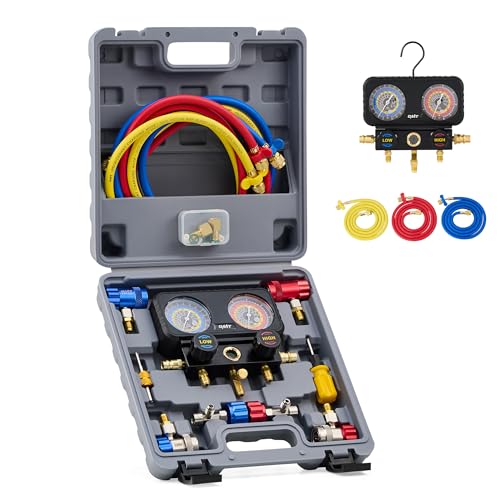
Manifold Gauges
Measure high-side and low-side pressures to evaluate charge, restrictions, and compressor performance.
Multimeter
Tests voltage, continuity, resistance, and capacitor microfarads — essential for electrical fault isolation.
Clamp Meter
Measures compressor and fan motor amp draw to detect failing windings or mechanical binding.
Vacuum Pump
Removes moisture and non-condensables from the system before recharging after a repair.
Leak Detector
Electronic and ultrasonic detectors locate refrigerant leaks that visual inspection would miss.
Thermometers & Psychrometers
Measure temperature split and indoor humidity to verify system performance after repair.
Beyond tools, certification matters. EPA Section 608 certification is legally required to handle refrigerants in the United States, and NATE certification signals verified competency across system types. A technician who cannot explain their diagnostic readings in plain language is a red flag — transparency is part of professional service.
What Homeowners Can Safely Do vs What Requires a Tech
Some maintenance tasks are safe and worthwhile for homeowners. Others carry safety risks or require licensed handling of refrigerant and high-voltage components.
| Task | Homeowner | Professional Tech |
|---|---|---|
| Replace or clean air filter | ✔ Safe and recommended monthly | — |
| Clear condensate drain line | ✔ Safe with basic precautions | — |
| Clean outdoor condenser fins | ✔ Safe with power off | — |
| Check and reset breaker | ✔ Safe if done carefully | — |
| Test capacitor or contactor | ✘ High-voltage hazard | ✔ Required |
| Add or recover refrigerant | ✘ EPA certification required | ✔ Required |
| Replace compressor | ✘ Specialized equipment needed | ✔ Required |
| Diagnose refrigerant leak | ✘ Requires detection tools | ✔ Required |
If you notice the system is running but failing to cool the house, resist the urge to keep adding refrigerant or bypassing safety switches. Those shortcuts can turn a manageable repair into a compressor failure. A professional air conditioner repair technician will identify the root cause and confirm the repair with measured performance.
Preventive Maintenance: How to Avoid Needing a Repair Tech
The most reliable way to reduce repair calls is consistent maintenance. Technicians consistently report that neglected filters and dirty condenser coils are behind a large share of service visits.
- Change the air filter regularly. A clogged filter restricts airflow, raises coil temperature, and can freeze the evaporator. Follow the filter manufacturer’s interval, and shorten it during high-use seasons or in homes with pets.
- Keep the outdoor unit clear. Remove leaves, grass clippings, and debris from around the condenser. Maintain at least two feet of clearance on all sides for proper heat rejection.
- Clean the condenser coil annually. A gentle rinse from the inside out removes dust and pollen that reduce heat transfer efficiency.
- Flush the condensate drain. Pour a cup of distilled vinegar through the drain line seasonally to prevent algae buildup and water backups.
- Schedule a professional tune-up. An annual inspection catches capacitor degradation, refrigerant slow leaks, and electrical wear before they cause a breakdown.
For a complete seasonal routine, see the AC maintenance guide. Homeowners dealing with repeated cooling issues in a specific room may also benefit from understanding how air filters for AC vents affect overall system balance.
How to Choose a Reliable AC Repair Tech
Not all service providers operate the same way. When evaluating a technician or company, look for these signals of professional standards.
Licensing & Insurance
Verify state licensing and liability insurance. A legitimate company will provide this information on request without hesitation.
Written Diagnosis
Ask for the measured readings and a written explanation of the fault before authorizing any repair work.
Parts Warranty
Confirm the warranty on both parts and labor. A solid warranty indicates confidence in the repair.
Clear Communication
A good technician explains options in plain language and never pressures you into an immediate decision.
EPA Certification
Confirm refrigerant handling certification — required by law for any refrigerant work.
Verified Reviews
Check multiple independent review sources and look for consistent patterns, not single outlier complaints.
For broader context on service categories and how to compare providers, the guide on air conditioning unit repair covers what to expect from different types of service calls.
Frequently Asked Questions
How often should an AC system be serviced by a repair tech?
Most manufacturers recommend a professional tune-up once per year, ideally in spring before the cooling season. Homes with heavy usage, pets, or dusty environments may benefit from a second inspection in late summer.
Can I diagnose my AC problem myself before calling a technician?
You can safely check the filter, thermostat settings, breaker, and outdoor unit clearance. Anything involving refrigerant, capacitors, or compressor testing should be left to a certified technician because of safety and legal requirements.
Why does my AC keep freezing up?
Frozen coils usually indicate restricted airflow (dirty filter, blocked ducts) or low refrigerant charge. A technician will measure airflow and refrigerant pressures to identify which condition applies. Continuing to run a frozen system can damage the compressor.
Is it worth repairing an AC that is over 15 years old?
Usually not, especially if the repair involves the compressor or a major coil. At that age, parts availability, refrigerant type, and declining efficiency make replacement the more reliable long-term decision. A technician should walk you through the comparison honestly.
What does a typical AC repair visit include?
A standard diagnostic visit includes a symptom interview, visual inspection, thermostat verification, electrical testing, refrigerant pressure analysis, and airflow measurement. The technician should explain findings and provide a written recommendation before any work begins.
How can I tell if a repair tech is trustworthy?
Look for EPA certification, state licensing, written diagnosis, transparent warranty terms, and clear communication. A trustworthy technician explains the root cause, offers options rather than a single forced solution, and does not pressure you into immediate decisions.
Final Thoughts: Informed Homeowners Make Better Repair Decisions
Understanding how an AC repair tech approaches diagnosis transforms the service experience. Instead of feeling uncertain about recommendations, you can ask informed questions: What were the pressure readings? What is the temperature split? Is the capacitor within spec? Does this repair address the root cause? Those questions signal to any technician that you expect a measured, professional diagnosis — and they help you avoid unnecessary repairs or premature replacement.
If the system is still under warranty, keep documentation of every service visit and register the equipment if you have not already. The AC warranty registration guide explains why registration often determines whether major repairs are covered. And if you are weighing a new system against ongoing repairs, explore the full range of air conditioner shopping guide before making a final call.