Floor AC Unit: The Complete Guide to Floor-Standing Air Conditioners
Everything you need to know about floor-mounted air conditioners — how they work, how to size one, where to place it, and which tier fits your space. Written for buyers who want to decide with confidence before adding a unit to their cart.
Jump to Buying ChecklistQuick takeaway: A floor AC unit is a vertical, self-contained cooling cabinet that sits on the floor and delivers conditioned air at low height. It suits rooms where window mounting is impractical, where wall space is limited, or where a renter cannot modify the structure. This guide explains the three main floor unit formats, sizing math, placement rules, and tier-based selection so you can choose the right unit with confidence.
What Is a Floor AC Unit?
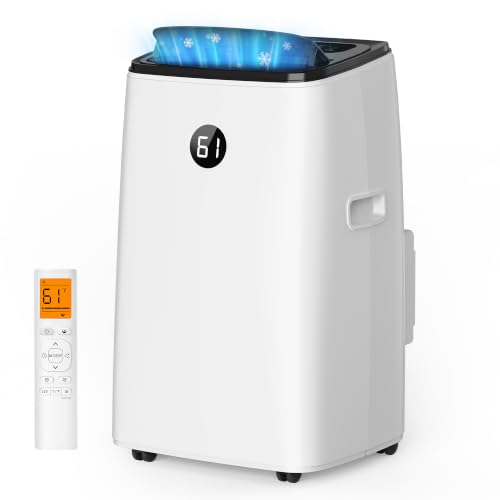
A floor AC unit — also called a floor-standing air conditioner or floor-mounted AC — is a cooling appliance housed in a tall, narrow cabinet that rests on the floor. Unlike a window air conditioner that hangs in a sash, or a wall-mounted mini-split head that sits high on the wall, a floor unit discharges cool air from vents positioned near the bottom or middle of the cabinet. Because cool air naturally settles, this low discharge point can support gentle, even mixing in a room without strong drafts at head height.
The term "floor unit" covers three distinct product families, and they behave very differently. Understanding which family you are shopping in is the first decision that prevents a return. The three families are portable floor units, ductless floor-mounted mini-splits, and commercial-grade floor consoles. Each has a different installation footprint, a different efficiency profile, and a different best-fit room.
If you are still mapping out which AC format suits your home, the broader AC types overview is a useful companion read before committing to a floor format.
The three floor unit families
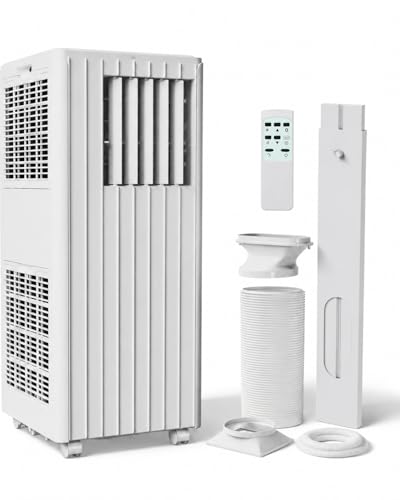
- Portable floor units: A wheeled, plug-in cabinet with an exhaust hose that vents through a window or wall opening. No permanent modification is required, which makes it the most renter-friendly floor option. Cooling capacity is limited by the single-hose or dual-hose exhaust design.
- Ductless floor-mounted mini-splits: A permanent, professionally installed system with an outdoor condenser and an indoor floor console. These deliver the strongest efficiency and the quietest operation of the three, and a single outdoor unit can serve several indoor floor consoles in different rooms.
- Commercial-grade floor consoles: Heavy-duty cabinets built for continuous duty in shops, server rooms, and light commercial spaces. These are engineered for durability and long run times rather than residential aesthetics.
How Floor-Standing Air Conditioners Work
Every floor unit uses the same refrigeration cycle as any other air conditioner: refrigerant absorbs heat indoors, the compressor moves that heat outdoors, and the cycle repeats. The difference is packaging. In a portable floor unit, the compressor and evaporator share one cabinet, so the unit rejects heat through an exhaust hose. In a floor-mounted mini-split, the noisy compressor lives in the outdoor condenser while the indoor floor console holds only the evaporator coil and blower — which is why mini-split floor consoles are dramatically quieter indoors.
Airflow design matters more than most buyers expect. A well-engineered floor cabinet draws return air from the upper face and discharges conditioned air from a lower louver, creating a slow convective loop. Cabinets with wide, adjustable louvers can throw air along the floor toward seating areas, which feels comfortable in living rooms but can feel cold at ankle level in bedrooms. Look for multi-directional louvers if the unit will serve a seating zone.
For a deeper explanation of the underlying cycle, see how an air conditioner works.
Portable Floor Unit vs Floor-Mounted Mini-Split vs Commercial Console
These three formats are often lumped together, but the right choice depends almost entirely on whether you can modify the building and how many hours per day the unit will run.
| Format | Installation | Indoor Noise | Efficiency Profile | Best For |
|---|---|---|---|---|
| Portable floor unit | Plug-in; hose vented through window or wall opening | Moderate — compressor is indoors | Entry-level efficiency; single-hose models lose some cooling to negative pressure | Renters, temporary setups, single rooms under 400 sq ft |
| Floor-mounted mini-split | Professional install; small wall penetration for line set | Very low indoors — compressor is outside | High efficiency; inverter models modulate smoothly | Homeowners wanting quiet, long-run comfort in one or several rooms |
| Commercial floor console | Professional install; often hardwired | Moderate to high depending on duty rating | Built for continuous duty rather than peak efficiency | Shops, server rooms, light commercial spaces |
For a room-by-room comparison of ductless formats, the split ductless air conditioning systems guide and the floor mounted AC overview go deeper. If you are weighing a single permanent floor console against a multi-room layout, the split units explainer clarifies how one outdoor condenser can serve several indoor consoles.
How to Size a Floor AC Unit (BTU by Room)
Sizing is the single most common mistake with floor units. An undersized unit runs continuously and never reaches the setpoint; an oversized unit short-cycles, leaves the room humid, and wears the compressor faster. Start with the standard allowance of 20 BTU per square foot of floor area, then apply adjustments.
Baseline BTU ranges
- Up to 150 sq ft: 5,000 – 6,000 BTU
- 150 – 250 sq ft: 6,000 – 8,000 BTU
- 250 – 400 sq ft: 8,000 – 12,000 BTU
- 400 – 600 sq ft: 12,000 – 15,000 BTU
- 600 – 900 sq ft: 15,000 – 20,000 BTU
Adjustments that change the number
- Add roughly 10% for a room that receives strong afternoon sun.
- Add roughly 10% for ceilings above 8 feet.
- Add roughly 600 BTU per additional regular occupant beyond two.
- Add roughly 4,000 BTU if the room shares an open boundary with a kitchen.
- Subtract roughly 10% for a heavily shaded room with few windows.
These are planning figures, not a substitute for a room-by-room load calculation. For a more precise method, the BTU calculator by room size walks through the arithmetic step by step, and how to size an air conditioner covers the assumptions behind the numbers. If you are sizing a whole home rather than one room, the AC sizing for whole home guide is the better starting point.
Floor Unit Tiers: Choosing by Market Position
Floor units span a wide range of build quality and feature depth. To compare fairly without anchoring on numbers, this guide uses a consistent tier framework. Choose the tier that matches how hard the unit will work and how long you intend to keep it.
Essential Floor Cooling
Entry-level portable floor cabinets with basic mechanical or simple digital controls. Suitable for occasional use in a single room, short lease periods, or a backup unit. Build is lighter, and louver adjustment is usually limited to one or two directions.
Balanced Floor Comfort
The sweet spot for most households. Mid-range portable units and entry floor-mounted mini-splits add programmable timers, wider louver travel, quieter blowers, and washable multi-stage filters. Well-specified for daily seasonal use in a primary room.
Premium Floor-Mounted Systems
Inverter-driven floor-mounted mini-splits with variable-speed compressors, low indoor noise, and multi-zone capability. These are a long-term investment for a homeowner who wants quiet, steady comfort across several rooms and is prepared for professional installation.
Heavy-Duty Floor Consoles
Reinforced cabinets and continuous-duty components built for shops, server rooms, and light commercial spaces. Prioritize durability and serviceability over residential styling. A worthwhile investment where the unit runs most of the day.
As a rule of thumb, a starter-tier portable is appropriate when the unit runs a few hours at a time, while a mid-tier or high-end tier unit pays back its position through quieter operation and smoother modulation during long summer runs. For the efficiency side of that equation, see what a SEER rating means and how inverter AC works.
Placement Rules for Floor Units
A floor unit's performance depends heavily on where it stands. The cabinet needs unobstructed intake and discharge, and a portable unit needs a short, straight exhaust path.
- Level surface first: An uneven floor causes vibration, refrigerant pooling, and condensate overflow. Use a stable, flat section of floor.
- Keep clearance: Leave at least 12 to 18 inches around the air intake and outlet. Do not tuck the unit into a corner behind furniture.
- Avoid direct sun: A cabinet sitting in a sunbeam reads a false temperature and runs longer than necessary.
- Short exhaust run: For portable units, the hose should be as short and straight as possible. Long, kinked hoses reduce cooling and increase indoor heat gain.
- Away from drafts: Do not point the louver directly at a bed or a seated person for long periods; aim along the floor instead.
- Condensate management: Confirm the drain path or tank capacity before placing a portable unit on a carpeted floor.
If the unit will be installed permanently, review AC indoor and outdoor placement before drilling any wall penetration.
Installation: What to Expect
Portable floor units require no tools beyond a window sealing kit. Floor-mounted mini-splits require a licensed installer, a line set, a condensate route, and an electrical circuit sized to the outdoor condenser. The installation quality matters as much as the equipment tier — a premium floor console connected to a poorly evacuated line set will underperform a mid-tier unit installed correctly.
Before scheduling an install, verify the electrical panel has capacity for the condenser and confirm whether a permit is required in your jurisdiction. The AC permit guide and how to check your home electrical panel are useful pre-install reads. For the full sequence, see the installation guide. If you are adding a floor console to an older property, installing air conditioning in an old house covers the structural considerations that trip up first-time buyers.
Comparing quotes from a local HVAC contractor against a big-box retailer is worth doing for permanent installs. The local HVAC vs big box store comparison explains where each channel adds or removes value during an installation.
Efficiency and Maintenance for Floor Units
Floor units accumulate dust faster than wall-mounted heads because the intake sits closer to the floor, where dust, pet hair, and debris settle. That makes filter maintenance more important, not less. A clogged filter on a floor cabinet reduces airflow, forces the compressor to run longer, and can lead to coil icing.
- Rinse or replace the filter every two to four weeks during heavy use.
- Clean the louver and intake grille monthly with a soft brush.
- For portable units, drain the condensate tank before it fills to avoid auto-shutoff mid-afternoon.
- For mini-split floor consoles, schedule a professional coil cleaning each season.
- Check the outdoor condenser for debris and clear the surrounding area before summer.
Detailed walkthroughs are available in how to clean an AC filter and how to clean condenser coils. A seasonal professional visit keeps efficiency stable and catches small issues early — see what an HVAC tune-up covers and how maintenance plans work. If you notice cooling loss between visits, why an AC is not blowing cold air lists the common causes in order of likelihood.
Floor AC Unit Buying Checklist
Use this checklist to narrow the field before you compare individual models. It is organized in the order a careful buyer should work through the decision.
- Confirm the format. Portable if you cannot modify the building; floor-mounted mini-split if you own the property and want quiet, efficient long-run comfort; commercial console if the space runs continuously.
- Calculate BTU. Measure floor area, then apply the sun, ceiling, and occupancy adjustments above.
- Set the tier. Match the tier to how many hours per day the unit will run and how many seasons you intend to keep it.
- Check the electrical fit. Confirm the outlet type and circuit capacity, especially for mini-split condensers.
- Plan the placement. Verify clearance, exhaust route, and condensate handling before purchase.
- Review noise expectations. Portable units are audible indoors; floor-mounted mini-splits are not.
- Confirm service access. Check that filters and drain tanks are reachable without moving heavy furniture.
Ready to Compare Floor Unit Options?
Browse the recommended floor-standing air conditioners below, filtered by tier and room size. Every listing links to full specifications so you can verify the fit before you commit.
View Recommended Floor UnitsFrequently Asked Questions
What is a floor-standing air conditioner?
A floor-standing air conditioner is a self-contained cooling unit that sits on the floor and discharges conditioned air from a tall vertical cabinet. Floor units are available as portable models, ductless floor-mounted mini-splits, and commercial-grade floor consoles.
How many BTU does a floor AC unit need?
As a starting point, allow 20 BTU per square foot of living space. A 300 square foot room typically needs around 6,000 to 8,000 BTU, while a 500 square foot area needs roughly 10,000 to 12,000 BTU. Adjust upward for sunny exposures, high ceilings, and occupancy.
Can a floor AC unit replace central air?
A single floor unit cannot cool an entire house, but a multi-zone floor-mounted mini-split system can serve several rooms without ductwork. For whole-home cooling with existing ducts, central air remains the most practical option. See central air conditioning for the comparison.
Do floor-standing AC units need a window vent?
Portable floor units exhaust hot air through a hose that must be vented through a window, wall opening, or sliding door. Ductless floor-mounted mini-splits need only a small wall penetration for refrigerant lines.
Where should a floor AC unit be placed?
Place the unit on a level surface near the room's exterior wall, away from direct sunlight and obstructions. Keep at least 12 to 18 inches of clearance around the air intake and outlet for efficient airflow.
Is a floor unit better than a window AC?
A floor unit is better where window mounting is unsafe, where the sash is an unusual style, or where the building cannot be modified. A window AC is typically more efficient for the same nominal capacity because the condenser is outside the room. The window air conditioner guide covers the trade-off in detail.
Final Word
A floor AC unit is the right answer when the room, the building, or the lease rules out a window or wall installation. The decision comes down to three variables: the format you can install, the BTU your room actually needs, and the tier that matches how hard the unit will work. Settle those three first and model selection becomes straightforward rather than overwhelming.
If your needs point toward a permanent, multi-room solution instead, compare the ductless mini-split AC guide and the VRV system overview before committing to a single floor console.