
AC Unit for Outside: Complete Outdoor AC Placement Guide
Everything you need to know about outdoor AC condenser units — placement, clearance, weather protection, and long-term maintenance for reliable cooling performance.
START LEARNINGWhy outdoor AC units matter: The outdoor condenser unit is the heart of your cooling system. It releases heat absorbed from your home, and its placement directly affects efficiency, lifespan, and energy use. A well-planned installation means quieter operation, lower energy consumption, and fewer repair calls. This guide walks you through every decision — from choosing the right location to protecting the unit through every season.
What an Outdoor AC Unit Actually Does
The outdoor unit — often called the condenser — is where heat transfer happens. Refrigerant arrives from inside your home carrying absorbed heat. The compressor pressurizes it, the condenser coils release that heat into the outside air, and the fan pushes air across the coils to speed up the process. The cooled refrigerant then travels back indoors to repeat the cycle.
Because the outdoor unit works continuously during cooling season, its environment matters enormously. Restricted airflow, debris buildup, or poor placement forces the compressor to work harder. That translates into longer run times, higher energy consumption, and accelerated wear on components. Understanding the unit's role helps you make smarter decisions about where it goes and how it is maintained.
Placement Rules and Clearance Requirements
Placement is the single most important decision for an outdoor AC unit. The goal is simple: unrestricted airflow in, unrestricted airflow out, and safe access for service technicians.
Standard Clearance Guidelines
| Direction | Minimum Clearance | Why It Matters |
|---|---|---|
| All sides (general) | 24 inches | Allows air intake and prevents heat recirculation |
| Service access side | 36 inches | Room for technicians to reach valves and electrical panel |
| Above the unit | 60 inches | Prevents hot air from being pulled back into the coils |
| From the house wall | 24 inches | Reduces vibration transfer and allows ventilation |
| From another unit | 24–36 inches | Prevents cross-contamination of hot exhaust air |
Always check your manufacturer's installation manual — some models specify slightly different figures. When in doubt, more clearance is better than less.
Best Locations for an Outdoor Unit
- Shaded side of the house — reduces solar heat load on the unit and improves efficiency.
- Level ground or a raised pad — prevents water pooling and keeps the unit stable.
- Away from dryer vents and leaf piles — reduces debris intake.
- Accessible for service — technicians should reach the unit without climbing over obstacles.
Locations to Avoid
- Enclosed spaces, crawlspaces, or tight corners with no cross-ventilation.
- Directly beneath bedroom windows (noise and vibration).
- Areas prone to flooding or standing water.
- Under decks with limited vertical clearance.
- Next to heat sources such as grills or generators.
If your home lacks suitable outdoor space, alternatives such as a wall-mounted configuration or a unit that does not require a window may be worth exploring. For homes where space is truly constrained, a compact indoor solution like a unit that doesn't require a window can complement your setup.
Outdoor Unit Types and Market Tiers
Outdoor units vary widely in build quality, noise level, and efficiency. Rather than comparing figures, it helps to understand where a model sits in the market. The table below uses universal tier descriptors to help you position options.
| Tier | Typical Characteristics | Best For |
|---|---|---|
| Entry-level | Basic single-stage compressor, standard coil protection, louder operation | Rentals, seasonal homes, limited-use spaces |
| Mid-range | Two-stage or scroll compressor, improved sound insulation, coated coils | Most single-family homes, balanced performance |
| Premium | Variable-speed inverter compressor, heavy-duty cabinet, corrosion-resistant finish | Hot climates, homes with long cooling seasons |
| Luxury / top-tier | Fully modulating operation, advanced diagnostics, premium materials, near-silent fans | High-end builds, energy-conscious households, noise-sensitive locations |
| Commercial-grade | Reinforced housing, high static pressure fans, extended duty cycles | Offices, retail spaces, multi-unit buildings |
Choosing a tier is about matching the unit to your environment. A premium inverter unit in a shaded, well-ventilated spot will outlast an entry-level model in direct sun — but an entry-level unit in a mild climate with good placement can serve reliably for many years.
For homes with heat pumps or dual-purpose systems, consider how the outdoor unit pairs with heating mode. Our guide to AC with heat pump explains how outdoor components differ when the system also handles winter heating.
Weather Protection and Seasonal Care
Outdoor AC units are engineered to withstand rain, sun, and temperature swings. Still, a few protective habits make a measurable difference in lifespan.
Summer Protection
- Provide shade where possible — a unit in shade can operate more efficiently than one in direct afternoon sun.
- Keep the top clear — never place objects on top of the unit; the fan discharge must remain unobstructed.
- Trim vegetation — keep shrubs at least two feet away to prevent debris intake.
Winter Care
- If the system runs year-round (heat pump), leave it uncovered — the defrost cycle needs airflow.
- If the system is idle for winter, use a breathable, vented cover. Avoid plastic sheeting that traps moisture.
- Clear snow and ice from the top and sides after storms.
- Inspect the pad for frost heave or cracking before the next cooling season.
Maintenance Checklist for Outdoor Units
Outdoor units accumulate dirt faster than indoor components because they sit exposed to the elements. A short seasonal routine prevents most performance problems.
- Rinse condenser coils with a garden hose (low pressure) each season.
- Remove leaves, grass clippings, and debris from the cabinet base.
- Straighten bent coil fins with a fin comb.
- Check the concrete pad for leveling and cracks.
- Inspect refrigerant line insulation for wear or sun damage.
- Clear the condensate drain path near the unit.
- Listen for unusual rattling, humming, or grinding noises.
- Verify that the disconnect box is closed and weather-tight.
- Trim nearby plants to maintain clearance.
- Schedule a professional inspection before peak season.
Many cooling problems start outdoors. If you notice the indoor fan moving air but the house stays warm, the root cause may be at the condenser. Our guide to an outdoor unit running but not blowing air walks through likely causes.
Similarly, if the system struggles to reach the set temperature, the outdoor unit may be underperforming. See our troubleshooting guide on an AC unit not keeping up with the thermostat.
Common Outdoor Unit Problems
Most outdoor unit issues fall into a few predictable categories. Recognizing the signs early helps you decide between a DIY fix and calling a professional.
| Symptom | Likely Cause | Next Step |
|---|---|---|
| Outdoor unit won't turn on | Tripped breaker, failed capacitor, or thermostat fault | Check the disconnect and breaker; call a technician if power is present |
| Fan spins but no cold air indoors | Low refrigerant, compressor issue, or blocked indoor coil | Inspect for ice on lines; schedule a refrigerant check |
| Unit runs constantly | Dirty coils, undersized system, or extreme heat load | Clean coils and check clearance; consider a load calculation |
| Loud rattling or buzzing | Loose fasteners, fan blade imbalance, or failing contactor | Shut off power and tighten accessible screws; call a pro if noise persists |
| Ice forming on the unit | Restricted airflow or low refrigerant charge | Turn system off, thaw, and inspect filter and coils |
Some problems originate indoors even though symptoms appear at the outdoor unit. If the indoor fan turns on but the system fails to cool, our guide on an AC unit fan turns on but no cold air explains how to trace the fault. For units that run but deliver no airflow, see AC unit running but not blowing air.
Electrical failures at the outdoor unit are common during storm season. If the unit fails to start after a power outage, consult AC unit not turning on outside for a step-by-step check.
How to Evaluate an Outdoor AC Unit
When comparing outdoor units, focus on build quality and suitability rather than headline specifications alone.
What to Look For
- Cabinet construction: Heavy-gauge steel with a corrosion-resistant finish lasts longer in humid or coastal climates.
- Coil protection: Coated or finned guards resist hail, debris, and salt air.
- Compressor type: Scroll and inverter compressors generally run smoother and quieter than traditional reciprocating designs.
- Sound rating: Lower decibel ratings matter if the unit sits near a patio or bedroom window.
- Service access: A well-designed panel layout reduces maintenance time and technician labor.
- Warranty coverage: A strong compressor warranty signals manufacturer confidence. Read our AC warranty explained guide to understand what is typically covered.
Questions to Ask Before Installation
- Does the proposed location meet the manufacturer's clearance requirements?
- Is the electrical disconnect within sight of the unit?
- Will the unit sit on a pad or wall bracket, and is the surface level?
- How will condensate drain away from the unit?
- Is the location accessible for future service?
Should You Repair or Replace?
If the outdoor unit is more than a decade old and repairs are becoming frequent, replacement often makes more sense than repeated fixes. A new premium-tier unit may operate more efficiently in the long run, especially if the existing system is entry-level. For a detailed framework, see our guide on AC replace or repair.
Recommended Outdoor AC Units for Reliable Performance
⚠️ AFFILIATE DISCLOSURE: This website contains affiliate links. As an Amazon Associate, we earn from qualifying purchases. If you make a purchase through these links, we may receive a small commission at no additional cost to you. Read our full affiliate policy.
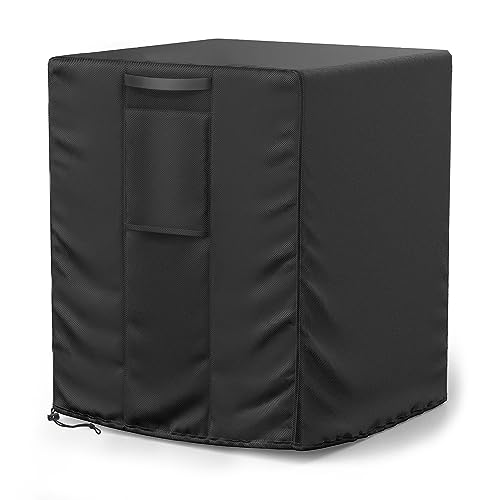
Mrrihand Central Air Conditioner Cover for Outside Units Waterproof Heavy Duty AC Unit for Outdoor Large AC Cover for Winter (30"X30"X32")-Balck
Check price on Amazon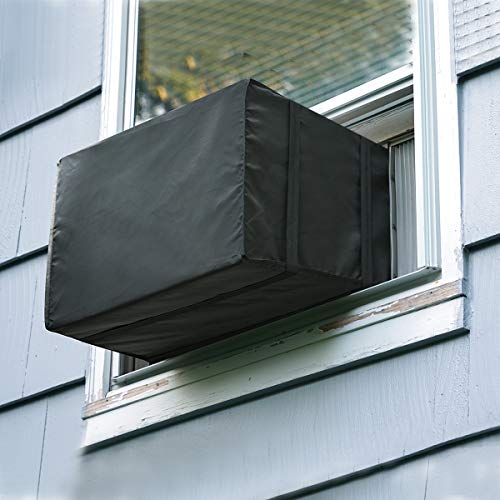
Luxiv Window AC Unit Cover Outdoor, Black Waterproof AC Cover 21X16X15 In | Fits 3000-7000 BTU Window AC Units, 420D Oxford Cover With Double Straps, For Outdoor Sun, Dust, Rain And Snow Protection
Check price on Amazon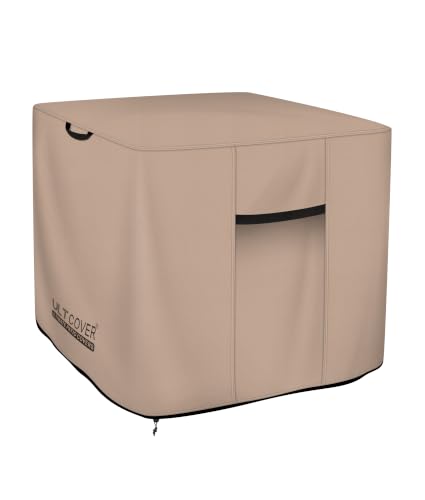
ULTCOVER Waterproof Air Conditioner Cover 30W x 30D x 32H in | Heavy Duty 600D Polyester, UV Resistant, for Outside AC Units
Check price on Amazon
2 Panel Air Conditioner Fence, 42" H x 6.33 FT W Metal AC Unit Fence with Louvered Panels, Outdoor Privacy Screen for Trash Can Enclosure, Pool Equipment, HVAC Systems & Backyard
Check price on Amazon
MODERN WAVE Central Air Conditioner Cover for Outside Units 36 x 36 - Top Universal Outdoor AC Cover Defender (Mesh, 36" x 36")
Check price on Amazon
Xeeol 36x36 Central Air conditioner Covers for Outside, Larger Mesh AC Unit Covers Outdoor - Top Universal Defender
Check price on Amazon
Central Air Conditioner Covers for Outside Units 36'' x 36'', AC Mesh Covers for Outside Unit, AC Unit Cover Outdoor Air Conditioner Condenser Hvac Heat Pump Cover Breathable Top Universal Defender
Check price on Amazon
Mrrihand Central Air Conditioner Cover for Outside Units Waterproof Heavy Duty AC Unit for Outdoor Large AC Cover for Winter (24"X24"X30")
Check price on AmazonFrequently Asked Questions
How much clearance does an outdoor AC unit need?
Most manufacturers recommend at least 24 inches on all sides, 36 inches on the service access side, and 60 inches of vertical clearance above the unit. These figures ensure proper airflow, prevent hot air recirculation, and give technicians room to work safely.
Can an outdoor AC unit run in direct sunlight?
Yes, outdoor units are designed to operate in sunlight. However, shaded placement improves efficiency because the unit does not have to work as hard to release heat. A shade structure or natural shade that does not block airflow is a worthwhile improvement.
Do outdoor AC units need a cover in winter?
Only if the unit is idle for the season. Use a breathable, vented cover that prevents moisture buildup. Never wrap the unit in plastic or seal it completely — trapped moisture accelerates corrosion and can damage electrical components.
How far should an outdoor AC unit be from the house wall?
Keep the unit at least 24 inches from the wall, with 36 inches on the service valve side. This spacing prevents vibration transfer to the structure and allows adequate air intake.
Can an outdoor AC unit be installed on a roof?
Yes, rooftop installation is common for commercial buildings and some residential systems. It requires a reinforced mounting structure, proper drainage, and safe service access. Consult a licensed HVAC contractor before deciding, and verify local building codes.
Why is my outdoor unit running but the house isn't cooling?
Common causes include low refrigerant, a failing compressor, blocked condenser coils, or a restricted indoor airflow path. Start by checking for ice on the refrigerant lines and cleaning accessible coils. If the problem persists, a technician should diagnose the system.
Ready to Choose the Right Outdoor AC Unit?
Now that you understand placement, clearance, weather protection, and maintenance, you have the knowledge to make a confident decision. Browse our recommended outdoor units above and compare features for your home.