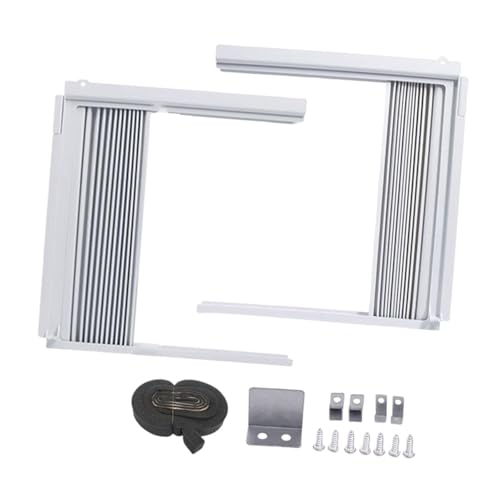
Accordion Panels for Window Air Conditioner: The Complete Guide
Everything you need to know about window AC side panels — what they do, how to size them, how to install them for a tight seal, and which panel tiers make sense for your window and cooling setup.
Why this page exists: You already know you want a window air conditioner. Now you are looking at the accessories — and the accordion panels are the part that most buyers underestimate. They are not cosmetic trim. They are the seal that keeps outside air out, keeps cool air in, and holds the unit steady. This guide walks you through the details before you buy.
What Are Accordion Panels for a Window AC?
Accordion panels — also called side panels or window panels — are the folding, pleated extensions attached to the left and right sides of a window air conditioner cabinet. When you place the unit in a window, these panels pull outward like an accordion to bridge the gap between the AC cabinet and the vertical window frame.
Their job is straightforward but critical. They close the open space around the unit so that the window opening is effectively reduced to just the AC footprint. Without them, you would be cooling the outdoors, inviting insects and debris inside, and allowing rain and drafts to pass around the unit.
Three core functions
- Sealing the window opening: The pleated panels create a physical barrier that limits air exchange between indoors and outdoors.
- Stabilizing the unit: By filling the side gaps, the panels prevent the AC from shifting or vibrating inside the window frame.
- Weather and pest resistance: A properly seated panel blocks rain intrusion and keeps insects from entering through the side gaps.
If you are still deciding whether a window unit is the right format for your room, the broader window air conditioner guide covers capacity ranges, window types, and installation constraints before you commit to a specific model.
Types of Accordion Panels
Not all accordion panels are the same. The material, frame, and insulation level vary by tier and by AC model. Here is the practical breakdown you will encounter when shopping for replacements or upgrades.
| Tier | Typical Construction | Best For | Notes |
|---|---|---|---|
| Entry-level | Single-layer plastic accordion with thin frame | Standard windows, mild climates, temporary setups | Functional seal but limited insulation; can stiffen over time |
| Mid-range | Reinforced plastic pleats with metal or thicker plastic edge frames | Most residential windows, year-round installations | Better tension retention and cleaner fit around the cabinet |
| Premium | Insulated panels with foam core or double-wall pleats | Hot climates, energy-conscious homes, older windows | Noticeably better thermal barrier at the side gaps |
| Universal / adjustable kits | Trim-to-fit panels with adjustable frames | Older or non-standard AC models, discontinued units | Convenient but rarely as tight as model-specific panels |
| Model-specific OEM panels | Exact replacement panels matched to the AC cabinet | Any unit with available OEM parts | Best fit and easiest installation; the default first choice |
Practical tip
Model-specific panels almost always seal better than universal kits. Before buying a universal set, check whether your AC brand and model still has OEM accordion panels available. A well-fitted mid-range OEM panel outperforms a premium universal panel that has to be trimmed to fit.
How to Size Accordion Panels Correctly
Sizing is where most panel purchases go wrong. The panels must be long enough to reach the window frame on both sides, short enough to fold without buckling, and tall enough to match the AC cabinet height.
What to measure
- Window opening width: Measure the full horizontal opening between the left and right window jambs.
- AC cabinet width and height: Measure the actual unit, not the box it came in. The panel height must align with the cabinet side.
- Side gap per side: Subtract the cabinet width from the window opening width and divide by two. This is the reach each panel must cover.
- Window sash position: Note where the lower sash sits when closed against the AC. The panel must fill the space beneath and beside the sash, not just the side gap.
- Model number: Write down the full brand and model number of your AC. Panel compatibility is model-specific for most brands.
If your AC capacity is still undecided, size the room first. The AC sizing guide and the 5,000 BTU window air conditioner reference are useful starting points for small rooms, while larger openings may call for a 12,000–14,000 BTU unit. Panel dimensions follow the unit, so confirming capacity first avoids buying panels twice.
Common sizing mistake
Buying panels based on window width alone. The panel must also match the cabinet height and the sash position. A panel that is the right width but the wrong height leaves a vertical gap along the top or bottom edge — one of the most common sources of draft and condensation around a window AC.
How to Install Accordion Panels for a Tight Seal
Installation is not complicated, but the order of steps matters. Rushing the panel seating is the fastest way to end up with a unit that rattles, leaks air, or lets water in during storms.
- Dry-fit the unit first: Place the AC in the window without panels and check that it sits level and that the window sash closes against the top rail.
- Attach the panels to the cabinet: Slide or clip the accordion panels onto the side rails of the AC according to the manufacturer's instructions. Most panels slot into tracks on the cabinet sides.
- Extend the panels to the frame: Pull each panel outward until it meets the window jamb. The pleats should be under light tension, not fully stretched flat.
- Seat the frame edges: Push the panel's outer edge into the window frame channel. If your window has no channel, use the included brackets or add weatherstripping to create a seat.
- Close and lock the sash: Lower the window sash so it rests on the AC's top rail and against the sash seal. Lock the window if possible — a locked sash reduces vibration.
- Seal the remaining gaps: Add foam weatherstripping or insulation strips along the top rail, the sash contact line, and any panel edges that do not sit flush.
- Check for wobble: Gently press the unit from side to side. If it shifts, add support brackets or adjust the panel tension before running the AC.
For units installed in walls rather than windows, the panel logic changes — see the through-the-wall AC guide for the wall-sleeve approach. If your window has no sash to close against, the AC unit that doesn't require a window overview covers alternative formats.
Insulating Accordion Panels for Better Efficiency
The accordion panels are a thin barrier. In hot climates or in homes with older single-pane windows, the side panels become a measurable weak point in the cooling envelope. A few low-effort upgrades make a real difference.
- Foam weatherstripping: Line the top rail and the sash contact line to stop air infiltration at the largest gap.
- Reflective window film: Apply film to the exposed glass above the unit to reduce solar heat gain into the room.
- Panel insulation strips: Adhesive foam strips on the inner face of the accordion panels add a thermal break without blocking the pleats.
- Side gap filler: For wide window openings, use a rigid foam board cut to fit behind the panel, leaving the pleats free to expand.
These steps pair well with the broader electricity bill reduction guide and the air duct sealing advice if your home also uses ducted cooling. If the unit itself is struggling after installation, the AC not cooling troubleshooting guide covers the common causes before you assume the panels are at fault.
When to Replace Your Accordion Panels
Accordion panels are wear items. They flex every time the unit is installed or removed, and plastic pleats stiffen with UV exposure and temperature cycling. Replace them when you notice any of the following:
- Cracks or splits along the pleat folds: Even a hairline crack lets air and moisture through.
- Loss of tension: Panels that no longer spring back or that sag away from the window frame.
- Yellowing or brittleness: A sign of UV degradation; brittle panels crack easily during the next installation.
- Persistent drafts or condensation: If the room feels drafty near the unit or moisture forms on the panels, the seal is failing.
- Rattling or vibration: Loose panels amplify compressor vibration into the window frame.
Replacement panels are model-specific for most brands. Bring your AC model number when ordering. If OEM panels are discontinued, a universal trim-to-fit kit is the practical fallback, reinforced with weatherstripping to compensate for the looser fit.
Maintenance Tips for Long-Lasting Panels
- Clean the pleats seasonally: Dust and pollen collect in the folds and can harbor mold. Wipe with a damp cloth and mild soap, then dry fully before reinstalling.
- Inspect after storms: Wind-driven rain can dislodge panel edges. Re-seat them before running the unit again.
- Remove panels before storing the AC: Store panels flat, not folded tight, to preserve pleat memory.
- Check the sash seal annually: The contact line between the window sash and the AC top rail is the highest-wear seal point.
- Pair with filter maintenance: A clean AC unit filter reduces strain on the whole system, including the panel seals that hold the unit steady.
Frequently Asked Questions
What are accordion panels for a window air conditioner?
Accordion panels are the folding side panels attached to a window air conditioner unit. They extend outward to fill the gap between the AC cabinet and the window frame, sealing the opening to keep outside air, insects, and debris out while holding the unit securely in place.
Do I need accordion panels if my window AC already has side panels?
Most window AC units ship with basic accordion panels. However, older panels can crack, lose their tension, or fail to seal properly. Replacement or upgraded panels with better insulation and reinforced frames are a common purchase when the original panels wear out or when the window opening is wider than the stock panels can cover.
How do I measure for replacement accordion panels?
Measure the width of your window opening, the height of the AC cabinet, and the gap on each side of the unit. Check your AC brand and model number, because accordion panels are model-specific. A panel that is too short leaves gaps, and one that is too long will not fold properly.
Can I insulate accordion panels for better efficiency?
Yes. Many owners add foam insulation strips, weatherstripping, or reflective window film around the accordion panels to reduce air leaks and heat transfer. This is especially useful in older homes or in very hot climates where the window frame itself becomes a weak point in the cooling envelope.
Are universal accordion panels a good option?
Universal panels can work as a stopgap, but fit is rarely perfect. Model-specific panels seal better and hold the unit more securely. If you cannot find OEM panels, choose a universal kit with adjustable frames and trim-to-fit edges, then reinforce the seal with weatherstripping.
Ready to choose the right panels?
Check your AC model number, measure the window opening, and pick the panel tier that matches your climate and window type. The recommendations below are matched to window AC units and panel accessories so you can compare features side by side.