
Air Cond Compressor: The Complete Guide
Understand how the AC compressor works, the different compressor types, warning signs of failure, and the maintenance habits that keep your system cooling reliably for years.
Start ReadingWhat Is an Air Cond Compressor?
The air cond compressor is the heart of any air conditioning system. It is a mechanical pump located in the outdoor unit that circulates refrigerant through the entire closed loop of the system. Without a functioning compressor, an air conditioner can blow air, but it cannot produce cooling.
Inside the compressor, low-pressure refrigerant gas returning from the indoor evaporator coil is compressed into high-pressure, high-temperature gas. This pressurized gas then travels to the outdoor condenser coil, where it releases heat to the outside air and condenses into a liquid. The liquid refrigerant passes through an expansion device, drops in pressure and temperature, and enters the evaporator coil indoors to absorb heat again. This continuous cycle is what removes heat from your home.
Because the compressor is the only component that actively drives refrigerant flow, its efficiency directly affects the cooling capacity, energy consumption, and lifespan of the whole system. A well-matched, healthy compressor keeps cooling performance stable; a weakened or damaged one causes weak airflow temperature, longer run times, and eventually a complete loss of cooling.
How the Compressor Works in the Cooling Cycle
To understand the compressor's role, picture the refrigerant loop as four connected stages:
- Evaporation (indoor coil): Low-pressure liquid refrigerant absorbs heat from indoor air and boils into a gas.
- Compression (compressor): The compressor raises the pressure and temperature of that gas so it can reject heat outdoors.
- Condensation (outdoor coil): The hot high-pressure gas releases heat to the outdoor air and condenses back into a liquid.
- Expansion (expansion valve): The liquid pressure drops sharply, making it cold enough to absorb indoor heat again.
The compressor sits between the evaporator and condenser. It must generate enough pressure differential to overcome system resistance, refrigerant line length, and ambient temperature. When the compressor is undersized, the system struggles to cool during peak heat. When it is oversized or running against a restricted refrigerant circuit, it may cycle rapidly and overheat.
Compressor operation is controlled by a contactor and protected by overload devices. In inverter-driven systems, the compressor speed is modulated electronically rather than simply switched on and off, which allows precise capacity control and smoother temperature regulation.
Types of AC Compressors Explained
Different air conditioning systems use different compressor designs. Each type has strengths suited to particular capacities and applications.
Reciprocating Compressor
Uses a piston moving inside a cylinder to compress refrigerant. Common in older central systems and some window units. Durable construction but with more moving parts and vibration.
Rotary Compressor
Uses a rotating roller or vane to compress gas. Compact, smooth-running, and widely used in mini-split and portable AC units. Good efficiency for small to mid-capacity systems.
Scroll Compressor
Uses two interlocking spiral scrolls to compress refrigerant continuously. Fewer moving parts, quieter operation, and high reliability. Common in modern central air conditioners.
Screw Compressor
Uses two rotating screws to compress gas. Typically found in commercial-grade and large-capacity chilled water or packaged systems where continuous heavy-duty operation is required.
Inverter Compressor
Variable-speed compressor driven by an inverter board. Adjusts speed to match load instead of cycling on and off. Delivers steadier temperatures and efficient long-run operation.
Single-Stage Compressor
Operates at one fixed speed: either fully on or fully off. Simple and proven design. The essential tier choice for many entry-level cooling systems.
When comparing compressor types, consider the load profile of the space. A small bedroom cooled occasionally may be well served by a rotary compressor in a mini-split. A whole-home central system running long hours in hot climates benefits from a scroll or inverter compressor that handles sustained operation efficiently.
Compressor type also affects serviceability. Scroll and rotary compressors typically have fewer wear points than reciprocating designs, but they still require correct refrigerant charge and clean coils to avoid overheating. Selecting the right compressor category is part of proper air cond system planning.
Warning Signs of a Failing Compressor
Catching compressor problems early can prevent collateral damage to other components. Watch for these signals:
- Weak cooling or no cooling: The unit runs but the air is not cold. This is often the first symptom, though it can also indicate low refrigerant charge or a dirty coil. If your AC unit is running but no cold air is coming out, the compressor should be tested.
- Loud noises from the outdoor unit: Grinding, screeching, or repeated clicking can indicate internal mechanical wear or a failing start component.
- Frequent circuit breaker trips: A compressor drawing excessive current due to shorted windings or a seized rotor will trip the breaker.
- Compressor overheating and shutting down: The unit may run briefly, then stop, then restart after cooling. This cycling suggests thermal overload protection is activating.
- Burnt smell or scorched wiring: Visible discoloration at the compressor terminals points to electrical failure and requires immediate professional attention.
- Oil residue around refrigerant lines: A refrigerant leak near the compressor can cause oil to escape, starving the compressor of lubrication.
Several of these symptoms overlap with other faults. For example, an AC unit that is working but not cooling may have a capacitor problem rather than a dead compressor. A qualified technician should perform electrical and pressure tests before replacement is recommended.
Maintenance Habits That Extend Compressor Life
Compressors fail prematurely for predictable reasons: overheating, poor lubrication, electrical faults, and refrigerant contamination. Routine maintenance addresses each of these risk factors.
- Keep the outdoor coil clean: Restricted airflow raises condensing pressure and forces the compressor to work harder. Rinse the coil seasonally and remove debris around the unit.
- Replace indoor air filters regularly: A clogged filter reduces airflow across the evaporator, which can lead to frozen coils and refrigerant floodback. Follow the recommended AC unit filter replacement interval.
- Verify refrigerant charge: Both undercharge and overcharge shorten compressor life. Charge should be checked with gauges and adjusted only by a certified technician.
- Inspect electrical components: Test the capacitor, contactor, and wiring connections during annual service. A failing capacitor is a common cause of hard-starting and compressor damage.
- Check for leaks: Low refrigerant from a slow leak causes the compressor to run hot and can eventually seize. Repair leaks before recharging.
- Schedule professional service: An annual inspection catches small issues before they become compressor-level failures. If you notice symptoms such as an AC unit not keeping up with the thermostat, have the system checked promptly.
In systems with inverter compressors, maintenance also includes checking the inverter board and ensuring the outdoor unit has adequate ventilation. Electronic components can fail independently of the compressor itself, so diagnostics should not automatically assume a mechanical fault.
Repair or Replace: Making the Right Call
Not every compressor problem means a new compressor is needed. The decision depends on what failed and the age of the equipment.
| Failure Type | Typical Approach | Best For |
|---|---|---|
| Failed capacitor or contactor | Component replacement | Most systems; simple electrical fix |
| Burnt wiring or loose terminals | Wire and terminal repair | Systems with no internal compressor damage |
| Seized or noisy compressor | Compressor replacement | Mid-tier systems in otherwise good condition |
| Shorted compressor windings | Compressor replacement or system replacement | Depends on age and refrigerant type |
| Refrigerant leak at compressor | Leak repair plus recharge | Repairable joints; otherwise assess replacement |
| Aged system with multiple faults | System replacement | High-end tier investment for long-term reliability |
Compressor replacement is a significant repair and should be weighed against the condition of the condenser coil, air handler, and refrigerant type. Older systems using phased-out refrigerants may not be good candidates for a long-term investment. In those cases, replacing the outdoor unit or the full system is often the more sensible choice for a professional-grade outcome.
Always request a written diagnosis that includes electrical test results, pressure readings, and a clear explanation of why the compressor is being condemned. A second opinion is reasonable for high-end tier equipment.
Ready to Explore Compressor-Compatible Cooling Options?
Browse recommended air conditioning units with reliable compressor technology, selected for performance and durability across different room sizes and usage profiles.
View Recommended UnitsFrequently Asked Questions
What is an air cond compressor and what does it do?
An air cond compressor is the pump that circulates refrigerant through the air conditioning system. It compresses low-pressure gas into high-pressure gas, allowing the refrigerant to release heat outdoors and absorb heat indoors, which is the core of the cooling cycle.
How long does an air cond compressor typically last?
A well-maintained air cond compressor commonly lasts between 10 and 15 years. Lifespan depends on usage hours, ambient conditions, electrical supply quality, and whether routine maintenance such as coil cleaning and refrigerant level checks is performed.
What are the warning signs of a failing air cond compressor?
Common signs include weak or no cooling, loud grinding or clicking noises from the outdoor unit, frequent breaker trips, the compressor overheating and shutting down, and visible oil residue or burnt wiring near the compressor terminals.
Can an air cond compressor be repaired or must it be replaced?
Some issues such as a failed capacitor, contactor, or electrical wiring can be repaired. However, internal mechanical failure like seized bearings, burnt windings, or valve damage usually requires full compressor replacement, and sometimes the entire outdoor unit if the system is aged.
Does a bigger compressor always mean better cooling?
No. The compressor must be matched to the cooling load and the rest of the system. An oversized compressor can short-cycle, fail to remove humidity properly, and wear out faster. Proper sizing is based on room load calculation, not on choosing the largest available unit.
Recommended Air Conditioners with Reliable Compressor Technology
⚠️ AFFILIATE DISCLOSURE: This website contains affiliate links. As an Amazon Associate, we earn from qualifying purchases. If you make a purchase through these links, we may receive a small commission at no additional cost to you. Read our full affiliate policy.

Pamolag AC Compressor For Chevrolet City Express LS, LT 2.0L 2015-2018 | For Nissan NV200 S/SV/Taxi/LT Mini 4-Door 2013-2020, Air Conditioning Compressor, OE ref CO29162C
Check price on Amazon
A-Premium Air Conditioner AC Compressor with Clutch | Compatible with Infiniti Q50 2014-2024, Q60 3.0L 2017-2022 & Nissan 370Z 2019-2020
Check price on Amazon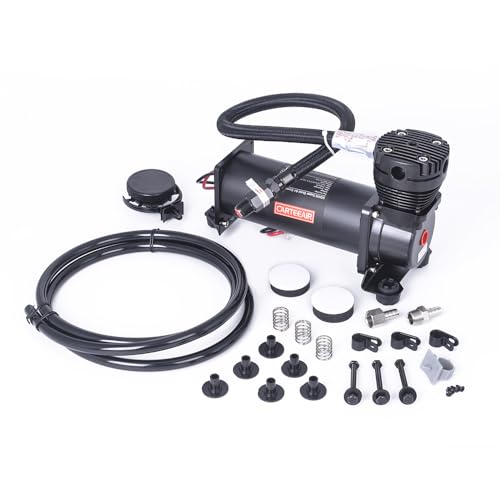
ZHSYMX Ultra Quiet Air Compressor, 3/8 NPT Super Silent 69DB 12V 300PSI Air Ride Suspension Compressor/Air Train Horn for Train/Truck/Car Black
Check price on Amazon
ACTECMAX Universal AC Electric Compressor 20cc/r Air Conditioner Compressor for 12V Auto Compressor for R134a, with Straight Fittings
Check price on Amazon
A/C Compressor w/Clutch Fit for Honda Accord 2003-2007 2.4L | Replace CO 28003C, 10345430, 140155,10349951,1521609, 1028003,1128003, 38800RAAA01, 38810RAAA01, 38810RBA006
Check price on Amazon
CARSUN AC/DC Tire Inflator Portable Air Compressor, Dual Power for Home 110V AC and Car 12V DC Air Pump with Pressure Gauge, Auto Shutoff, Tire Pump for Car Motorcycle Bicycle and Other Inflatables
Check price on Amazon
A-Premium Air Conditioner AC Compressor with Clutch | Compatible with Mini Cooper 2007-2016, Cooper Paceman 2013-2016, Cooper Countryman 2011-2016
Check price on Amazon