
Air Conditioner for a 1,500 Square Foot House: Complete Planning Guide
Everything a homeowner needs before choosing a cooling system for a 1,500 square foot home — sizing, system types, efficiency tiers, installation factors, and long-term care, explained clearly and without guesswork.
A 1,500 square foot house sits in a comfortable middle zone: it is large enough that a single window unit usually cannot handle the whole home, yet small enough that you do not necessarily need the largest equipment on the market. That makes the decision more interesting than it first appears. The right choice depends on your climate, the layout of your home, whether ductwork already exists, and how you plan to use each room. This guide walks through each of those factors in order, so you can move from research to a confident decision.
Why this guide focuses on planning rather than shopping: Most homeowners researching this topic already know they want a cooler, more comfortable home. What they usually lack is a clear framework for comparing options. This page gives you that framework — the technical concepts, the trade-offs between system types, and the practical questions to ask before any installation begins.
How Much Cooling Capacity Does a 1,500 Square Foot House Need?
Capacity is measured in BTUs (British Thermal Units) per hour, and getting it right is the single most important technical decision you will make. An undersized system runs constantly and never quite keeps up on the hottest days. An oversized system cools too quickly, cycles on and off repeatedly, struggles to remove humidity, and wears out its compressor faster. For a 1,500 square foot home, the rough working range is typically between 24,000 and 36,000 BTU, which corresponds to a 2-ton to 3-ton system.
That range is deliberately wide because square footage alone is a rough shortcut. A well-insulated home in a mild climate with shaded windows may sit comfortably at the lower end, while a home with single-pane glass, a west-facing wall of windows, or an open-plan layout with high ceilings may need the upper end. The professional way to resolve this is a room-by-room load calculation, often called a Manual J calculation, which accounts for insulation, window area, orientation, air leakage, occupancy, and local design temperatures. If you want a deeper walkthrough of the methodology, see our guide on how to size an air conditioner.
| Home Scenario | Typical Capacity Range | System Tier Context |
|---|---|---|
| Well-insulated, shaded, mild climate | 24,000 BTU (2-ton) | Essential tier sizing |
| Average insulation, mixed climate | 30,000 BTU (2.5-ton) | Balanced tier sizing |
| Older home, large windows, hot climate | 36,000 BTU (3-ton) | High-end tier sizing |
Notice that the tier labels above describe the sizing scenario, not the product itself. A high-end tier sizing requirement does not mean you must buy a luxury system — it means the load calculation points to the upper end of the capacity range, and the equipment you choose should match that. To cross-check your numbers against a simpler method, the BTU calculator by room size is a useful starting point before you consult a technician.
Comparing System Types for a 1,500 Square Foot Home
Once you know the capacity range, the next question is which type of system fits your house. Each type has a different installation profile, a different efficiency ceiling, and a different maintenance rhythm. The four options below cover the vast majority of homes at this size.
Central Air Conditioning
The default choice when ductwork already exists or can be added. A single outdoor condenser paired with an indoor air handler distributes cooled air through the duct network. It delivers even temperatures across rooms and integrates cleanly with a furnace or heat pump.
Best for: Homes with existing ducts, or homes where a full renovation makes duct installation practical. Compare the broader category in our central air conditioning guide.
Ductless Mini-Split
One outdoor unit connected to one or more wall-mounted indoor heads. No ductwork is required, so installation is far less invasive. Multi-zone configurations let you cool only the rooms you use, which can be a strong fit for homes with unused guest rooms or closed-off spaces.
Best for: Older homes without ducts, additions, and households that want room-by-room control. See ductless mini-split AC for the full breakdown.
Window & Portable Units
Practical for cooling a single bedroom or a small apartment, but usually insufficient to condition an entire 1,500 square foot home on their own. They work well as supplements — for example, cooling a home office during the day while the central system is set back.
Best for: Supplemental cooling, renters, and homes with one problem room. Compare in our window air conditioner and portable air conditioner guides.
Heat Pump Systems
A heat pump cools exactly like a central AC in summer and reverses the cycle to heat in winter. For homeowners replacing both a furnace and an aging AC at the same time, a single heat pump can simplify the system and often qualifies for efficiency-focused programs.
Best for: Full system replacements in moderate to mild climates. Review the trade-offs in heat pump vs air conditioner.
Efficiency Ratings: What SEER2 Really Tells You
SEER2 is the current standardized efficiency rating for cooling equipment in the United States, replacing the older SEER metric with a more realistic test procedure. Higher numbers mean more efficient operation, but the practical difference between tiers depends heavily on how many hours per year your system runs. In a hot climate with a long cooling season, moving up an efficiency tier produces a larger long-term energy reduction than the same jump would in a mild climate.
For a 1,500 square foot home, the efficiency decision usually comes down to three tiers:
- Essential tier: Meets minimum standards and covers the basics. A solid choice when the system will run a moderate number of hours and the installation itself is the priority.
- Balanced tier: The most common choice for this home size. It improves efficiency meaningfully without pushing into flagship territory, and typically pairs well with a variable-speed or two-stage compressor for better humidity control.
- High-end tier: Designed for long cooling seasons and homeowners who plan to stay in the home for many years. The efficiency gain compounds over time and often comes with quieter operation and more advanced controls.
If you want to understand how the rating is calculated and where the thresholds fall, our explanation of what a SEER rating is and the newer SEER vs SEER2 DOE standards covers the details. For homes in warm regions, pairing an efficient condenser with a properly sealed duct system matters as much as the rating on the label.
Installation Factors That Shape the Final Outcome
Installation quality influences performance more than most homeowners expect. Two identical systems installed differently can behave very differently in year five. Before you commit to any contractor, make sure the following factors are addressed in writing.
- Duct condition: Leaky or undersized ducts waste a significant share of the cooling the equipment produces. If your home already has ducts, ask for a pressure test or at least a visual inspection of joints and insulation. Our guide on how to seal air ducts explains what to look for.
- Electrical capacity: A new system may need a dedicated circuit or an upgraded panel. Confirm the amperage requirement early so it does not become a surprise mid-installation. The 110V vs 240V AC unit comparison is useful context for smaller equipment.
- Outdoor placement: The condenser needs clearance for airflow and should not be boxed in by fencing, shrubs, or a deck. Placement affects efficiency and noise. See AC indoor and outdoor placement for guidelines.
- Permits: Most jurisdictions require a permit for a new or replaced system. A reputable contractor will handle this as part of the project. If you are unsure, do I need a permit for AC walks through the typical rules.
- Contractor vetting: Ask for license and insurance documentation, request references from similar-sized homes, and get at least three written proposals. Our guide on how to choose an HVAC contractor covers the questions worth asking.
Keeping the System Efficient Over the Long Run
A well-installed system still depends on routine care to hold its efficiency. The good news is that most of the important maintenance is simple and inexpensive relative to the cost of neglect.
- Filter changes: Every one to three months during cooling season, depending on pets and dust. A clogged filter forces the blower to work harder and can freeze the evaporator coil. See when to replace an AC filter.
- Coil cleaning: Outdoor condenser coils collect debris and lose efficiency. A seasonal rinse and an annual deeper cleaning keep heat transfer effective. Our guides on cleaning condenser coils and cleaning evaporator coils cover the process.
- Seasonal checklists: A short spring and fall routine catches small issues before they become failures. The seasonal AC checklist is a practical starting point.
- Thermostat strategy: A programmable or smart thermostat that sets back during unoccupied hours reduces runtime without sacrificing comfort. See how to use a programmable thermostat.
- Service plans: An annual maintenance contract is optional, but it does keep the system on a schedule and often includes a pre-season inspection. Our overview of an air conditioner annual maintenance contract explains what is typically included.
Recommended Air Conditioners for a 1,500 Square Foot House
⚠️ AFFILIATE DISCLOSURE: This website contains affiliate links. As an Amazon Associate, we earn from qualifying purchases. If you make a purchase through these links, we may receive a small commission at no additional cost to you. Read our full affiliate policy.

14,000 BTU Portable Air Conditioner Cools Up to 700 Sq.Ft, 3-IN-1 Energy Efficient Portable AC Unit with Remote Control & Installation Kits for Large Room, Office, Temporary Space
Check price on Amazon
Midea 6,000 BTU Window Air Conditioner, Electronic Control, 250 Sq Ft, New | 3-In-1 Cool/Fan/Dehumidifier Modes, Easy-To-Use Controls, Remote Control, And Cooling For Bedrooms, Studies and Home Offices
Check price on Amazon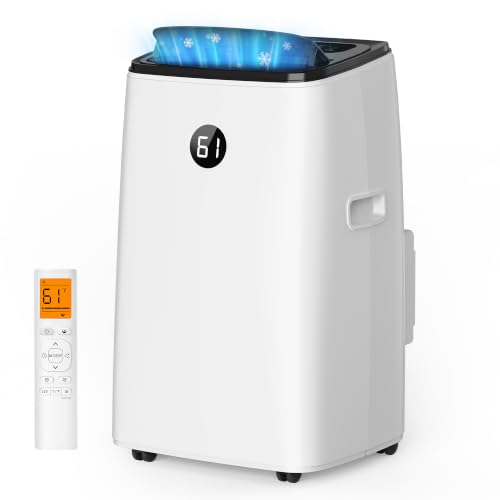
AGTANA 14000 BTU Portable Air Conditioner for Large Room up to 700 Sq. Ft, 3-in-1 Self-Evaporating AC with Fan & Dehumidifier, Floor Standing Portable AC Unit with Remote Control, Auto Swing, White
Check price on Amazon
BLACK+DECKER Window Air Conditioner 12000 BTU, BD12WT6, White | AC Window Unit Cools Up to 550 Square Feet, AC Unit with Remote Control, 3 Cooling Speeds and Fan Only Function, 12 CEER
Check price on AmazonFrequently Asked Questions
Is a 2-ton system enough for a 1,500 square foot house?
In many cases, yes — particularly in a well-insulated home with shaded windows in a moderate climate. But the correct answer depends on a load calculation, not square footage alone. Homes with large west-facing windows, poor insulation, or high ceilings may need a 2.5-ton or 3-ton system. Treat 2-ton as a starting reference point and confirm with a professional assessment.
Can I cool a 1,500 square foot house with window units only?
It is possible in mild climates with a carefully planned layout, but it is rarely comfortable or efficient across the whole home. Window units are best used as supplements to a central or mini-split system, for example cooling a home office during the day while the main system is set back.
Which is better for a 1,500 square foot home: central AC or a mini-split?
Central AC is usually the more practical choice when ductwork already exists. A ductless mini-split is often the better fit for older homes without ducts, additions, and households that want room-by-room control. Neither is universally superior — the right answer depends on your home's existing infrastructure and how you use the space.
What SEER2 rating should I aim for at this home size?
Most homeowners in this size range land in the balanced tier, which offers a meaningful efficiency improvement over the minimum without pushing into flagship territory. If you live in a hot climate with a long cooling season and plan to stay in the home for many years, moving up to the high-end tier can make sense over the long run.
How long does an AC system typically last?
With regular maintenance, a well-installed central system commonly lasts 15 to 20 years, and mini-split systems have a similar lifespan. Installation quality and maintenance habits influence longevity as much as the equipment brand. For a deeper look, see how long an AC lasts.
Ready to Compare Systems for Your Home?
Use the framework above to narrow your options, then review the recommended equipment for this home size. You can also explore our broader AC buying guide for more detailed comparisons.
Explore Recommended Options