
Air Conditioner Taking a Long Time to Cool?
Understand the root causes and actionable solutions to restore fast, efficient cooling in your home.
You turn on your air conditioner expecting relief, but the room stays warm for what feels like hours. An air conditioner taking a long time to cool is a common frustration, but it often signals an issue that is straightforward to diagnose. Whether it's a clogged filter, a refrigerant leak, or simply an undersized unit, understanding the "why" is the first step toward getting your comfort back. This guide walks you through the most frequent culprits, from minor maintenance oversights to components that need professional attention.
Common Reasons Your AC is Slow to Cool
1. Clogged or Dirty Air Filter
The air filter is the most common and easily fixable cause. When it is clogged with dust and debris, airflow is restricted. The system has to work harder to pull air through, reducing its cooling capacity and making the process painfully slow. A dirty filter can also cause the evaporator coil to freeze, which drastically reduces cooling.
- Fix: Check your filter monthly and replace or clean it every 1–3 months, depending on usage and dust levels.
2. Thermostat Settings or Malfunction
Sometimes the issue is as simple as the thermostat being set to "FAN ON" instead of "AUTO," which keeps the blower running continuously without the compressor engaging. Alternatively, a miscalibrated or faulty thermostat may be reading the temperature incorrectly, causing the AC to run longer than necessary or not at all.
- Fix: Verify the fan setting is on "AUTO." If you suspect a thermostat issue, consider a smart thermostat upgrade, which offers precise control. If the screen is blank or unresponsive, check the batteries or circuit breaker first.
3. Low Refrigerant Levels (Leak)
Refrigerant is the lifeblood of your AC. If there is a leak, the system will struggle to absorb heat from your home, leading to long runtimes and insufficient cooling. Unlike a filter, refrigerant is sealed in a closed loop and does not get "used up." Low levels always indicate a leak that requires professional repair.
- Fix: Call a licensed HVAC technician. They can locate the leak, repair it, and recharge the system. Attempting to top off refrigerant without fixing the leak is a temporary and inefficient solution.
4. Dirty or Blocked Condenser Coils (Outdoor Unit)
The condenser coils in the outdoor unit release heat absorbed from your home. If they are coated in dirt, leaves, or grass clippings, heat exchange becomes inefficient. The compressor runs longer and hotter, and your home cools very slowly.
- Fix: Gently clean the coils with a hose and a soft brush after turning off the power. Ensure at least two feet of clearance around the unit and trim any vegetation.
5. Undersized AC Unit or Ductwork Issues
If your AC was always slow to cool from the day it was installed, it may be undersized for your space. Alternatively, leaky or poorly designed ducts can lose a significant portion of cooled air before it reaches your rooms. A system that constantly runs without achieving the set temperature often points to a sizing or distribution problem.
- Fix: A professional load calculation (Manual J) can determine the correct size. Duct sealing and insulation upgrades can dramatically improve performance.
6. Frozen Evaporator Coil
When airflow is restricted (often by a dirty filter) or refrigerant is low, the evaporator coil can drop below freezing and accumulate ice. This blocks airflow entirely and makes cooling nearly impossible. You might notice ice on the indoor unit or a puddle of water near the air handler.
- Fix: Turn off the AC and let the coil thaw completely. Replace the filter and check for refrigerant issues. If the coil freezes again quickly, call a technician.
Quick Troubleshooting Checklist
Before calling a professional, run through these simple checks. Many issues can be resolved in minutes.
| Symptom | Possible Cause | Action |
|---|---|---|
| Weak airflow from vents | Dirty filter or blocked ducts | Replace filter; inspect ductwork for obstructions |
| AC runs but air isn't cold | Low refrigerant or faulty compressor | Schedule professional diagnosis |
| Ice on indoor unit | Restricted airflow or low refrigerant | Turn off, thaw, replace filter, call tech if persistent |
| Outdoor unit not running | Tripped breaker or capacitor failure | Check breaker; call technician for electrical components |
| Thermostat screen blank | Dead batteries or lost power | Replace batteries; check circuit breaker |
When to Call a Professional
While some issues are DIY-friendly, others require the expertise and tools of a certified HVAC technician. If you've replaced the filter, checked the thermostat, and cleaned the outdoor unit, but the air conditioner is still taking a long time to cool, it's time to call in a pro. Signs that indicate professional help is needed include:
- Hissing or bubbling sounds near the refrigerant lines (possible leak).
- Ice buildup on the indoor coil that returns after thawing.
- The compressor never turns on or trips the breaker repeatedly.
- You suspect a refrigerant leak or electrical fault.
For a deeper dive into related issues, you might find our guides on an AC that runs but does not cool and why your AC isn't lowering the temperature helpful. Also, consider scheduling an AC service and maintenance appointment to prevent future problems.
Preventive Measures for Faster Cooling
Regular maintenance is the best way to ensure your AC cools quickly and efficiently. Here are some proactive steps:
- Change filters regularly: Every 1–3 months.
- Schedule annual tune-ups: A professional cleaning and inspection keeps the system running at peak performance.
- Seal and insulate ducts: Prevent cooled air from escaping into attics or crawlspaces.
- Use a programmable thermostat: Set it to cool only when you're home, reducing strain.
- Keep outdoor unit clear: Remove debris and vegetation around the condenser.
If your AC is running constantly but not cooling, explore our article on constant running without cooling. For a broader understanding of cooling issues, check an AC unit not cooling properly.
Top Air Conditioners for Fast and Efficient Cooling
⚠️ AFFILIATE DISCLOSURE: This website contains affiliate links. As an Amazon Associate, we earn from qualifying purchases. If you make a purchase through these links, we may receive a small commission at no additional cost to you. Read our full affiliate policy.

Windowless Portable Air Conditioner, 24.3" Small Evaporative Air Cooler for Room No Window, 3-Speed Settings, 4 Modes, 15H Timer, Remote Control, 4 Ice Packs, Quiet AC Unit for Bedroom, Black
Check price on Amazon
Portable Air Conditioners, Swamp Cooler Portable AC Unit for Room, Windowless Cooling Fan That Blow Cold Air w/Remote 5L Tank 12 Speeds 9H Timer, Evaporative Air Cooler for Bedroom Garage (White)
Check price on Amazon
Windowless Portable Air Conditioners Fan, Swamp Cooler 3 Modes & 3 Speeds, 16FT Remote,12H Timer for Smart Auto-off, No Hose Needed,2-Gal Tank for 20H Cooling 36db Evaporative Air Cooler
Check price on Amazon
Portable Air Conditioner Fan, 4-in-1 Mini Air Cooler with 450ML Water Tank, 3 Speeds Portable Fan 7 Colors LED Ambient Light, Mini Evaporative Cooler Desktop Humidifier Fan for Bedroom Office Travel
Check price on Amazon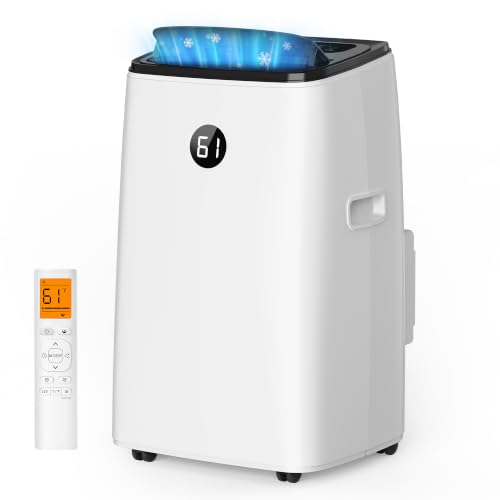
AGTANA 14000 BTU Portable Air Conditioner for Large Room up to 700 Sq. Ft, 3-in-1 Self-Evaporating AC with Fan & Dehumidifier, Floor Standing Portable AC Unit with Remote Control, Auto Swing, White
Check price on Amazon
Midea 8,500 BTU ASHRAE Portable Air Conditioner, Cools up to 150 Sq. Ft. | 5,000 BTU SACC Portable AC, Smart APP & Remote Control, with Dehumidifier & Fan mode, Window Kit, Easy-to-use and Install
Check price on Amazon
Arctic Air Pure Chill 2.0 Evaporative Air Cooler by Ontel - Powerful, Quiet, Lightweight and Portable Space Cooler with Hydro-Chill Technology For Bedroom, Office, Living Room & More,Blue
Check price on Amazon
Midea Duo 14,000 BTU Portable Air Conditioner with Heat, Inverter Quiet | 12,000 BTU SACC High Efficiency Inverter Portable AC, with Heat up to 550 Sq.Ft. Smart/Remote Control, Alexa/Google Assistant
Check price on AmazonFrequently Asked Questions
Why is my AC cooling so slowly all of a sudden?
A sudden slowdown in cooling often points to a dirty air filter, a thermostat setting error, or a tripped breaker. If these quick checks don't resolve the issue, it could indicate a refrigerant leak or a failing component like the capacitor.
How long should an AC take to cool a room?
Generally, a properly sized AC should cool a room by 5–8°F within 15–30 minutes. Factors like outdoor temperature, insulation, and room size affect this. If it takes hours to achieve the set temperature, you likely have an efficiency or capacity problem.
Can a dirty filter really make my AC take longer to cool?
Absolutely. A clogged filter restricts airflow, forcing the system to work harder and longer. It also reduces the amount of cold air reaching your rooms, making the entire cooling process slow and inefficient.
Is it normal for an AC to run for hours on a very hot day?
On exceptionally hot days (above 95°F), your AC may run nearly continuously to maintain the set temperature. This is normal as it's struggling to overcome the heat gain. However, if it never reaches the set point or runs constantly on milder days, you should investigate.
When should I replace my AC instead of repairing it?
If your AC is over 10–15 years old, requires frequent repairs, or uses obsolete R-22 refrigerant, replacement is often more sensible than repeated repairs. A new, high-efficiency unit will cool faster and consume less energy.
Disclaimer
Some of the content on this site uses AI assistance. Information is provided for educational purposes only. We are not responsible for any losses resulting from the use of this information. By using this site, you waive any right to bring legal claims against us arising from your use of the information provided. If you do not agree, please do not use this site. Read the full disclaimer.