Air Conditioner Unit for Camper: The Complete Cooling Guide
Everything you need to know before choosing a camper air conditioner — sizing, power, installation, and maintenance explained clearly for RV owners and road travelers.
Explore Buying FactorsWhy this guide matters: A camper is not a house. Limited space, thin insulation, fluctuating power supply, and constant travel create unique cooling challenges. Choosing the right air conditioner unit for a camper is about matching capacity to your rig, understanding power limits, and planning installation before the first hot night on the road. This guide walks you through every decision point so you can choose with confidence.
Why Camper Cooling Is Different From Home Cooling
Campers, travel trailers, fifth wheels, and motorhomes present cooling challenges that stationary homes do not. The envelope is smaller but far less insulated. Roofs absorb direct sun, windows are often single-pane, and interior volume is compact with limited air circulation. In addition, campers move — which means the air conditioner must survive vibration, road shock, and seasonal storage.
Power is the second major factor. Many campsites provide 30-amp or 50-amp service, while boondockers rely on generators or battery banks. A standard rooftop air conditioner can draw substantial current at startup, so understanding your electrical system is just as important as understanding BTU capacity. If you are still exploring general cooling options, the broader air conditioner guide provides useful context on compressor technology and efficiency ratings.
Finally, installation varies widely. Some campers come pre-wired and pre-framed for a rooftop unit, while others require a portable solution that vents through a window or hatch. The right choice depends on your camper's construction, your travel style, and how much interior space you are willing to dedicate to cooling equipment.
Types of Air Conditioner Units for Campers
There are four main categories of camper air conditioners. Each has distinct advantages, trade-offs, and installation requirements. The table below summarizes the essential differences using tier-based descriptors rather than numeric figures.
| Type | Best For | Installation | Power Demand | Market Tier |
|---|---|---|---|---|
| Rooftop AC | Travel trailers, fifth wheels, motorhomes with pre-wired roof vents | Permanent roof mount; requires 14x14 inch vent opening | High; typically 120V AC, 20-amp circuit | Mid-range to premium |
| Portable AC | Small campers, rentals, campers without roof reinforcement | Floor unit with window or hatch vent kit | Moderate to high; 120V AC | Entry-level to mid-range |
| Window AC | Camper conversions, DIY builds, stationary seasonal setups | Window or custom wall opening | Moderate; 120V AC | Entry-level to mid-range |
| 12V DC AC | Off-grid boondocking, van conversions, solar-equipped rigs | Wall or roof mount; dedicated DC wiring | Low to moderate; 12V DC battery bank | Premium to flagship |
Rooftop Air Conditioners
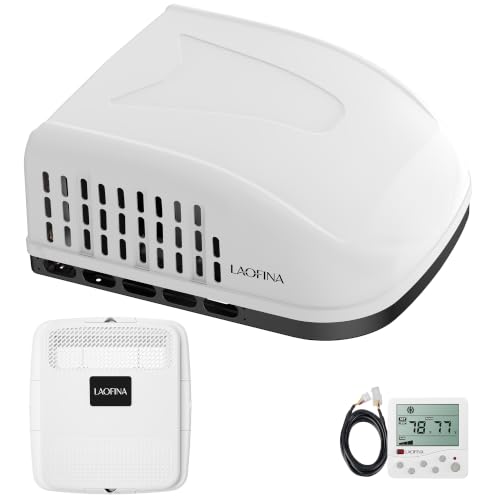
Rooftop units are the most common factory-installed option for travel trailers and motorhomes. They mount over a standard 14x14 inch roof vent, saving interior floor space and distributing cool air through ceiling ducts or a direct discharge grille. Most rooftop units operate on 120V AC and require a dedicated circuit, typically 20 amps. Installation involves sealing the roof opening carefully to prevent water intrusion — a task best handled by a professional if your camper is not pre-framed.
Rooftop ACs are available in non-ducted and ducted configurations. Non-ducted units blow air directly downward and are simpler to install. Ducted systems distribute air through ceiling channels and provide more even cooling but require factory ductwork. For larger campers with multiple zones, a ducted system is often the better long-term investment.
Portable Air Conditioners
Portable AC units sit on the floor and exhaust hot air through a hose connected to a window or hatch. They are the most flexible option for campers without roof reinforcement or pre-wiring. Portable units are easy to move between the camper and a garage or tent, making them a solid choice for renters and seasonal travelers. The trade-off is floor space consumption and the need to manage condensate — some units evaporate water automatically, while others require manual draining.
When selecting a portable unit for a camper, pay attention to the exhaust hose length and window kit compatibility. Camper windows are often smaller and differently shaped than home windows, so confirm the kit fits before purchase. If your camper has limited floor space, a floor-standing air conditioner may still work if positioned carefully near the vent opening.
Window Air Conditioners
Window units are less common in factory-built campers but popular in DIY conversions and skoolies. They are simple to install, widely available, and generally efficient for their cooling capacity. The main challenge is structural: camper walls and windows are not always designed to support the weight and torque of a window unit. Reinforcements and custom brackets are often necessary.
For campers with sliding or casement windows, specialized mounting kits exist. If your camper has an unusual window configuration, review options for windows that open sideways or consider a portable unit instead to avoid structural modifications.
12V DC Air Conditioners
Dedicated 12V DC air conditioners are designed for off-grid use. They draw power directly from a battery bank and are highly efficient compared to 120V units running through an inverter. However, cooling capacity is generally lower, and the upfront investment is higher. These units are best suited for van lifers and boondockers with substantial solar and lithium battery systems. If you are building an off-grid electrical system, understanding air conditioner wattage is essential for sizing your battery bank correctly.
How to Size an Air Conditioner for Your Camper
Sizing a camper AC is not simply a matter of square footage. Interior volume, insulation quality, window area, roof color, and climate all influence cooling load. The table below provides general guidance based on camper length and typical construction. Use it as a starting point, then adjust for your specific situation.
| Camper Length | Typical Interior Volume | Suggested BTU Range | Notes |
|---|---|---|---|
| Up to 16 ft (teardrop, small van) | Compact | 5,000 – 8,000 BTU | Portable or 12V DC units often sufficient |
| 16 – 24 ft (small travel trailer) | Moderate | 8,000 – 11,000 BTU | Rooftop or high-capacity portable |
| 24 – 32 ft (mid-size trailer) | Large | 11,000 – 13,500 BTU | Rooftop unit with ducted or non-ducted discharge |
| 32 – 40 ft (large travel trailer, fifth wheel) | Very large | 13,500 – 15,000 BTU | Consider dual units for extreme climates |
| 40 ft+ (large fifth wheel, motorhome) | Extra large | 15,000 BTU+ per zone | Dual rooftop units or zoned ducted system |
Beyond length, consider these adjustment factors. A camper with large, unshaded windows may need 10–20% more capacity. Dark-colored roofs absorb more heat and increase cooling load. If you frequently camp in hot, humid climates, err toward the higher end of the range. Conversely, a well-insulated four-season camper in a mild climate may perform well with a slightly smaller unit.
Oversizing is a common mistake. An oversized unit cools the air quickly but does not run long enough to remove humidity, leaving the camper feeling clammy. Undersizing leads to constant operation and poor comfort during heat waves. Aim for the middle of the recommended range and prioritize a unit with adjustable fan speeds and a reliable thermostat.
Power and Electrical Considerations
Camper electrical systems vary widely. Before choosing an air conditioner, determine your available power source and the capacity of your camper's electrical panel.
Shore power: Most campsites provide 30-amp or 50-amp service. A single rooftop air conditioner typically requires a 20-amp dedicated circuit. If your camper has 30-amp service, running an AC plus a microwave or electric water heater simultaneously may trip the main breaker. Plan your usage accordingly.
Generators: Boondockers often use portable generators. Confirm the generator's running and surge wattage exceed the air conditioner's startup demand. Inverter generators are preferable for sensitive electronics and quieter operation.
Battery and solar: Standard 120V air conditioners are not practical on battery power alone without a large inverter and substantial battery bank. If off-grid cooling is a priority, a dedicated 12V DC air conditioner is the more efficient path. Calculate your daily energy budget carefully before committing.
For a deeper understanding of how electrical requirements differ across AC types, review the guide on air conditioner watts and consult a qualified RV electrician if you are unsure about your camper's wiring capacity.
Installation Tips for Camper Air Conditioners
Installation quality directly affects performance, safety, and longevity. Here are the key considerations for each type.
Rooftop installation: Verify that your camper's roof framing can support the unit's weight. Use a proper roof gasket and sealant to prevent leaks. Route the power cable through the existing vent opening or a dedicated conduit. If your camper is not pre-wired, consult a professional to avoid compromising the roof structure or electrical safety.
Portable installation: Position the unit near a window or hatch that can accommodate the exhaust hose. Keep the hose as short and straight as possible to maximize efficiency. Seal gaps around the window kit to prevent hot air from re-entering. Ensure the unit sits on a level, stable surface during travel — secure it or stow it before moving.
Window unit installation: Reinforce the window frame or wall opening to support the unit's weight. Use a bracket or support system designed for the application. Seal the perimeter with foam or weatherstripping to prevent air leaks and water intrusion.
12V DC installation: Use appropriately sized wiring and fuses. Mount the unit securely to withstand road vibration. Ensure the battery bank and charging system can handle the continuous draw without excessive voltage drop.
Maintenance for Camper Air Conditioners
Camper AC units endure more stress than home units. Vibration, dust, road debris, and seasonal storage all take a toll. A simple maintenance routine can prevent most common problems.
Filters: Clean or replace filters every few weeks during heavy use. Clogged filters reduce airflow and force the compressor to work harder. If you notice the air conditioner running but not cooling, a dirty filter is one of the first things to check.
Coils: Inspect and clean the condenser and evaporator coils at least once per season. Road dust and pollen accumulate quickly and reduce heat transfer efficiency.
Roof gasket: For rooftop units, inspect the gasket annually. Tighten mounting bolts to the manufacturer's specification and replace the gasket if it shows cracking or compression. A failed gasket leads to water damage inside the camper.
Drainage: Ensure condensate drains are clear. Portable units with manual drain tanks should be emptied regularly. Rooftop units typically drain onto the roof, but clogged drain holes can cause water pooling.
Seasonal checks: Before each camping season, test the unit on shore power, listen for unusual noises, and verify that the thermostat responds correctly. If the unit short cycles or fails to reach the set temperature, schedule a professional inspection.
Common Camper AC Problems and Solutions
Even well-maintained camper air conditioners can develop issues. Understanding the symptoms helps you troubleshoot quickly and decide when to call a technician.
Not cooling: Check the filter, thermostat settings, and power source. If the compressor runs but air is warm, the refrigerant charge may be low or the coils may be dirty. Review the guide on air conditioner stopped blowing cold air for a step-by-step diagnostic approach.
Short cycling: Frequent on-off cycling often indicates an oversized unit, a faulty thermostat, or restricted airflow. In a camper, it can also result from low voltage at the campsite pedestal. Test the voltage under load before assuming the unit is defective.
Water leaks: Interior water leaks usually point to a blocked condensate drain or a failed roof gasket. Exterior leaks around the roof opening require immediate attention to prevent structural damage.
Noise and vibration: Loose mounting bolts, debris in the fan, or worn bearings can cause excessive noise. Secure the unit and clean the fan area before scheduling a repair.
Electrical trips: If the unit trips the breaker repeatedly, stop using it and have the circuit inspected. Undersized wiring or a failing compressor can create a safety hazard.
When in doubt, consult a qualified RV technician. Attempting complex repairs without proper training can void warranties and create safety risks.
Camper AC Buying Checklist
Before finalizing your purchase, run through this checklist to ensure the unit matches your camper and travel style.
- Measure your camper: Confirm interior length, width, and ceiling height. Note window area and roof configuration.
- Determine power availability: Identify whether you will use shore power, a generator, or a battery bank. Confirm amperage capacity.
- Choose the mounting type: Rooftop, portable, window, or 12V DC — based on camper construction and your willingness to modify.
- Select capacity: Use the sizing table as a guide, then adjust for climate, insulation, and window area.
- Check efficiency features: Look for adjustable fan speeds, programmable thermostats, and sleep modes. Efficiency matters for long trips.
- Verify installation requirements: Confirm that the required vent opening, wiring, or window kit is compatible with your camper.
- Plan for maintenance: Ensure filters are accessible and that replacement parts are available for your model.
- Read owner reviews: Pay attention to comments about durability, noise, and performance in real camping conditions.
Frequently Asked Questions
What size air conditioner unit do I need for a camper?
Camper AC sizing depends on interior volume and insulation. Small campers typically need around 5,000 to 8,000 BTU, mid-size campers around 9,000 to 13,500 BTU, and large travel trailers or fifth wheels often need 15,000 BTU or more. Consider ceiling height, window area, and climate when finalizing capacity.
Can I run a camper air conditioner on battery power?
Standard rooftop and portable camper AC units draw significant power and generally require a shore power connection or a generator. Dedicated 12V DC air conditioners exist for off-grid use, but they are specialty products with lower cooling capacity and require a robust battery bank and solar setup.
What is the difference between a rooftop and a portable AC for a camper?
A rooftop AC is permanently mounted on the camper roof, saves interior floor space, and integrates with the existing vent opening. A portable AC sits inside the camper and vents through a window or hatch, offering flexibility and easier installation but consuming floor space and requiring condensate management.
Do camper air conditioners need special maintenance?
Yes. Camper AC units should have filters cleaned regularly, rooftop gaskets inspected for leaks, coils cleaned seasonally, and the unit checked for vibration or debris after travel. Regular maintenance helps prevent short cycling and premature failure.
Can I install a rooftop air conditioner on any camper?
Not always. Rooftop installation requires a reinforced roof frame and a 14x14 inch vent opening. Some campers come pre-wired and pre-framed; others require structural modifications. If your camper is not pre-prepared, a portable unit is often the safer choice.
How do I know if my camper AC is the right size?
The right size unit cools the camper to the desired temperature without running constantly or short cycling. If the unit runs non-stop on hot days and never reaches the set temperature, it may be undersized. If it cools quickly but leaves the air clammy, it may be oversized.
Ready to Choose Your Camper AC Unit?
Choosing the right air conditioner unit for a camper comes down to three priorities: matching capacity to your rig, understanding your power limits, and planning installation before the first trip. With the guidance above, you can narrow your options and select a unit that keeps your camper comfortable season after season.
Explore our recommended camper air conditioners below, compare features, and check availability for your next adventure.