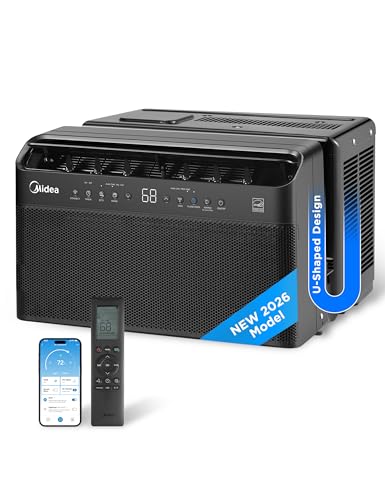
Air Conditioners for Windows That Open Sideways
Complete guide to cooling rooms with casement and crank-out windows — casement window AC units, portable AC kits, mini-splits, and everything you need to choose confidently before buying.
Quick summary: Standard window air conditioners are built for double-hung windows that slide up and down. If your windows crank open to the side, you need a different approach. This guide covers the three proven solutions — casement window AC units, portable AC with a casement window kit, and ductless mini-splits — so you can match the right system to your room, your wall, and your installation comfort level.
Why Sideways-Opening Windows Need Special AC Solutions
Casement windows — also called crank-out or side-hinged windows — open outward on a vertical hinge. They seal tightly, offer excellent ventilation, and are common in modern homes, apartments, and older buildings alike. But their design creates a practical problem for cooling: a traditional window AC unit relies on a stable horizontal sill and a sash that slides vertically. Casement windows have neither.
Mounting a regular window unit in a casement frame is unsafe and often ineffective. The unit cannot be supported properly, the window cannot close around it, and the result is a poor seal that lets hot air back in. Worse, the weight of the unit can damage the crank mechanism. The correct approach is to use a cooling system designed for — or adaptable to — a sideways-opening window.
If you are also exploring other window configurations, our guide to air conditioners that fit in sliding windows covers horizontal sliders, and our overview of air conditioners that do not need a window is useful if your wall or window situation is especially restrictive.
Solution 1: Casement Window Air Conditioners
A casement window AC is purpose-built for vertical, side-hinged windows. Instead of sitting on a horizontal sill, these units are tall and narrow, designed to fit into the vertical opening of a crank-out window. The unit is typically mounted in a frame or bracket that secures it to the window opening while allowing the window to close against a sealing panel.
Casement Window AC Unit Mid-Range
Casement-specific air conditioners are the most direct replacement for a standard window unit. They slide into the vertical opening and are sealed with a panel that the window closes against. Most models are designed for single rooms and are available in capacity ranges suitable for bedrooms, home offices, and small living areas.
- Designed specifically for casement windows
- No permanent wall modification required
- Window can still be closed and locked
- Straightforward installation for capable DIYers
- Fewer models available than standard window ACs
- Usually limited to smaller capacity ranges
- Some window frames may need a support bracket
- Less efficient than a mini-split in the long run
If your window opening is unusually narrow, our guide to air conditioners for small window openings can help you narrow down compact options. For a step-by-step walkthrough of the installation process, see casement window AC installation.
Solution 2: Portable Air Conditioners with Casement Window Kits
Portable air conditioners are freestanding units that sit on the floor and exhaust hot air through a hose. With the right window kit, a portable AC works well with casement windows. The kit typically includes a fabric or rigid panel that fills the vertical window opening, plus a zippered or circular port for the exhaust hose. The window closes against the panel, creating a seal that keeps hot outdoor air out.
Portable AC + Casement Window Kit Entry-Level
This is the most flexible option for renters and anyone who cannot modify the window or wall. The unit rolls from room to room, and the casement kit is removable and reusable. Performance depends heavily on the quality of the window seal — a poorly fitted kit will let heat back in and reduce cooling effectiveness.
- No permanent installation or structural changes
- Portable between rooms
- Works with casement windows using a dedicated kit
- Good choice for renters and temporary setups
- Requires a quality casement window kit for best results
- Single-hose models can create negative pressure
- Noisier than window or mini-split units
- Takes up floor space
For more on choosing a portable unit that suits your space, see our guide to air conditioning units for small spaces and air conditioning units for one room. If you are setting up a bedroom, the living room AC guide also applies to larger open areas.
Solution 3: Ductless Mini-Split Systems
A ductless mini-split is the highest-performance option for cooling a room with casement windows. The indoor air handler mounts on a wall or ceiling, and the outdoor condenser connects through a small refrigerant line set. Because the system does not rely on the window at all, the casement window can stay fully functional. Mini-splits are quiet, efficient, and provide consistent cooling across the room.
Ductless Mini-Split Premium
A mini-split is a long-term investment that delivers the best comfort and efficiency. It requires professional installation and a small wall penetration for the refrigerant lines, but it avoids the window entirely. This makes it ideal for homeowners who want a permanent solution and are willing to plan the installation properly.
- Best energy efficiency and cooling consistency
- Very quiet operation
- Window remains fully usable
- No window sealing issues
- Professional installation required
- Permanent wall penetration for line set
- Higher upfront investment than window or portable units
- Not ideal for renters or temporary setups
If you are comparing ductless options, our overview of air conditioning options for homes without ductwork explains how mini-splits fit into a broader cooling strategy. For whole-home planning, see air conditioners that cool the whole house.
Side-by-Side Comparison
The table below compares the three main solutions across the factors that matter most when choosing an air conditioner for a sideways-opening window.
| Solution | Tier | Best For | Installation | Efficiency | Window Usable |
|---|---|---|---|---|---|
| Casement Window AC | Mid-Range | Single-room cooling, homeowners who want a direct window solution | Moderate DIY, bracket may be needed | Good for the category | Yes, with sealing panel |
| Portable AC + Casement Kit | Entry-Level | Renters, temporary setups, rooms without permanent mounting options | Easy, no tools required for kit | Moderate, depends on seal quality | Yes, with kit installed |
| Ductless Mini-Split | Premium | Long-term whole-room comfort, homeowners planning a permanent upgrade | Professional installation | Highest in class | Yes, fully usable |
Frequently Asked Questions
Can you put a regular window air conditioner in a casement window?
What is the best air conditioner for sideways-opening windows?
Do portable air conditioners work with casement windows?
How do I seal a casement window for a portable AC exhaust hose?
Is a mini-split better than a casement window AC?
Ready to Compare Your Options?
Browse recommended air conditioners for casement and sideways-opening windows, selected for performance and reliability. Check availability and explore models that fit your room and installation needs.
View Recommended ModelsFinal Thoughts
Sideways-opening windows do not have to limit your cooling options. A casement window AC delivers a direct, window-mounted solution. A portable AC with a casement kit offers flexibility and easy setup. A ductless mini-split provides the highest performance for homeowners planning a permanent upgrade. By measuring carefully, matching capacity to the room, and investing in a proper window seal, you can cool any room with a casement window effectively and comfortably.
For ongoing care after installation, see our air conditioner service and maintenance guide. If you notice performance issues later, our troubleshooting resources on air conditioners running but not cooling and air conditioner short cycling can help you diagnose common problems early.