
Dual Hose Portable Air Conditioners: The Smart Cooling Choice for Modern Homes
If you are researching dual hose portable AC units, you are likely looking for stronger cooling performance, better energy efficiency, and a smarter setup than single hose systems can offer. This guide explains exactly how dual hose technology works, who benefits most from it, and how to select the right model for your space before you commit to a purchase.
Explore Top OptionsQuick Summary: What Makes a Dual Hose Portable AC Different?
A dual hose portable air conditioner uses two separate air paths: one hose draws outdoor air in to cool the condenser, and the second hose exhausts hot air back outside. This design prevents the unit from pulling cooled indoor air out of the room, which is the main weakness of single hose systems. The result is faster cooling, more stable room temperature, and better energy efficiency over long cooling sessions. For anyone cooling a medium to large room, a dual hose model is generally the stronger long-term investment.
How Dual Hose Portable AC Systems Work
Understanding the mechanics of a dual hose system helps you appreciate why it outperforms single hose designs in most real-world cooling scenarios. A portable air conditioner cools a room by moving heat from inside to outside, and the hose configuration determines how efficiently that heat transfer happens.
The Two-Hose Airflow Path
In a dual hose unit, the first hose is the intake. It pulls outside air into the unit to cool the condenser coil. The second hose is the exhaust. It pushes the heated air from the condenser back outdoors. Meanwhile, the evaporator coil cools the indoor air and blows it back into the room through the front vent. Because the condenser has its own dedicated outdoor air supply, the unit does not need to steal already-cooled indoor air to do its job.
Why This Matters for Room Pressure
Single hose units create negative pressure inside a room. As the unit exhausts hot air outside, replacement air is drawn in through gaps around doors and windows, and that replacement air is often hot outdoor air. This is why single hose units can feel like they are fighting themselves. Dual hose units maintain a more balanced pressure, so the cooled air you paid to produce stays where you need it.
If you are still deciding between portable and other cooling formats, our broader guide on using a portable AC without a window covers alternative venting setups that pair well with dual hose designs.
Key Benefits of Dual Hose Portable Air Conditioners
The dual hose design delivers several practical advantages that matter during daily use, especially in warmer climates or in rooms that need consistent cooling for many hours.
Faster, More Consistent Cooling
Because the unit is not pulling cooled indoor air outside, the room reaches the target temperature faster and holds it more steadily.
Better Energy Efficiency
Less wasted cooling translates into lower energy draw over long sessions, which makes dual hose models efficient in the long run.
More Stable Room Pressure
Balanced airflow reduces drafts from gaps and prevents hot outdoor air from being sucked in through cracks.
Stronger Performance in Larger Rooms
Dual hose units handle medium and large spaces more reliably than single hose models of similar capacity.
Reduced Humidity Reintroduction
With less outdoor air pulled in through gaps, the unit maintains a more comfortable humidity balance indoors.
Better Fit for Open-Plan Spaces
Living rooms, lofts, and open kitchens benefit from the stronger, more even airflow that dual hose systems deliver.
For households comparing cooling formats beyond portable units, our overview of buying an air conditioner explains how portable systems fit into a wider home cooling strategy.
Who Should Choose a Dual Hose Portable AC
Dual hose portable air conditioners are not the right fit for every situation, but they are the stronger choice in several common scenarios.
- Renters who cannot install a permanent unit: A dual hose model delivers near-split-system comfort without drilling or permanent mounting.
- Homes without ductwork: Older homes and converted spaces often lack central ducts, making portable cooling the practical route. Our guide on bedroom air conditioner options explains how to size a unit for sleeping spaces.
- Medium to large rooms: Spaces between roughly 250 and 500 square feet benefit most from the stronger airflow of a dual hose design.
- Home offices and sunrooms: Rooms that heat up quickly during the day need the faster recovery time that dual hose units provide.
- Households with long cooling hours: If the unit will run for six hours or more per day, the efficiency advantage of dual hose systems becomes more meaningful.
Sizing Your Dual Hose Portable AC Correctly
Choosing the right cooling capacity is just as important as choosing the right hose design. An undersized unit runs constantly and never fully cools the room, while an oversized unit cycles on and off too quickly and struggles to remove humidity.
Capacity Guidelines by Room Size
- Up to 150 square feet: 5,000 to 6,000 BTU is usually sufficient for a small bedroom or office.
- 150 to 250 square feet: 8,000 to 10,000 BTU covers most standard bedrooms and home offices.
- 250 to 400 square feet: 12,000 to 14,000 BTU suits larger bedrooms, living rooms, and open studios.
- 400 to 600 square feet: 14,000 to 18,000 BTU is appropriate for large living areas and open-plan spaces.
Factors That Push You Toward Higher Capacity
- Ceilings taller than eight feet
- Large or unshaded windows facing the sun
- Kitchen areas that generate heat
- Multiple occupants or heat-producing electronics
- Poor insulation or rooms above a garage
If your room is on the boundary between two capacity tiers, choose the higher tier rather than the lower one. Dual hose units handle slight oversizing more gracefully than single hose units, so the safety margin is worth having.
Features That Matter When Choosing a Dual Hose Portable AC
Beyond capacity and hose count, several features separate a good dual hose unit from a great one. Focus on these when comparing models.
Compressor Type and Inverter Technology
Inverter compressors adjust speed smoothly instead of cycling fully on and off. They maintain temperature more evenly and are generally more efficient during long runs. Non-inverter models are simpler and often sit in the entry-level tier, while inverter-equipped dual hose units tend to be mid-range or premium in positioning.
Noise Level
Portable units are inherently louder than window or mini-split systems because all components sit inside the room. Look for models that publish decibel ratings and prioritize units designed with sound dampening if the AC will run in a bedroom or office.
Drainage Options
Portable AC units collect condensate. Some models offer continuous drainage via a hose connection, which is convenient during long cooling sessions. Others use a self-evaporative system that burns off most moisture through the exhaust. Both approaches work, but continuous drainage is helpful in humid climates.
Window Kit Quality
The window kit determines how cleanly the two hoses vent outside. A well-designed kit with adjustable panels and good sealing reduces air leaks and keeps the unit performing at its rated capacity.
Smart Controls and Timers
Wi-Fi control, programmable timers, and remote thermostats are increasingly common. These features help you run the unit only when needed, which supports efficiency and convenience.
Filtration
Washable filters are standard, but some units add activated carbon or HEPA-stage filtration. If allergy relief is a priority, this is worth checking.
Single Hose vs Dual Hose: Direct Comparison
The table below summarizes the practical differences between the two portable AC configurations. Use it to confirm that a dual hose unit matches your priorities.
| Category | Single Hose Unit | Dual Hose Unit | Best For |
|---|---|---|---|
| Airflow Design | One hose exhausts hot air; pulls indoor air out | Two hoses: one intake, one exhaust | Dual hose for larger rooms |
| Cooling Speed | Moderate; slower recovery | Faster and more consistent | Dual hose for daily use |
| Energy Efficiency | Lower over long sessions | Higher over long sessions | Dual hose for extended runs |
| Room Pressure | Creates negative pressure | Balanced pressure | Dual hose for sealed rooms |
| Setup Complexity | Simple, one window opening | Requires two hose routes | Single hose for minimal setups |
| Typical Market Position | Entry-level tier | Mid-range to premium tier | Dual hose for long-term investment |
For a broader look at how portable units compare with permanently mounted options, our compact window air conditioning units guide is a useful companion read.
Recommended Dual Hose Portable Air Conditioners
The curated selection below highlights dual hose portable AC models organized by tier and use case. Each option is chosen for strong build quality, sensible feature sets, and reliable performance within its class. Use the descriptors to match a model to your priorities rather than relying on a single metric.
- Entry-level tier: Solid basic dual hose cooling for smaller rooms, with straightforward controls and dependable daily performance.
- Mid-range tier: A balanced pick with quieter operation, better drainage options, and stronger window kits for cleaner installation.
- High-end tier: Feature-rich models with inverter compressors, smart controls, and improved filtration for larger or more demanding spaces.
- Top-tier flagship: Premium builds designed for maximum efficiency and long cooling sessions, ideal for open-plan living areas.
When comparing options, focus on how each model aligns with your room size, noise tolerance, and drainage preferences. A mid-range unit with a strong window kit often outperforms a higher-tier model that is poorly installed.
Compare Available ModelsInstallation and Setup Tips for Dual Hose Units
Proper installation directly affects how well a dual hose portable AC performs. These steps help you get the most from your unit from day one.
- Choose the right window: A double-hung or sliding window works best. The kit should seal the opening firmly around both hoses.
- Keep hoses short and straight: Avoid sharp bends and unnecessary length. Shorter, straighter runs reduce strain on the fan and improve airflow.
- Position the unit centrally: Place the AC where cool air can circulate freely through the room rather than in a corner.
- Seal gaps: Use weather stripping or foam around the window kit to prevent hot outdoor air from leaking in.
- Check drainage: If using continuous drainage, route the hose to a floor drain or bucket with a slight downward slope.
- Maintain clearance: Leave space around the intake and exhaust vents so the unit can breathe properly.
Routine maintenance matters just as much as setup. Cleaning filters every two to four weeks keeps airflow strong. Our guide on cleaning the filter of an air conditioner walks through the process step by step.
Frequently Asked Questions
Is a dual hose portable AC always better than a single hose unit?
Not always, but it is better in most situations where the unit will run for several hours a day in a medium or large room. Dual hose units cool faster, maintain more stable room pressure, and are more efficient during long sessions. Single hose units still make sense for very small rooms or short, occasional use where routing a second hose is impractical.
How many BTU do I need for a dual hose portable AC?
Match capacity to room size. Up to 150 square feet needs roughly 5,000 to 6,000 BTU, 150 to 250 square feet needs 8,000 to 10,000 BTU, 250 to 400 square feet needs 12,000 to 14,000 BTU, and 400 to 600 square feet needs 14,000 to 18,000 BTU. Increase the figure for high ceilings, strong sun exposure, or heat-generating appliances.
Can a dual hose portable AC be used in a room without a window?
Portable units need a way to exhaust hot air outdoors. If a standard window is not available, you can vent through a sliding door, a wall opening, or a dedicated vent kit. Our guide on using a portable AC without a window covers the workable alternatives in detail.
Do dual hose units require more maintenance?
They require the same basic maintenance as single hose units: filter cleaning, drainage checks, and seasonal cleaning of coils and vents. The second hose adds one more connection to inspect, but the overall maintenance routine is nearly identical.
Are dual hose portable AC units noisy?
All portable AC units produce more noise than window or mini-split systems because the compressor sits inside the room. Dual hose units are not inherently louder than single hose units of similar capacity, and many mid-range and high-end models include sound dampening features. Check published decibel ratings if quiet operation is a priority.
How long can a dual hose portable AC run continuously?
Most quality dual hose units are designed for continuous operation during the cooling season. Ensure proper drainage, keep filters clean, and give the unit adequate clearance around its vents. Running the unit within its rated capacity range supports long-term reliability.
Best Dual Hose Portable Air Conditioners for Efficient Home Cooling
⚠️ AFFILIATE DISCLOSURE: This website contains affiliate links. As an Amazon Associate, we earn from qualifying purchases. If you make a purchase through these links, we may receive a small commission at no additional cost to you. Read our full affiliate policy.

BJADE'S Dual Hose Portable Air Conditioner Window Seal Kit for Portable AC Exhaust Hose 5.9 Inch Diameter with Insulating Sealing Tape,Adjustable Portable AC Window Vent Kit Length from 17" to 47"
Check price on Amazon
Hisense 8,000 BTU DOE/SACC (10,000 ASHRAE) Portable Air Conditioner Dual Hose & Inverter, 350 Sq Ft, Wi-Fi, ConnectLife App Google & Alexa, 3 operating modes, Noise 42 dB HAP0825TWD (Renewed)
Check price on Amazon
Humhold 14000BTU Inverter Portable Air Conditioners,Dual Hose Portable AC | 3 in 1 Fast Cooling AC Unit for Large Room up to 700 sq.ft, w/t Dehumidifier & Fan, (42dB) Quiet Sleep Mode, Remote Control
Check price on Amazon
SereneLife 14000 BTU Inverter Portable Air Conditioner with Wi-Fi | Portable AC Unit with Dehumidifier, Fan Modes, Dual Hose System | Compact Standing Air Conditioner with Window Kit (White)
Check price on Amazon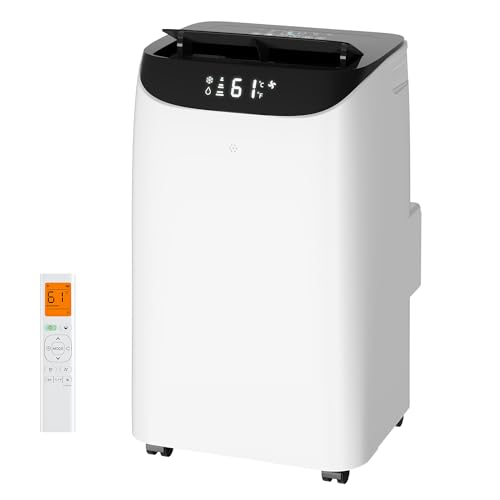
Inverter 16000 BTU Portable Air Conditioner, 3 in 1 Portable Ac Unit Cools Up for Rooms 850 Sq. Ft, Dual Hose Standing AC for Bedrooms with Dehumidifier, Fan, Quiet Sleep Mode, Remote Control
Check price on Amazon
SereneLife 14000 BTU Portable Inverter Air Conditioner, 115V Smart Cooling & Heating with WiFi, Energy Efficient, For Bedrooms, Living Spaces & Offices, 650 Sq Ft Coverage, (White)
Check price on AmazonFinal Thoughts Before You Choose
A dual hose portable air conditioner is a smart fit for anyone who needs reliable cooling without permanent installation. The design solves the core weakness of single hose units by preventing cooled indoor air from being pulled outside, which translates into faster cooling, better efficiency, and more stable room conditions.
Use this guide as a decision framework: confirm your room size, decide whether dual hose performance matches your usage pattern, and compare models by tier rather than by a single specification. When installation is done properly and maintenance is kept up, a well-chosen dual hose unit delivers dependable comfort season after season.
For households that also need to cool sleeping spaces, our bedroom air conditioner guide offers additional sizing and placement advice that pairs naturally with the recommendations above.