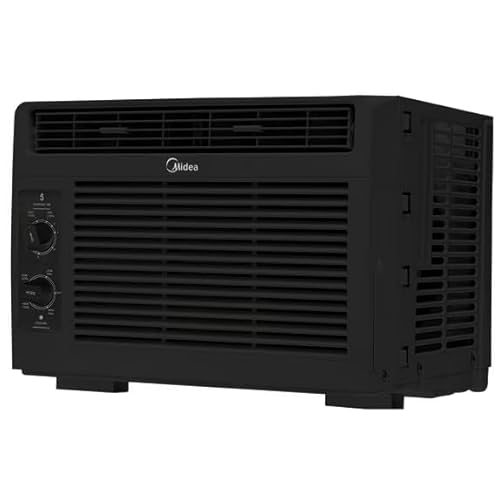
Compact Window Air Conditioning Units
Your complete guide to choosing, installing, and maintaining a compact window AC that fits your room, your window, and your efficiency goals.
START THE GUIDEWho this guide is for: If you are researching a compact window air conditioning unit before buying — whether for a bedroom, a home office, a studio apartment, or a rental — this page gives you the complete picture. You already know roughly what you want; here is everything you need to make a confident, well-informed decision.
What Counts as a "Compact" Window AC?
A compact window air conditioning unit is generally a single-room window-mounted system rated between roughly 5,000 and 8,000 BTU. These units are engineered around a narrower, shallower chassis than full-size window air conditioners, which makes them easier to fit into standard double-hung windows, sliding windows, and smaller openings — including windows in apartments where exterior space is limited.
Compared with larger window units, compact models trade cooling capacity for portability and easier installation. That trade-off is exactly what makes them the right fit for many rooms. If you are still comparing form factors overall, our overview of window air conditioners and the broader guide to buying an AC are good companion reads. For rooms where a window mount is not workable, the bedroom air conditioner guide covers alternatives.
Why Choose a Compact Window Unit?
Compact window units remain one of the most practical cooling solutions for single rooms, and the reasons are consistent across the category:
- Fits smaller windows: Narrow chassis designs work in openings where larger units simply will not seat safely.
- Single-room precision: You cool only the room you are in, rather than conditioning an entire house for one occupant.
- No ductwork: Installation does not require duct runs, which matters for older homes and rentals. If your home lacks ducts entirely, the guide to central air conditioning explains when a ducted system is and is not a realistic option.
- Straightforward installation: Most compact units under 8,000 BTU are designed for DIY installation with the included window kit and support bracket.
- Predictable maintenance: A washable filter and accessible coils make routine upkeep simple.
How to Size a Compact Window AC
Correct sizing is the single most important decision you will make. An undersized unit runs continuously and never reaches the set temperature; an oversized unit cools quickly but cycles on and off, leaving the room clammy and wearing the compressor. The table below is a practical starting point for compact window units.
| Cooling Capacity | Typical Room Size | Best For |
|---|---|---|
| 5,000 BTU | Up to ~150 sq ft | Small bedrooms, home offices, studio corners |
| 6,000 BTU | ~150–200 sq ft | Standard bedrooms, small living areas |
| 8,000 BTU | ~200–250 sq ft | Larger bedrooms, small open-plan studios |
Adjust upward if the room is heavily sunlit, sits on a top floor, has poor insulation, or regularly holds more than two people. A kitchen adds significant internal heat from cooking and appliances. For a deeper walkthrough of load calculations, see how to size an air conditioner and the BTU calculator by room size.
Sizing rule of thumb: Do not over-size to "be safe." A compact unit that is 20–30% larger than the room requires will short-cycle, which hurts both comfort and long-term efficiency.
Efficiency Ratings That Matter for Compact Units
Compact window units are covered by the same efficiency framework as other room air conditioners. The most relevant ratings are:
- CEER / SEER2: Seasonal efficiency for cooling. Higher is better. Units with inverter (variable-speed) compressors score meaningfully higher than single-speed models.
- ENERGY STAR: A certification threshold above the federal minimum. It is a useful shortcut for filtering out lower-efficiency models in the category.
Within the compact segment, the performance gap between entry-level and premium models is largely a question of compressor technology and insulation quality. An entry-level fixed-speed unit is a solid choice for occasional use; a mid-range inverter unit is more efficient in the long run for daily use, and a top-tier inverter model typically runs quieter and holds temperature more steadily. For a broader explanation, read what is a SEER rating and the guide to inverter AC technology.
Features Worth Understanding
Spec sheets on compact window units look similar across brands, so it helps to know which features actually affect daily use.
| Feature | What It Does | Worth Prioritizing? |
|---|---|---|
| Inverter compressor | Varies speed to hold temperature; quieter and more efficient | Yes, for daily use |
| Washable filter | Captures dust; reusable and easy to clean | Essential |
| Programmable timer / sleep mode | Reduces overnight operation and cycling | High value |
| Remote or Wi-Fi control | Convenience and scheduling from a phone | Optional |
| Dehumidify-only mode | Removes moisture without full cooling | Useful in humid climates |
| Window kit with side panels | Seals the gap around the unit | Essential for efficiency |
Installation: What to Expect
Compact window units are the most installation-friendly category of air conditioner. A typical installation involves seating the unit in the window opening, attaching the included side panels, and securing the window sash above it. Most models include a basic support bracket; heavier units benefit from an exterior L-bracket or a dedicated window AC bracket for long-term safety.
A few practical points:
- Measure the window opening width and the unit's chassis dimensions before ordering.
- Check that the window can be closed and locked above the unit for security.
- Slightly tilt the unit outward so condensate drains correctly.
- Make sure the electrical circuit can handle the unit's rated amperage; most compact units run on a standard 115V circuit, but confirm on the nameplate.
If you are weighing a window unit against an alternative that needs no window at all, the article on portable AC units without a window covers that trade-off. For tighter casement-style openings, a dedicated casement window air conditioner may be the right fit instead.
Maintenance That Keeps a Compact Unit Running
Routine maintenance is short and inexpensive relative to the cost of a service call, and it directly protects cooling performance.
- Clean the filter every two to four weeks during heavy cooling season. A clogged filter restricts airflow and forces the compressor to work harder. Our guide to cleaning the air conditioner filter walks through the process.
- Clean the coils seasonally. Dust and debris on the evaporator and condenser coils reduce heat transfer. See cleaning evaporator coils and cleaning air conditioner coils.
- Check the condensate path. A tilted unit drains properly; a level or inward-tilted unit can leak into the room. The drain cleaning guide is useful if you notice water.
- Seal the window gap. Foam insulation or the included side panels prevent cooled air from escaping and hot outside air from entering.
If something stops working, our roundup of common AC problems is a sensible first stop before calling a technician.
Compact Window AC vs. Other Cooling Options
Compact window units are not the only single-room option, and the right choice depends on your window, your room, and how you use the space.
| Option | Best For | Trade-Off |
|---|---|---|
| Compact window AC | Small to medium rooms with a standard window | Permanent window occupancy during cooling season |
| Portable AC | Rooms without a suitable window, or rented spaces | Needs an exhaust vent; generally louder |
| Ductless mini-split | Whole-room cooling with quieter operation and higher efficiency | Professional installation and a higher upfront investment tier |
| Central air | Whole-home cooling with existing ductwork | Requires ducts and significant installation work |
For a closer comparison of mini-splits, see the guide to ductless mini-split AC. If your goal is whole-home comfort, the overview of central air conditioning systems explains what that pathway involves.
Frequently Asked Questions
What size compact window air conditioner do I need?
Compact window units typically range from 5,000 to 8,000 BTU. A 5,000–6,000 BTU unit cools rooms up to about 150 square feet, while a 7,000–8,000 BTU unit handles rooms up to roughly 250 square feet. Adjust upward for sunny rooms, kitchens, or rooms with multiple occupants, and downward for shaded, well-insulated rooms.
Are compact window air conditioners energy efficient?
Modern compact window units with inverter compressors and high CEER or SEER2 ratings are substantially more efficient than older single-speed models. Look for ENERGY STAR certification and variable-speed operation for the best long-term efficiency, especially if the unit will run daily through the cooling season.
Can I install a compact window AC myself?
Most compact window units under 8,000 BTU are designed for straightforward DIY installation using the included mounting bracket and window kit. Larger or heavier units may require two people and additional support brackets. Always confirm the unit is seated securely and the window can be closed above it.
How often should I clean my window AC filter?
Clean the filter every two to four weeks during heavy cooling season, and at least once a month during lighter use. A clogged filter reduces airflow, strains the compressor, and lowers cooling performance.
Why does my compact window AC leak water inside?
Most indoor water leaks come from a unit that is tilted inward instead of slightly outward, a clogged condensate drain, or a dirty filter causing ice buildup that melts. Check the tilt and drain first, then clean the filter and coils.
Final Checklist Before You Decide
Before selecting a compact window air conditioning unit, confirm the following:
- The unit's BTU rating matches the room size, with adjustments for sun, insulation, and occupancy.
- The chassis dimensions fit your window opening, and the window can be secured above it.
- The efficiency rating and compressor type suit how often you will run the unit.
- The electrical circuit supports the unit's rated amperage.
- You are prepared for routine filter and coil maintenance.
Ready to Compare Compact Window Units?
Browse the recommended compact window air conditioning units below to compare features, sizing, and efficiency side by side, then choose the model that fits your room and window.