Comfort Mini Split: The Complete Guide to Ductless Cooling
A comfort mini split delivers targeted heating and cooling without ductwork. Learn how these systems work, how to size them correctly, and which tier fits your home best before you decide.
EXPLORE THE GUIDEWhy this guide matters: Most buyers researching a comfort mini split already know they want ductless cooling. What they still need is clarity on sizing, efficiency ratings, placement, and long-term reliability. This guide answers those questions so you can move forward with confidence.
What Is a Comfort Mini Split?
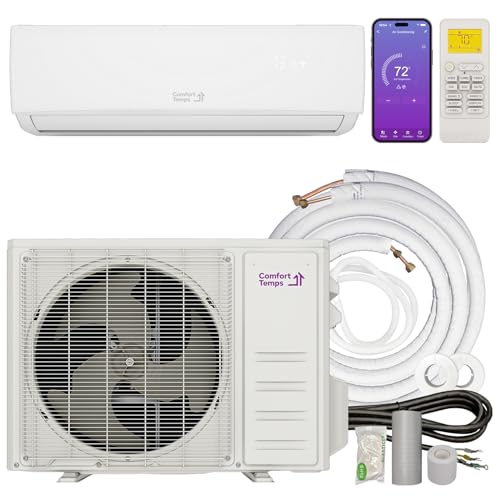
A comfort mini split is a ductless air conditioning system made up of two main components: an outdoor condenser unit and one or more indoor air-handling units. Instead of pushing cooled air through a network of ducts, the indoor unit blows conditioned air directly into the room it serves. This design eliminates the energy losses that occur in ducted systems, where treated air can leak or lose temperature before reaching living spaces.
The term "comfort mini split" is often used to describe systems designed with occupant comfort as the priority — quieter operation, smoother temperature control, and better humidity management than basic single-zone units. Many modern comfort mini splits are heat pumps, meaning they can both cool in summer and heat in winter by reversing the refrigerant cycle.
If you are comparing system types more broadly, our overview of central air units explains how whole-home ducted systems differ from ductless configurations. For homes without existing ductwork, a mini split is frequently the most practical path to year-round comfort.
How a Comfort Mini Split Works
Understanding the mechanics helps you evaluate features that actually matter. Here is the sequence of operation in a standard ductless mini split:
- Indoor unit draws in room air through a return grille and passes it over an evaporator coil.
- Refrigerant absorbs heat from the air inside the evaporator coil, cooling the air before it is blown back into the room.
- Refrigerant travels to the outdoor unit through copper line sets, where the compressor raises its pressure and temperature.
- Outdoor coil releases heat to the outside air, and the refrigerant cycles back indoors to repeat the process.
Inverter-driven compressors are common in mid-range and premium comfort mini splits. Instead of switching on and off at full power, an inverter compressor modulates its speed to match the cooling demand. The result is steadier room temperature, lower humidity swings, and quieter operation. Systems without this technology are covered in our guide to non-inverter AC units, which explains where fixed-speed compressors still make sense.
Some comfort mini splits pair the cooling function with a heat pump cycle. If you want a single system for both seasons, the article on cold climate mini split systems explains how low-ambient performance is rated and what to check before relying on one in freezing conditions.
Mini Split Configurations: Single-Zone vs Multi-Zone
Comfort mini splits are available in several configurations, and the right one depends on how many rooms you need to condition and whether those rooms are used at the same time.
- Single-zone systems connect one outdoor unit to one indoor head. They are the simplest option for a bedroom, home office, or an addition that lacks ductwork. Efficiency is high because there is no distribution loss.
- Multi-zone systems connect one outdoor unit to two to five indoor heads. Each zone has its own thermostat, so occupants can set different temperatures in each room. Multi-zone systems suit whole-home retrofits and multi-story layouts.
- Ducted mini splits use a slim ducted air handler concealed in a ceiling or closet, distributing air through short duct runs to several registers. This option works well when you want a cleaner look or need to serve adjacent spaces.
Wall-mounted indoor heads are the most common, but ceiling cassettes and floor-mounted units exist for rooms where wall space is limited. Our article on ductless mini split AC systems covers the full range of indoor unit styles and where each is typically installed.
Sizing a Comfort Mini Split Correctly
Oversizing a mini split is one of the most common mistakes. An oversized unit cools the room too quickly, then shuts off before it has removed enough humidity. The result is a room that feels cold and clammy rather than comfortable. Undersizing leads to continuous operation and poor temperature recovery on hot days.
The basic rule of thumb is 20 BTU of cooling capacity per square foot of floor area, adjusted upward for sun exposure, ceiling height, and occupancy. A 300 square foot bedroom with average insulation typically needs a 6,000 to 8,000 BTU unit, while a 500 square foot living area may need 12,000 BTU. For a formal load calculation, our guide on how to size an air conditioner walks through the variables that affect the final number.
If your project is a whole-home installation, the sizing logic changes because you are dividing the load across multiple zones. The article on AC sizing for whole home explains how to allocate capacity across rooms and why the largest zone does not always determine the outdoor unit size.
Efficiency Ratings You Should Understand
Comfort mini splits carry two efficiency ratings that matter for cooling and heating respectively. SEER2 measures cooling efficiency over a standardized season; HSPF2 measures heating efficiency for heat pump models. Higher numbers mean the system uses less electricity to deliver the same conditioning.
Federal minimum standards have tightened in recent years, and the rating that applies to you depends on your region. Our explainer on SEER vs SEER2 DOE standards breaks down the regional differences and which thresholds apply to ductless systems. If you are comparing ENERGY STAR models, the overview of ENERGY STAR certified AC units explains what the certification requires beyond the federal minimum.
Inverter compressors and variable-speed fans are the two features that most consistently lift a comfort mini split into a higher efficiency band. The article on variable speed AC systems explains how modulation reduces energy use during partial-load conditions, which is most of the cooling season.
Comfort Mini Split Market Tiers
Comfort mini splits are positioned across three broad tiers. Understanding what each tier delivers helps you match the system to your expectations rather than paying for features you will not use.
Essential Tier
Single-zone systems with fixed or basic inverter compressors. Straightforward controls, standard filtration, and solid build quality. A good fit for a single bedroom, garage, or occasional-use space.
Balanced Tier
Inverter compressors with wider modulation ranges, quieter indoor heads, and better humidity control. Multi-zone options become common here. Suits most primary living spaces and whole-home retrofits.
Top-Tier
High-efficiency inverter systems with advanced filtration, smart controls, low-ambient heating performance, and premium materials. Intended for primary residences where comfort and long-term efficiency are priorities.
Higher tiers generally deliver more consistent temperature control because the compressor can throttle down further before cycling off. Entry-level units may hold temperature within a degree or two, while top-tier inverter systems often hold within half a degree. If precise comfort matters to you, that difference is worth weighing.
Indoor and Outdoor Placement Guidelines
Placement affects both performance and how comfortable the system feels in daily use. The indoor head should be mounted high on a wall where its airflow can travel across the room rather than blowing directly onto a seating area. Avoid corners and alcoves that trap air and cause short cycling.
The outdoor condenser needs clearance on all sides for airflow and should not be boxed in by fencing or shrubs. On multi-zone systems, keep line set runs as short as practical — long runs reduce capacity and add to installation complexity. Our guide on AC indoor and outdoor placement covers clearance distances, sun exposure, and noise considerations in detail.
If the outdoor unit will sit on a balcony or near a property line, check local noise ordinances before installation. Premium indoor heads are often rated in the low 20s decibels on their lowest fan setting, which is quieter than a whisper in most rooms.
Installation: What to Expect
A comfort mini split installation involves mounting the indoor head, positioning the outdoor unit, running the refrigerant line set and condensate drain, and commissioning the system with a vacuum pump. Proper evacuation of the line set is critical — moisture left in the lines can degrade the compressor over time.
Most installations require a licensed HVAC technician, and in many jurisdictions a permit is needed for the electrical connection and refrigerant work. The article on do I need a permit for AC explains how to check your local requirements. If you are evaluating contractors, our guide on how to choose an HVAC contractor lists the questions that separate thorough installers from quick-turnaround crews.
Avoiding common mistakes — undersized line sets, poor condensate slope, or skipping the vacuum step — saves significant trouble later. The list of common AC installation mistakes is worth reviewing before you sign an installation agreement.
Maintenance for Long-Term Comfort
Mini splits are relatively low-maintenance, but the tasks that matter are not optional. The indoor filter should be cleaned every two to four weeks during heavy use; a clogged filter restricts airflow and forces the compressor to work harder. Coil cleaning once per season keeps heat exchange efficient.
The condensate drain line is another common failure point. A clogged drain can cause water to back up into the indoor unit and drip down the wall. Our guide on clean air conditioner drain line covers the flush procedure and how often to do it. For a broader seasonal routine, the seasonal AC checklist lists tasks by season so nothing gets skipped.
Outdoor coils should be rinsed periodically to remove pollen and dust. Avoid using a pressure washer on the fins — a garden hose on low pressure is sufficient. If the system develops odd noises or stops cooling, the troubleshooting article on AC not cooling walks through the likely causes in order of frequency.
Common Comfort Mini Split Problems
Most mini split issues fall into a handful of categories. Knowing them helps you describe the problem accurately when you call for service.
- Water leaking from the indoor head — usually a clogged condensate drain or a drain line that lost its slope.
- Ice forming on the indoor coil — low refrigerant charge, restricted airflow, or a dirty filter.
- Weak cooling — dirty coils, a failing capacitor, or a compressor that is not reaching full speed.
- Bad odors — microbial growth on the evaporator coil or in the drain pan, often from standing water.
- Outdoor unit not running — tripped breaker, failed contactor, or a communication fault between indoor and outdoor units.
For a structured diagnostic approach, the collection of common AC problems covers symptoms, causes, and the point at which a technician should be called. If you suspect a refrigerant issue, the article on refrigerant leak repair explains how leaks are located and what the repair involves.
Comfort Mini Split vs Other Cooling Options
The table below compares a comfort mini split against the most common alternatives on the factors buyers weigh most heavily.
| Factor | Comfort Mini Split | Central AC | Window AC |
|---|---|---|---|
| Ductwork required | No | Yes | No |
| Zoning capability | Per-room control | Requires added zoning hardware | Single room only |
| Indoor noise level | Very quiet at low fan speeds | Quiet, but duct noise can occur | Noticeable compressor hum |
| Installation complexity | Moderate — licensed technician recommended | High — full duct system | Low — DIY possible |
| Heating capability | Yes, on heat pump models | Yes, with a furnace or heat pump | No |
| Best suited for | Ductless homes, additions, zoned comfort | Whole-home with existing ducts | Single rooms, temporary setups |
For a direct comparison of ducted and ductless approaches, the article on ductless vs ducted AC expands on the trade-offs in installation scope, efficiency, and long-term maintenance.
Ready to Compare Comfort Mini Split Options?
Review the recommended models below, filtered by tier and application, so you can match a system to your room size and comfort expectations.
VIEW RECOMMENDED MODELSFrequently Asked Questions
How many rooms can one comfort mini split serve?
A single-zone system serves one room. Multi-zone systems typically support two to five indoor heads on one outdoor unit. Beyond five zones, a second outdoor unit or a different system type is usually more practical.
Does a comfort mini split heat as well as it cools?
Heat pump models are efficient down to their rated low-ambient temperature, which varies by model. Cold-climate versions maintain capacity at lower outdoor temperatures. If winters are severe in your area, check the rated heating capacity at your design temperature before relying on a standard model.
How long does installation take?
A single-zone installation typically takes one day. Multi-zone systems usually take one to two days depending on line set routing and the number of indoor heads. Permitting and inspection timelines vary by jurisdiction.
Can a comfort mini split be installed in an apartment?
Yes, provided the building permits outdoor unit placement on a balcony or wall bracket. Some rental agreements restrict modifications, so confirm with the property owner before installation.
What maintenance does a mini split require?
Filter cleaning every two to four weeks during heavy use, coil cleaning once per season, and an annual professional inspection. The condensate drain should be flushed periodically to prevent clogs.
Is a comfort mini split quieter than a window unit?
Yes. The compressor sits outside, so the indoor unit produces only fan noise. At low fan speeds, premium indoor heads are significantly quieter than any window unit.
Final Thoughts
A comfort mini split is a strong fit for homes without ductwork, additions that need independent temperature control, and anyone who values quiet operation and per-room zoning. The key decisions are sizing, configuration, and tier. Get those right, and the system will deliver consistent comfort for years with modest maintenance.
If you are still weighing system types, revisit the guide on ductless mini split AC systems for a deeper look at indoor unit styles, or the article on how to size an air conditioner to confirm your capacity requirement before shopping.