Car AC Recharge: What to Expect and How to Decide
If your car's vents are pushing warm air on a hot day, refrigerant loss is the usual suspect. Here is what a recharge actually involves, why it is rarely just a top-off, and how to choose between a professional service and a DIY kit.
Quick answer: A car air conditioner recharge is not a maintenance item like an oil change. A sealed system holds its refrigerant for years. When cooling fades, refrigerant has escaped through a leak, and the recharge is only as good as the leak diagnosis behind it. Expect a proper service to include recovery, vacuum, leak testing, and a measured charge, not just a can of refrigerant.
What a Car AC Recharge Actually Involves
The term "recharge" gets used loosely, which is why expectations vary so much between shops and DIY kits. In a proper automotive service bay, a recharge is a sequence of steps built around one goal: restoring the correct refrigerant charge in a system that is proven to be sealed.
- System inspection. The technician checks the compressor, condenser, drive belt, pressure sensors, and visible lines before touching the refrigerant.
- Recovery. Any remaining refrigerant is removed with a recovery machine. Federal rules require recovered refrigerant to be handled properly, not vented to the atmosphere.
- Vacuum and moisture removal. The system is held under vacuum. This boils off moisture and confirms the circuit holds pressure, which is the first real leak test.
- Leak testing. If the vacuum does not hold, the technician traces the leak with dye, electronic sniffers, or pressure testing before charging a leaking system.
- Measured charge. The correct weight of refrigerant for your vehicle is added, along with the correct oil and often a UV dye for future leak tracing.
- Performance verification. Vent temperature and system pressures are checked at idle and at higher engine speeds.
This is why a proper recharge on a car air conditioning system is more than a can-and-hose job. If the system has lost a significant amount of refrigerant, it lost it through a leak, and the leak will drain the new charge at the same rate. A recharge without diagnosis buys you time, not a fix.
Important: Refrigerant type matters. Older vehicles use R-134a; many newer models use R-1234yf. The two are not interchangeable, and the service equipment differs. Always confirm the spec on your underhood label before approving any service or buying a kit.
Signs Your Car AC Needs Attention
Not every cooling complaint is a refrigerant problem. Cold air that gradually fades over months points toward a slow leak. A sudden loss of cooling after a repair or a long winter could be a component fault. The symptoms below overlap, so diagnosis comes first.
- Air that is cool but not cold. Partial refrigerant loss is the most common cause.
- Air that is completely warm. Could be an empty system, a failed compressor clutch, a blown fuse, or a blocked expansion valve.
- Cooling that works at speed but not at idle. Often points to condenser airflow or fan problems rather than refrigerant.
- Rapid cycling or a compressor that will not engage. Frequently a low-pressure cutoff triggered by low refrigerant, but also possible from a faulty sensor.
- Oily residue or dye around lines and fittings. A strong visual cue for a refrigerant leak.
- Musty smell at startup. Usually evaporator moisture and microbial growth, not a refrigerant issue.
If your symptoms match a system that has lost its charge entirely, the car air conditioner stopped blowing cold air guide walks through the diagnostic order before any service is booked.
Service Options and What Each Tier Includes
Because the word "recharge" covers wildly different services, it helps to think in tiers. The table below describes what each tier typically includes and who it is appropriate for. No figures are listed, because service quotes vary by region, vehicle, and refrigerant type.
| Service Tier | What It Typically Includes | Best For |
|---|---|---|
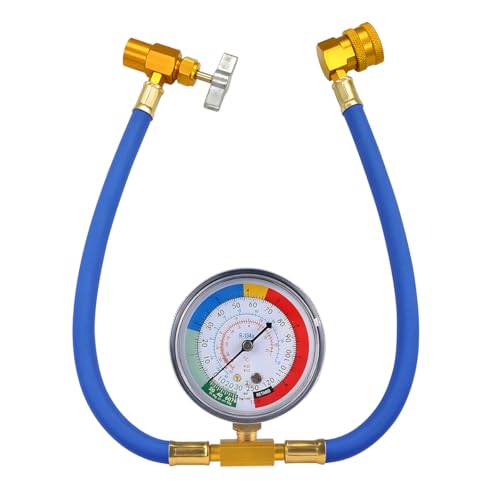
| Starter tier DIY top-off kit |
Single refrigerant can with gauge and hose; no recovery, no vacuum, no leak test | Known-sealed systems that are mildly low; short-term cooling restoration |
| Mid-tier Basic shop recharge |
Recovery, vacuum, standard charge by weight, vent temperature check | Systems with no suspected leaks that need a correct, measured charge |
| Mid-tier Recharge plus leak diagnosis |
Everything above plus dye injection, electronic leak detection, and line inspection | Systems that have lost charge repeatedly or have unknown history |
| High-end tier Full system service |
Leak repair, component replacement where needed, oil charge, full charge and performance validation | Leaking or failed systems, vehicles with compressor or condenser faults |
A general automotive air conditioning repair shop usually offers the middle and upper tiers. National chains sometimes run seasonal recharge specials at the starter level, which is a reasonable way to restore cooling when the system is known to be healthy. If you want a second opinion on what is normal for your situation, the car AC repair cost page breaks down what different repair categories involve without quoting figures.
Professional Service vs. DIY Kit
Both paths exist for good reasons, and the right choice depends on what you know about your system. A DIY kit is a tool, not a diagnosis. A professional service is a diagnosis with a charge attached.
When a DIY kit makes sense
- The system has never been opened and the cooling loss is gradual.
- The kit refrigerant matches your vehicle's label exactly.
- You can read the gauge and understand the ambient-temperature relationship.
- You accept that a top-off is a stopgap and plan a professional diagnosis if cooling fades again.
When a professional service is the right call
- The system is completely empty or the compressor will not engage.
- You have recharged before and cooling faded within one season.
- The vehicle uses R-1234yf, which is handled with different equipment and rules.
- You see oily residue, hear compressor noise, or notice the belt slipping.
- You want the job documented for warranty or resale purposes.
One practical middle path is to have a shop perform the diagnosis and vacuum test, then decide on the charge. This separates the leak question from the refrigerant question, which is exactly where the confusion usually lives. If you are also dealing with a system that runs but does not cool, the car AC not blowing cold air with Freon full guide covers the non-refrigerant causes in detail.
What Affects the Scope of the Job
Two vehicles with the same symptom can need very different work. The main variables are the refrigerant type, the vehicle layout, and whether the system has a known history.
- Refrigerant type. R-1234yf systems require dedicated equipment and generally command more labor time than R-134a systems.
- Leak location. A fitting O-ring is a quick repair. An evaporator core behind the dashboard is a major labor job.
- Component condition. A weak compressor or a corroded condenser turns a recharge into a repair.
- System access. Some engine bays make service ports and line routing far easier to reach than others.
- Vehicle age and history. A system with unknown service history needs leak testing before charging; a documented, sealed system does not.
This is why a quote over the phone is always an estimate. A shop that gives a firm number before seeing the vehicle is either quoting the starter tier only, or planning to add items after inspection. Both are normal, but you should know which one you are getting. The car air conditioner repair shop guide covers how to vet a shop before you commit.
After the Recharge: What Healthy Looks Like
A properly serviced system should deliver a vent temperature noticeably colder than ambient within a few minutes of driving. It should hold that performance at idle in traffic, not just on the highway. If cooling returns and then fades over weeks or months, the leak was never resolved and the cycle will repeat.
- Cold air within two to three minutes of starting the engine and turning on the AC.
- Stable performance at idle in warm weather, without the compressor cutting in and out rapidly.
- No new noises from the compressor or belt area.
- No oily residue appearing around fittings after a few weeks of use.
If the system holds its charge and performs well, routine cabin filter changes and occasional condenser cleaning are all the attention it needs. For owners who want to understand the full picture of the system beyond the charge itself, the auto air conditioning overview is a useful starting point.
Frequently Asked Questions
How often does a car air conditioner need a recharge?
Can I recharge my car AC with a DIY kit?
Why does my car AC blow warm air after a recharge?
What does a professional car AC recharge include?
Is it safe to keep topping off a leaking system?
Decide With the Full Picture
Use the tiers and symptoms above to identify which service level your vehicle actually needs, then confirm the refrigerant type and ask for a leak test before approving any charge. A little diagnosis now prevents a repeat visit next season.