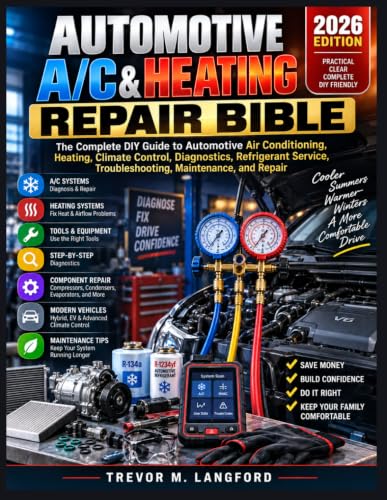
Automotive Air Conditioning Repair: What You Need to Know
Understand how a car AC system works, the most common failure symptoms, and how to evaluate repair options so you can make an informed decision before booking service.
START LEARNINGWho this guide is for: If you are researching automotive air conditioning repair, you have probably noticed your car's AC is not performing as it should, or you want to understand the system before authorizing work. This guide explains the components, the symptoms that point to specific problems, and the tools and service options that lead to a reliable repair. Read first, then decide.
How a Car Air Conditioning System Works
An automotive air conditioning system is a closed refrigerant loop, much like a home AC but scaled to fit a vehicle. The compressor pressurizes refrigerant gas, the condenser releases heat, the expansion valve or orifice tube drops pressure, and the evaporator absorbs heat from the cabin air. A blower then pushes that cooled air through the vents.
Where automotive systems differ from residential systems is in packaging. The compressor is belt-driven by the engine, the condenser sits in front of the radiator, and the evaporator is buried inside the dashboard. That layout makes some repairs straightforward and others labor-intensive, which is why diagnosing the actual problem before replacing parts matters so much.
If you want a broader explanation of the refrigerant process itself, the AC refrigerant cycle guide is a useful primer. The auto air conditioning overview also covers the system at a general level.
Key Components and What They Do
Understanding the main components helps you interpret symptoms. The table below summarizes what each part contributes and what tends to fail.
| Component | Role | Common Failure Signs |
|---|---|---|
| Compressor | Pressurizes refrigerant to drive the cycle | No cooling, noise, or clutch not engaging |
| Condenser | Releases heat from refrigerant to outside air | Reduced cooling, especially in traffic |
| Evaporator | Absorbs heat from cabin air | Weak cooling, musty smell, water leaks |
| Expansion valve / orifice tube | Controls refrigerant flow and pressure drop | Uneven cooling, compressor cycling |
| Refrigerant lines and seals | Carry refrigerant through the loop | Slow leaks and gradual cooling loss |
| Blower motor | Moves air through the evaporator and vents | Weak airflow, noise, or no airflow |
Common Symptoms and What They Suggest
Diagnosis starts with observation. The table below maps common complaints to likely causes. This is not a substitute for a proper inspection, but it helps you describe the problem clearly when you talk to a technician.
| Symptom | Likely Cause | Next Step |
|---|---|---|
| AC blows warm air | Low refrigerant, compressor issue, or electrical fault | Request pressure and electrical diagnostics |
| Cooling fades at idle or in traffic | Condenser airflow or fan issue | Inspect condenser and cooling fan operation |
| Musty smell from vents | Moisture and microbial growth on the evaporator | Evaporator cleaning or cabin filter replacement |
| Water on the passenger floor | Clogged condensate drain | Clear the drain and check for blockage |
| Compressor clutch not engaging | Low refrigerant, faulty relay, or pressure switch | Electrical and pressure checks |
| Noisy compressor | Worn internal components or low oil | Stop using AC and arrange inspection |
If the main symptom is that the air is not cold, the car air conditioner stopped blowing cold air overview walks through the most common causes in order of likelihood. For a comparison with home systems, the air conditioning unit not blowing cold air guide covers similar symptom logic in a residential context.
Repair Approaches: What Each One Involves
Automotive AC repair ranges from a simple recharge to a full component replacement. The right approach depends on the actual problem, not on the most expensive fix. The table below summarizes the main repair categories.
| Repair Category | What It Involves | Best For |
|---|---|---|
| Recharge and leak check | Evacuate, vacuum test, and recharge refrigerant | Minor leaks or routine service |
| Component replacement | Replace compressor, condenser, or evaporator | Confirmed component failure |
| Electrical diagnostics and repair | Trace sensors, relays, and wiring | Compressor clutch or fan issues |
| Cleaning and maintenance | Condenser cleaning, drain clearing, filter replacement | Reduced performance without component failure |
Entry-Level Tier Repairs
Recharges and filter replacements. Straightforward tasks that address the most common performance complaints.
Mid-Range Tier Repairs
Component replacements such as compressors or condensers. These require evacuation, proper oil balancing, and a proper recharge.
High-End Tier Repairs
System-wide diagnostics and rebuilds, often on newer vehicles with complex climate control electronics.
Tools Used in Professional Repair
Professional repair relies on a consistent set of tools. Understanding them helps you evaluate whether a shop is equipped to do the job properly, especially if you are considering DIY work.
Manifold Gauge Set
The manifold gauge set measures high-side and low-side pressures, which are the primary diagnostic indicators for most AC issues. Pressure readings help distinguish between low refrigerant, a compressor problem, and a restriction in the system.
Vacuum Pump
Before recharging, the system must be evacuated to remove air and moisture. A dedicated vacuum pump is used for this step. The automotive air conditioning vacuum pump overview explains the specific requirements for automotive use. For general context on evacuation, the air conditioning evacuation pump guide covers the concept more broadly.
Refrigerant Recovery and Charging Equipment
Modern service requires refrigerant recovery rather than venting. Recovery machines capture refrigerant for reuse or recycling, and charging equipment dispenses the correct amount by weight. The freon for HVAC overview is useful background on refrigerant handling in general.
Leak Detection Tools
Electronic leak detectors, UV dye kits, and pressure testing tools are used to locate slow leaks that would otherwise be missed. Finding the leak before recharging prevents repeat service visits.
How to Choose a Repair Shop
Automotive AC repair quality varies significantly between shops. A few questions can separate a thorough shop from one that will simply recharge the system and send you on your way.
- Ask about diagnostics: A shop that performs pressure testing, leak detection, and electrical checks before recommending parts is on the right track.
- Confirm recovery practices: Refrigerant must be recovered, not vented. Ask how the shop handles recovery.
- Check component matching: Replacement compressors, condensers, and evaporators should be matched to the vehicle. Ask about OEM versus aftermarket options.
- Ask about warranty: A warranty on parts and labor is a signal that the shop stands behind its work.
- Review the service order: The written estimate should list diagnostics, parts, labor, and refrigerant handling separately.
The air conditioning repair places overview provides additional guidance on evaluating service providers. If you also service home HVAC equipment, the air conditioning companies near my location page is useful for finding service in your area.
DIY Considerations and Safety
Some automotive AC tasks are within reach for a confident DIYer, while others are best left to professionals. Understanding the boundary protects both your safety and your vehicle.
Tasks That Are Reasonable for DIY
- Replacing the cabin air filter
- Cleaning the condenser with appropriate tools
- Clearing a condensate drain
- Inspecting for obvious leaks or loose fittings
Tasks That Require Professional Handling
- Refrigerant recovery and charging
- Compressor, condenser, or evaporator replacement
- System evacuation and vacuum testing
- Electrical diagnostics for climate control modules
Refrigerant handling is regulated, and improper handling can cause injury or environmental harm. If you are not equipped with recovery and evacuation equipment, the practical choice is a professional shop.
Preventive Maintenance to Avoid Repairs
Regular maintenance reduces the likelihood of major repairs and keeps the system performing as designed. The following habits make a meaningful difference.
- Run the AC regularly: Brief use in cooler months keeps seals lubricated and the compressor engaged.
- Keep the condenser clean: Debris and insects reduce airflow and cooling performance.
- Replace the cabin filter: A clogged filter reduces airflow and can cause musty odors.
- Address small issues early: Slow cooling that worsens over time often indicates a small leak that becomes a larger problem.
For broader maintenance context that applies across AC categories, the AC maintenance guide is a useful companion read.
Related Considerations
A few adjacent topics come up frequently during automotive AC repairs and are worth reviewing alongside the main topic.
- Home system comparisons: The air is blowing but not cold in house overview covers similar symptoms in residential systems.
- Evacuation tools: The air conditioning evacuation pump guide explains the general principles that also apply in automotive work.
- Service companies: The anytime heating and cooling overview provides additional context on HVAC service providers.
- Alternatives: The car window air conditioner page covers add-on cooling options for vehicles that do not have working factory AC.
Frequently Asked Questions
Why is my car AC blowing warm air?
Common causes include low refrigerant from a leak, a failing compressor, a faulty pressure switch, or an electrical issue preventing the compressor clutch from engaging. A pressure test and electrical diagnostics will narrow down the cause.
How often should a car AC system be serviced?
Many manufacturers recommend an inspection every one to two years. Regular use of the AC throughout the year helps keep seals lubricated and reduces the chance of slow leaks developing unnoticed.
Can I just recharge my car AC myself?
DIY recharge kits exist, but they do not address the underlying cause of low refrigerant. If the system has a leak, adding refrigerant without repairing the leak leads to repeat problems. Proper service includes leak detection, evacuation, and charging by weight.
What is the difference between an AC recharge and a full AC repair?
A recharge restores refrigerant to the correct level. A repair addresses the cause of the loss, which may involve replacing a component. A thorough shop will determine which approach your vehicle needs before recommending work.
Is a noisy compressor always a sign of failure?
Not always, but it should be inspected. Noise can come from the clutch, a worn belt, or internal compressor wear. The AC compressor running but not cooling overview explains related symptoms in a home AC context that parallel automotive behavior.
Ready to Explore Repair Tools and Parts?
Review recommended automotive air conditioning repair tools and components, then check availability and compatibility for your vehicle.
EXPLORE OPTIONS