Different Types of Central Air Conditioning Systems
Understand how split, packaged, heat pump, and ductless central systems work so you can match the right configuration to your home, climate, and ductwork situation.
START COMPARINGWhy this matters: "Central air" is not a single product. It is a family of system designs that all aim to cool a whole home from one or more central units. The type you choose affects installation complexity, energy performance, zone control, and how well the system fits existing ductwork. This guide breaks down each central AC configuration so you can narrow your options before requesting quotes.
What Makes an Air Conditioner "Central"?
A central air conditioning system cools air at a single indoor location and distributes it through a network of ducts to multiple rooms. Unlike a window unit or a single-room portable unit, a central system is designed to condition an entire house or a large portion of it from one control point. The key components are the outdoor condenser, the indoor evaporator coil (often mounted on a furnace or air handler), refrigerant lines, and the duct system.
Within that shared architecture, manufacturers use several distinct configurations. The differences come down to where components are housed, whether ductwork is required, and whether the system can also heat. Below are the main types you will encounter when comparing central systems.
1. Split System Central Air Conditioner
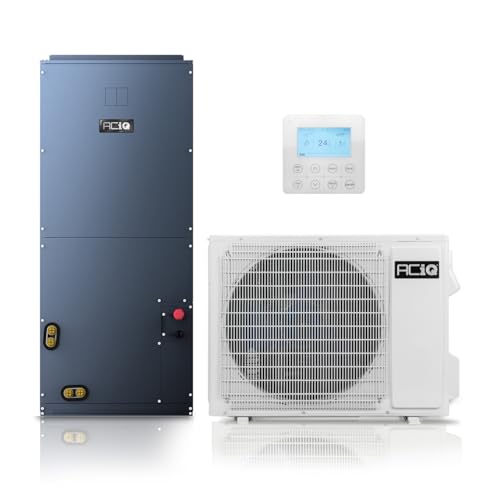
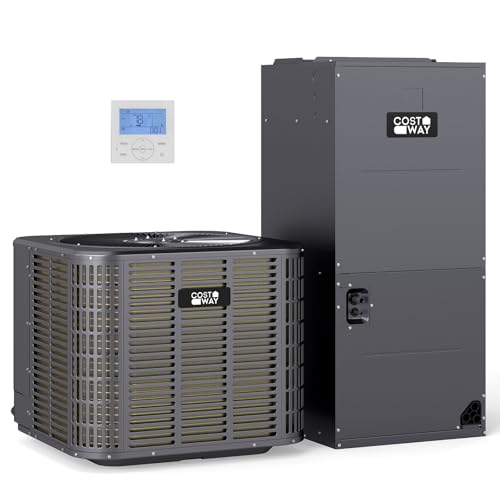
The split system is the most widely installed residential central AC design. It "splits" the system into two physical locations: an outdoor condenser unit containing the compressor and condenser coil, and an indoor air handler or furnace containing the evaporator coil and blower. Refrigerant lines and electrical wiring connect the two halves, and the indoor blower pushes cooled air through the ducts.
- Best for: Homes with existing ductwork and space for an outdoor condenser pad.
- Strengths: Proven design, broad product selection across all performance tiers, efficient in the long run when paired with a high-efficiency condenser.
- Considerations: Requires indoor space for the air handler and a clear path for refrigerant lines; duct losses can reduce delivered efficiency.
Split systems are available across the full range of market positions, from entry-level single-stage models to premium variable-speed units. If you are sizing a replacement for an existing split system, use a proper load calculation rather than copying the old tonnage; the guide on how to size an air conditioner explains the room-by-room method.
2. Packaged Central Air Conditioning Unit
A packaged unit consolidates the condenser, compressor, evaporator coil, and blower into one outdoor cabinet. All cooling components live in a single weatherproof enclosure, usually on a roof or a concrete pad beside the house. Ductwork connects directly to the cabinet and routes conditioned air into the home.
- Best for: Homes with limited indoor mechanical space, flat-roof or crawlspace construction, and regions where rooftop installation is standard practice.
- Strengths: Single-point installation simplifies service access; no indoor air handler closet is required.
- Considerations: Roof-mounted units need structural support and safe access for maintenance; packaged systems typically offer fewer configuration choices than split systems.
Packaged units are common in manufactured housing and in homes where indoor closets are at a premium. They can also combine cooling with electric heating elements or a gas furnace in a single cabinet, which is why they are sometimes called packaged heating and cooling units.
3. Central Heat Pump System
A central heat pump is a split or packaged system that can reverse the refrigerant cycle. In cooling mode it works exactly like a standard central air conditioner. In heating mode it absorbs heat from outdoor air and moves it indoors, which is far more efficient than electric resistance heating in moderate climates.
- Best for: Homeowners who want one system for both cooling and heating, especially in climates with mild to moderate winters.
- Strengths: Dual-purpose operation, strong efficiency in the long run, and eligibility for efficiency-focused incentive programs in many regions.
- Considerations: Heating capacity and efficiency drop in very cold outdoor temperatures; cold-climate models address this but sit in higher market tiers.
If you are comparing a heat pump against a furnace-plus-AC combination, review the trade-offs in the guide to HVAC heat pumps. Heat pumps are also a natural fit when replacing an aging electric furnace and air conditioner pair.
4. Ductless Mini-Split Central System
A ductless mini-split uses one outdoor condenser connected to one or more indoor wall, ceiling, or floor-mounted air handlers. Each indoor unit conditions its own zone, and refrigerant lines run through a small wall penetration instead of full ductwork. Multi-zone systems can condition an entire home from a single outdoor unit, which is why they are often discussed alongside central systems.
- Best for: Homes without ductwork, additions, older homes where duct installation is impractical, and households that want room-by-room zone control.
- Strengths: No duct losses, fast installation, independent zone temperatures, and strong efficiency across all market tiers.
- Considerations: Each indoor head needs wall or ceiling space; multi-zone systems require careful line routing and can sit in mid-range to premium tiers when many zones are added.
Ductless systems are frequently chosen when adding cooling to a house that has hydronic or baseboard heating. For homes weighing ducted versus ductless options, the comparison of ductless heat and air conditioners covers the practical differences.
5. Ducted Central System With Zoning
A standard split or packaged system can be upgraded with motorized dampers and multiple thermostats to create a zoned central system. Each zone receives conditioned air only when its thermostat calls for it, which reduces energy waste in unoccupied rooms and evens out temperature differences between floors.
- Best for: Multi-story homes, finished basements, and layouts with rooms that are hard to keep comfortable with a single thermostat.
- Strengths: Whole-home cooling with room-level control, better comfort in problem areas, and reduced run time for the outdoor unit.
- Considerations: Zoning hardware and controls add complexity; duct design must be reviewed to ensure adequate airflow when dampers close.
Zoning is a configuration layer rather than a separate product category, so it can be applied to split, packaged, or heat pump systems. It is often the most practical answer when a homeowner wants central comfort without replacing the entire duct system.
6. Variable Refrigerant Flow (VRF) Central System
VRF systems are a commercial-grade evolution of ductless and ducted technology. A single outdoor unit modulates refrigerant flow to many indoor units, each with its own setpoint. VRF is common in multi-family buildings, offices, and larger homes where simultaneous heating and cooling of different zones is needed.
- Best for: Large homes, light commercial spaces, and buildings that require precise zone control and high part-load efficiency.
- Strengths: Excellent part-load performance, long refrigerant line runs, and flexible indoor unit styles including ducted and cassette types.
- Considerations: Professional-grade design and commissioning are essential; the technology sits in the top-tier and commercial-grade segment of the market.
Side-by-Side Comparison
| System Type | Ductwork Required | Heating Capability | Typical Market Tier | Best For |
|---|---|---|---|---|
| Split system | Yes | No (cooling only) | Entry-level to premium | Homes with existing ducts |
| Packaged unit | Yes | Optional (electric or gas) | Mid-range to high-end | Limited indoor space, roof installations |
| Central heat pump | Yes | Yes (reverse cycle) | Mid-range to premium | Year-round comfort in moderate climates |
| Ductless mini-split | No | Often yes (heat pump models) | Mid-tier to premium | Homes without ducts, additions |
| Zoned ducted system | Yes (with dampers) | Depends on base system | Mid-range to high-end | Multi-story and uneven layouts |
| VRF system | Optional (mixed) | Yes (heat recovery options) | Commercial-grade | Large homes and light commercial |
How to Choose the Right Central System Type
Start with the physical constraints of the house. If ductwork already exists and is in good condition, a split system or heat pump is usually the most straightforward path. If indoor space is tight, a packaged unit may be the practical choice. If there is no ductwork and installing it would require major renovation, a ductless mini-split or a high-velocity small-duct system deserves serious consideration.
Next, think about how the home is used. A single-zone split system with one thermostat is fine for a compact, open floor plan. A two-story home with a finished basement will usually benefit from zoning or from a multi-zone ductless design. Households that want heating and cooling from one system should compare heat pump options against a separate furnace and AC combination.
Finally, plan for the long term. Duct condition, refrigerant type, and control strategy all influence how efficient the system will be in the long run. If you are still in the early research stage, the overview of heating and cooling systems provides useful context on how central AC fits alongside other home comfort equipment.
Installation and Sizing Considerations
Every central system type depends on correct sizing. An oversized unit short-cycles, struggles to remove humidity, and wears out faster. An undersized unit runs continuously and never reaches the setpoint on hot days. A room-by-room load calculation is the reliable method, and the air conditioner sizing guide walks through the inputs that matter.
Duct design is equally important for ducted systems. Leaky or undersized ducts can waste a significant share of the cooling the equipment produces, which is why sealing and balancing are part of a quality installation. Homeowners planning a new installation should also confirm local permitting requirements before work begins; the guide on whether you need a permit for AC explains when approvals are typically required.
For larger projects, comparing contractor qualifications matters as much as comparing equipment. The guide on how to choose an HVAC contractor covers licensing, insurance, and quote evaluation.
Frequently Asked Questions
What is the most common type of central air conditioning system?
The split system is the most common residential central AC design. It pairs an outdoor condenser with an indoor air handler or furnace and distributes cooled air through ductwork.
How does a packaged central air conditioner differ from a split system?
A packaged unit houses all cooling components in one outdoor cabinet, while a split system separates the outdoor condenser from the indoor air handler. Packaged units suit homes with limited indoor mechanical space.
Can a central heat pump cool and heat a home?
Yes. A central heat pump works like an air conditioner in summer and reverses the refrigerant cycle in winter to provide heating. It is a dual-purpose system best suited to moderate climates.
Are ductless mini-split systems considered central air conditioning?
They are often grouped with central systems because one outdoor unit can serve multiple indoor zones, but they distribute air directly into rooms without ductwork. They are technically ductless systems.
Which central AC type is best for a home without ductwork?
A ductless mini-split system is the best fit for a home without existing ducts. It avoids duct installation, allows zone control, and installs with only a small wall penetration per indoor unit.