Drain Pump for AC Unit: The Complete Condensate Management Guide
Everything you need to know about AC condensate pumps — how they work, when you need one, how to install and maintain it, and which tier of pump fits your system.
What Is a Drain Pump for an AC Unit?
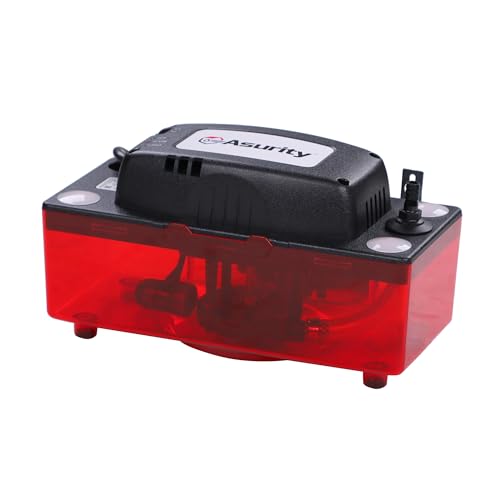
A drain pump for an AC unit — also called a condensate pump — is a small electromechanical device that collects the water produced by your air conditioner as it cools and dehumidifies indoor air, then pumps that water to a drainage point. When an air conditioner runs, moisture from the air condenses on the cold evaporator coil. That condensate drips into a drain pan and normally flows out through a gravity drain line. A drain pump becomes necessary when gravity alone cannot move the water to a safe discharge location.
In a typical split system, the indoor air handler sits in an attic, closet, or ceiling space. The condensate line must slope downward continuously toward a floor drain, exterior wall, or utility sink. In many real-world installations, that slope is impossible or impractical — especially for basement air handlers, ceiling cassette units, ducted mini-splits, and retrofits in older homes. That is exactly where a condensate pump earns its place.
Key idea: A drain pump does not cool your home. Its only job is to move condensate water reliably so that moisture never overflows the drain pan and damages your property.
Understanding the broader picture of how moisture interacts with your HVAC system helps. If you are also dealing with high indoor humidity, our guide on decreasing humidity in your house covers complementary strategies. And if you want to compare moisture-removal approaches, the dehumidifier vs AC comparison explains how each device handles water removal differently.
How a Condensate Drain Pump Works
A condensate pump is a simple but clever device. Understanding its sequence of operation helps you diagnose problems later and choose the right unit in the first place.
The Basic Sequence of Operation
- Collection: Condensate water drips from the evaporator coil into the drain pan and flows into the pump's built-in reservoir through an inlet port.
- Level sensing: A float switch rises with the water level inside the reservoir. Most pumps use a mechanical float; better units use a solid-state or dual-float design.
- Activation: When the water reaches a set level, the float triggers the motor. The impeller spins and pushes water out through the discharge port and into the discharge line.
- Discharge: Water travels up or across to a drain, sink, or exterior location. The check valve prevents water from flowing back into the reservoir when the pump stops.
- Safety cutoff: If the water level rises beyond the normal activation point — because of a clog, a failed motor, or a blocked discharge line — a secondary safety switch shuts off the AC unit to prevent overflow.
Key Components Inside the Pump
- Reservoir: The collection tank. Larger reservoirs mean fewer start-stop cycles, which extends motor life.
- Float switch: The level sensor that starts and stops the motor. Mechanical floats are common; solid-state sensors are more resistant to algae and debris.
- Impeller and motor: The pumping mechanism. Heavy-duty motors and reinforced impellers handle longer runs and higher lift.
- Check valve: Prevents backward flow and keeps the discharge line primed.
- Safety switch: The overflow protection that ties into your AC control circuit.
- Discharge port and tubing: The outlet where water leaves the pump. Tubing diameter and run length both matter.
If you want a deeper foundation on how the cooling cycle produces condensate in the first place, see our explanation of how an air conditioner works. It helps to connect the dots between the refrigerant cycle, coil temperature, and water production.
When Do You Actually Need a Drain Pump?
Not every AC installation requires a pump. Gravity drainage is always the preferred method when it is feasible, because it has no moving parts and no electrical connection. You need a drain pump when gravity drainage is impossible or unreliable.
Situations That Require a Drain Pump
- Basement air handlers: The indoor unit sits below grade, so water cannot flow upward to a drain.
- Attic installations with long horizontal runs: When the drain line must travel a long distance with insufficient pitch, water pools and eventually overflows.
- Ceiling cassette and ducted mini-splits: These units are mounted overhead, often without a continuous downward path to a drain.
- Units installed below the sewer line: Condensate cannot drain into a plumbing stack above the unit's level.
- Retrofit and renovation projects: Existing structures often lack the slope or routing needed for gravity drainage.
- Discharge to a remote location: Sometimes the only practical discharge point is across a room or up a wall.
When Gravity Drainage Is Enough
If your air handler is above grade and the drain line can maintain a continuous downward slope to a floor drain, exterior wall, or condensate receptor, a pump is generally unnecessary. A well-sloped gravity line with a proper trap is simpler, quieter, and has no electrical draw. Many ducted mini-split systems and conventional central air conditioning systems can use gravity drainage when the layout allows.
Warning: Never rely on a gravity line that runs uphill or is perfectly level, even for a short distance. Standing water in the line promotes algae growth, and the pan will eventually overflow. If you cannot achieve continuous downward slope, install a pump.
If your drain pan is already filling with water, that is a symptom you should not ignore. Our article on a drip pan in the attic full of water walks through the causes and fixes, including when a pump is the real solution.
Types of AC Drain Pumps
Condensate pumps come in several form factors, each suited to different installations. The table below compares them using neutral tier descriptors rather than any monetary figures.
| Type | Best For | Market Tier | Key Characteristics |
|---|---|---|---|
| Standard reservoir pump | Attics, closets, basements with moderate lift | Entry-level to mid-range | Built-in tank, float switch, check valve; simple and widely available |
| High-lift pump | Long vertical runs, ceiling cassettes, tight spaces | Mid-tier to premium | Stronger motor, higher discharge head, larger reservoir |
| Tankless / inline pump | Compact installations, ducted systems with tight clearances | Mid-tier | No reservoir; detects water in the pan and pumps on demand |
| Ducted mini-split pump | Ducted mini-split air handlers | Mid-tier | Compact, often integrated or slim-profile, designed for concealed spaces |
| Commercial-grade pump | Large systems, high condensate volume, critical uptime | Commercial-grade | Heavy-duty motor, dual safety switches, reinforced housing, longer service life |
For ducted mini-split installations specifically, our guide on ducted mini-split ductwork covers how condensate routing integrates with the rest of the system design. And if you are comparing ducted and ductless approaches, the ducted vs ductless AC comparison puts the drainage implications in context.
How to Choose the Right Drain Pump
Selecting a pump is mostly about matching three physical requirements: lift, run length, and condensate volume. Getting these right prevents short cycling, premature failure, and overflow.
1. Determine the Lift (Discharge Head)
Lift is the vertical distance the pump must push water. Measure from the pump's discharge port to the highest point of the discharge line. Add the vertical rise and account for any fittings. Choose a pump rated for more lift than you actually need — a margin of safety reduces strain on the motor.
2. Measure the Horizontal Run
Long horizontal runs add friction. A pump rated for a certain lift at a short run may struggle at a much longer run. Check the manufacturer's lift-versus-run chart, and keep the discharge line as short and straight as practical.
3. Estimate Condensate Volume
Hotter, more humid climates and larger systems produce more condensate. A larger reservoir reduces cycling frequency. For high-volume systems, a commercial-grade unit with a robust motor is the safer long-term investment.
4. Check the Safety Switch
A high-level safety switch that shuts off the AC when the reservoir is full is essential. Without it, a clogged line or failed motor can cause water damage. Prefer pumps with a normally closed (NC) safety contact that integrates cleanly with your control wiring.
5. Consider Noise and Location
Pumps installed near living spaces benefit from quieter operation and vibration isolation. If the pump will sit in a bedroom closet or above a ceiling, prioritize low-noise designs and mount the unit on a vibration-dampening pad.
Selection Checklist
- Measured vertical lift from pump to highest discharge point
- Total horizontal run length and number of fittings
- Estimated condensate volume based on system size and climate
- Presence of a high-level safety switch tied to AC control
- Reservoir size suitable for cycling frequency
- Noise level appropriate for the installation location
- Compatibility with the drain pan outlet and tubing size
Installation Essentials
Proper installation is what separates a pump that lasts a decade from one that fails in a season. These are the essentials, whether you are installing a pump on a new system or retrofitting one.
Placement and Mounting
- Mount the pump on a solid, level surface close to the drain pan outlet.
- Keep the inlet lower than or level with the drain pan outlet so water flows in freely.
- Use a vibration-dampening pad if noise is a concern.
- Ensure the pump is accessible for future service and cleaning.
Drain Line and Discharge Routing
- Connect the drain pan outlet to the pump inlet with a short, flexible, slope-friendly line.
- Route the discharge line with a continuous rise where possible, avoiding loops that trap water.
- Install a check valve if the pump does not include one; it prevents backflow into the reservoir.
- Terminate the discharge at a suitable point — a utility sink, floor drain, or exterior location that will not cause staining or freezing issues.
Electrical and Safety
- Connect the pump to a dedicated circuit or a properly rated outlet. If you are unsure about your electrical capacity, review whether you need an electrician for AC work.
- Wire the high-level safety switch in series with the AC control circuit so a full reservoir stops cooling before overflow occurs.
- Follow local codes and the manufacturer's instructions. Improper wiring can void warranties and create hazards.
Pro tip: Label both ends of the discharge line and note the pump model inside the air handler access panel. Future service technicians will thank you, and you will avoid misordering parts.
If you are installing a pump as part of a larger mini-split project, our DIY mini-split installation guide provides broader context on system setup. For ducted systems, ducted mini-split system fundamentals help you plan the condensate route alongside the ductwork.
Maintenance and Cleaning
Condensate pumps are simple machines, but they live in a wet environment. Algae, biofilm, dust, and sludge are the enemies. A modest maintenance routine prevents the majority of failures.
Twice-Yearly Maintenance Routine
- Inspect the reservoir: Remove the cover and check for visible debris, algae, or sludge. Clean with warm water and a mild detergent; avoid abrasive cleaners.
- Test the float switch: Slowly pour clean water into the reservoir until the pump activates, then confirm it shuts off when the level drops. Repeat to verify the safety switch triggers at the high level.
- Flush the discharge line: Pour clean water through the line or disconnect and flush it to remove biofilm and mineral buildup.
- Check the check valve: Confirm it seals and does not allow backflow. Replace if it is stuck or leaking.
- Verify the inlet line: Ensure the drain pan outlet and inlet line are clear and properly sloped.
- Listen for unusual noise: Grinding or rattling may indicate a failing motor or debris in the impeller.
Extending Pump Life
- Keep the reservoir clean; algae buildup is the leading cause of premature failure.
- Do not undersize the pump; a motor straining against excessive lift runs hotter and fails sooner.
- Ensure the discharge line does not sit in standing water or freeze.
- Replace the pump at the first sign of motor weakness rather than waiting for a full overflow event.
Good maintenance habits pair well with broader seasonal service. Our seasonal AC checklist includes condensate system checks you can fold into your spring and fall routines.
Troubleshooting Common Drain Pump Issues
Most pump problems fall into a few recognizable patterns. Here is how to diagnose each one without guessing.
| Symptom | Likely Cause | What to Check |
|---|---|---|
| Pump runs continuously | Stuck float, stuck check valve, or discharge line backflow | Clean the float mechanism; inspect the check valve; verify the discharge line does not loop back |
| Pump does not run | No power, failed float switch, or seized motor | Confirm outlet power; test the float manually; listen for motor hum |
| Water overflows the pan | Clogged inlet, failed pump, or blocked discharge | Clear the inlet line; test the pump; inspect the discharge for kinks or blockage |
| AC shuts off intermittently | Safety switch tripping due to high water level | Check for slow drainage; clean the reservoir; verify discharge lift is within rating |
| Loud grinding or rattling | Debris in the impeller or failing motor bearing | Clean the impeller area; replace the pump if noise persists |
| Algae or slime in reservoir | Warm, stagnant water with organic buildup | Clean thoroughly; consider a maintenance tablet; reduce standing water time |
If your AC is leaking water rather than pumping it, the root cause might be elsewhere. Our AC leaking water solution guide covers the full diagnosis. And if the unit is running but not cooling at all, see AC not cooling solutions — a tripped safety switch from a full reservoir is one of the causes.
Frequently Asked Questions
A drain pump for an AC unit is a small device that collects the condensate water produced during cooling and pumps it to a remote drainage location. It is used when gravity drainage is not possible, such as in basement, attic, or ceiling-mounted installations.
You need a drain pump if your AC unit is installed where condensate cannot drain by gravity — for example, a basement air handler, an attic unit with an insufficiently sloped line, a ceiling cassette, or a ducted mini-split mounted overhead. If a continuous downward slope to a suitable drain exists, gravity drainage is preferred.
Inspect and clean the pump at least twice per year, ideally before and after the cooling season. Check for algae and debris, test the float switch manually, and flush the discharge line. In humid climates or high-volume systems, quarterly checks are worthwhile.
If the pump fails, condensate water can overflow the drain pan and cause water damage to ceilings, walls, and floors. Most quality pumps include a high-level safety switch that shuts down the AC before overflow occurs, but that protection depends on correct wiring and a functioning switch.
Many homeowners can handle the mechanical connection — routing the inlet and discharge lines — but the electrical connection and safety switch wiring should follow local codes. If you are not comfortable with electrical work, have a qualified technician handle the wiring. Our guide on whether you need an electrician for AC work can help you decide.
Match the pump to three things: vertical lift, horizontal run length, and condensate volume. Choose a pump rated for more lift than you actually need, account for friction in long runs, and pick a larger reservoir for high-volume systems. Commercial-grade pumps are appropriate for large systems where uptime is critical.
Final Thoughts: Pump It Before It Pours
A drain pump for an AC unit is a small component with an outsized role. When it works, you never think about it. When it fails, you are dealing with water damage, disrupted cooling, and unexpected repair work. The right approach is straightforward: understand whether your installation needs a pump, choose one rated for your actual lift and volume, install it with a working safety switch, and keep the reservoir clean.
If you are still planning your system or troubleshooting related issues, the broader guides on how an air conditioner works, AC water leaks, and attic drip pan overflow will fill in the surrounding context. For ducted installations, the ducted mini-split system guide and ductwork guide round out the picture.
Learn the fundamentals first, then choose the pump tier that matches your system. A well-chosen, well-maintained condensate pump is a long-term investment in dry ceilings, working cooling, and peace of mind.
Ready to Explore Drain Pump Options?
Browse recommended condensate pumps and compare features, lift ratings, and safety switches to find the tier that fits your AC installation.
VIEW RECOMMENDED PUMPS