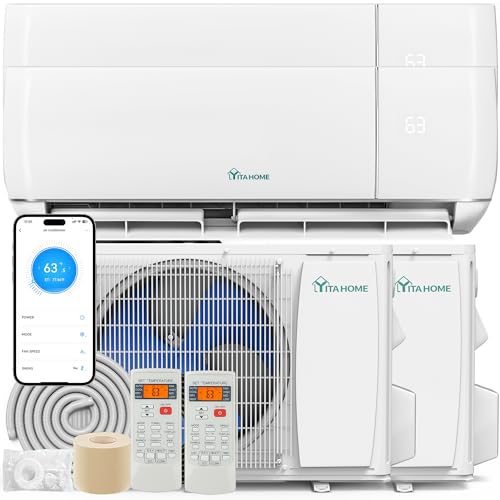
Dual Zone Split Unit Air Conditioner: The Complete Buyer’s Guide
Understand how two-zone ductless systems work, who they suit best, and what to check before you commit to a split unit with two indoor heads.
START LEARNINGWhy this guide matters: If you are researching a dual zone split unit air conditioner, you likely want independent temperature control in two rooms without tearing up walls for ductwork. This page explains the technology, compares it against alternatives, and walks you through sizing, efficiency, and installation considerations so you can decide with confidence.
What Is a Dual Zone Split Unit Air Conditioner?
A dual zone split unit air conditioner is a ductless mini-split system in which a single outdoor compressor connects to two separate indoor air handlers. Each indoor head sits in its own zone—typically two bedrooms, a living room plus a home office, or a main floor and a converted attic—and can be operated independently. That means one zone can be cooled while the other is switched off, or both zones can run at different setpoints.
Unlike a traditional central system that pushes conditioned air through a network of ducts, a dual zone split system delivers cooling directly into each room. This eliminates duct losses and gives you room-by-room control without a major renovation. For a broader view of how these systems fit into the wider category, see our guide to dual zone mini split heat pump and air conditioner options.
How the Two Zones Work Together
The outdoor unit houses the compressor and condenser, while each indoor unit contains an evaporator coil and a blower. Refrigerant lines run from the outdoor unit to each indoor head, and a shared communication cable keeps the system coordinated. Modern inverter-driven models vary compressor speed to match the combined demand of both zones, which is why they tend to hold temperatures steadily rather than cycling on and off abruptly.
Key Benefits of a Two-Zone Split System
Independent Comfort
Each zone has its own setpoint and remote. A south-facing bedroom can run cooler while a shaded office stays milder—no compromise between occupants.
No Ductwork Required
Installation needs only a small wall penetration for refrigerant lines and drainage, which suits older homes and additions where ducts are impractical.
Zoned Energy Use
You can condition only the rooms in use. Running one head instead of cooling an entire house is a meaningful efficiency advantage in partial-occupancy situations.
Quiet Operation
The noisy compressor sits outdoors. Indoor units are typically whisper-quiet at low fan speeds, which matters for bedrooms and home offices.
Heating Capability
Many dual zone systems are heat pumps, providing both cooling and heating. That makes them a year-round solution in moderate climates.
Cleaner Air Options
Most indoor heads include washable filters, and many add multi-stage filtration or ionization, which supports better indoor air quality in each zone.
Dual Zone Split vs. Other Cooling Approaches
Choosing between a dual zone split unit and alternatives depends on your layout, budget tier, and how you use the rooms. The table below compares the main options on practical dimensions rather than numeric pricing.
| Approach | Best For | Zoning Control | Installation Impact | Relative Tier |
|---|---|---|---|---|
| Dual zone split unit | Two rooms needing independent comfort, homes without ducts | Independent per zone | Minor wall penetrations; no ductwork | Mid-range to premium |
| Single zone mini-split | One open-plan area or a single room | Single zone only | One wall penetration | Entry-level to mid-range |
| Central AC with zoning | Whole-home cooling with existing ductwork | Zoned via dampers and thermostats | Requires ducts and possibly damper retrofits | Premium to top-tier |
| Two window AC units | Renters or short-term setups in two rooms | Independent but noisy | Window or wall openings required | Entry-level |
| Portable AC pair | Temporary or rental situations | Independent but limited | Window vent kits needed | Entry-level |
If you are comparing ducted and ductless approaches more broadly, our breakdown of ducted vs ductless AC explains where each format makes the most sense. For a whole-home perspective on zoned comfort, the dual zone HVAC system guide covers the ducted alternative.
Sizing a Dual Zone Split System Correctly
Sizing is the single most important decision in a two-zone installation. An undersized system struggles on peak days, while an oversized system short-cycles, dehumidifies poorly, and wears out faster. The right approach is a room-by-room load calculation rather than a blanket square-footage rule.
Factors That Affect Each Zone’s Load
- Floor area and ceiling height — larger and taller rooms need more capacity.
- Window area and orientation — west- and south-facing glass adds significant solar gain.
- Insulation and air sealing — leaky envelopes raise the effective load.
- Occupancy and appliance heat — kitchens, home gyms, and media rooms run hotter.
- Climate zone — design temperatures determine peak demand.
A qualified installer will typically perform a Manual J–style load calculation for each zone. If you want to understand the methodology before talking to contractors, our how to size an air conditioner article walks through the process, and the BTU calculator by room size gives you a starting estimate.
Efficiency Ratings and What They Mean for Two Zones
Ductless systems are rated with SEER2 (cooling) and HSPF2 (heating) under current DOE standards. Because a dual zone system modulates between one and two active heads, real-world efficiency depends heavily on how you operate it. Running both zones at moderate setpoints is usually more efficient than blasting one zone and leaving the other off for long stretches, since inverter compressors prefer steady partial loads.
For a full explanation of the metrics, see what is SEER rating and our overview of SEER vs SEER2 DOE standards. If efficiency is a priority, the highest SEER air conditioner roundup highlights models at the top of the range.
Market Tiers for Dual Zone Split Systems
Dual zone systems span a wide range of build quality and feature sets. Instead of quoting figures, the table below groups typical offerings by market tier so you can match expectations to your goals.
| Tier | Typical Characteristics | Best For |
|---|---|---|
| Entry-level | Single-stage or basic inverter compressors, essential filtration, simple remotes, standard warranties. | Guest rooms, seasonal use, straightforward two-room setups. |
| Mid-range | Full inverter modulation, Wi-Fi control, improved filtration, quieter indoor units, better cold-climate heating. | Primary bedrooms and living spaces used daily year-round. |
| Premium | High-efficiency inverter systems, advanced air purification, very low indoor noise, smart-home integration, extended warranties. | Whole-home comfort where two zones are the core living areas. |
| Top-tier | Flagship efficiency, multi-stage filtration, enhanced cold-climate performance, premium build materials and controls. | High-performance homes, off-grid or extreme-climate installations, long-term ownership. |
Installation Considerations for Two Zones
A dual zone installation is more involved than a single-zone setup because two refrigerant line sets, two drain paths, and two indoor mounting locations must be planned together. Key decisions include:
- Outdoor unit placement — needs clearance, drainage, and a path for two line sets.
- Indoor head locations — high on a wall, away from obstructions, with supply air not blowing directly onto occupants.
- Line set routing — minimize length and bends; longer runs affect capacity and require proper charge adjustment.
- Condensate management — gravity drains where possible; condensate pumps where slope is insufficient.
- Electrical — dedicated circuits sized to the outdoor unit; verify panel capacity before work begins.
- Permits — many jurisdictions require a permit for refrigerant work and electrical connections.
If you are weighing DIY versus professional installation, our DIY mini split air conditioner installation guide explains what is realistically achievable and where licensed help is essential. For electrical questions, the do I need an electrician for AC article covers panel and circuit checks.
Maintenance for a Two-Zone System
Because there are two indoor heads, maintenance doubles on the indoor side. A simple routine keeps both zones performing:
- Clean or wash indoor filters every two to four weeks during heavy use.
- Inspect and clear condensate drains each season to prevent backups.
- Keep outdoor coils free of leaves and debris; rinse gently when needed.
- Schedule professional service annually to check refrigerant charge and electrical connections.
- Verify both remotes and any Wi-Fi schedules are functioning after seasonal transitions.
For a full seasonal checklist, see our seasonal AC checklist, and for filter guidance, the how to clean AC filter walkthrough is a good starting point.
Who Should Choose a Dual Zone Split Unit?
A dual zone split unit is a strong fit when two rooms need independent comfort and ductwork is absent, impractical, or undesirable. Typical scenarios include:
- Two bedrooms with different occupancy schedules or temperature preferences.
- A living area plus a home office that is used during work hours only.
- A main house plus a finished attic, basement, or addition.
- Older homes where retrofitting ducts would be disruptive or costly in effort.
- Renters or homeowners who want a reversible heat pump for year-round use.
If your cooling needs extend to three or more rooms, a multi-zone system may be the better path. Our ductless air conditioning systems multi-zone overview explains how the category scales.
Frequently Asked Questions
What is a dual zone split unit air conditioner?
A ductless system with one outdoor compressor connected to two separate indoor air handlers. Each indoor unit cools its own zone independently, allowing different rooms to be set to different temperatures.
How many square feet can a dual zone split system cool?
Coverage depends on the capacity of each indoor head and the outdoor unit. A typical dual zone system comfortably cools two rooms or zones totaling roughly 600 to 1,000 square feet, but proper sizing requires a room-by-room load calculation.
Can a dual zone split system heat as well as cool?
Many dual zone split systems are heat pumps, so they both cool and heat. In heating mode they reverse the refrigerant cycle to move heat from the outdoor air into your rooms, making them a year-round solution in moderate climates.
Is a dual zone split unit more efficient than window ACs?
Generally yes. Ductless mini-splits use inverter compressors and variable-speed fans that modulate output to match demand. This typically delivers more consistent comfort and better energy efficiency than multiple window units, especially across two rooms.
Do both zones have to run at the same time?
No. Each indoor head operates independently. You can run one zone while the other is off, or run both at different setpoints. Inverter systems adjust compressor speed to match the combined demand.
Ready to Compare Dual Zone Options?
Review our curated selection of dual zone split unit air conditioners below. Each listing links to detailed product information so you can compare features, efficiency, and zone capacity before deciding.
View Recommended ModelsFinal Thoughts
A dual zone split unit air conditioner is a practical, efficient way to bring independent comfort to two rooms without ductwork. The keys to a successful installation are accurate room-by-room sizing, careful placement of both indoor heads, and selecting a tier that matches how intensively you will use the system. If you take those steps, a two-zone ductless setup can deliver quiet, consistent comfort for years.
For a broader look at the category, explore our guides to dual zone mini split heat pump and air conditioner systems, ductless air conditioning systems, and dual zone HVAC systems to see how ducted and ductless zoning compare.