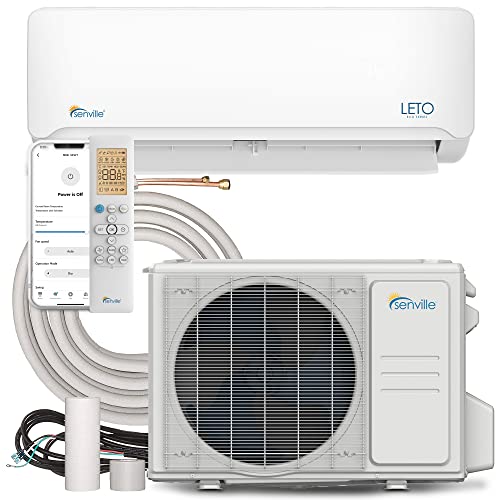
Ductless Heat Pump and Air Conditioner: The Complete Guide
Discover how a single ductless system delivers efficient cooling in summer and reliable heating in winter. Learn about system types, sizing, efficiency ratings, installation, and maintenance so you can choose the right solution with confidence.
Start LearningWhy this guide matters: A ductless heat pump and air conditioner is one of the most versatile comfort systems available today. Unlike a traditional air conditioner, it can reverse its operation to heat your home in cold weather, all while avoiding the energy losses associated with ductwork. Whether you are researching for a new installation or replacing an aging system, this guide provides the complete picture so you can make a well-informed decision.
What Is a Ductless Heat Pump and Air Conditioner?
A ductless heat pump and air conditioner — commonly called a mini-split system — pairs an outdoor compressor unit with one or more indoor air-handling units. The two are connected by a small conduit that carries refrigerant lines, power, and condensate drainage through a hole in the wall, typically only about three inches wide. No ductwork is required, which makes this system ideal for homes without existing ducts, additions, converted spaces, and older properties where retrofitting ducts would be disruptive.
In cooling mode, the system absorbs heat from inside your rooms and releases it outdoors. In heating mode, the refrigerant cycle reverses and the system extracts heat from outdoor air — even cold air contains usable heat energy — and transfers it inside. This dual capability is what distinguishes a heat pump from a cooling-only air conditioner. If you are exploring the broader category of systems that work without ductwork, our overview of ductless solutions provides useful context before diving into the specifics.
Types of Ductless Heat Pump Systems
Ductless systems are available in several configurations. The right choice depends on the number of rooms you want to condition, the layout of your home, and how independently you want to control temperatures in different zones.
Single-Zone Mini-Split
One indoor unit paired with one outdoor compressor. The most straightforward configuration, ideal for a single room, a studio, a converted attic, or a home office. Entry-level in complexity and installation.
Multi-Zone Ductless System
One outdoor compressor connected to two to eight indoor units. Each indoor unit operates independently, giving you room-by-room temperature control. A mid-range to high-end tier choice for whole-home comfort.
Ceiling Cassette
An indoor unit recessed into the ceiling that distributes air in multiple directions. A premium option that blends into the room design and delivers even air distribution. Well-suited to larger open spaces.
Floor-Mounted Unit
Installed low on the wall or floor, this configuration is useful in rooms with limited upper-wall space, such as under windows or sloped ceilings. Available in mid-range and premium tiers.
Ducted Mini-Split
An indoor unit that connects to a short run of ductwork to serve multiple adjacent spaces or conceal the air handler. A top-tier configuration that balances discretion with broader coverage.
Compact / Wall-Mounted
The most common indoor style. Mounted high on the wall, it is compact, quiet, and available across entry-level through premium tiers. A solid choice for most residential rooms.
Key Benefits of Ductless Heat Pump and Air Conditioner Systems
Understanding the advantages helps you evaluate whether a ductless system aligns with your comfort goals, your home's characteristics, and your long-term efficiency priorities.
- Year-round comfort from one system: Cooling and heating capabilities are combined in a single unit, simplifying equipment selection and reducing the number of separate systems in your home.
- No ductwork required: Eliminates the energy losses that can occur through leaky or poorly insulated ducts, and avoids the disruption of retrofitting ductwork into an existing structure.
- Zone-by-zone control: Multi-zone configurations let you set different temperatures in different rooms, so you can condition only the spaces that are occupied.
- High efficiency: Many ductless heat pumps achieve high SEER2 and HSPF2 ratings, and inverter-driven compressors modulate output smoothly to match the load rather than cycling on and off.
- Quiet operation: Because the compressor is located outdoors, indoor noise levels are notably low — an important consideration for bedrooms and home offices.
- Flexible installation: The small conduit requirement makes ductless systems suitable for older homes, additions, garage conversions, and spaces where ductwork is impractical.
Ductless Heat Pump vs. Other System Types
Comparing system categories helps clarify where a ductless heat pump and air conditioner fits in the broader landscape. The table below uses quality-tier descriptors rather than any numeric indicators, so the comparison remains stable over time.
| System Category | Heating Capability | Ductwork | Zoning Flexibility | Typical Tier | Best For |
|---|---|---|---|---|---|
| Ductless Heat Pump & AC | Yes — reverse-cycle heating | None | High (multi-zone) | Mid-range to premium | Homes without ducts, additions, room-by-room comfort |
| Central Air Conditioner | Cooling only (heat pump variant available) | Required | Moderate (with zoning dampers) | Mid-range to high-end | Whole-home cooling with existing ductwork |
| Window Air Conditioner | Cooling only (some with heat strips) | None | Single room | Entry-level | Single-room cooling on a simple installation |
| Portable Air Conditioner | Cooling only (some with heat mode) | None | Single room, movable | Entry-level to mid-range | Temporary or rental cooling needs |
| Ducted Mini-Split | Yes — reverse-cycle heating | Short duct runs | Moderate to high | High-end to top-tier | Concealed installation serving adjacent rooms |
For a deeper look at how ducted and ductless approaches differ in practice, our comparison of ducted versus ductless AC covers installation considerations, efficiency trade-offs, and maintenance implications.
How to Size a Ductless Heat Pump for Your Space
Correct sizing is the single most important factor in system satisfaction. An undersized unit will struggle to reach the set temperature during extreme weather, while an oversized unit will short-cycle, which reduces efficiency, unevenly distributes air, and can shorten equipment life. A proper load calculation — often referred to as a Manual J calculation — accounts for room dimensions, insulation, window area and orientation, air infiltration, occupancy, and local climate.
As a rough starting point, many residential rooms are matched to a capacity range based on square footage, but this should always be verified by a professional load calculation. Oversizing is a common mistake; a unit that is slightly conservative in capacity usually performs better than one that is oversized. If you want to understand the sizing principles in more detail, our guide on how to size an air conditioner walks through the variables that matter most.
Understanding Efficiency Ratings
Ductless heat pumps are evaluated with two primary metrics. SEER2 measures cooling efficiency over a representative season, and HSPF2 measures heating efficiency. Higher ratings indicate greater efficiency, but the practical benefit depends on your climate, your usage patterns, and how well the system is sized and installed. Inverter-driven compressors are particularly relevant here: rather than running at full power and shutting off, they modulate speed to maintain the setpoint with minimal temperature swings.
It is also worth noting that ductless systems avoid the duct losses that can affect central systems, so their effective efficiency in the conditioned space can be notably higher than the rating alone suggests. Our explanation of DOE efficiency standards provides additional context on how ratings are structured and updated.
Installation Process: What to Expect
A professional ductless heat pump installation typically follows a structured sequence. Understanding the steps helps you ask the right questions and set realistic expectations for timeline and disruption.
- Site assessment and load calculation: A technician evaluates the space, identifies the best indoor and outdoor unit locations, and performs a load calculation to confirm capacity.
- Mounting the indoor unit: A mounting plate is secured to the wall, and a small hole is drilled for the conduit. Placement is chosen to optimize airflow and minimize obstructions.
- Positioning the outdoor unit: The compressor is placed on a stable pad or bracket with adequate clearance for airflow and service access.
- Running the line set: Refrigerant lines, communication wiring, and condensate drainage are routed through the conduit and connected to both units.
- Vacuum and charge: The system is evacuated to remove moisture and non-condensable gases, then charged with refrigerant to the manufacturer's specification.
- Commissioning and testing: The installer verifies operation in both cooling and heating modes, checks for leaks, confirms condensate drainage, and reviews controls with the homeowner.
For a broader view of what the installation journey involves, including permitting and contractor selection, see our ductless heat pump installation guide. If you are considering a DIY approach, our resource on DIY mini-split installation outlines the skills, tools, and regulatory considerations involved.
Maintenance Essentials
Routine maintenance protects efficiency, indoor air quality, and equipment longevity. Most tasks are simple and can be performed by the homeowner, while a few benefit from professional attention.
Filter Care
Clean or replace the indoor unit filter every two to four weeks during heavy use. A clogged filter restricts airflow, reduces efficiency, and can contribute to coil freezing.
Coil and Blower Cleaning
Inspect the indoor coil and blower wheel periodically. Dust and biological growth can accumulate over time; annual cleaning helps maintain airflow and air quality.
Condensate Drain
Verify that the condensate drain line flows freely. A blocked drain can cause water backup and indoor unit damage. A periodic flush with water or a mild cleaning solution is helpful.
Outdoor Unit Clearance
Keep the area around the outdoor unit free of leaves, debris, and obstructions. Adequate airflow is essential for efficient heat exchange in both cooling and heating modes.
Professional Service
Schedule an annual professional check that includes refrigerant level verification, electrical connection inspection, and a thorough performance test in both modes.
Seasonal Checks
Before each cooling and heating season, confirm that the system starts promptly, reaches temperature appropriately, and produces no unusual noises or odors.
Frequently Asked Questions
Can a ductless heat pump really heat a home in cold weather?
How many indoor units do I need?
Is a ductless heat pump quieter than a window air conditioner?
Do ductless systems require special electrical work?
How long does a ductless heat pump last?
Ready to Explore Ductless Heat Pump Options?
You have learned how these systems work, how to size them, what installation involves, and how to maintain them. The next step is to explore available models and compare features that matter for your home.
Explore Options Below