
Electric Air Cond Compressor: The Complete Guide
Understand how the compressor powers your air conditioner, compare compressor technologies, and learn how to evaluate this critical component before choosing a new cooling system.
Why this guide matters: The electric air cond compressor is the single most important mechanical component in any air conditioning system. It is the component that moves refrigerant, creates the pressure differential needed for cooling, and consumes the largest share of the system's electrical energy. Understanding it helps you make a smarter, longer-lasting purchase decision.
What Is an Electric Air Cond Compressor?
An electric air cond compressor is an electrically driven pump that sits inside the outdoor unit of a split system, inside the chassis of a window or portable unit, or at the heart of a packaged system. Its job is simple to describe but demanding in practice: it draws in low-pressure refrigerant gas from the evaporator, compresses it into a high-pressure, high-temperature gas, and pushes it toward the condenser coil where heat is released to the outside air.
Without a working compressor, refrigerant would circulate without the pressure difference required to absorb heat indoors and reject it outdoors. In practical terms, the compressor is what turns a fan and a coil into an actual cooling machine. This is why compressor quality is one of the strongest indicators of how durable and efficient an air conditioner will be over its service life.
The compressor is also the largest single electrical load in the system. Its start-up behavior, running speed, and internal design directly affect energy use, noise levels, and how well the unit handles partial-load conditions such as mild evenings when full cooling capacity is not needed. If you are exploring how the full system fits together, the broader topic of electric air conditioning provides useful context on the electrical side of cooling equipment.
How the Compressor Fits Into the Cooling Cycle
Air conditioning relies on a continuous refrigerant cycle with four main stages. The compressor drives the entire loop:
- Compression: The compressor receives low-pressure, low-temperature gas from the indoor evaporator coil and compresses it into a high-pressure, high-temperature gas.
- Condensation: The hot gas travels to the outdoor condenser coil, where airflow removes heat and the refrigerant condenses into a liquid.
- Expansion: The liquid passes through an expansion device, dropping sharply in pressure and temperature before entering the evaporator.
- Evaporation: Inside the evaporator, the cold refrigerant absorbs heat from indoor air, turning back into a gas and returning to the compressor to repeat the cycle.
Because the compressor controls the pressure ratio between the high and low sides of the circuit, any weakness in the compressor — worn valves, degraded internal seals, or a failing motor winding — shows up quickly as reduced cooling performance. In ductless systems, this cycle works the same way, which is why compressor quality matters just as much in ductless mini-split equipment as it does in a central system.
Types of Electric Air Cond Compressors
Several compressor technologies are used in residential and light commercial cooling equipment. Each has a distinct internal mechanism, and each tends to appear in a different segment of the market. The descriptors below describe relative market position and typical application rather than any specific figure.
Reciprocating Compressor
A piston-driven design that compresses refrigerant through a back-and-forth motion. It is a mature, well-understood technology with a relatively simple mechanism, but it is generally less efficient and noisier than newer designs.
Rotary Compressor
A compact design using a rotating roller or vane to compress refrigerant. Rotary compressors are smaller and lighter than reciprocating units, run smoothly, and are well suited to the space constraints of window and portable air conditioners.
Scroll Compressor
Two interlocking spiral scrolls compress refrigerant continuously with very few moving parts and no reciprocating valves. Scroll compressors are known for quiet operation, strong reliability, and high efficiency, which is why they dominate mid-range and premium central and ductless systems.
Inverter-Driven Compressor
Rather than switching on and off at full speed, an inverter compressor varies its rotational speed to match the cooling demand. This variable-speed operation reduces temperature swings, lowers start-up current, and improves part-load efficiency — the condition in which most systems actually operate.
In practice, these categories overlap. A modern premium unit may combine a scroll compressor with inverter drive, while a balanced-tier window unit may use a rotary compressor with a fixed-speed motor. When comparing systems, it helps to look at both the mechanical design and the drive method together. The energy-efficient split air conditioner category is a good example of how these technologies are packaged for residential use.
Compressor Comparison at a Glance
The table below summarizes how the main compressor types differ in practical terms. Use it as a quick reference when reading product specifications.
| Compressor Type | Market Tier | Efficiency Character | Noise Character | Best For |
|---|---|---|---|---|
| Reciprocating | Entry-level | Moderate; simple fixed-speed operation | Noticeably louder | Older or basic cooling setups |
| Rotary | Balanced | Good; compact and smooth-running | Quiet for its class | Window, portable, and small split units |
| Scroll | High-end | High; continuous compression with few parts | Very quiet | Central AC, premium mini-splits |
| Inverter Scroll / Rotary | Top-tier | Highest part-load efficiency | Quietest in steady operation | Modern high-efficiency homes |
Reading tip: A higher-tier compressor does not automatically make a system better. Matching compressor capacity and technology to the actual cooling load of the space matters more than the label alone. An oversized top-tier unit can perform worse than a correctly sized balanced-tier unit.
What Determines Compressor Efficiency
Compressor efficiency is influenced by several interacting factors. Understanding them helps you read efficiency ratings with more confidence:
- Drive method: Fixed-speed compressors run at a single speed and cycle on and off. Inverter compressors modulate speed, which typically reduces energy waste during partial-load conditions.
- Internal design: Scroll compressors have fewer moving parts and continuous compression, which generally reduces internal losses compared with reciprocating designs.
- Refrigerant type: The refrigerant's thermodynamic properties affect how much work the compressor must do to achieve a given cooling effect. Newer refrigerants are selected partly for their efficiency and environmental profile.
- System matching: The compressor must be matched to the coil size, refrigerant charge, and airflow of the full system. A mismatch erodes efficiency regardless of compressor quality.
- Installation quality: Correct line-set length, proper evacuation, and accurate refrigerant charging are decisive. Even a top-tier compressor underperforms if the installation is flawed.
Efficiency ratings such as SEER2 translate these factors into a comparable number. If you want to understand how those ratings are structured, the guide to ENERGY STAR certified AC units explains how certified equipment is tested and categorized.
How to Evaluate a Compressor Before You Buy
When comparing air conditioning systems, the compressor specification is one of the few details worth checking directly. The checklist below covers the points that matter most:
- Confirm the compressor type (rotary, scroll, or reciprocating) and whether it is inverter-driven.
- Check that the system's cooling capacity matches the calculated load for your space, not just the room's square footage.
- Look at the efficiency rating of the complete system rather than the compressor in isolation.
- Review the warranty terms for the compressor specifically, as coverage often differs from the rest of the unit.
- Consider noise expectations, especially if the outdoor unit sits near a bedroom or shared wall.
- Verify that the unit is designed for the refrigerant and voltage available in your region.
- Ask about part-load performance if your climate has mild seasons, since that is where inverter compressors show their advantage.
For homes without existing ductwork, the compressor decision is often made within a ductless system purchase. The overview of energy-efficient ductless air conditioner options shows how compressor technology and installation format are packaged together. If you are weighing ducted against ductless formats generally, the comparison of ductless vs ducted AC is a useful companion read.
Maintaining the Compressor for Long Service Life
Compressors rarely fail without warning. Most failures are preceded by conditions that degrade the component over months or years. Regular maintenance addresses those conditions directly:
- Keep coils clean: Dirty condenser coils raise head pressure, forcing the compressor to work harder. Routine coil cleaning is one of the highest-value maintenance tasks.
- Maintain correct refrigerant charge: Undercharging and overcharging both stress the compressor. Only a qualified technician should adjust charge levels.
- Replace air filters on schedule: Restricted indoor airflow reduces evaporator performance and can lead to frozen coils, which in turn stresses the compressor on restart.
- Inspect electrical connections: Loose or corroded terminals cause voltage drops and overheating at the compressor terminals.
- Watch for short cycling: Frequent on-off cycling wears out contactors and compressor motors faster than steady operation.
- Schedule professional check-ups: An annual inspection catches small issues — weak capacitors, low charge, worn contactors — before they damage the compressor.
Longevity note: A compressor that is correctly sized, properly installed, and maintained on schedule commonly lasts as long as the outdoor unit itself. The most common causes of premature failure are installation errors and neglected refrigerant charge, not manufacturing defects.
Signs of a Failing Compressor
Recognizing early warning signs helps you act before secondary damage occurs. Watch for these symptoms:
- Warm air from the vents while the system is running, often indicating the compressor is not building pressure.
- Loud grinding, clunking, or screeching from the outdoor unit, which can point to internal mechanical wear.
- Frequent circuit breaker trips when the system starts, sometimes caused by a failing compressor motor or start components.
- Short cycling, where the compressor starts and stops repeatedly in a short window.
- Refrigerant leaks near the compressor area, which can indicate seal or housing degradation.
If several of these signs appear at once, professional diagnosis is the right next step. Compressor replacement is a major repair, and confirming the cause prevents unnecessary parts replacement. For broader system-level troubleshooting context, the energy efficiency HVAC resource explains how compressor performance interacts with the rest of the system.
Frequently Asked Questions
What is an electric air cond compressor and what does it do?
An electric air cond compressor is the heart of any air conditioning system. It is an electrically driven pump that circulates refrigerant through the cooling circuit, compressing low-pressure gas into high-pressure gas so the system can release heat outdoors and deliver cooled air indoors.
Which compressor type is best for residential air conditioners?
For most residential systems, rotary compressors are common in window and portable units, while scroll compressors dominate mid-range and premium central and ductless systems. Reciprocating compressors are typically found in older or entry-level equipment. Inverter-driven scroll and rotary compressors are generally the most efficient choice for modern homes.
How long does an AC compressor typically last?
A well-maintained electric air cond compressor commonly lasts between 10 and 15 years, often matching the expected service life of the entire outdoor unit. Proper refrigerant charge, clean coils, and regular professional inspections are the biggest factors in longevity.
What are the signs of a failing AC compressor?
Common warning signs include the system blowing warm air, loud grinding or clunking noises from the outdoor unit, frequent breaker trips, the compressor short-cycling, and refrigerant leaks. If several of these appear together, a professional diagnostic is recommended before the issue damages other components.
Is an inverter compressor always the better choice?
Not always. Inverter compressors excel at part-load efficiency and temperature stability, which makes them a strong fit for homes that run cooling for long stretches or in mild-to-moderate climates. For a space that is only cooled occasionally for short periods, a well-sized fixed-speed unit can still be a sensible choice within its tier. The right decision depends on usage patterns, climate, and system sizing.
Ready to Choose the Right Cooling System?
Now that you understand the electric air cond compressor, you can evaluate systems with more confidence. Compare compressor types, system efficiency ratings, and installation formats side by side before making your final decision. Our product recommendations below are organized to help you narrow down the options.
Recommended Air Conditioners with Electric Air Cond Compressor
⚠️ AFFILIATE DISCLOSURE: This website contains affiliate links. As an Amazon Associate, we earn from qualifying purchases. If you make a purchase through these links, we may receive a small commission at no additional cost to you. Read our full affiliate policy.

Universal AC Electric Compressor 20cc/r Air Conditioner Compressor for 12V | 12V Auto Compressor for R134a
Check price on Amazon
ACTECMAX Universal AC Electric Compressor 20cc/r Air Conditioner Compressor for 12V Auto Compressor for R134a, with Straight Fittings
Check price on Amazon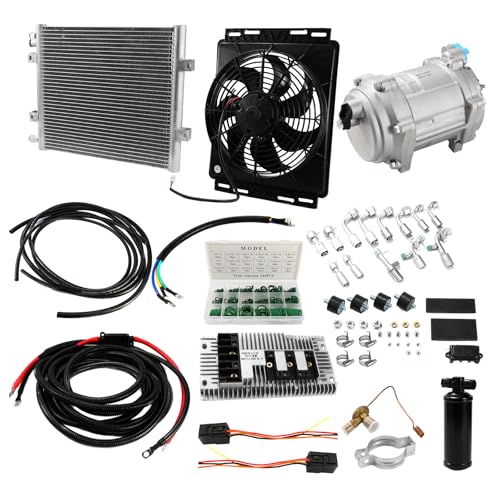
ZFQPTO Automobile A/C Air Conditioner Electric Compressor 12V Fits for Classic Cars, Trucks, RVs, Farm Vehicles, Excavators, Pickup Trucks, Construction Vehicles, Vans, etc.
Check price on Amazon
NEKPOKKA 12V automobile air conditioner electric compressor, applicable to refitting automobile air conditioning system, no oil consumption air conditioning compressor kit 12V DC air conditioning unit
Check price on Amazon
DEWALT 60 Gal. 175 PSI Stationary Electric Air Compressor. 14.6 SCFM at 90 PSI DXCM603.COM
Check price on Amazon
CARSUN AC/DC Tire Inflator Portable Air Compressor, Dual Power for Home 110V AC and Car 12V DC Air Pump with Pressure Gauge, Auto Shutoff, Tire Pump for Car Motorcycle Bicycle and Other Inflatables
Check price on Amazon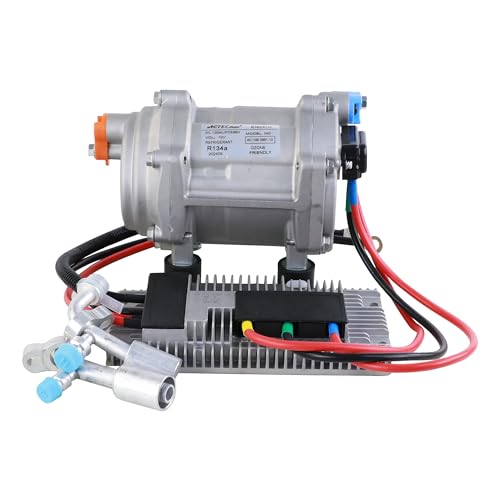
ACTECMAX Universal AC Electric Compressor 20cc/r Air Conditioner Compressor for 12V Auto Compressor for R134a, with 90 Degree Fittings
Check price on Amazon