
Energy Efficiency of Portable Air Conditioners
Understand how portable ACs consume electricity, which efficiency ratings actually matter, and the practical steps that lower energy use without sacrificing comfort.
EXPLORE THE GUIDEWhy this page exists: Portable air conditioners are convenient, but their energy performance is often misunderstood. This guide explains the mechanics behind portable AC efficiency, how to read the ratings, and how to choose and operate a unit that cools effectively while keeping electricity use reasonable.
How Portable AC Energy Efficiency Works
A portable air conditioner is a self-contained cooling system. It draws indoor air across an evaporator coil, delivers cooled air back into the room, and rejects heat through an exhaust hose routed out a window or wall opening. The compressor, fans, and condensate management all draw electricity, which is why efficiency depends on several interacting components rather than a single number.
Unlike central systems or ductless mini-split units, a portable AC does not distribute cool air through ductwork. That makes installation flexible, but it also introduces a structural efficiency challenge: the unit sits inside the conditioned space and must exhaust hot air outside. The way it handles that exhaust has a major effect on real-world energy use.
Efficiency in portable ACs is best understood in three layers: the compressor's cooling performance, the fan and airflow design, and the installation context including hose routing, window sealing, and room load. A top-tier model installed poorly can consume more energy than a mid-tier model installed correctly.
Compressor efficiency
Rotary and inverter compressors convert electricity into cooling more effectively than older reciprocating designs, especially at part load.
Airflow design
Well-designed fan systems move more air per watt, improving heat exchange at the evaporator and condenser coils.
Installation quality
Sealed window kits, short exhaust runs, and proper hose insulation reduce the cooling loss that forces longer run times.
Portable units are typically rated in British thermal units (BTU) for cooling capacity and in watts for power draw. The relationship between those two figures is the foundation of efficiency, which brings us to the ratings themselves.
EER, CEER, and Efficiency Ratings Explained
The energy efficiency ratio (EER) divides cooling output in BTU by electrical input in watts. A higher EER means more cooling per unit of electricity. Portable air conditioners historically used EER, but the U.S. Department of Energy later introduced the combined energy efficiency ratio (CEER) for portable units, which accounts for standby power and part-load behavior in a more realistic way.
For practical comparison, CEER is the more meaningful number for portable ACs sold in the United States. A basic single-hose model may land in the 6.5 to 7.5 range, while a well-engineered dual-hose or inverter unit can reach 8.5 to 10 or higher. The difference sounds small in absolute terms, but over a full cooling season it translates into noticeably different electricity use.
| Tier | Typical CEER Range | What It Means in Practice |
|---|---|---|
| Entry-level | 6.5 – 7.5 | Basic single-hose cooling; adequate for short, occasional use in small rooms. |
| Mid-range | 7.5 – 8.5 | Better airflow and sealing; suitable for regular seasonal use in bedrooms and offices. |
| High-end tier | 8.5 – 9.5 | Dual-hose or inverter designs; stronger efficiency during long run times. |
| Top-tier / ENERGY STAR | 9.5 and above | Best-in-class efficiency, optimized compressors, and superior part-load behavior. |
It is also worth noting that efficiency ratings are tested under standardized conditions. Real-world performance depends on ambient temperature, humidity, window exposure, and how well the exhaust is sealed. A certified portable air conditioner with strong efficiency credentials still needs proper installation to deliver its rated performance.
Single-Hose vs Dual-Hose Efficiency
The hose configuration is one of the most consequential design choices in portable AC efficiency. A single-hose unit pulls indoor air, uses it to cool the condenser, and exhausts that air outside. Because air is being pushed out of the room, replacement air must come in from somewhere, often through gaps around doors and windows. That creates negative pressure and pulls warm outdoor air into the space, which the AC then has to cool.
A dual-hose unit separates the two air paths: one hose brings outdoor air in to cool the condenser, and the second hose sends it back out. The room's conditioned air stays in the room, so the unit avoids the negative-pressure penalty. In practice, dual-hose portable ACs are more efficient and maintain cooling more consistently, especially in tightly sealed rooms.
Single-hose
Simpler and lighter, but creates negative pressure that draws in warm air. Efficiency suffers in sealed rooms and during long run times.
Dual-hose
Balanced airflow with separate intake and exhaust. Better real-world efficiency and more stable room temperature, though slightly bulkier.
Hose insulation
Insulated exhaust hoses reduce heat gain along the run. Short, straight, well-sealed hose paths improve efficiency on either configuration.
If you are weighing portable cooling against a permanent solution, the comparison between ductless and ducted systems is useful, but within the portable category itself, dual-hose designs are the efficiency-forward choice for rooms that will be cooled for hours at a time.
Sizing and BTU: The Efficiency Foundation
An oversized portable AC cools the room quickly but cycles on and off frequently, which wastes energy and removes humidity less effectively. An undersized unit runs continuously without reaching the set temperature, which also wastes energy. Correct sizing is the single most reliable efficiency improvement available to any buyer.
As a general starting point, portable AC capacity is matched to room area and heat load:
| Room Size | Typical Cooling Capacity | Best For |
|---|---|---|
| Up to 150 sq ft | 5,000 – 6,000 BTU | Small bedrooms, home offices, dorm rooms |
| 150 – 250 sq ft | 8,000 – 10,000 BTU | Standard bedrooms, small living areas |
| 250 – 400 sq ft | 12,000 – 14,000 BTU | Living rooms, open-plan studios |
| 400 sq ft and above | 14,000 BTU+ or multiple units | Large rooms, lofts, multi-zone setups |
Heat load adjustments matter as much as square footage. South-facing windows, kitchen appliances, occupied rooms with electronics, and poor insulation all increase the required capacity. A small, high-efficiency portable room air conditioner that is correctly sized will typically outperform a larger unit that is oversized for the space.
Inverter Compressors and Variable-Speed Operation
Traditional portable AC compressors run at a fixed speed: they are either fully on or fully off. Inverter compressors adjust speed continuously, ramping down once the room approaches the set temperature and ramping up when load increases. This variable-speed behavior reduces the energy spikes associated with frequent compressor starts and improves part-load efficiency, which is exactly how portable ACs spend most of their operating hours.
Inverter portable ACs also tend to maintain temperature more steadily, reduce humidity more consistently, and operate with less noise variation. The efficiency advantage is most pronounced in rooms with moderate, stable loads, such as bedrooms used overnight, where the compressor can settle into a low, efficient speed rather than cycling on and off.
The same principle appears across the broader HVAC market, and it is one reason energy-efficient HVAC systems increasingly favor variable-speed designs. For portable units, inverter technology is a clear efficiency differentiator in the mid-range and high-end tiers.
ENERGY STAR Certified Portable ACs
ENERGY STAR certification indicates that a portable AC meets or exceeds efficiency thresholds set by the U.S. Environmental Protection Agency. Certified models are independently verified, and the certification is a reliable shortcut when comparing products across brands with otherwise similar specifications.
Choosing an ENERGY STAR air conditioner is not a guarantee of superior real-world performance, but it does confirm that the unit has met a defined efficiency standard. Combined with correct sizing, dual-hose design, and inverter operation, certification becomes part of a coherent efficiency strategy rather than a marketing label.
Operating Habits That Improve Efficiency
Even a high-end portable AC can waste energy if it is operated carelessly. The following habits consistently improve efficiency in real homes:
- Seal the window kit properly. Gaps around the exhaust panel are the most common source of cooling loss. Use the manufacturer's panel, foam seals, or a purpose-built window seal to close the gap completely.
- Keep the exhaust hose short and straight. Every bend and extra foot of hose adds resistance and heat gain. Route the hose as directly as possible to the window.
- Insulate the exhaust hose. A hose sleeve reduces heat radiated back into the room, which lowers the cooling load the unit must handle.
- Close doors and block heat sources. Cooling a single closed room is far more efficient than trying to cool an open floor plan. Close blinds during peak sun and avoid running heat-generating appliances nearby.
- Use timers and sleep modes. Schedule cooling for occupied hours and let the unit ramp down overnight. Many top-tier models include programmable timers and eco modes.
- Maintain the filters and coils. Clogged filters reduce airflow and force the compressor to work harder. Clean or replace filters regularly, especially during heavy-use months.
- Drain condensate correctly. Excess moisture reduces cooling performance. Use continuous drain options where available and keep the water tank from overflowing.
- Pair with a ceiling fan. Air movement improves perceived comfort at a higher thermostat setpoint, allowing the AC to run less. This strategy is well established in broader energy-saving tips for AC use.
Portable ACs vs Other Cooling Options
Portable ACs occupy a specific niche: they need no permanent installation, can move between rooms, and suit renters or homes without ductwork. Those advantages come with efficiency trade-offs compared with alternatives.
| Option | Relative Efficiency | Best For |
|---|---|---|
| Portable AC | Moderate; varies widely by design | Renters, temporary cooling, rooms without window support |
| Window AC | Generally higher than portable | Rooms with compatible windows and permanent installation |
| Ductless mini-split | High; best part-load performance | Long-term whole-room or multi-zone cooling |
| Central AC | High when ductwork is sealed and sized correctly | Whole-home cooling with existing ducts |
For a long-term single-room solution, a high-efficiency mini-split air conditioner usually outperforms a portable unit on efficiency and comfort. Portable ACs remain the right answer when installation flexibility is the priority, and within that category, selecting a dual-hose or inverter model narrows the efficiency gap considerably.
Frequently Asked Questions
Are portable air conditioners energy efficient?
Portable air conditioners are generally less efficient than window units and ductless mini-splits of comparable capacity. Efficiency varies widely by model, and units with higher CEER ratings, dual-hose designs, and inverter compressors perform noticeably better than basic single-hose models.
What is a good EER rating for a portable air conditioner?
A good EER or CEER rating for a portable AC is typically 8.0 or higher. Entry-level models often sit near 6.5 to 7.5, while top-tier and ENERGY STAR certified models reach 8.5 to 10 or above, delivering more cooling per unit of electricity.
Do dual-hose portable ACs use less energy than single-hose units?
Dual-hose portable ACs are generally more efficient in practice because they draw outdoor air for condenser cooling instead of pulling conditioned indoor air out of the room. This avoids the negative-pressure problem that makes single-hose units work harder.
How many watts does a portable air conditioner use?
Portable AC wattage typically ranges from about 700 watts for small 8,000 BTU models to around 1,500 watts for larger 14,000 BTU units. Inverter and high-efficiency models often use less power at part load, which matters for long run times.
Does a higher BTU always mean better cooling efficiency?
No. Oversized units cycle on and off frequently, which wastes energy and dehumidifies poorly. Matching capacity to the room's heat load is more important than choosing the highest BTU number available.
Can I improve portable AC efficiency without replacing the unit?
Yes. Sealing the window kit, insulating and shortening the exhaust hose, cleaning filters, closing doors, and using timers or sleep modes all improve efficiency with an existing unit.
Putting It All Together
Portable AC efficiency is the product of three decisions: choosing a unit with a strong CEER rating and efficient design, sizing it correctly for the room, and installing and operating it with care. Dual-hose and inverter models cost more in relative market terms than entry-level single-hose units, but they deliver better efficiency during the long run times that matter most. Certification programs such as ENERGY STAR provide a useful checkpoint, while window sealing and hose management determine how much of the rated efficiency actually reaches the room.
For buyers in the research stage, the practical sequence is straightforward: measure the room, estimate the heat load, shortlist dual-hose or inverter models with strong CEER figures, verify certification, and plan the installation carefully. The recommendations below follow that same logic and highlight portable air conditioners selected for their efficiency characteristics.
Recommended Energy-Efficient Portable Air Conditioners
⚠️ AFFILIATE DISCLOSURE: This website contains affiliate links. As an Amazon Associate, we earn from qualifying purchases. If you make a purchase through these links, we may receive a small commission at no additional cost to you. Read our full affiliate policy.

14,000 BTU Portable Air Conditioner Cools Up to 700 Sq.Ft, 3-IN-1 Energy Efficient Portable AC Unit with Remote Control & Installation Kits for Large Room, Office, Temporary Space
Check price on Amazon
SereneLife 14000 BTU Portable Inverter Air Conditioner, 115V Smart Cooling & Heating with WiFi, Energy Efficient, For Bedrooms, Living Spaces & Offices, 650 Sq Ft Coverage, (White)
Check price on Amazon
SereneLife Portable AC Unit 8000 BTU | Compact Room Air Conditioner with Dehumidifier & Fan | Energy Efficient 800W Low-Power Motor | Rolling Wheels, Remote, 24-Hour Timer | Window Mount Kit
Check price on Amazon
10,000BTU Energy Saving Portable Air Conditioners for Rooms up to 550 Sq Ft | Self-Evaporating Portable AC Unit with Remote Control&24H Timer, Cool/Dry/Fan/Sleep, LED Display&Installation Kits for Home
Check price on Amazon
Hisense 8,000 BTU DOE/SACC (10,000 ASHRAE) Portable Air Conditioner Dual Hose & Inverter, 350 Sq Ft, Wi-Fi, ConnectLife App Google & Alexa, 3 operating modes, Noise 42 dB HAP0825TWD (Renewed)
Check price on Amazon
ZAFRO Smart Inverter Portable Air Conditioners, 14000 BTU (10000 BTU SACC) Dual Hose Portable AC Unit with Energy Saving/Ultra Quiet(42dB)/Drainage-free Cooling/APP/Remote for Multi-Scenario Use
Check price on Amazon
BLACK+DECKER Portable Air Conditioner, 10,000 BTU, BPACT10WT, White | 5,500 BTU SACC for Rooms up to 450 Sq. Ft., 3-in-1 Portable AC, Fan and Dehum with Follow Me Remote Control
Check price on Amazon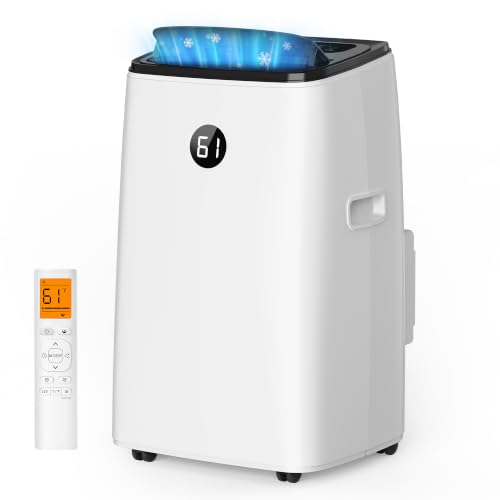
AGTANA 14000 BTU Portable Air Conditioner for Large Room up to 700 Sq. Ft, 3-in-1 Self-Evaporating AC with Fan & Dehumidifier, Floor Standing Portable AC Unit with Remote Control, Auto Swing, White
Check price on AmazonDisclaimer
Some of the content on this site uses AI assistance. Information is provided for educational purposes only. We are not responsible for any losses resulting from the use of this information. By using this site, you waive any right to bring legal claims against us arising from your use of the information provided. If you do not agree, please do not use this site. Read the full disclaimer.