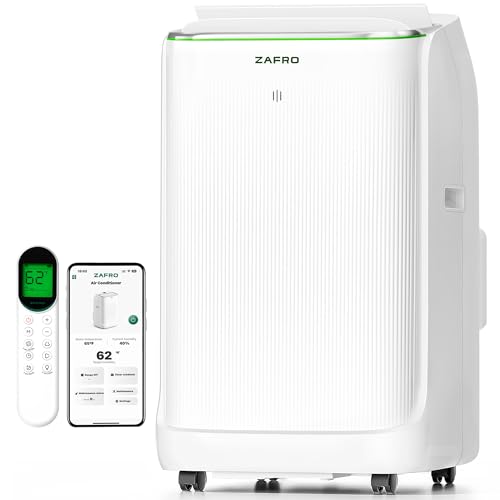
Energy Star Certified Portable Air Conditioner: The Complete Buyer's Guide
Everything you need to know about choosing an energy-efficient portable AC — from understanding the Energy Star certification and efficiency ratings to sizing, features, maintenance, and top-tier recommendations for your space.
View Top PicksA portable air conditioner offers a flexible cooling solution for rooms where installing a window unit or ducted system isn't practical. However, not all portable ACs are created equal — and that's where the Energy Star certification becomes a crucial benchmark. An Energy Star certified portable air conditioner has been independently tested to meet strict efficiency guidelines set by the U.S. Environmental Protection Agency (EPA), meaning it delivers the same cooling comfort while consuming less electricity than standard models.
If you're in the research phase and already know you want a portable unit, this guide will walk you through every consideration — from understanding how Energy Star certification works for portable ACs to matching BTU capacity with your room size, and finally to the features that separate entry-level units from top-tier models. By the end, you'll have the confidence to select the right energy-efficient portable air conditioner for your home or office.
What You'll Learn in This Guide
- What Does Energy Star Certified Mean?
- Why Energy Star Certification Matters
- Understanding Efficiency Ratings for Portable ACs
- Sizing Your Portable AC by Room and BTU
- Key Features of Premium Portable ACs
- Installation and Placement Tips
- Maintenance for Long-Term Efficiency
- Portable AC Tiers Compared
- Frequently Asked Questions
- Top Recommendations
1. What Does Energy Star Certified Mean for a Portable AC?
Energy Star is a voluntary labeling program administered by the EPA and the U.S. Department of Energy (DOE). Products that earn the Energy Star label have been certified to meet or exceed specific energy-efficiency specifications set by these agencies. For portable air conditioners, the certification process evaluates how efficiently the unit converts electricity into cooling output.
It's important to understand that Energy Star certification for portable ACs is based on a specific efficiency metric. Unlike central air conditioners or window units that use SEER or EER ratings, portable ACs are rated using the Combined Energy Efficiency Ratio (CEER), which factors in both standby power consumption and active cooling efficiency. To qualify for Energy Star, a portable AC must meet a minimum CEER threshold that varies by cooling capacity.
When you see the Energy Star label on a portable AC, it means the manufacturer submitted the model for third-party testing, and it passed the efficiency requirements. This is particularly valuable for portable units because they typically operate for extended periods during hot months, making long-term efficiency a significant factor.
To explore the broader category of certified cooling products, you can review our comprehensive guide to Energy Star certified air conditioners and compare how portable models stack up against other form factors.
2. Why Energy Star Certification Matters
Portable air conditioners are known for being less efficient than window or central systems because part of the cooling process involves exhausting hot air through a hose, and some cooled air inevitably escapes. Given this inherent efficiency challenge, choosing a certified model becomes even more important.
Environmental and Practical Benefits
- Lower energy consumption: Certified units use less electricity for the same cooling output, reducing your household energy footprint.
- Consistent performance standards: Energy Star certification requires testing under standardized conditions, so you can trust the rated cooling capacity.
- Standby power limits: The certification also limits standby power draw, preventing phantom energy use when the unit is plugged in but not running.
- Alignment with efficiency goals: If you're pursuing broader home efficiency improvements, a certified portable AC supports that objective. For a holistic approach, see our resources on energy efficiency in HVAC.
It's worth noting that while Energy Star certification guarantees a baseline level of efficiency, it doesn't indicate absolute performance. Two certified models can differ in cooling speed, noise level, and build quality. That's why the sections below on sizing and features matter just as much as the certification itself.
For a deeper dive into the portable AC category and efficiency considerations specific to this form factor, our guide on the energy efficiency of portable air conditioners provides additional context.
3. Understanding Efficiency Ratings for Portable ACs
To make an informed decision, you need to understand the metrics used to rate portable air conditioners. Here's a breakdown of the key terms:
CEER (Combined Energy Efficiency Ratio)
CEER is the primary efficiency metric for portable ACs. It's calculated by dividing the cooling output (in BTU) by the electrical input (in watts), while also accounting for standby power consumption. A higher CEER indicates better efficiency. Energy Star certification requires a minimum CEER that depends on the unit's cooling capacity — larger units generally have different thresholds.
BTU (British Thermal Units)
BTU measures cooling capacity, not efficiency. A higher BTU rating means the unit can cool a larger space, but it doesn't indicate how efficiently it does so. Pairing the right BTU with your room size is essential — an oversized unit will cycle on and off frequently, wasting energy and failing to dehumidify properly.
Watts
Wattage indicates power consumption. When comparing two units with the same BTU rating, the one with lower wattage is more efficient. The CEER rating encapsulates this relationship.
| Metric | What It Measures | Why It Matters |
|---|---|---|
| CEER | Combined efficiency including standby power | Higher CEER = more efficient; required for Energy Star |
| BTU | Cooling capacity | Must match room size; too high or too low reduces efficiency |
| Watts | Power draw during operation | Lower watts at same BTU means better efficiency |
When you browse Energy Star certified models, you'll notice the CEER value listed in the specifications. Use it as a comparison tool between units of similar capacity. For a broader understanding of how efficiency ratings work across different AC types, see our overview of Energy Star certified AC.
4. Sizing Your Portable AC by Room and BTU
Correct sizing is the single most important factor in getting satisfactory performance from any air conditioner, portable or otherwise. An undersized unit will run continuously without reaching the set temperature, while an oversized unit will cool the air quickly but leave the room humid and cycle inefficiently.
General BTU-to-Room-Size Guidelines
The following table provides a starting point. Adjust upward for rooms with high ceilings, poor insulation, large windows, or direct sun exposure, and downward for well-shaded, well-insulated spaces.
| Room Size (sq ft) | Recommended BTU Range | Typical Use Case |
|---|---|---|
| Up to 150 | 5,000 – 6,000 BTU | Small bedroom, home office, dorm room |
| 150 – 250 | 8,000 – 10,000 BTU | Medium bedroom, small living area |
| 250 – 400 | 12,000 – 14,000 BTU | Large bedroom, living room, open-plan space |
| 400 – 550 | 14,000 – 18,000 BTU | Large living area, combined kitchen/living |
For a more precise calculation that accounts for ceiling height, window area, and occupancy, you can use our detailed guide on how to size an air conditioner. And if you're specifically cooling a small room, our recommendations for the energy-efficient portable room air conditioner may help narrow your options.
5. Key Features of Premium Portable ACs
Beyond the Energy Star label and correct sizing, certain features significantly affect the usability, comfort, and long-term efficiency of a portable air conditioner. When comparing models, look for these capabilities:
Dehumidification Mode
A dedicated dehumidification mode allows the unit to remove moisture from the air without actively cooling. This is valuable in humid climates and helps maintain comfort even when cooling demand is low.
Programmable Timer and Sleep Mode
These features let you schedule operation around your daily routine, reducing energy use when the room is unoccupied or during sleeping hours when a higher temperature is acceptable.
Auto-Evaporation System
Portable ACs collect condensate water. An auto-evaporation system recycles this moisture to cool the condenser coils, reducing how often you need to empty the drain tank. Higher-tier models often include this feature.
Remote Control and Smart Connectivity
Many mid-range and top-tier portable ACs offer remote controls, and some include Wi-Fi connectivity for app-based control and voice assistant integration. These conveniences make it easier to optimize run times for efficiency.
Noise Level
Portable ACs are generally noisier than window or split systems because the compressor and fan are in the same unit. If the unit will run in a bedroom or office, pay attention to the decibel rating — premium models often incorporate sound-dampening design.
Filtration
Washable and replaceable filters help maintain airflow and indoor air quality. Some units include additional filtration stages for dust or allergens. Clean filters are essential for maintaining efficiency over time.
If you're comparing portable units against other ductless options, our ductless vs ducted AC comparison can help clarify the trade-offs in efficiency and installation.
6. Installation and Placement Tips for Maximum Efficiency
Portable air conditioners are designed for easy setup, but proper installation directly affects both cooling performance and energy consumption. Here are the essential steps:
- Choose the right window or door: The exhaust hose must vent hot air outside. A sliding window or sliding glass door works best with the included window kit. Casement windows require a special adapter.
- Seal the window kit thoroughly: Gaps around the exhaust hose allow hot outdoor air to enter, forcing the unit to work harder. Use foam insulation or weather stripping to seal any gaps.
- Keep the exhaust hose short and straight: Extending the hose or allowing it to bend sharply reduces airflow and increases energy consumption. Position the unit as close to the window as practical.
- Maintain clearance around the unit: Leave at least 12–18 inches of space around the intake and exhaust vents for proper airflow.
- Level the unit: Most portable ACs must be level for the condensate management system to function correctly.
If you're considering a more permanent cooling solution, our guide to the easiest portable air conditioner to install offers additional insight into setup considerations.
7. Maintenance for Long-Term Efficiency
An Energy Star certified portable AC will only deliver its rated efficiency if it's properly maintained. Over time, dust accumulation on filters and coils reduces airflow, forcing the compressor to work harder. Here's a simple maintenance routine:
- Clean or replace the air filter every two weeks during heavy use. Most portable AC filters are washable with warm water and mild detergent.
- Empty the drain tank regularly. If your unit doesn't have auto-evaporation, check the tank daily in humid conditions. Some units can be set up for continuous drainage via a hose.
- Inspect and clean the exhaust hose. Ensure it's free of kinks or obstructions.
- Clean the exterior and intake vents. Dust buildup on the outside of the unit can restrict airflow.
- Store properly during the off-season. Drain all water, clean the filter, and cover the unit to prevent dust accumulation.
For a comprehensive seasonal checklist, see our energy-saving tips for air conditioning.
8. Portable AC Tiers Compared
Portable air conditioners on the market can be grouped into broad tiers based on their feature set, build quality, and performance characteristics. The table below outlines what you can generally expect at each tier. Note that all tiers can include Energy Star certified models — certification is about efficiency, not tier.
| Tier | Typical Characteristics | Best For |
|---|---|---|
| Entry-level | Basic cooling and fan modes, manual controls or simple remote, single-speed compressor, smaller BTU range, standard filter. | Occasional use in small rooms, short-term cooling needs, secondary spaces. |
| Mid-range | Programmable timer, auto-evaporation system, remote control, multiple fan speeds, sleep mode, better noise insulation, some smart features. | Regular use in bedrooms and living areas, users who value convenience and efficiency. |
| Premium / top-tier | Wi-Fi and app control, voice assistant compatibility, advanced filtration, dual-hose design (in some models), quieter operation, robust build quality, comprehensive warranty. | Frequent use in primary living spaces, smart home integration, users seeking maximum comfort and control. |
The tier you choose should align with how often you'll use the unit and the features you value. A mid-range model often represents a balanced choice for those who want Energy Star efficiency plus practical conveniences. If you're outfitting a room with a more permanent solution, exploring energy-efficient mini-split options may be worthwhile for comparison.
9. Frequently Asked Questions
Is an Energy Star certified portable air conditioner significantly more efficient than a non-certified one?
Yes. Energy Star certification requires a minimum CEER that is higher than the baseline for non-certified units. The exact difference varies by capacity, but certified models are designed to meet stricter efficiency standards, which translates to lower energy consumption over the life of the unit.
Can a portable AC with Energy Star certification cool a large room?
Cooling capacity depends on BTU, not certification. A certified unit with sufficient BTU for your room size will cool effectively. However, portable ACs are generally best suited for rooms up to about 400–550 sq ft. For larger spaces, consider a ductless mini-split AC or multiple units.
Do Energy Star portable ACs require special installation?
No. They install similarly to any portable AC — you just need a window or door for the exhaust hose. The certification relates to efficiency, not installation complexity. Standard window kits are included with most models.
How do I verify that a portable AC is truly Energy Star certified?
Look for the Energy Star logo on the product packaging and in the product listing. You can also search the EPA's official Energy Star product database by model number to confirm certification.
Will an Energy Star portable AC reduce my electricity bill?
It can help. Because certified units are more efficient, they consume less electricity for the same cooling output compared to non-certified models of similar capacity. The actual impact depends on usage hours, local electricity rates, and how well the unit is sized and maintained.
Are dual-hose portable ACs more efficient than single-hose models?
Dual-hose models are generally more efficient because they draw in outdoor air for the condenser and exhaust hot air separately, reducing the negative pressure that pulls in hot air from outside. However, dual-hose options are less common, and Energy Star certification can apply to both types. If efficiency is a top priority, a dual-hose certified model is worth considering.
Ready to Choose Your Energy Star Certified Portable AC?
Browse our curated selection of top-tier and mid-range portable air conditioners that meet Energy Star certification standards. Compare features, capacity, and efficiency to find the right fit for your space.
See Top Recommendations10. Top Energy Star Certified Portable Air Conditioner Recommendations
The products below are selected for their Energy Star certification, cooling capacity, and feature sets. Use the descriptions to identify which tier aligns with your needs, then click through to view current availability and detailed specifications on Amazon.